

A képen: · A kerettel együtt:
 Megtekintés
 Küldés
 Megosztás
 Részletek
 Útmutató

 Letöltés
 Hasonló darabok
 X-ray felvétel
 Diavetítés
 Kérdések és válaszok
 Statisztika

Ft 87344
Kézzel készített olajfestmény reprodukció
Kézzel festett olajvastú vászon, az Ön által választott méretben és keretben, művészeink készítik meglévőre. ( Váltás nyomtatványra Áttérés digitális képre)
Méret
·Standard méret
egyedi méretű
CM
INCH
Válasszon előre meghatározott méreteink közül, amelyek megfelelnek a műalkotás eredeti arányainak.
Méretek betöltése...

szélesség
magasság
Írja be a kívánt szélességet és magasságot, hogy illeszkedjen a keretéhez vagy a falához. Mivel ez kézzel festett alkotás, egy eltérő formájú méret esetén a művész akár festhet is valamivel többet a kép körül, vagy korolathat is belőle — az Ön döntésének megfelelően. A festés megkezdése előtt küldünk egy digitális tervezetet jóváhagyásra. Az oldalon látható kép nem tartalmazza a végeredményt — csak a tervezet mutatja meg a valódi eredményt.
 További információk
Befejezés
·
Fehér Ft1

Elmosódott szélek Ft1

Kiterjesztett Ft1

P118B Ft10

P118H Ft10

P118W Ft10

P438Z Ft10

P508JH Ft12

P508YH Ft12

P805H Ft10

P805Z Ft10

P919BZ Ft10

P919G Ft10

P919XJ Ft10

P959ZH Ft10

P968JZ Ft12

W106C Ft8

W218G Ft10

W218JH Ft8

W218Y Ft10

W307PJ Ft10

W316G Ft10

W316PJ Ft8

W316Y Ft10

W398PJ Ft8

W4111J Ft10

W500HY Ft15

W500JH Ft15

W692G Ft12

W849H Ft8

W940BG Ft15

W953PJ Ft8

H24-GOLD Ft30

H24-SILVER Ft30

H36-GOLD Ft45

H36-SILVER Ft45
Védődobozban, feltekercselve szállítva, készen a saját keretbe helyezésre.
Extrák
opcionálisMit tartalmaznak a plusz szolgáltatások?
Példák a módosíthatóságra: Az arc kicserélése a vásárló fotójára; háziállat hozzáadása (pl. macska kicserélése kutyára); rejtett üzenet elhelyezése a háttérben; a háttér tájéképének vagy elemeinek megváltoztatása.
A megrendelést követően a TopImpressionists.com csapat e-mailt küld a vásárlónak az instrukciókkal, és biztosítja a tervezeti előnézetet
A megrendelést követően a TopImpressionists.com csapat e-mailt küld a vásárlónak az instrukciókkal, és biztosítja a tervezeti előnézetet
Világszerte elérhető szállítás () 3-4 hét alatt a szokásos 5 hét helyett. (5 november). A minőség nem kérdőjelezhető.
Védőréteg (Lakk)
Névtábla
A gravírozott bronztábla részletei
This elegant plaque features the artist's name and the title of the artwork, finely engraved for a timeless presentation.
It is made from bronze with a refined, elegant finish. The text is precisely laser-engraved for a sharp and permanent result. Measuring 9x2 cm, the plaque is compact yet easy to read. It's built to be durable and scratch-resistant, offering a professional, museum-quality look. Mounting is simple thanks to the included adhesive backing.
Átlátszó akril tábla részletei
The plaque includes essential engraved details such as the artist's name, the title of the artwork, the date it was created, the type of media used-like oil on canvas or watercolor-a brief description of the piece, and a QR code that links to the complete artwork information.
It is crafted from clear acrylic, offering a sleek, modern appearance. The text is UV-engraved in black to ensure strong visual contrast. With a size of 10x15 cm, it ensures optimal readability. It comes equipped with two metal hooks for secure wall mounting. The plaque is designed to be weather-resistant, making it suitable for various environments, and it includes interactive features that work seamlessly with smartphone scanning.
Fekete akril tábla részletei
This elegant plaque includes engraved information such as the artist's name, the title of the artwork, the date it was created, the type of media used (like oil on canvas or watercolor), a short description of the artwork, and a QR code for quick access to more information.
The plaque itself is made from refined black acrylic with a premium finish. The text is laser-engraved in white for high contrast and readability. Its size is 10x15 cm, designed to be easy to read. It comes with two metal hooks for professional mounting. The design is sleek and fits any interior style. It is also weather-resistant and durable, with built-in digital integration for mobile compatibility.
Az üvegkeretes opció csak 110 cm alatti méretben érhető el
 Az üvegkeretes opció csak 110 cm alatti méretben érhető el
- Ingyenes globális expressz szállítás
- Prémium minőségű len vászon
- Teljes körű szállítási biztosítás
- Vámvisszatérítési Garancia
- Hiteles színarányosság garancia
- 100 napos visszaküldési lehetőség (csak hibás termékek esetén)
- 100% pénzvisszatérítési garancia
- Több darab vásárlásakor kedvezmény


A gyűjtemény leírása
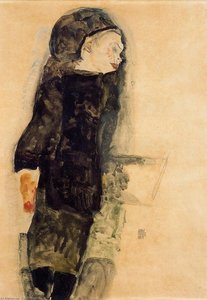
Witness Egon Schiele's haunting 'Child in Black.' This watercolor captures a young figure amidst a somber setting, reflecting the artist’s Expressionist style and exploration of mortality. A poignant portrait from 1911.
A művész életrajza
Fedezd fel Egon Schiele expresszionista művészi világát! Mély psihológiai elemzés, vonal és érzelmi erővel – részletes információkat és képeket itt találhatsz!
A festményről
A Fragmented Soul: Egon Schiele’s ‘Child in Black’
Egon Schiele's “Child in Black,” painted in 1911, isn’t merely a portrait; it’s a distilled essence of anxiety and nascent sexuality, a haunting glimpse into the artist’s intensely personal world. Created during a period of profound upheaval – both personally and within European art – this watercolor captures a young figure, likely a girl, rendered with an unsettling directness that speaks volumes about Schiele's fascination with vulnerability and the darker aspects of human experience. The painting immediately draws the viewer in with its muted palette—a symphony of grays, blacks, and subtle blues—creating an atmosphere of quiet contemplation tinged with unease. It’s a visual embodiment of Expressionism’s core tenets: prioritizing emotional impact over realistic representation.
The Artist's Crucible: Schiele’s Biography and the Shadow of Loss
To truly appreciate “Child in Black,” one must understand the turbulent backdrop against which it was created. Born in 1890 in Tulln an der Donau, Austria, Egon Schiele’s life was tragically shaped by illness and loss from a young age. The death of his father, a railway station master, due to syphilis at just fourteen profoundly impacted him, fueling a lifelong preoccupation with mortality and the fragility of existence. This early trauma, coupled with the subsequent loss of his sister Elvira, instilled in Schiele a deep-seated sense of melancholy and an unflinching gaze upon the human condition. His uncle’s guardianship, marked by control and disapproval of his artistic pursuits, further contributed to his independent spirit and rebellious nature – qualities that would become hallmarks of his work. The painting can be seen as a direct reflection of this internal struggle, a visual manifestation of grief and uncertainty.
Expressionist Techniques: Line, Color, and the Unveiling of Emotion
Schiele’s mastery lies in his distinctive technique—a raw, almost violent application of watercolor. Notice the loose, gestural lines that define the child's form; they aren’t precise or idealized but rather convey a sense of immediacy and emotional intensity. The figure is rendered with an unsettling lack of detail, emphasizing its vulnerability and drawing attention to the subtle shifts in expression—a slight tilt of the head, a downward gaze – that hint at inner turmoil. The use of color is equally deliberate: the dominant blacks and grays create a somber mood, while small touches of blue suggest a melancholic longing. The background, with its indistinct wall and cryptic writing (likely a title or description), further isolates the child, intensifying the sense of loneliness and introspection. It’s a technique that prioritizes feeling over form, echoing the core principles of Expressionism.
Symbolic Resonance: Mortality, Innocence, and the Unspoken
“Child in Black” is rich with symbolic potential. The child herself represents innocence—a fleeting, vulnerable state threatened by the encroaching realities of life and death. The black clothing could symbolize mourning or a sense of impending doom, while the hat adds an element of defiance, suggesting a quiet resistance to the forces that seek to diminish her spirit. The painting’s overall atmosphere evokes a sense of unease, prompting viewers to contemplate themes of mortality, loss, and the complexities of human emotion. It's not a cheerful portrait; it’s a poignant meditation on the darker aspects of existence—a subject Schiele explored relentlessly throughout his tragically short career. The ambiguity surrounding the child’s identity further enhances the painting’s power, inviting viewers to project their own anxieties and interpretations onto the scene.
TopImpressionists offers meticulously crafted hand-painted reproductions of “Child in Black,” allowing you to bring this powerful work of art into your home or office. Each reproduction is created by skilled artists using archival-quality materials, ensuring that it captures the essence and emotional depth of Schiele’s original masterpiece. Explore our collection today and experience the haunting beauty of “Child in Black” firsthand.
Kérdések és válaszok
Milyen érzelmet közvetít a „Child in Black”, Egon Schiele alkotása?
A „Child in Black”, Egon Schiele alkotása művészeti alkotás érzelmi tónusa Melancholic. Ez foglalja össze a mű által kifejezett érzést.
Milyen hangulatot áraszt egy enteriőrben „Child in Black”, Egon Schiele alkotása?
A Dramatic hangulatával a "Child in Black" című alkotás egy Living Room helyiségbe is javasolt.
Milyen technikával készült a „Child in Black”, Egon Schiele alkotása?
A "Child in Black" alkotás Acrylic On Canvas technikával készült.
Gyors tények és művészeti kvíz
Egon Schiele életrajza

Egon Schiele
1890 - 1918, Ausztria
A művész életrajza
A Life Forged in Expression
Egon Schiele, született 1890. június 12-én Tulln an der Donau városban, Ausztriában, egy izgalmas és fájdalmas életre vágtak bele. Élete egyfajta viharos útra vezetett, melyben a rendkívüli művészi látás mellett mély személyes nehézségek is álltak fenn. Korai évei betegség és veszteség árnyékát vetették rá – édesapja, Adolph Schiele, a szifilisztől halt meg, amikor Egon csak tizennégy éves volt, egy tragédia, amely mélyen rémetelte az emlékezetét. Az anyjához, majd a nagybátyjáéhoz, Leopold Czihaczekhez került, aki kontrolláltabb módon nevelte, de ez a helyzet is formálta a fiú független szellemiségét. Már gyermekkorában vonzódott a vonatokhoz – egy motívum, ami később a festményein is megjelenik –, és mutatós kézügyességre tett gyanúságot, bár ezt az apja elutasította, mert azt tartotta, ez egy figyelmetlenség, ami távol sodorja a gyakorlatiabb foglalkozástól. A húgának, Elvira halálának is hosszú árnyékot vetett a fiatal művész lelke felett. Ezek a korai tapasztalatok mélyen beépültek az alkotói kifejezésébe – állandó küzdés élet, halál és emberi természet témáival.
The Crucible of Vienna: Artistic Development
Schiele formális művészi kiképzése a Kunstgewerbeschule (Művészeti Iskola)ban indult Bécsben, de hamar elégedetlen maradt a konzervatív megközelítéssel. Átment az Akademie der bildenden Künste-re (Művészeti Akadémia), ahol még inkább csalódott a szigorú tudományos hagyományokra. Ez a kielégületlenség vezetett odáig, hogy elhagyta a formális képzést, és saját utat tört be – ami bizonyítja a művészi hite áldozkodását. Gustav Klimt befolyása kulcsfontosságú volt ezekben az időszakokban; Schiele admirálta Klimt dekoratív stílusát és szimbólumok használatát, még annak is örvendett, hogy a megőrzött művész tanítványa volt. Azonban hamarosan elszaladt Klimt estétől, saját egyedi hangot fejlesztve, melyet a szigorú, objektív megjelenés helyett az érzelmi mélység és a pszichológiai intenzitás jellemzett. 1909-ben alapították a Neues Wiener Kunstgruppe-t (Új Bécsi Művészeti Csoportot), ahol egyértelműen a progresszív művészek sorába tartozott, akik kihívást gördítettek a korabeli művészi normák elé. Korai munkái gyakran zavaró portrék és önportrék voltak, melyek erőteljes érzelmi turbulenciát sugalltak, deformált alakokat és egy éles vágyat tükröztek az emberi lélek mélyén rejlő titkok feltárására. Nem egyszerűen a fizikai formák ábrázolását keresték, hanem az érzések kifejezését – mit *éreznek*, nem mit *látnak*.
Raw Emotion and Unflinching Truth
Egon Schiele művészete azonnal felismerhető a frissességben és pszichológiai mélységében. Merészebben foglalkozott olyan témákkal, amelyek az akkori időkben tabutartóak voltak – szexualitás, halál, félelem, izoláció – egy merész, nem vonakodó tekintettel. Egyedi stílusa karakterisztikái a meghosszabbított alakok, torzult pózok és kifejező vonalak, melyek egyfajta nyugtalanságot és érzelmi intenzitást sugallnak. Az emberi test, különösen a nátúrt, lett a művész központja, nem mint ideális szépség tárgya, hanem az emberi tapasztalatok összetettségének kifejezőjeként. Az önportrék jelentős részét képezik a művész oeuvre-jében, melyek intim betekintést engednek az ő belső világába – egy világ gyakran magányos és önbizonytalan.
A Legacy Cut Short: Achievements & Significance
Bár Szellemet megnehezítette a cenzúra és a jogi perek – beleértve egy rövid börtönbüntetést is, amiért ápoli fiatalokat állított képének köszönhetően –, elismerést szerzett Bécs avantgárd körében. Művei kihívást gördítettek a korabeli normák elé, melyek sokakat lenyűgöztek és felháborítottak. A halálos influenza járványakor, 28 éves korában, rövid idő alatt hunyt el, ami a művész életét egy tragikus befejezéssel zárta. Az ő munkássága azonban örök volt – jelentős alkotásai, mint például az *Self-Portrait with Physalis*, a *Couple Embracing* és a *Field Landscape (Kreuzberg near Krumau)* bizonyítékok a művészi géniuszára. Hatása a későbbi generációk művészeiére is látható – különösen azoknál, akik foglalkoznak pszichológiai témákkal és kihívják a hagyományos művészi normákat. Schiele alkotásai ma világszerte jelentős múzeumi gyűjteményekben találhatók, beleértve a Leopold Múzeum Bécsben és a Egon Schiele Művészeti Központot Českému Krumlovban, biztosítva művészi örökségének továbbvételét. A művész nem csak esztétikailag vonzó, hanem mélyen emberi alkotásokat hagyott hátra – egy bizonyíték azokra a képességekre, amelyekkel az művészet képes az élet összetettségével szembenézni őszinte, merészes és állhatatos látással.
Gyors információk Egon Schiele művészről
- Artistic Movement Or Style: Kezdeti expresszionista
- Artists Or Movements Influenced By This Artist: ['Vienesi Secession']
- Artists Who Influenced This Artist: ['Gustav Klimt']
- Date Of Birth: 1890. június 12.
- Date Of Death: 1918. október 31.
- Full Name: Egon Schiele
- Nationality: Osztrák
- Notable Artworks:
- A híd
- Napnyugta
- Halál és lány
- Place Of Birth: Tulln, Ausztria


Fedezze fel a műalkotásokat témák, stílusok és jellemzők szerint csoportosítva.


Egon Schiele
Child in Black
() ·
A kerettel együtt: · Kézzel festve, olajfesték, vászonon
Összesen