

A képen: · A kerettel együtt:
 Megtekintés
 Küldés
 Megosztás
 Részletek
 Útmutató

 Letöltés
 Hasonló darabok
 X-ray felvétel
 Diavetítés
 Kérdések és válaszok
 Statisztika
- 191.0 x 152.0 cm


Ft 87344
Kézzel készített olajfestmény reprodukció
Kézzel festett olajvastú vászon, az Ön által választott méretben és keretben, művészeink készítik meglévőre. ( Váltás nyomtatványra Áttérés digitális képre)
Méret
·Standard méret
egyedi méretű
CM
INCH
Válasszon előre meghatározott méreteink közül, amelyek megfelelnek a műalkotás eredeti arányainak.
Méretek betöltése...

szélesség
magasság
Írja be a kívánt szélességet és magasságot, hogy illeszkedjen a keretéhez vagy a falához. Mivel ez kézzel festett alkotás, egy eltérő formájú méret esetén a művész akár festhet is valamivel többet a kép körül, vagy korolathat is belőle — az Ön döntésének megfelelően. A festés megkezdése előtt küldünk egy digitális tervezetet jóváhagyásra. Az oldalon látható kép nem tartalmazza a végeredményt — csak a tervezet mutatja meg a valódi eredményt.
 További információk
Befejezés
·
Fehér Ft1

Elmosódott szélek Ft1

Kiterjesztett Ft1

P118B Ft10

P118H Ft10

P118W Ft10

P438Z Ft10

P508JH Ft12

P508YH Ft12

P805H Ft10

P805Z Ft10

P919BZ Ft10

P919G Ft10

P919XJ Ft10

P959ZH Ft10

P968JZ Ft12

W106C Ft8

W218G Ft10

W218JH Ft8

W218Y Ft10

W307PJ Ft10

W316G Ft10

W316PJ Ft8

W316Y Ft10

W398PJ Ft8

W4111J Ft10

W500HY Ft15

W500JH Ft15

W692G Ft12

W849H Ft8

W940BG Ft15

W953PJ Ft8

H24-GOLD Ft30

H24-SILVER Ft30

H36-GOLD Ft45

H36-SILVER Ft45
Védődobozban, feltekercselve szállítva, készen a saját keretbe helyezésre.
Extrák
opcionálisMit tartalmaznak a plusz szolgáltatások?
Példák a módosíthatóságra: Az arc kicserélése a vásárló fotójára; háziállat hozzáadása (pl. macska kicserélése kutyára); rejtett üzenet elhelyezése a háttérben; a háttér tájéképének vagy elemeinek megváltoztatása.
A megrendelést követően a TopImpressionists.com csapat e-mailt küld a vásárlónak az instrukciókkal, és biztosítja a tervezeti előnézetet
A megrendelést követően a TopImpressionists.com csapat e-mailt küld a vásárlónak az instrukciókkal, és biztosítja a tervezeti előnézetet
Világszerte elérhető szállítás () 3-4 hét alatt a szokásos 5 hét helyett. (4 november). A minőség nem kérdőjelezhető.
Védőréteg (Lakk)
Névtábla
A gravírozott bronztábla részletei
This elegant plaque features the artist's name and the title of the artwork, finely engraved for a timeless presentation.
It is made from bronze with a refined, elegant finish. The text is precisely laser-engraved for a sharp and permanent result. Measuring 9x2 cm, the plaque is compact yet easy to read. It's built to be durable and scratch-resistant, offering a professional, museum-quality look. Mounting is simple thanks to the included adhesive backing.
Átlátszó akril tábla részletei
The plaque includes essential engraved details such as the artist's name, the title of the artwork, the date it was created, the type of media used-like oil on canvas or watercolor-a brief description of the piece, and a QR code that links to the complete artwork information.
It is crafted from clear acrylic, offering a sleek, modern appearance. The text is UV-engraved in black to ensure strong visual contrast. With a size of 10x15 cm, it ensures optimal readability. It comes equipped with two metal hooks for secure wall mounting. The plaque is designed to be weather-resistant, making it suitable for various environments, and it includes interactive features that work seamlessly with smartphone scanning.
Fekete akril tábla részletei
This elegant plaque includes engraved information such as the artist's name, the title of the artwork, the date it was created, the type of media used (like oil on canvas or watercolor), a short description of the artwork, and a QR code for quick access to more information.
The plaque itself is made from refined black acrylic with a premium finish. The text is laser-engraved in white for high contrast and readability. Its size is 10x15 cm, designed to be easy to read. It comes with two metal hooks for professional mounting. The design is sleek and fits any interior style. It is also weather-resistant and durable, with built-in digital integration for mobile compatibility.
Az üvegkeretes opció csak 110 cm alatti méretben érhető el
 Az üvegkeretes opció csak 110 cm alatti méretben érhető el
- Ingyenes globális expressz szállítás
- Prémium minőségű len vászon
- Teljes körű szállítási biztosítás
- Vámvisszatérítési Garancia
- Hiteles színarányosság garancia
- 100 napos visszaküldési lehetőség (csak hibás termékek esetén)
- 100% pénzvisszatérítési garancia
- Több darab vásárlásakor kedvezmény


A gyűjtemény leírása
El Greco's monumental Laocoön captures the tragic death of Laocoön and his sons—inspired by Hellenistic sculpture—with dramatic distortion & emotive color, reflecting Mannerist ideals.
A művész életrajza
El Greco: görög származású festő, aki a manierizmus legnagyobb alakja lett! Fedezze fel Toledo képeit, vallási művészetét és egyedi stílusát!
A festményről
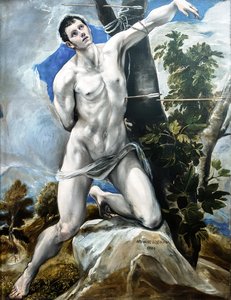
Saint Sebastian (El Greco) – A Study in Suffering and Divine Grace
Saint Sebastian is arguably El Greco’s most iconic work, embodying the artist's signature Mannerist style and capturing the profound emotional depth that defines his oeuvre. Painted between 1576 and 1579 during his formative years in Toledo, Spain—a city steeped in religious fervor—the painting transcends mere depiction; it strives to convey a visceral experience of faith tested by adversity. Its enduring power lies not only in its masterful execution but also in the complex tapestry of symbolism woven into every brushstroke.- Subject Matter: The artwork portrays Saint Sebastian, martyred for his Christian beliefs during Diocletian’s persecution in the 4th century AD. Tradition recounts that Sebastian endured two torturous deaths – initially pierced by arrows and subsequently flogged to death—a harrowing narrative rendered with unflinching realism.
- Style & Technique: El Greco's distinctive Mannerist style is immediately apparent. Characterized by elongated figures, dramatic lighting (chiaroscuro), and distorted proportions, the painting rejects Renaissance ideals of harmony and balance in favor of expressive dynamism. The artist employs loose brushwork—particularly evident in the depiction of Saint Sebastian’s flesh tones—creating a palpable sense of texture and conveying intense emotion.
- Historical Context: Toledo served as El Greco's artistic crucible during the Counter-Reformation, influencing his stylistic choices and thematic preoccupations. The painting reflects the anxieties and spiritual aspirations of the era, presenting Saint Sebastian as a symbol of unwavering devotion amidst persecution.
- Symbolism & Interpretation: Beyond its literal portrayal of martyrdom, Saint Sebastian is laden with symbolic significance. The upward gaze of the saint signifies his plea for divine intervention—a yearning for solace and acceptance in the face of suffering. The desolate landscape—rendered in muted earth tones—underscores the isolation experienced by martyrs and reinforces the painting’s overarching mood of solemn contemplation.
El Greco's Mannerist Vision – Anatomical Distortion & Dramatic Light
El Greco’s masterful manipulation of anatomy exemplifies his commitment to Mannerism’s aesthetic principles. Unlike Renaissance artists who meticulously studied human musculature and sought anatomical accuracy, El Greco deliberately elongates Saint Sebastian’s figure—a technique borrowed from Michelangelo—creating an ethereal quality that transcends earthly constraints. This distortion isn't merely stylistic; it serves to heighten the emotional impact of the scene by emphasizing vulnerability and conveying a sense of spiritual transcendence. Simultaneously, El Greco utilizes chiaroscuro—the stark contrast between light and shadow—to sculpt Saint Sebastian’s form and draw the viewer’s eye toward his anguished expression. The dramatic lighting amplifies the saint's suffering, creating an atmosphere of palpable tension and intensifying the painting’s emotional resonance.The Toledo Landscape – A Reflection of Spiritual Isolation
The backdrop of Saint Sebastian—a bleak landscape dominated by rolling hills and distant mountains veiled in mist—is more than just decorative; it functions as a powerful symbol of spiritual isolation. El Greco's decision to depict the scene against this desolate terrain underscores the psychological burden borne by martyrs—the profound loneliness inherent in confronting mortality and unwavering faith. The muted earth tones contribute to the painting’s somber mood, reinforcing its contemplative spirit and inviting viewers to contemplate themes of suffering, resilience, and divine grace.Legacy & Influence – An Artist Ahead of His Time
Saint Sebastian stands as a testament to El Greco's artistic genius—a work that anticipates the expressive fervor of Expressionism and foreshadows the fragmented forms of Cubism centuries later. His stylistic innovations challenged prevailing aesthetic conventions, establishing him as a pioneer of Mannerist art and securing his place among the most influential painters of the Baroque era. The painting continues to captivate audiences today with its haunting beauty and profound emotional depth—a timeless masterpiece that speaks to the enduring human desire for spiritual solace amidst adversity.Kérdések és válaszok
„Laocoön”, El Greco alkotása színei élénkek vagy fakók?
A "Laocoön" színe Értékmentesen fakó telítettségű és Monokróm intenzitású.
Használhatom az augmented reality technológiát, hogy megtekintsem a „Laocoön”, El Greco alkotása művet a saját szobámban?
A „Laocoön”, El Greco alkotása Kiterjesztett valóság előnézet oldala kiterjesztett valóságot használ, hogy az alkotást egy kompatibilis eszközön, az Ön saját környezetében is megmutassa.
Mennyi volt El Greco életkora, amikor a "Laocoön" készült?
El Greco 36 éves korában festette a „Laocoön” című művét. A művész 1541 született, a alkotás dátuma pedig 1577.
Gyors tények és művészeti kvíz
El Greco életrajza

El Greco
1541 - 1614, Ελλάδα
A művész életrajza
Doménikos Theotokópoulos, Known As El Greco – A Life Forged in Faith and Fire
Doménikos Theotokópoulos, universally recognized as El Greco – “the Greek” – stands apart from his contemporaries as a painter whose life and artistic output defied easy categorization. Born in Crete, Greece, around 1541, during the Venetian dominion, his artistic journey unfolded across Venice and Rome before ultimately finding its most profound expression within the spiritual landscape of Spain: Toledo. El Greco wasn’t merely shaped by these locations; he synthesized their diverse influences into a singular style – one that foreshadowed the emotive fervor of Expressionism and the fragmented forms characteristic of Cubism centuries ahead of time. His formative years immersed in Byzantine iconography instilled within him meticulous attention to detail and an instinctive grasp of religious symbolism, establishing a bedrock upon which his distinctive artistic explorations would build. Yet, he resolutely resisted confinement within established traditions, signing his canvases with Greek – “Krḗs” – as a defiant assertion of Cretan identity, even as he embraced new artistic horizons. The genesis of El Greco’s singular style wasn't solely rooted in technique; it stemmed from the fervent religious fervor permeating Crete and the rich artistic heritage bequeathed by Venetian masters.From Venice to Toledo: A Transformation Marked By Innovation
His relocation to Venice around 1567 constituted a pivotal juncture in his artistic trajectory. Surrounded by an exuberant artistic milieu, El Greco diligently studied the luminaries of his era – Titian, Tintoretto, Veronese – absorbing their mastery of color palettes, compositional strategies, and theatrical lighting effects. He deliberately loosened his brushwork, embracing the sensual qualities inherent in oil paint and elevating the expressive power of his depictions. This Venetian influence is palpably present in early works such as *St. Sebastian* (1600), where anatomical precision harmoniously blends with a dramatic illumination reminiscent of Caravaggio’s style – a testament to his ability to synthesize disparate artistic traditions. Subsequently, his sojourn in Rome exposed him to Mannerism, a stylistic movement characterized by elongated figures, distorted perspectives, and sophisticated compositional arrangements. While he demonstrated considerable talent within the competitive Roman art world, El Greco struggled to garner widespread acclaim due to prevailing aesthetic sensibilities of the time. It was his definitive settlement in Toledo – circa 1577 – that finally liberated him from artistic constraints and allowed his visionary artistic vision to flourish. The city’s fervent religious atmosphere during the Counter-Reformation provided both patronage and an environment conducive to portraying spiritual contemplation with unparalleled intensity.A Style Defined By Distortion, Emotion, And Spiritual Depth
El Greco's stylistic hallmark is instantly recognizable: figures rendered in elongated proportions—a deliberate departure from naturalistic representation—infused with palpable emotion and bathed in dramatic illumination. This isn’t mere stylistic embellishment; it represents a profound philosophical commitment to conveying the unseen realms of consciousness and experience – those realities beyond the confines of observable phenomena. He achieved this feat through masterful manipulation of color—often employing hues that deviated significantly from naturalistic standards—to heighten the emotional resonance of his canvases. Furthermore, El Greco’s lighting techniques—characterized by stark contrasts between light and shadow—created a theatrical effect, drawing viewers into the very core of the depicted scene and mirroring the dramatic narratives found in biblical texts. *The Burial of the Count of Orgaz* (1586-1588), arguably his magnum opus, exemplifies these stylistic principles flawlessly. This monumental painting portrays a miraculous event—the descent of saints to bury a nobleman—with remarkable realism interwoven with ethereal figures embodying divine intervention – demonstrating El Greco’s unparalleled ability to fuse artistic innovation with spiritual contemplation. His distinctive style transcended mere imitation; it constituted an audacious assertion of artistic individuality and a courageous rejection of prevailing aesthetic conventions.Influences And Artistic Legacy: Echoes Across Centuries
El Greco's artistic heritage extends far beyond his immediate contemporaries, resonating powerfully across subsequent artistic movements. Artists like Picasso and Braque recognized him as a precursor to Cubism—admiring his fragmented forms and unconventional perspectives—demonstrating the enduring influence of his stylistic innovations. Similarly, Expressionists embraced El Greco’s emotive intensity—capturing profound psychological states through bold color palettes and dramatic compositions—affirming his role as a pivotal figure in shaping modern artistic sensibilities. His oeuvre continues to inspire artists today, prompting explorations into themes of faith, spirituality, and human experience. Beyond the realm of art history, El Greco's stylistic legacy persists in contemporary visual culture, influencing designers and filmmakers alike. He remains an artist whose work transcends temporal boundaries—a testament to his enduring capacity for communicating universal truths about the human condition through a singular artistic voice.Notable Works: Icons Of Spiritual Expression
- The Burial of the Count of Orgaz (1586-1588): Considered El Greco’s masterpiece, this monumental painting embodies his stylistic hallmarks—elongated figures, dramatic lighting, and masterful blending of realism and spiritual symbolism.
- View of Toledo (1596-1600): This evocative landscape captures the spirit of Toledo with swirling atmospheric effects and a visionary perspective—a testament to El Greco’s ability to transform observation into profound artistic expression.
- The Opening of the Fifth Seal (1608-1614): Part of a series exploring biblical themes, this painting showcases El Greco's masterful use of color and composition to convey spiritual awe and existential contemplation.
- St. Sebastian (1600): This poignant depiction of St. Sebastian exemplifies El Greco’s stylistic prowess—anatomical precision combined with theatrical illumination—creating a powerfully emotive image.
Gyors információk El Greco művészről
- Artistic Movement Or Style: Mannerizmus, Barrokok
- Artists Or Movements Influenced By This Artist:
- Expressionizmus
- Kubizmus
- Artists Who Influenced This Artist:
- Titian
- Tintoretto
- Date Of Birth: 1541 Cretében
- Date Of Death: 1614 Toledoában
- Full Name: Doménikos Theotokópoulos
- Nationality: Görög-spanyol
- Notable Artworks:
- A Szűz Mária tiszteletére
- Fray Hortensio Félix Paravicino
- El Espolio
- St. Sebastian
- Place Of Birth: Creta Görögországban
Fedezze fel a műalkotásokat témák, stílusok és jellemzők szerint csoportosítva.


El Greco
Laocoön
() ·
A kerettel együtt: · Kézzel festve, olajfesték, vászonon
Összesen