
 Megtekintés
 Küldés
 Megosztás
 Részletek
 Útmutató

 Letöltés
 Hasonló darabok
 X-ray felvétel
 Diavetítés
 Kérdések és válaszok
 Statisztika
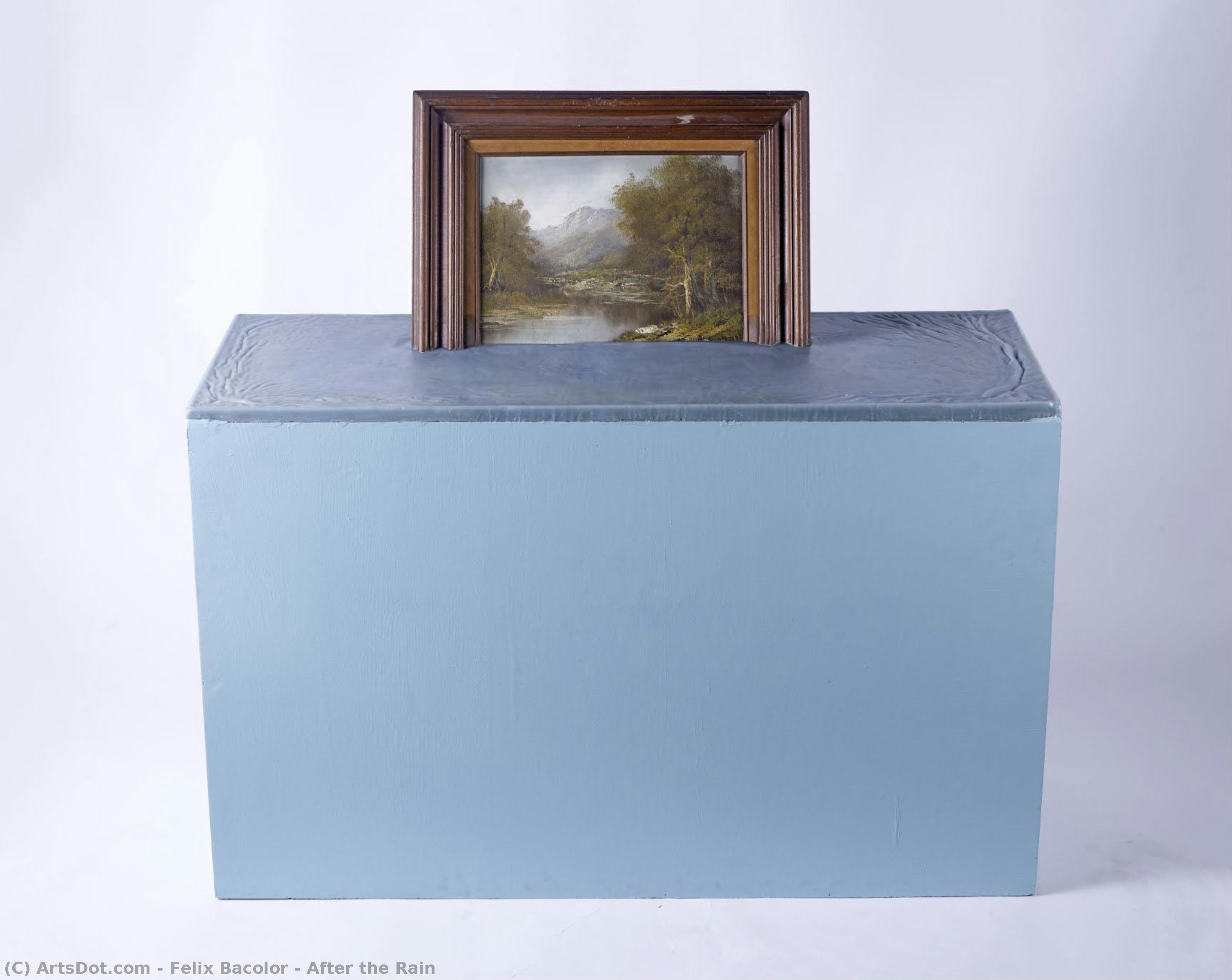
After the Rain


Explore 'After the Rain' by Felix Bcolor – a captivating 2012 installation featuring a textured blue cube and serene landscape painting. A unique blend of realism & abstraction, perfect for art collectors.
 Összes részlet megjelenítése
Explore the evocative installations of Felix Bacolor, a Filipino artist examining time, space & human experience through layered, immersive works.
Az ezen az oldalon megjelenített műalkotások szerzői jogi védelem alatt állnak, ami azt jelenti, hogy törvényileg nem készíthetünk és nem adhatunk el belőlük pontos másolatokat. Ez a védelem olyan nemzetközi megállapodások alapján érvényesül, mint például a Berni Egyezmény és a nemzeti jogszabályok által, beleértve azokat is, amelyeket meghatározott Az USA szerzői jogi törvénye – 17. cím.
Ez a módszer teljes mértékben megfelel a szerzői jogi szabályozásnak, mivel nem tartalmazza a védett műalkotás másolását vagy duplikálását. Ehelyett ez egy kreatív újinterpretáció – egy új festmény, amely az eredetivel való összefüggései miatt hatással van rá, de nem az az.
Giclée / Műnyomat
Múzeumi minőségű giclée vagy vászonnyomat, gyors gyártással és rugalmas finomítási lehetőségekkel. ( Kézzel festett másolat rendelése Áttérés digitális képre)




































Standard méret
egyedi méretű
CM
INCH
Válasszon előre meghatározott méreteink közül, amelyek megfelelnek a műalkotás eredeti arányainak.
Loading sizes...

szélesség
magasság
Írja be a keretének vagy a falának megfelelő szélességet és magasságot. A nyomatot csak le lehet vágni, soha nem tehető nagyobbá, mint az eredeti kép, így egy eltérő alakú méretnél a kép egy része elveszik. Mielőtt bármit kinyatintanánk, küldünk egy digitális próbamodellt jóváhagyásra. Az oldalon látható kép nem tartalmazza a valós levágást — ezt csak a próbamodell mutatja meg.
Világszerte történő kiszállítás területére mindössze 2 hét alatt, a szokásos 4-5 hét helyett. (4 november)

Ingyenes globális expressz szállítás

Prémium minőségű len vászon

Teljes körű szállítási biztosítás

Vámvisszatérítési Garancia

Hiteles színarányosság garancia

100 napos visszaküldési lehetőség (csak hibás termékek esetén)

100% pénzvisszatérítési garancia

Több darab vásárlásakor kedvezmény
 Az üvegkeretes opció csak 110 cm alatti méretben érhető el

After the Rain
Giclée / Műnyomat
Reprodukció mérete
-


Összesített ár
Ft 22934
b. 1967, the PhilippinesThe artist enjoys working with both installations and paintings, enjoying the inventiveness of developing an image in painting and the immediacy and
Kérdések és válaszok
Hol tekinthető meg az eredeti „After the Rain”, Felix Bacolor alkotása?
Az eredeti "After the Rain" mű megtekinthető a ILHAM Gallery, Kuala Lumpur, Malaysia múzeumgyűjteményében.
Hol tudom letölteni a(t) „After the Rain”, Felix Bacolor alkotása?
A "After the Rain" letölthető változatként is elérhető: a mű Letöltés oldala magas felbontású digitális kép letöltése lehetőséget kínál.
Hogyan találhatok olyan műalkotásokat, amelyek stílusában hasonlítanak a(z) „After the Rain”, Felix Bacolor alkotása alkotásra?
A „After the Rain”, Felix Bacolor alkotása Hasonló alkotások oldala kapcsolódó műalkotásokat mutat be.
A művész életrajza
The Architecture of Perception: The Art of Felix Bacolor
Born in 1967 in the Philippines, Felix Bacolor has carved a singular niche in the contemporary art world by treating sculpture not merely as an object, but as an immersive experience. His artistic journey is a profound exploration of how we inhabit the world, focusing on the delicate interplay between time, space, and human perception. From his early years, Bacolor displayed a deep-seated fascination with architectural forms and textures—elements that would later become the foundational language of his practice. By merging the structural rigidity of architecture with the fluid nature of conceptual thought, he creates works that challenge the viewer to reconsider the boundaries of reality.
Bacolor’s creative evolution is deeply rooted in the principles of Minimalism and Conceptual Art. Through rigorous experimentation with tactile materials such as concrete and wood, he has mastered the ability to evoke striking visual effects that resonate with both weight and lightness. His style is defined by a deliberate layering of elements, where sharp geometric shapes are often juxtaposed against more organic, unpredictable forms. This tension creates environments that feel simultaneously monumental and subtly unsettling, pulling the observer into a space where the distinction between presence and absence begins to blur.
Themes of Void and Transformation
At the heart of Bacolor’s oeuvre lies a preoccupation with the passage of time and the concept of the void. His installations often utilize repetition and fragmentation to reflect the transient nature of existence. By manipulating scale and volume, he constructs spaces that envelop the audience, transforming mere observation into a visceral encounter. The recurring motifs of his work—the exploration of empty spaces and the transformation of solid matter—serve as metaphors for the human condition, inviting deep contemplation on how we perceive change and loss within our environment.
The artist’s ability to bridge different mediums is also a hallmark of his development. While he is widely celebrated for his sculptural installations, he frequently engages with painting to explore the inventiveness of imagery and the immediacy of color. This dual approach allows him to navigate between the three-dimensional physical presence of sculpture and the two-dimensional narrative potential of the canvas, creating a cohesive artistic vision that spans both the tangible and the imagined.
A Global Artistic Presence
Bacolor’s recognition has extended far beyond the shores of the Philippines, as his work has resonated within prominent cultural institutions across Europe and Asia. His participation in exhibitions at the Artinformal Gallery in Makati established him as a vital voice in the contemporary Filipino art scene, showcasing his ability to push creative boundaries alongside his peers. His international trajectory includes significant contributions to the cultural landscape of France, notably through his presence in institutions such as the Musée Félix Ziem in Martigues, where his artistic lens offers a unique perspective on the surrounding landscapes.
Through his acclaimed contributions to various international art forums, including notable recognitions in Florence, Bacolor has solidified his status as an artist of global significance. His work continues to provoke essential dialogues regarding our relationship with the physical world and the ephemeral nature of time, ensuring his place in the ongoing narrative of contemporary installation art.

Felix Bacolor
1967 - , Philippines
Rövid információk
- Full Name: Felix Bacolor
- Nationality: Filipino
- Date Of Birth: 1967
- Place Of Birth: Philippines
- Notable Artworks:
- Hauled Out
- After the Rain
- Artistic Movement Or Style: Contemporary Installation
- Artists Or Movements Influenced By This Artist: ['San Felice']
Kapcsolódó cikkek

The Soul of Color: A Journey into the Emotional Resonance of Lyrical Abstraction
Embark on a cultural journey through Lyrical Abstraction. Explore how masters like Kandinsky used color and motion to translate emotion into visual poetry. Discover the profound beauty of abstract expressionism and learn to curate emotional resonance in your own art collection.