

Shown: · With its frame:
 Megtekintés
 Küldés
 Megosztás
 Részletek
 Útmutató

 Letöltés
 Hasonló darabok
 X-ray felvétel
 Diavetítés
 Q&A
Q&A Statisztika
Ft 87954
Kézzel készített olajfestmény reprodukció
Kézzel festett olajvastú vászon, az Ön által választott méretben és keretben, művészeink készítik meglévőre. ( Váltás nyomtatványra Áttérés digitális képre)
Size
·Standard méret
egyedi méretű
CM
INCH
Válasszon előre meghatározott méreteink közül, amelyek megfelelnek a műalkotás eredeti arányainak.
Loading sizes...

szélesség
magasság
Írja be a kívánt szélességet és magasságot, hogy illeszkedjen a keretéhez vagy a falához. Mivel ez kézzel festett alkotás, egy eltérő formájú méret esetén a művész akár festhet is valamivel többet a kép körül, vagy korolathat is belőle — az Ön döntésének megfelelően. A festés megkezdése előtt küldünk egy digitális tervezetet jóváhagyásra. Az oldalon látható kép nem tartalmazza a végeredményt — csak a tervezet mutatja meg a valódi eredményt.
 További információk
Finish
·
White Ft1

Blurside Ft1

Extended Ft1

P118B Ft10

P118H Ft10

P118W Ft10

P438Z Ft10

P508JH Ft12

P508YH Ft12

P805H Ft10

P805Z Ft10

P919BZ Ft10

P919G Ft10

P919XJ Ft10

P959ZH Ft10

P968JZ Ft12

W106C Ft8

W218G Ft10

W218JH Ft8

W218Y Ft10

W307PJ Ft10

W316G Ft10

W316PJ Ft8

W316Y Ft10

W398PJ Ft8

W4111J Ft10

W500HY Ft15

W500JH Ft15

W692G Ft12

W849H Ft8

W940BG Ft15

W953PJ Ft8

H24-GOLD Ft30

H24-SILVER Ft30

H36-GOLD Ft45

H36-SILVER Ft45
Shipped in a protective tube, ready for your own framer.
Above 105 cm the frame is shipped as a kit for a professional framer — read the details.
Extras
optionalWhat do the extras include?
Examples of what can be changed: Replace face with customer photo; Add pet (e.g., replace cat with dog); Include hidden message in background; Change background landscape or elements.
After order, TopImpressionists.com team will email client for instructions and provide a mockup preview
After order, TopImpressionists.com team will email client for instructions and provide a mockup preview
Világszerte elérhető szállítás () 3-4 hét alatt a szokásos 5 hét helyett. (30 október). A minőség nem kérdőjelezhető.
Védőréteg (Lakk)
Névtábla
A gravírozott bronztábla részletei
This elegant plaque features the artist's name and the title of the artwork, finely engraved for a timeless presentation.
It is made from bronze with a refined, elegant finish. The text is precisely laser-engraved for a sharp and permanent result. Measuring 9x2 cm, the plaque is compact yet easy to read. It's built to be durable and scratch-resistant, offering a professional, museum-quality look. Mounting is simple thanks to the included adhesive backing.
Átlátszó akril tábla részletei
The plaque includes essential engraved details such as the artist's name, the title of the artwork, the date it was created, the type of media used-like oil on canvas or watercolor-a brief description of the piece, and a QR code that links to the complete artwork information.
It is crafted from clear acrylic, offering a sleek, modern appearance. The text is UV-engraved in black to ensure strong visual contrast. With a size of 10x15 cm, it ensures optimal readability. It comes equipped with two metal hooks for secure wall mounting. The plaque is designed to be weather-resistant, making it suitable for various environments, and it includes interactive features that work seamlessly with smartphone scanning.
Fekete akril tábla részletei
This elegant plaque includes engraved information such as the artist's name, the title of the artwork, the date it was created, the type of media used (like oil on canvas or watercolor), a short description of the artwork, and a QR code for quick access to more information.
The plaque itself is made from refined black acrylic with a premium finish. The text is laser-engraved in white for high contrast and readability. Its size is 10x15 cm, designed to be easy to read. It comes with two metal hooks for professional mounting. The design is sleek and fits any interior style. It is also weather-resistant and durable, with built-in digital integration for mobile compatibility.
Az üvegkeretes opció csak 110 cm alatti méretben érhető el
 Az üvegkeretes opció csak 110 cm alatti méretben érhető el
- Ingyenes globális expressz szállítás
- Prémium minőségű len vászon
- Teljes körű szállítási biztosítás
- Vámvisszatérítési Garancia
- Hiteles színarányosság garancia
- 100 napos visszaküldési lehetőség (csak hibás termékek esetén)
- 100% pénzvisszatérítési garancia
- Több darab vásárlásakor kedvezmény


A gyűjtemény leírása
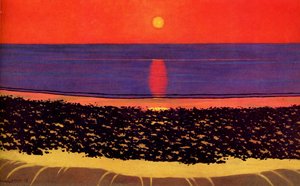
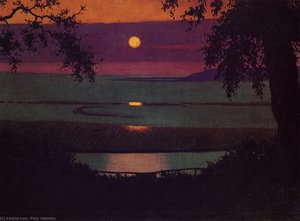
Discover Felix Vallotton’s serene "Sunset" – a luminous Impressionist seascape capturing twilight hues & a silhouetted tower. Explore this evocative Swiss artwork.
A művész életrajza
Vallotton (1865-1925) svájci festő és grafikus, a Nabis tagja, a modern fametszet megújítója. Kiemelődik a 'Intimités' sorozattal, pszichológiai mélységű műveivel és egyedi stílusával.
About the painting
Quick facts and art quiz
About Félix Vallotton

Félix Vallotton
1865 - 1925, Svájc
A művész életrajza
A Life Bridging Worlds: Félix Vallotton and the Fin de Siècle
Félix Édouard Vallotton, born in Lausanne, Switzerland in 1865, was an artist whose work embodies the complex spirit of the *fin de siècle*. He navigated a path between his Swiss roots and the vibrant artistic milieu of Paris, ultimately becoming a pivotal figure in the development of modern art. His early life, steeped in the conservative Protestant values of his family—his father a pharmacist, later a chocolatier—provided a stark contrast to the bohemian world he would embrace as an artist. Though initially steered towards classical studies at the Collège Cantonal, Vallotton’s passion for visual expression led him to Paris in 1882, where he enrolled at the Académie Julian. This marked not merely a geographical relocation but a profound shift in perspective, immersing him in the heart of artistic innovation and intellectual ferment.
His academic training provided a solid foundation in technique, yet it was his encounters with emerging avant-garde circles that truly ignited his creative trajectory. He quickly absorbed the spirit of Impressionism, particularly its focus on capturing fleeting moments and subjective experience, but he soon began to forge his own distinctive path, moving beyond mere imitation towards a more personal and expressive style.
The Nabis and the Language of Intimacy
Vallotton’s artistic evolution took a decisive turn when he became associated with *Les Nabis*—a group of young artists including Pierre Bonnard, Édouard Vuillard, and Maurice Denis—in 1892. Though often considered somewhat of an outsider within the group, his affiliation proved crucial in shaping his distinctive style. The Nabis sought to infuse art with a spiritual quality, exploring symbolism and decorative aesthetics. Vallotton absorbed these influences but filtered them through his own unique sensibility, characterized by a cool detachment and unflinching realism. This is perhaps most powerfully expressed in his series of woodcuts, particularly *Intimités* (1898). These ten interior scenes are remarkable for their psychological intensity, depicting charged encounters between men and women with an unsettling frankness. They aren’t narratives of romance or passion but rather explorations of tension, power dynamics, and the hidden complexities within domestic life. The stark contrasts of black and white in his woodcuts—a deliberate nod to Japanese *ukiyo-e* prints—heighten the sense of unease and psychological scrutiny.
The *Intimités* series stands as Vallotton’s most celebrated achievement, a testament to his ability to capture the subtle nuances of human interaction. He masterfully employed light and shadow, composition, and cropping techniques to create images that are both visually arresting and emotionally evocative. The figures in these scenes—often depicted in intimate settings—seem trapped within their own private worlds, caught in moments of unspoken longing or simmering conflict.
Master of Woodcut and Painterly Nuance
Vallotton’s mastery extended beyond the realm of painting; he is widely celebrated as a virtuoso of woodcut, revitalizing the medium with his innovative techniques. He embraced the simplicity and directness of the form, employing bold lines and stark contrasts to create images that were both visually striking and emotionally resonant. His prints weren't merely illustrations but independent works of art, often satirical in nature, commenting on social conventions and political issues. Simultaneously, Vallotton continued to develop his painting style, moving away from purely academic approaches towards a more personal expression. He skillfully balanced realism with subtle symbolic undertones, creating portraits, landscapes, and still lifes that possess an enigmatic quality.
His later paintings demonstrate a refined technique, characterized by carefully modulated colors and precise rendering of form. He often painted *paysages composés* (“composed landscapes”), constructed from memory and observation, imbued with a sense of stillness and melancholy. Vallotton’s work is marked by an exceptional control over color and light, creating atmospheric effects that are both luminous and suggestive.
Legacy and Enduring Influence
Félix Vallotton’s influence resonated throughout the early 20th century, impacting artists as diverse as Edvard Munch and Ernst Ludwig Kirchner. His unflinching gaze, his exploration of psychological themes, and his innovative use of printmaking techniques paved the way for new artistic expressions. He died in Paris in 1925, leaving behind a body of work that continues to captivate and challenge viewers today. His art serves as a poignant reflection of the anxieties and contradictions of the *fin de siècle*, offering a glimpse into a world on the cusp of profound change. Vallotton’s legacy lies not only in his technical brilliance but also in his ability to capture the complexities of human experience with honesty, intelligence, and an enduring sense of mystery. He remains a compelling figure—a Swiss artist who found his voice in Paris, bridging tradition and modernity, realism and symbolism, leaving an indelible mark on the history of art.
Quick facts about Félix Vallotton
- Artistic Movement Or Style: Post-impresszionizmus, Szimbolizmus
- Artists Or Movements Influenced By This Artist:
- Munch
- Beardsley
- Kirchner
- Artists Who Influenced This Artist:
- Holbein
- Ingres
- Japán ukiyo-e
- Date Of Birth: 1865. december 28.
- Date Of Death: 1925. december 29.
- Full Name: Félix Edouard Vallotton
- Nationality: svájci/francia
- Notable Artworks:
- Intimités
- Bathers on a summer evening
- Moonlight
- Place Of Birth: Lausanne, Svájc
Hasonló műalkotások




Fedezze fel a műalkotásokat témák, stílusok és jellemzők szerint csoportosítva.


Félix Vallotton
Sunset
() ·
With its frame: · Hand-painted in oil on linen
Total