
A képen: · A kerettel együtt:
 Küldés
 Megosztás
 Részletek
 Útmutató

 Letöltés
 Hasonló darabok
 Diavetítés
 Kérdések és válaszok
 Statisztika

Ft 87344
Kézzel készített olajfestmény reprodukció
Kézzel festett olajvastú vászon, az Ön által választott méretben és keretben, művészeink készítik meglévőre. ( Váltás nyomtatványra Áttérés digitális képre)
Méret
·Standard méret
egyedi méretű
CM
INCH
Válasszon előre meghatározott méreteink közül, amelyek megfelelnek a műalkotás eredeti arányainak.
Méretek betöltése...

szélesség
magasság
Írja be a kívánt szélességet és magasságot, hogy illeszkedjen a keretéhez vagy a falához. Mivel ez kézzel festett alkotás, egy eltérő formájú méret esetén a művész akár festhet is valamivel többet a kép körül, vagy korolathat is belőle — az Ön döntésének megfelelően. A festés megkezdése előtt küldünk egy digitális tervezetet jóváhagyásra. Az oldalon látható kép nem tartalmazza a végeredményt — csak a tervezet mutatja meg a valódi eredményt.
 További információk
Befejezés
·
Fehér Ft1

Elmosódott szélek Ft1

Kiterjesztett Ft1

P118B Ft10

P118H Ft10

P118W Ft10

P438Z Ft10

P508JH Ft12

P508YH Ft12

P805H Ft10

P805Z Ft10

P919BZ Ft10

P919G Ft10

P919XJ Ft10

P959ZH Ft10

P968JZ Ft12

W106C Ft8

W218G Ft10

W218JH Ft8

W218Y Ft10

W307PJ Ft10

W316G Ft10

W316PJ Ft8

W316Y Ft10

W398PJ Ft8

W4111J Ft10

W500HY Ft15

W500JH Ft15

W692G Ft12

W849H Ft8

W940BG Ft15

W953PJ Ft8

H24-GOLD Ft30

H24-SILVER Ft30

H36-GOLD Ft45

H36-SILVER Ft45
Védődobozban, feltekercselve szállítva, készen a saját keretbe helyezésre.
Extrák
opcionálisMit tartalmaznak a plusz szolgáltatások?
Példák a módosíthatóságra: Az arc kicserélése a vásárló fotójára; háziállat hozzáadása (pl. macska kicserélése kutyára); rejtett üzenet elhelyezése a háttérben; a háttér tájéképének vagy elemeinek megváltoztatása.
A megrendelést követően a TopImpressionists.com csapat e-mailt küld a vásárlónak az instrukciókkal, és biztosítja a tervezeti előnézetet
A megrendelést követően a TopImpressionists.com csapat e-mailt küld a vásárlónak az instrukciókkal, és biztosítja a tervezeti előnézetet
Világszerte elérhető szállítás () 3-4 hét alatt a szokásos 5 hét helyett. (5 november). A minőség nem kérdőjelezhető.
Védőréteg (Lakk)
Névtábla
A gravírozott bronztábla részletei
This elegant plaque features the artist's name and the title of the artwork, finely engraved for a timeless presentation.
It is made from bronze with a refined, elegant finish. The text is precisely laser-engraved for a sharp and permanent result. Measuring 9x2 cm, the plaque is compact yet easy to read. It's built to be durable and scratch-resistant, offering a professional, museum-quality look. Mounting is simple thanks to the included adhesive backing.
Átlátszó akril tábla részletei
The plaque includes essential engraved details such as the artist's name, the title of the artwork, the date it was created, the type of media used-like oil on canvas or watercolor-a brief description of the piece, and a QR code that links to the complete artwork information.
It is crafted from clear acrylic, offering a sleek, modern appearance. The text is UV-engraved in black to ensure strong visual contrast. With a size of 10x15 cm, it ensures optimal readability. It comes equipped with two metal hooks for secure wall mounting. The plaque is designed to be weather-resistant, making it suitable for various environments, and it includes interactive features that work seamlessly with smartphone scanning.
Fekete akril tábla részletei
This elegant plaque includes engraved information such as the artist's name, the title of the artwork, the date it was created, the type of media used (like oil on canvas or watercolor), a short description of the artwork, and a QR code for quick access to more information.
The plaque itself is made from refined black acrylic with a premium finish. The text is laser-engraved in white for high contrast and readability. Its size is 10x15 cm, designed to be easy to read. It comes with two metal hooks for professional mounting. The design is sleek and fits any interior style. It is also weather-resistant and durable, with built-in digital integration for mobile compatibility.
Az üvegkeretes opció csak 110 cm alatti méretben érhető el
 Az üvegkeretes opció csak 110 cm alatti méretben érhető el
- Ingyenes globális expressz szállítás
- Prémium minőségű len vászon
- Teljes körű szállítási biztosítás
- Vámvisszatérítési Garancia
- Hiteles színarányosság garancia
- 100 napos visszaküldési lehetőség (csak hibás termékek esetén)
- 100% pénzvisszatérítési garancia
- Több darab vásárlásakor kedvezmény


A gyűjtemény leírása
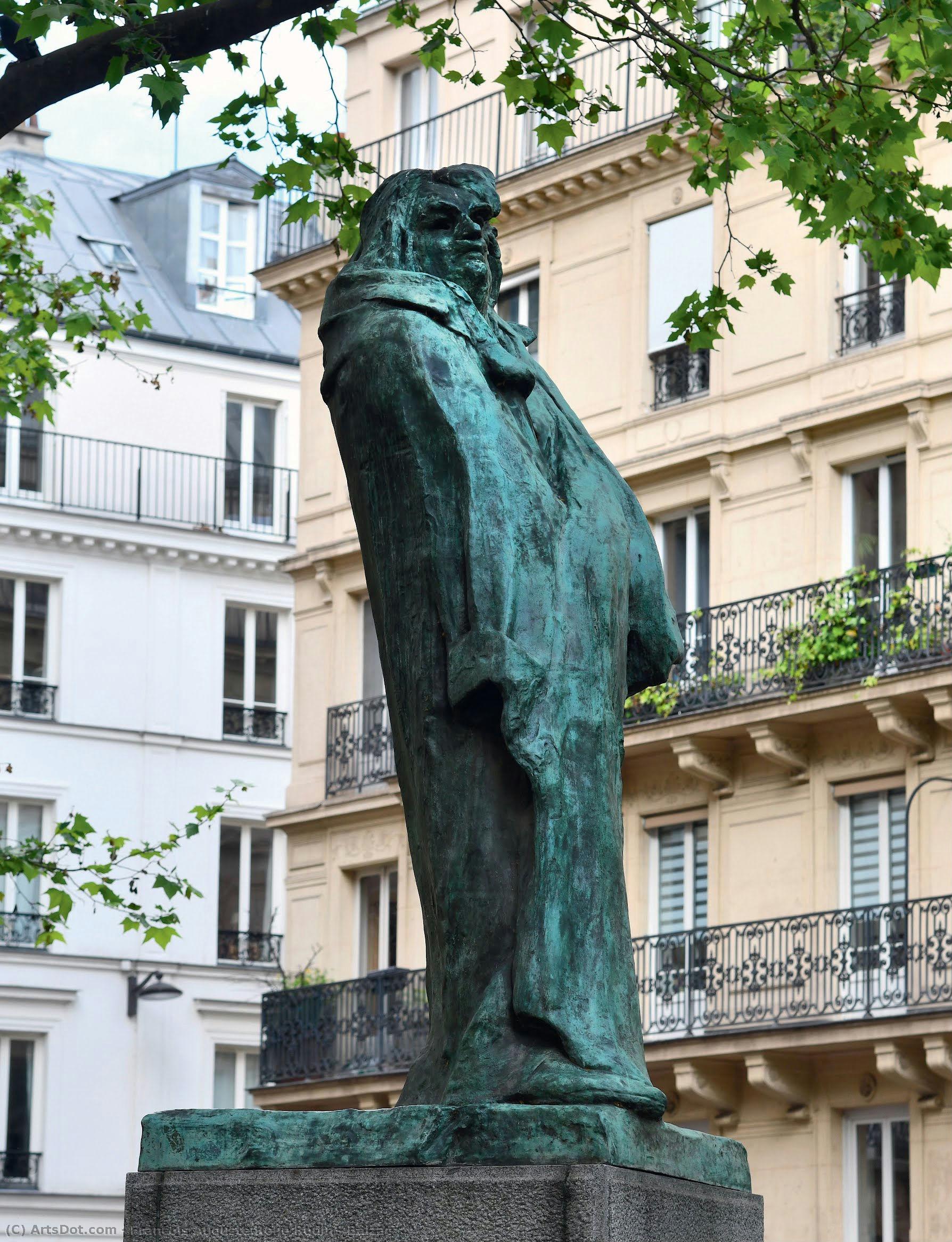
A powerful bronze monument capturing the expressive realism of Auguste Rodin's Balzac, a revolutionary masterpiece of modern sculpture that invites you to explore its profound emotional depth and history.
A művész életrajza
Rodin, a francia szobrász, a modern művészet egyik legkiemelkedőbb alakja. A 'Gondolat', 'Ölelést' és 'Calai városi polgárok' ikonikus alkotásai a lélek mélységeit ábrázolják.
A festményről
The Soul in Bronze: Rodin's Revolutionary Vision
To encounter Auguste Rodin’s Balzac is to witness a moment of profound artistic rebellion captured in metal. This is not merely a portrait of the legendary French novelist Honoré de Balzac; it is an elemental force, a monumental achievement that redefined the boundaries of modern sculpture. When first exhibited in 1898, the work was met with such visceral shock and vitriol from the Parisian art establishment that critics famously likened it to a "block of salt" or a statue still wrapped in its packaging. Yet, beneath this rugged, seemingly unfinished exterior lies one of the most psychologically profound works of the nineteenth century. Rodin moved away from the polished, idealized neoclassicism of his era, choosing instead to capture the raw, internal energy of a creative genius at work.
The sculpture presents a figure that seems to emerge from the very substance of the earth. Rodin utilized a technique of simplification, stripping away superfluous anatomical details to focus on the sheer mass and presence of the subject. The heavy, enveloping drapery of Balzac’s dressing gown creates a monolithic silhouette, a textured landscape of bronze that suggests both weight and movement. This deliberate lack of fine detail serves a higher purpose: it directs the viewer's gaze toward the expressive power of the head, which appears to surge upward from the dark, shrouded body. It is a masterful study in contrast—the heavy, grounded base versus the luminous, intellectual vitality of the face.
A Monument to Intellectual Ferocity
The emotional resonance of Balzac lies in its ability to portray the internal struggle of the creative process. Rodin spent seven years obsessively studying various poses and studies to achieve this specific state of being. The subject is not depicted in a moment of repose, but rather in a state of intense mental absorption, lost within the sprawling universe of his Comédie Humaine. His gaze, directed toward a distant, unseen horizon, suggests a mind traversing the complexities of French society, from the streets of Paris to the deepest recesses of the human heart. For collectors and lovers of fine art, this piece offers more than just aesthetic beauty; it offers a window into the very essence of genius and the solitude of creation.
For those looking to integrate such a powerful statement into a curated space, a high-quality reproduction of this masterpiece brings an unparalleled sense of gravitas. Whether placed in a sunlit study or a sophisticated gallery setting, the textured bronze tones and commanding presence of Balzac serve as a focal point that invites contemplation. It is a work that transcends time, bridging the gap between the historical weight of the nineteenth century and the bold, expressive spirit of modernism. To possess a reproduction of this sculpture is to hold a piece of art history that continues to challenge, inspire, and move the soul.
Kérdések és válaszok
Milyen más neveken ismert Rodin Ferenc?
Rodin Ferenc más néven is ismert: François Auguste René Rodin, Auguste Rodin.
Hogyan találkoznak a korszak és a mű stílusa „Balzac”, Rodin Ferenc alkotása alkotásban?
„Balzac”, Rodin Ferenc alkotása alkotásművében a Modern Sculpture irányzat találkozik a 19. század korszakkal.
Milyen helyet foglal el a művészettörténelemben a "Balzac"?
Történelmileg a "Balzac" a szélesebb körű 19th Century korszak Modern Sculpture alkotása.
Gyors tények és művészeti kvíz
Rodin Ferenc életrajza

Rodin Ferenc
1840 - 1917, Franciaország
A művész életrajza
François Auguste René Rodin: A Sculptor of Souls
François Auguste René Rodin, a name forever intertwined with the very essence of modern sculpture, emerged from 19th-century France as a revolutionary force—a sculptor who dared to breathe life and emotion into stone. Born in Paris on November 12, 1840, into modest beginnings, his artistic journey wasn’t initially paved with grand expectations; rather, it began with a series of humbling rejections from the prestigious École des Beaux-Arts. Yet, this early struggle proved to be a crucible, forging within him an unwavering determination and a unique vision that would ultimately reshape the landscape of sculpture. His formative years were spent honing his craft as a decorative stonemason, a practical apprenticeship that instilled in him a profound understanding of materials and form—a foundation upon which he would later build his groundbreaking innovations. A deeply personal tragedy – the untimely death of his beloved sister Marie – profoundly impacted Rodin’s artistic trajectory, leading to a period of introspection and ultimately fueling an intense desire to capture the raw, unfiltered emotions of the human experience. This emotional depth became a defining characteristic of his work, imbuing it with a palpable sense of vulnerability and authenticity rarely seen in previous generations of sculptors.Breaking with Tradition: A New Language in Stone
Rodin’s artistic philosophy represented a radical departure from the prevailing academic standards that dominated sculpture during his time. While formally trained in classical techniques—a necessary step for any aspiring artist—he resolutely rejected the idealized forms and narrative rigidity that characterized much of the art produced by the École des Beaux-Arts. Instead, he sought to capture the fleeting nuances of human emotion, the weight of thought, and the intricate complexities of the inner life. His early works, such as *The Age of Bronze* (1877), initially provoked considerable controversy among critics who found his figures too realistic, too devoid of the polished perfection expected in traditional sculpture. However, Rodin remained steadfastly committed to his artistic vision, driven by an unshakeable belief in the power of his own unique approach. He began to experiment with fragmented forms, rough surfaces, and dynamic compositions—elements that conveyed a sense of movement, psychological intensity, and profound emotional resonance. This innovative strategy challenged conventional notions of beauty and paved the way for a new era in sculptural expression, one where the human experience itself became the primary subject matter. His ability to model complex, turbulent surfaces with remarkable sensitivity allowed him to capture the play of light and shadow, creating sculptures that seemed to pulsate with life.Iconic Forms: The Thinker, The Kiss, and Beyond
Rodin’s legacy is indelibly marked by a series of iconic sculptures—works that continue to captivate audiences worldwide and serve as enduring symbols of human emotion and experience. *The Thinker* (1880-1882), originally conceived as part of the monumental *Gates of Hell*, quickly became an emblem of philosophical contemplation, its powerfully rendered form embodying the weight of human thought and existential questioning. The figure’s posture—a slumped shoulder, a furrowed brow, a hand resting thoughtfully on his chin—evokes a sense of profound introspection and intellectual struggle. *The Kiss* (1886-1898), a celebration of passionate love, is renowned for its sensual beauty and emotional intimacy—a depiction of two figures entwined in an embrace that seems to radiate with warmth and tenderness. And *The Burghers of Calais* (1884-1895), a monumental tribute to courage and sacrifice, stands as a testament to Rodin’s ability to convey profound human drama through sculptural form—a powerful depiction of six citizens of Calais who bravely faced certain death during the Hundred Years' War. These works weren’t merely representations of physical bodies; they were explorations of the human condition, imbued with psychological depth and emotional resonance. Notably, Rodin deliberately eschewed smooth surfaces and polished finishes, opting instead to leave visible traces of his hand—a conscious decision to emphasize the creative process itself and to acknowledge the artist's role in shaping the sculpture.The Influence of Paris and Beyond
Rodin’s artistic development was inextricably linked to the vibrant cultural landscape of 19th-century Paris. The city’s burgeoning artistic scene, fueled by innovation and a spirit of experimentation, provided fertile ground for Rodin’s creative explorations. He drew inspiration from a diverse range of sources—from classical sculpture and Renaissance art to Impressionist painting and Symbolist literature. His travels to Italy in 1876 proved particularly transformative, exposing him to the works of Michelangelo and other masters of the High Renaissance, whose dynamic compositions and expressive figures profoundly influenced his own artistic style. Back in Paris, Rodin’s work began to gain recognition, attracting both critical acclaim and public admiration. He was commissioned to create numerous sculptures for private patrons and public monuments—including *The Thinker*, which initially served as a central figure within the *Gates of Hell*—and his reputation steadily grew throughout Europe.A Lasting Legacy: Rodin’s Place in Art History
By the turn of the 20th century, Auguste Rodin had firmly established himself as one of the most celebrated sculptors of his time—a figure whose work profoundly influenced generations of artists to come. His sculptures are now housed in museums around the world, including the Musée Rodin in Paris—a dedicated space that celebrates his life’s work and provides a comprehensive overview of his artistic journey. Beyond his individual achievements, Rodin played a pivotal role in shaping the trajectory of modern sculpture, challenging traditional conventions and paving the way for new forms of expression. His emphasis on emotional intensity, psychological depth, and innovative use of form laid the groundwork for movements such as Expressionism and Cubism—demonstrating the enduring impact of his artistic vision. Rodin’s legacy is not merely one of artistic innovation; it's a testament to the power of art to connect us to our shared humanity—a reminder that even in the face of adversity, beauty and emotion can endure.Gyors információk Rodin Ferenc művészről
- Artistic Movement Or Style: Modern szobrászat
- Artists Or Movements Influenced By This Artist:
- Impressionizmus
- Modern szobrászat
- Artists Who Influenced This Artist:
- Michelangelo
- Caravaggio
- Date Of Birth: November 12, 1840
- Date Of Death: November 17, 1917
- Full Name: François Auguste René Rodin
- Nationality: Francia
- Notable Artworks:
- A Gondolat
- Az Ölelések
- Calais Városa
- Place Of Birth: Párizs, Franciaország
Fedezze fel a műalkotásokat témák, stílusok és jellemzők szerint csoportosítva.


Rodin Ferenc
Balzac
() ·
A kerettel együtt: · Kézzel festve, olajfesték, vászonon
Összesen