

 Előnézet
 Megosztás
 Megosztás
 Részletek
 Útmutató

 Letöltés
 Hasonló darabok
 X-ray felvétel
 Diavetítés
 Statisztika
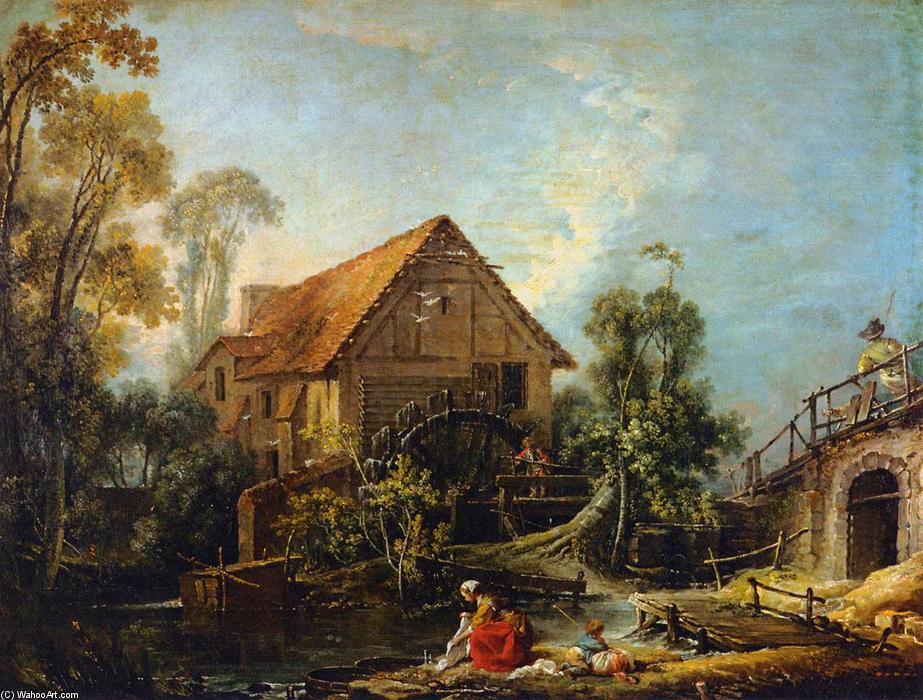
The Mill
 Painting
- Rococo Style
 1751
1751- Early Modern
 66.0 x 84.0 cm
 Louvre
Experience the serene Rococo elegance of Boucher's Mill, a pastoral vision capturing 18th-century grace; discover this masterpiece today.
 Tovább olvasom
Fedezd fel François Boucher (1703-1770) rokokó mestert! Élvezd a szenzualitást, mitológiai képeket, portrékat és idilli tájakat – a 18. századi francia művészetet definiálja!
Vásároljon nagy felbontású, javított digitális képet, amely minőségében messze felülmúlja az online előnézetet.
Minden fájlt szakembereink a legmodernebb eszközök és precíz, kézi retusálás segítségével készítenek el aprólékosan. Gondoskodunk arról, hogy minden kép kivételes tisztasággal, pontos színhelyességgel és részletgazdag finomsággal rendelkezzen.
A végleges fájl 72 órán belül e-mailben megérkezik, professzionális, szerkesztői és nyomtatási környezetbe optimalizálva az azonnali használathoz. Ez ugyanaz a minőség, amelyben a legmeghatározóbb tervezőstúdiók, kiadók és galériák is megbízhatnak.
Digitális kép
Töltsön le nagy felbontású fájlt személyes kiállításokhoz, nyomtatáshoz és kreatív projektekhez. ( Váltás nyomtatványra Kézzel festett másolat vásárlása)
Minden digitális kép rendeléséhez tartozó extrák
Szakértői digitális kézbesítés, garantáltan
Amikor a TopImpressionists.com szolgáltatást választja, nem csupán egy képet kap – professzionálisan felmagasított digitális műalkotást kap, amely precizitással készült, és amelyet megelégsedési gwarancia tesz biztoslássá. Az alábbiakban automatikusan minden benne 】

Gyors e-mail teslimítés
A nagy felbontású digitális képmásolatát a megrendelést követő 72 órán belül e-mailben elküldjük Önnek – azonnal használható formátumban.

MI-alapú digitális képjavítás
Műve professzionális módon kerül optimalizálásra fejlett mesterséges intelligencia eszközök és manuális szerkesztés segítségével, biztosítva a maximális részletességet, tisztaságot és színpontosságot.

Örök életű ingyenes újradatás
Véletlenül törölted vagy elvesztetted a fájlodat? Ne aggódj – bármikor ingyen újra megküldjük neked.

Nincs importköltség – soha
Élvezze műalkotásait azonnal, vám, illeték vagy szállítási költség nélkül – a digitális letöltések mindig adamentesek.

Színpontosság garantálása
Professzionális eszközök és színkezelés segítségével garantáljuk, hogy digitális képe a lehető legpontosabban tükrözze az eredeti színeket.

100 napos elégedettségi garancia
Ha nemມີ elégedett a digitális képével, 100 napon belül felülvizsgáljuk vagy 100% visszatérítjük az amountot – kérdés बिना.

100% Pénzvisszatérítési garancia
Nem tetszett a vásárlás? 100 napon belül teljes visszatérítést garantálunk a digitális fájl megvételétől számítva – kérdés nélkül.

Tömegrendelési kedvezmények
Vásároljon 3 képet, spóroljon 10%-et - Vásároljon 5-öt, spóroljon 15%-et - Vásároljon 10+ képet, spóroljon 20%-at. Kiváló kreatív projektekhez, galériákhoz és ügynökségekhez.
A Tranquil Vision of Rococo Pastoral
François Boucher’s “The Mill,” painted in 1751 during the zenith of Rococo art, offers a glimpse into a refined aesthetic that prioritized elegance and sensual beauty. More than just a depiction of rural life, it embodies the spirit of its time—a reaction against the grandeur of Baroque formalism and a celebration of harmonious natural landscapes infused with aristocratic leisure.
- Subject Matter: The painting portrays a picturesque mill nestled amongst lush greenery and flowing water. This idyllic setting was favored by Rococo artists as it conveyed serenity and idealized notions of pastoral existence, reflecting the tastes of the French court.
- Style & Technique: Boucher’s masterful brushwork exemplifies the hallmark characteristics of Rococo—delicate pastel hues, soft textures, and a meticulous attention to detail. The artist skillfully employs glazing techniques to achieve luminous effects, capturing the diffused light filtering through the trees and illuminating the mill’s façade.
- Historical Context: Created during Louis XV's reign, “The Mill” reflects the prevailing artistic sensibilities of the period. Rococo flourished as a counterpoint to Baroque grandeur, favoring ornamentation and playful asymmetry—elements deliberately absent from earlier styles. Boucher’s work aligns perfectly with this cultural shift towards refined pleasure and aristocratic indulgence.
Symbolism & Artistic Interpretation
Beyond its visual beauty, “The Mill” carries symbolic weight. The mill itself represents industriousness and practicality—a grounding element amidst the ethereal atmosphere of the scene. However, Boucher elevates this commonplace subject through idealized representation, emphasizing harmony between humanity and nature. The figures in the foreground – women observing the mill’s operation – symbolize feminine grace and contemplation, furthering the painting's overarching theme of tranquil beauty.
- Color Palette: Boucher utilizes a restrained yet luminous color palette dominated by muted greens, blues, and creams—colors that evoke feelings of calmness and freshness.
- Composition: The balanced composition guides the viewer’s eye across the canvas, creating a sense of visual equilibrium. The placement of figures and trees contributes to the overall harmony of the scene.
Emotional Impact & Legacy
"The Mill" transcends mere representation; it aspires to evoke emotion—a feeling of peaceful contemplation and appreciation for the beauty of the natural world. Boucher’s ability to capture this intangible quality cemented his reputation as one of the foremost artists of his era, influencing subsequent generations of painters and establishing a lasting legacy within the history of Rococo art.
A high-quality reproduction of “The Mill” allows you to experience the artistry and tranquility of François Boucher’s masterpiece in your own home. Explore our collection at TopImpressionists.com for stunning prints and canvases that bring this iconic artwork to life!
Gyakran Ismételt Kérdések
Megrendelhető-e a "The Mill" olajfestmény másolata?
A "The Mill" kézzel festett olajfesték reprodukció lino vászonon formátumban is elérhető. A rendelés ez az oldal felületen adható le, különböző méretválasztékban.
Milyen formájú és méretű „The Mill”, François Boucher alkotása?
A "The Mill" formátuma Landscape, az eredeti mérete pedig 66 x 84 cm. Mindkettő hasznos információ egy reprodukció tervezésekor.
Szabad-e jogilag másolni a(z) Louvre múzeum collectionsében található „The Mill”, François Boucher alkotása alkotást?
A „The Mill”, François Boucher alkotása szerzői jogi státusza egyértelmű: a mű a joghallgatói schützenesség körébe tartozik – a szerzői jog lejártt. A Louvre gyűjteményében való szereplése nem változtat ezen a státuszon.
Mennyi éves volt François Boucher, amikor megalkotta a "The Mill" alkotást 1751 årban?
François Boucher 48 éves korában festette a „The Mill” című művét. A művész 1703 született, a alkotás dátuma pedig 1751.
Kinek ajánlott ajándékba „The Mill”, François Boucher alkotása?
A "The Mill" kiváló ajándékajánlat Anniversary számára.
Milyen típusú alkotás a "The Mill"?
A katalógusban a „The Mill”, François Boucher alkotása alkotás a wall art kategóriába tartozik. Ez a besorolás segít hasonló művek megtalálásában.
Ismertebb műalkotás a „The Mill”, François Boucher alkotása?
A "The Mill" mű a Iconic kategóriába sorolható.
The Mill színei erőteljesnek vagy lágynak tűnnek?
A "The Mill" színtelítettsége Balanced. Az intenzitás azt mutatja meg, mennyire erőteljesnek tűnnek a színek.
Művész életrajza
François Boucher: A Master of Rococo Grace
François Boucher (1703-1770) stands as a towering figure in the history of French art, indelibly linked to the opulent and sensual world of the Rococo. More than just a painter, he was a designer, decorator, and a key architect of the aesthetic sensibilities that defined 18th-century France – an era synonymous with elegance, pleasure, and refined beauty. His work isn’t merely decorative; it's a carefully constructed exploration of mythology, love, and aristocratic life, imbued with a captivating charm that continues to resonate today.
Early Years and Artistic Foundations
Born on September 29th, 1703, in the heart of Paris, François Boucher’s artistic journey began within a family already steeped in creative pursuits. His father, Nicolas Boucher, was himself a skilled embroiderer and designer – a profession that instilled in young François an appreciation for intricate detail and decorative artistry. Initially, he received his foundational training from his father, learning the fundamentals of design and color. However, at the age of seventeen, a pivotal encounter occurred: he caught the eye of François Lemoyne, the leading painter of the day and a master of the Rococo style. This apprenticeship provided Boucher with invaluable experience in mastering the techniques of composition, brushwork, and the delicate balance between form and color.
Further refining his skills, Boucher briefly studied under Jean-François Cars, a renowned engraver, gaining expertise in printmaking – a skill that would later prove crucial to his artistic development. But it was his victory at the Grand Prix de Rome in 1720 that truly launched him onto the path to greatness. This prestigious competition, established by King Louis XIV, offered a royal scholarship and residency in Rome—a golden opportunity for young artists to study the masterpieces of the Renaissance and Baroque periods.
Rome and the Influence of Masters
Boucher’s time in Italy was transformative. He immersed himself in the works of titans like Tiziano, Veronese, and Tintoretto – absorbing their dramatic compositions, vibrant colors, and masterful use of light and shadow. Crucially, he also studied the work of Giovanni Domenico Tiepolo, Luca Giordano, and Sebastiano Ricci—artists known for their dynamic movement and theatrical flair. These encounters profoundly shaped Boucher’s artistic vision, influencing his approach to color, composition, and the portrayal of emotion.
Upon returning to France in 1724, Boucher embarked on a remarkable project: he meticulously copied over 120 paintings by Watteau, the master of the *rocaille* style. This painstaking effort allowed him to deeply understand Watteau’s techniques and his innovative approach to depicting intimate scenes and fleeting moments of beauty. It was a deliberate act of homage and a strategic move to establish himself within the established artistic circles.
The Rise to Royal Favor and Artistic Maturity
Boucher's return to France coincided with a period of immense opportunity. He was quickly admitted to the Académie Royale de Peinture et de Sculpture in 1731, marking his official entry into the Parisian art world. His debut work, “Rinaldo and Armida” (1734), immediately captivated audiences and established him as a rising star. The painting showcased his burgeoning talent for creating dynamic compositions filled with mythological drama and exquisite detail.
Boucher’s career truly took off when he was commissioned to paint portraits of Madame de Pompadour, the influential mistress of King Louis XV. These portraits—particularly “Madame Boucher” (1756)—became iconic symbols of aristocratic elegance and sophistication. His ability to capture the sitter's personality and grace while adhering to the conventions of courtly portraiture solidified his position as the most sought-after painter in France.
Themes, Techniques, and Lasting Legacy
Boucher’s oeuvre is remarkably diverse, encompassing a wide range of subjects—from mythological scenes and pastoral landscapes to intimate domestic moments and grand historical narratives. His paintings are characterized by their delicate brushwork, pastel palettes, and an emphasis on creating a sense of idyllic beauty and sensual pleasure. Recurring themes include love, beauty, leisure, and the idealized world of mythology.
Beyond painting, Boucher made significant contributions to the decorative arts. He designed costumes and sets for the theater, created tapestries for the Beauvais workshops, and collaborated with the Gobelins Manufactory—a testament to his versatility and influence as a designer. His appointment as *Premier Peintre du Roi* (First Painter of the King) in 1765 cemented his status as the leading artist of the French Rococo.
Despite facing criticism later in his career for perceived superficiality, François Boucher’s impact on subsequent generations of artists is undeniable. He influenced figures like Jean-Honoré Fragonard and contributed significantly to the development of Neoclassicism through his students. His work continues to be celebrated for its technical skill, artistic innovation, and enduring contribution to the Rococo style—a testament to a life dedicated to capturing the beauty and grace of 18th-century France.

François Boucher
1703 - 1770 , Francia
Rövid tények
- Artistic Movement Or Style: Rokokó
- Artists Or Movements Influenced By This Artist:
- Fragonard
- Neoklasszicizmus
- Artists Who Influenced This Artist:
- François Lemoyne
- Jean-François Cars
- Date Of Birth: 1703. szeptember 29.
- Date Of Death: 1770. május 30.
- Full Name: François Boucher
- Nationality: Francia
- Notable Artworks:
- Rinaldo és Armida
- Főszezon
- Vénusz trionfa
- Naplemente táj
- Place Of Birth: Párizs, Franciaország