

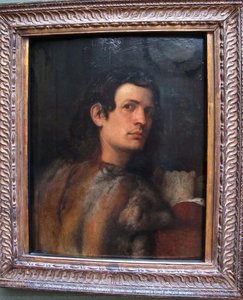
Shown: · With its frame:
 Megtekintés
 Küldés
 Megosztás
 Részletek
 Útmutató

 Letöltés
 Hasonló darabok
 X-ray felvétel
 Diavetítés
 Q&A
Q&A Statisztika
 Acrylic On Canvas
- WallArt
- Early Venetian Renaissance
 1510
1510 745.0 x 545.0 cm
Ft 87954
Kézzel készített olajfestmény reprodukció
Kézzel festett olajvastú vászon, az Ön által választott méretben és keretben, művészeink készítik meglévőre. ( Váltás nyomtatványra Áttérés digitális képre)
Size
·Standard méret
egyedi méretű
CM
INCH
Válasszon előre meghatározott méreteink közül, amelyek megfelelnek a műalkotás eredeti arányainak.
Loading sizes...

szélesség
magasság
Írja be a kívánt szélességet és magasságot, hogy illeszkedjen a keretéhez vagy a falához. Mivel ez kézzel festett alkotás, egy eltérő formájú méret esetén a művész akár festhet is valamivel többet a kép körül, vagy korolathat is belőle — az Ön döntésének megfelelően. A festés megkezdése előtt küldünk egy digitális tervezetet jóváhagyásra. Az oldalon látható kép nem tartalmazza a végeredményt — csak a tervezet mutatja meg a valódi eredményt.
 További információk
Finish
·
White Ft1

Blurside Ft1

Extended Ft1

P118B Ft10

P118H Ft10

P118W Ft10

P438Z Ft10

P508JH Ft12

P508YH Ft12

P805H Ft10

P805Z Ft10

P919BZ Ft10

P919G Ft10

P919XJ Ft10

P959ZH Ft10

P968JZ Ft12

W106C Ft8

W218G Ft10

W218JH Ft8

W218Y Ft10

W307PJ Ft10

W316G Ft10

W316PJ Ft8

W316Y Ft10

W398PJ Ft8

W4111J Ft10

W500HY Ft15

W500JH Ft15

W692G Ft12

W849H Ft8

W940BG Ft15

W953PJ Ft8

H24-GOLD Ft30

H24-SILVER Ft30

H36-GOLD Ft45

H36-SILVER Ft45
Shipped in a protective tube, ready for your own framer.
Above 105 cm the frame is shipped as a kit for a professional framer — read the details.
Extras
optionalWhat do the extras include?
Examples of what can be changed: Replace face with customer photo; Add pet (e.g., replace cat with dog); Include hidden message in background; Change background landscape or elements.
After order, TopImpressionists.com team will email client for instructions and provide a mockup preview
After order, TopImpressionists.com team will email client for instructions and provide a mockup preview
Világszerte elérhető szállítás () 3-4 hét alatt a szokásos 5 hét helyett. (31 október). A minőség nem kérdőjelezhető.
Védőréteg (Lakk)
Névtábla
A gravírozott bronztábla részletei
This elegant plaque features the artist's name and the title of the artwork, finely engraved for a timeless presentation.
It is made from bronze with a refined, elegant finish. The text is precisely laser-engraved for a sharp and permanent result. Measuring 9x2 cm, the plaque is compact yet easy to read. It's built to be durable and scratch-resistant, offering a professional, museum-quality look. Mounting is simple thanks to the included adhesive backing.
Átlátszó akril tábla részletei
The plaque includes essential engraved details such as the artist's name, the title of the artwork, the date it was created, the type of media used-like oil on canvas or watercolor-a brief description of the piece, and a QR code that links to the complete artwork information.
It is crafted from clear acrylic, offering a sleek, modern appearance. The text is UV-engraved in black to ensure strong visual contrast. With a size of 10x15 cm, it ensures optimal readability. It comes equipped with two metal hooks for secure wall mounting. The plaque is designed to be weather-resistant, making it suitable for various environments, and it includes interactive features that work seamlessly with smartphone scanning.
Fekete akril tábla részletei
This elegant plaque includes engraved information such as the artist's name, the title of the artwork, the date it was created, the type of media used (like oil on canvas or watercolor), a short description of the artwork, and a QR code for quick access to more information.
The plaque itself is made from refined black acrylic with a premium finish. The text is laser-engraved in white for high contrast and readability. Its size is 10x15 cm, designed to be easy to read. It comes with two metal hooks for professional mounting. The design is sleek and fits any interior style. It is also weather-resistant and durable, with built-in digital integration for mobile compatibility.
Az üvegkeretes opció csak 110 cm alatti méretben érhető el
 Az üvegkeretes opció csak 110 cm alatti méretben érhető el
- Ingyenes globális expressz szállítás
- Prémium minőségű len vászon
- Teljes körű szállítási biztosítás
- Vámvisszatérítési Garancia
- Hiteles színarányosság garancia
- 100 napos visszaküldési lehetőség (csak hibás termékek esetén)
- 100% pénzvisszatérítési garancia
- Több darab vásárlásakor kedvezmény


A gyűjtemény leírása
Giorgione's 'Ceres' captures a moment of serene contemplation amidst Venetian life. This portrait depicts a woman gazing into the distance, accompanied by figures engaged in various activities and a bird perched on a branch – a testament to Giorgione’s masterful blend of observation and artistic expression.
A művész életrajza
A Tempest (Giorgione): Egy őrületes reneszánszi festmény Venezia szívében, mely titok és szimbólumokkal tarkítva káprázik el az emlékezetben. Érdemes megfigyelni a nő és gyermek ábrázatát valamint a táj szépségét!
About the painting
Giorgione’s ‘The Tempest’: A Venetian Masterpiece of Atmosphere and Mystery
Giorgio Barbarelli da Castelfranco, known universally as Giorgione (1477 – 1510), remains one of the most perplexing enigmas within the canon of Early Venetian Renaissance painting. Unlike many artists of his era whose biographies offer detailed accounts of their lives and careers, Giorgione’s story is fragmented—a tapestry woven from sparse historical records primarily gleaned from Giorgio Vasari’s biographical sketches. Born in Castelfranco Veneto, a town nestled on the outskirts of Venice, Giorgione’s artistic journey began under the tutelage of Giovanni Bellini, absorbing the established stylistic conventions before embarking upon an independent exploration that would ultimately redefine Venetian art.
‘The Tempest,’ housed in the Gallerie Venezia Palazzo Ducale, exemplifies Giorgione's unparalleled mastery of atmospheric illusionism and psychological subtlety. Painted circa 1506-1508, this monumental canvas depicts a shadowy interior scene—a room dominated by a woman seated on a stone bench beneath a tempestuous sky glimpsed through arched windows. The painting’s brilliance lies not merely in its technical virtuosity but also in its profound emotional resonance.
Technique and Innovation: Giorgione's Pioneering Approach
Giorgione revolutionized Venetian painting with his groundbreaking use of sfumato—a technique perfected by Bellini and subsequently embraced by Leonardo da Vinci—that achieved an unprecedented level of tonal gradation. Layers upon layers of translucent glaze meticulously blended to create soft, hazy contours that dissolved boundaries between light and dark. This masterful manipulation of color and texture wasn’t simply decorative; it served as a conduit for conveying mood and emotion with remarkable precision.
- Color Palette: Giorgione favored muted hues—ochres, siennas, blues—creating an ethereal palette that prioritized tonal harmony over vibrant chromatic contrasts.
- Glazing Technique: The application of thin layers of translucent glaze allowed for gradual color transformations and enhanced the painting’s luminous quality.
- Compositional Ambiguity: Giorgione deliberately avoided conventional perspectival conventions, opting instead for a flattened space that fostered psychological depth and uncertainty.
Historical Context and Venetian Artistic Identity
‘The Tempest’ emerged during a period of artistic ferment in Venice—a city grappling with the legacy of Dante Alighieri's ‘Divine Comedy’ and increasingly attuned to humanist ideals. Giorgione’s painting reflects this intellectual climate, prioritizing contemplation and psychological exploration over literal representation. It stands as a testament to Venetian artists’ commitment to capturing not just what was seen but also what was felt—a pursuit that distinguished Venice from other European capitals.
Symbolism and Emotional Impact: Decoding the Tempest
The tempestuous sky serves as a powerful symbol of inner turmoil—representing both external forces and psychological anxieties. The woman’s enigmatic gaze invites viewers to contemplate her thoughts and emotions, prompting questions about identity, desire, and fate. Giorgione's deliberate ambiguity ensures that ‘The Tempest’ remains perpetually open to interpretation, captivating audiences across centuries with its haunting beauty and enduring mystery.
A Legacy of Atmospheric Illusionism
Giorgione’s influence extends far beyond the confines of Venetian painting. His pioneering sfumato technique profoundly impacted subsequent generations of artists—including Leonardo da Vinci and Raphael—solidifying his place as a cornerstone of Western art history. ‘The Tempest,’ therefore, isn't merely a stunning visual experience; it is an embodiment of Giorgione’s artistic vision—a testament to the transformative power of atmosphere, emotion, and psychological insight.
Kérdések és válaszok
Hol tudom letölteni a(t) „Ceres”, Giorgione alkotása?
A „Ceres”, Giorgione alkotása letölthető a mű Letöltés oldaláról, magas felbontású digitális kép letöltése formátumban.
A Giorgione alkotása, a "Ceres", a jogi szabadhasználatban (public domain) áll-e, és miért?
A "Ceres" szerzői jogi státusza – közösségi tulajdon – a szerzői jog lejártt – a művész 1510 évi halálából adódik.
Melyik évben készült a „Ceres”, Giorgione alkotása?
A "Ceres" 1510-ban készült. Ez az időpont meghatározó jelentőséggel bír Giorgione pályájában és az adott korszak kontextusában is.
Quick facts and art quiz
About Giorgione

Giorgione
1477 - 1510, Olaszország
A művész életrajza
Giorgione (1477/8-1510), a key High Renaissance Venetian painter
Giorgio Barbarelli da Castelfranco, known to the world as Giorgione, remains one of the most elusive and captivating figures in Renaissance art. Born in the small town of Castelfranco Veneto near Venice around 1477 or 1478 – the exact year is debated – his tragically short life, ending around 1510 at the age of thirty-two or thirty-three, belies an artistic impact that continues to resonate centuries later. Unlike many of his contemporaries whose lives are well documented, Giorgione’s story is shrouded in mystery, pieced together from scant historical records and the often romanticized accounts of Giorgio Vasari. What we do know suggests a man deeply immersed in the vibrant culture of Venice, a city that fostered both artistic innovation and a sensual appreciation for beauty. He likely apprenticed under Giovanni Bellini, a leading Venetian painter, absorbing the established traditions before forging his own unique path. Early commissions included portraits of prominent figures like Doge Agostino Barbarigo, demonstrating an immediate talent for capturing likeness and status. However, it was in his departure from conventional subject matter and his revolutionary approach to painting that Giorgione truly distinguished himself. Giorgio Vasari’s biographical sketches offer tantalizing glimpses into Giorgione's life – he describes him as a man who delighted in all the beauty the world could offer, singing and playing the lute, and “putting into his pictures, the greatest beauty and the greatest variety that he could find.” His gentle obsession with the soft tones of flesh and the shade of quiet trees distinguish his paintings, and profoundly influenced his student Titian. Despite Vasari’s romanticized portrayal, verifiable information about Giorgione is scarce. He was married to Lucrezia Querinelli, and they had several children – though none survived infancy. His artistic activity flourished during this period, fueled by patronage from wealthy Venetian families and a fervent desire to explore new creative horizons.A Style Unlike Any Other: The Venetian Breakthrough
Giorgione’s artistic style marked a significant break from the prevailing Florentine emphasis on linear perspective and precise draftsmanship. He championed color, atmosphere, and an evocative moodiness that became hallmarks of the Venetian school. His technique involved softening outlines, employing subtle gradations of tone – *sfumato* – to create atmospheric effects, and prioritizing overall harmony over meticulous detail. This approach wasn’t merely a technical choice; it reflected a fundamentally different artistic sensibility. Giorgione sought not to replicate reality but to capture its essence, its fleeting emotions, and its poetic resonance. He famously stated that he wished to “paint as poets write,” aiming for an emotional impact rather than a literal representation of the scene before him. This ambition is vividly realized in masterpieces like *The Tempest* (c. 1506-1508) and *Pastoral Concert*, where hazy landscapes dominate, bathed in diffused light—a technique that would become synonymous with Venetian painting. The absence of sharp lines and pronounced shadows contributes to the paintings’ ethereal quality, inviting viewers into a realm of contemplation and emotion.Notable Works: Visions of Beauty and Mystery
Giorgione's oeuvre is remarkably small compared to his contemporaries, consisting of approximately six surviving artworks—a fact that has fueled speculation about his artistic output and contributed to his enduring mystique. Yet, these paintings are undeniably powerful, demonstrating Giorgione’s mastery of color and form. *The Tempest*, depicting a soldier and a nursing mother amidst a stormy landscape, remains one of the most debated compositions in Renaissance art. Scholars continue to wrestle with its symbolism—the enigmatic gaze of the soldier, the serene expression of the woman, and the evocative depiction of the turbulent sky—seeking to unlock its hidden meanings. Similarly, *Pastoral Concert*, celebrating musicians in a tranquil meadow, exemplifies Giorgione’s commitment to capturing mood and atmosphere above all else. The painting's harmonious colors and subtle gradations of tone create an immersive experience for the viewer, transporting them to a realm of idealized beauty. Other significant works include *Sleeping Venus*, which showcases Giorgione’s exquisite handling of color and drapery—a testament to his skill as a painter—and *Judith*, demonstrating his early exploration of dramatic narrative alongside atmospheric effects.Influence and Legacy: Shaping Venetian Art
Giorgione's influence extended far beyond his own paintings, establishing him as a pivotal figure in the development of Venetian art. He served as a mentor to Titian, who would become one of the most celebrated artists of the High Renaissance—carrying forward Giorgione’s innovations in color and atmospheric painting. The Venetian school embraced Giorgione's stylistic principles, rejecting the rigid conventions of Florentine art and prioritizing expressive emotion alongside visual beauty. This shift toward a more sensual and poetic aesthetic profoundly impacted the artistic landscape of Italy, shaping the tastes and sensibilities of subsequent generations. Giorgione’s legacy continues to inspire artists today—a reminder that true artistry lies not in slavishly imitating reality but in capturing its essence—its fleeting emotions, and its profound beauty. He remains a symbol of artistic freedom, innovation, and the power of suggestion – a painter who dared to prioritize feeling over form, atmosphere over accuracy, and poetry over narrative.Quick facts about Giorgione
- Artistic Movement Or Style: Magyar reneszánsz, Velencei iskola
- Artists Or Movements Influenced By This Artist: ['Titian']
- Artists Who Influenced This Artist:
- Giovanni Bellini
- Mantegna
- Date Of Birth: 1477/78 vagy 1473/74
- Date Of Death: 1510 októbere
- Full Name: Giorgio Barbarelli da Castelfranco
- Nationality: Olasz
- Notable Artworks:
- A Tempest
- Pastoral Concert
- Alvó Vénusz
- Judit
- Place Of Birth: Castelfranco Veneto, Itália
Fedezze fel a műalkotásokat témák, stílusok és jellemzők szerint csoportosítva.




Giorgione
Ceres
() ·
With its frame: · Hand-painted in oil on linen
Total