


 Előnézet
 Megosztás
 Megosztás
 Részletek
 Útmutató

 Letöltés
 Hasonló darabok
 X-ray felvétel
 Diavetítés
 Statisztika
Sadko
 Oil On Canvas
- WallArt
- Romanticism
 1876
1876- 19th Century
 323.0 x 230.0 cm
Explore Repin’s ‘Sadko,’ a mesmerizing Romantic masterpiece! Dive into an underwater world of mermaids & mythic beauty. A luminous, symbolic painting by a Russian icon.
 Tovább olvasom
Repin, a nagyszerű orosz realista festő, a 'Volgai targoncárosok' és más ikonikus műveivel ábrázolta Oroszország társadalmát és történelmét. Érdekes életrajza, alkotásai.
Giclée / Műnyomat
Múzeumi minőségű giclée vagy vászonnyomat, gyors gyártással és rugalmas finomítási lehetőségekkel. ( Kézzel festett másolat vásárlása Áttérés digitális képre)




P118B Ft10

P118H Ft10

P118W Ft10

P438Z Ft10

P508JH Ft12

P508YH Ft12

P805H Ft10

P805Z Ft10

P919BZ Ft10

P919G Ft10

P919XJ Ft10

P959ZH Ft10

P968JZ Ft12

W106C Ft8

W218G Ft10

W218JH Ft8

W218Y Ft10

W307PJ Ft10

W316G Ft10

W316PJ Ft8

W316Y Ft10

W398PJ Ft8

W4111J Ft10

W500HY Ft15

W500JH Ft15

W692G Ft12

W849H Ft8

W940BG Ft15

W953PJ Ft8




Standard méret
egyedi
CM
INCH
Válasszon előre meghatározott méreteink közül, amelyek megfelelnek a műalkotás eredeti arányainak.
Loading sizes...

szélesség
magasság
Megadhat saját méreteket is egy konkrét kerethez vagy helyszínhez igazítva. Amennyiben a kiválasztott méret nem egyezik az eredeti kép arányokkal, a műalkotást le fogjuk vágni, vagy kiegészítjük a képet tükrözött vagy egyszínű szélekkel. A gyártás megkezdése előtt egy digitális tervezetet küldünk jóváhagyásra.
Kérjük, vegye figyelembe, hogy a képernyőn látható előnézet nem tükrözi a tényleges levágást vagy kiegészítést. Csak a tervezet mutatja pontosan a végső kompozíciót.
Bár az egyedi méretek is elérhetőek, az eredeti arányok megőrzése érdekében azt javasoljuk, hogy válasszon a előre meghatározott listából származó méretet.
Világszerte történő kiszállítás területére mindössze 2 hét alatt, a szokásos 4-5 hét helyett. (5 október)

Ingyenes globális expressz szállítás

Prémium minőségű len vászon

Teljes körű szállítási biztosítás

Vámvisszatérítési Garancia

Tökéletes színarányosság garancia

100 napos visszaküldési garancia (csak gyártási hibás termékek esetén)

100% pénzvisszatérítési garancia

Több darab vásárlásakor kedvezmény
 Az üvegkeretes opció csak 110 cm alatti méretben érhető el

Sadko
Giclée / Műnyomat
Reprodukció méretei
-


Összesített ár
Ft 21530
A Dream Beneath the Waves: Repin's "Sadko"
Ilya Repin’s “Sadko,” completed in 1876, is not merely a depiction of a fantastical tale; it’s an immersion into a world where myth and reality intertwine. This monumental canvas, measuring 323 x 230 cm, captures the essence of Russian folklore – the legend of the Volga boatman Sadko, who traded his riches for three beautiful daughters with the Sea King. The scene unfolds as a vibrant, almost overwhelming, tableau of mermaids, a central male figure adorned in opulent attire, and an atmosphere thick with enchantment and a subtle melancholy.
- Romanticism’s Embrace: “Sadko” firmly establishes Repin within the Romantic movement. The emphasis isn't on precise realism but rather on evoking powerful emotions – wonder, longing, and a profound connection to nature’s beauty. This is evident in the swirling waters, the luminous figures, and the overall sense of dreamlike unreality.
- A Crowded Narrative: Repin masterfully employs a dense composition, layering figures and details to create a feeling of mystery and abundance. The sheer number of mermaids contributes to the artwork’s captivating energy, drawing the viewer into this submerged world.
Technique and Artistic Vision
Repin's technical prowess is immediately apparent in the meticulous brushwork and the masterful layering of colors. He utilizes a technique that builds up luminosity through multiple applications of paint, creating shimmering effects on the water’s surface and illuminating the figures with an ethereal glow. The fluid lines mimic the movement of water, while the rougher textures applied to the garments and scales add depth and tactile quality. The color palette – dominated by deep blues and greens punctuated by gold and pink – isn't simply decorative; it reinforces the otherworldly atmosphere and evokes a sense of magic.
- Flattened Perspective: The slightly flattened perspective contributes to the dreamlike quality, further distancing the viewer from a strictly realistic representation.
- Detailed Brushwork: Repin’s attention to detail is remarkable, particularly in rendering the intricate scales of the mermaids and the folds of the central figure's clothing.
Symbolism and Narrative Depth
Beyond its surface beauty, “Sadko” is rich with symbolic meaning. The mermaids, archetypal figures of feminine allure and mystery, represent a potent force – perhaps a temptation or a reflection of human longing. The central male figure, often interpreted as Sadko himself, embodies the themes of sacrifice, desire, and the pursuit of unattainable beauty. The entire scene speaks to the timeless struggle between humanity and the untamed forces of nature, a core concern within Russian art and literature.
- Mythic Resonance: The artwork draws directly from Russian folklore, offering a visual interpretation of a beloved legend.
- Emotional Undertones: Despite its fantastical elements, “Sadko” carries a subtle melancholic tone, hinting at the fleeting nature of beauty and happiness.
Historical Context and Legacy
Completed in 1876, "Sadko" reflects a pivotal moment in Russian art history – the rise of Realism alongside Romantic tendencies. Repin’s work bridges these movements, offering a visually stunning and emotionally resonant interpretation of a traditional tale. This painting solidified Repin's reputation as one of Russia’s most important artists, influencing generations of painters to come. A hand-painted reproduction offers an unparalleled opportunity to experience the full power and beauty of this iconic masterpiece in your own space.
Gyakran Ismételt Kérdések
Ki készítette a(t): "Sadko"?
A "Sadko" alkotását Repin Ilyás készítette. Az ezen az oldalon található információk Repin Ilyás eredeti művészetét mutatják be.
Mennyire tel愈t a "Sadko" színpalettája?
A „Sadko”, Repin Ilyás alkotása alkotás Subtle Color telítettségű színekkel készült.
Milyen arányú „Sadko”, Repin Ilyás alkotása, és milyen méretű?
A „Sadko”, Repin Ilyás alkotása egy 323 x 230 cm méretű, Portrait formátumú alkotás.
Mennyi volt Repin Ilyás életkora, amikor a "Sadko" készült?
Amikor a "Sadko" alkotása 1876-ben készült, Repin Ilyás – aki 1844-ben született – 32 éves volt.
Melyik évben készült a „Sadko”, Repin Ilyás alkotása?
A "Sadko" művészeti alkotás 1876-ból származik. A dátum Repin Ilyás pályájának és az adott korszaknak is meghatározó pontjaként szolgál.
Milyen felhasználásra javasolt a „Sadko”, Repin Ilyás alkotása?
A „Sadko”, Repin Ilyás alkotása javasolt felhasználása Statement. Emellett más célokra is alkalmas lehet.
Megtekinthetném a(z) „Sadko”, Repin Ilyás alkotása röntgensugárzásos felvételét?
A „Sadko” rétegről rétegre vizsgálható a mű alkotásának X-Ray felvétel oldalán, amely egy restaurátori fényasztal alapján készült interaktív néző, és tizenegyi optikai rétegben mutatja be a képet.
A művész életrajza
Early Life and the Seeds of Realism
Ilya Yefimovich Repin, a name that echoes through the very heart of Russian art, was born in 1844 in the unassuming Ukrainian town of Chuguev. His origins were far removed from the opulent circles often associated with artistic patronage; his father, a former soldier who traded horses, and his mother, deeply rooted in the traditions of their rural community, instilled within young Ilya a profound connection to the land and its people – an understanding forged in the hardships, vibrant spirit, and unwavering resilience of peasant life. This early immersion into the realities of rural existence would become the bedrock upon which his artistic vision was built. Formal education began at a local school overseen by his mother, but a brief period followed at a military cantonist school, an experience he later recalled with a touch of melancholy. Yet, even within the rigid structure of military discipline, his innate talent for drawing blossomed, revealing a nascent gift that would soon demand expression. At sixteen, he embarked on an apprenticeship with Ivan Bunakov, an icon painter, plunging into the rigorous world of religious art – a training that honed his skills in meticulous detail and instilled a deep appreciation for compositional precision. These formative years were not merely technical exercises; they represented a crucial immersion into the visual language of Russian culture, laying the groundwork for his later explorations of national identity and social commentary. Through restoring ancient icons and fulfilling portrait commissions, Repin began to observe and capture the essence of human character – a skill he would master with remarkable insight throughout his illustrious career.St. Petersburg and the Embrace of Social Consciousness
Driven by an unyielding ambition, Repin journeyed to St. Petersburg in 1863, seeking admission to the prestigious Imperial Academy of Fine Arts. Initial rejection did not deter him; instead, he diligently audited classes, immersing himself completely within the city’s vibrant artistic milieu. It was here that he encountered Ivan Kramskoi, a towering figure in the Peredvizhniki movement – a collective of realist artists who boldly rejected the conventions of academic art and sought to depict Russian life with unflinching honesty and social awareness. Kramskoi became Repin's mentor, guiding him towards a more politically engaged and socially conscious approach to his work. The influence of critic Vladimir Stasov was also pivotal, encouraging Repin to focus on contemporary themes, the lives of ordinary people, and the injustices prevalent within Russian society. Repin’s talent quickly blossomed, earning recognition and awards – notably gold medals for “Job and His Friends” in 1869 and "The Raising of Jairus' Daughter" in 1871. These early successes signaled the arrival of a powerful new voice in Russian art – one that would challenge established norms and capture the spirit of a rapidly changing nation. A particularly formative experience was his journey along the Volga River in 1870, sketching the arduous lives of barge haulers; this provided the inspiration for what would become his most celebrated masterpiece, “Barge Haulers on the Volga,” a work that cemented his reputation as a champion of the marginalized and a keen observer of human suffering.Masterpieces of Realism and Historical Drama
Repin’s name became inextricably linked with realism through works that unflinchingly portrayed the realities of Russian society. “Barge Haulers on the Volga” (1873), a monumental canvas depicting eleven exhausted laborers dragging boats along the river, shocked and captivated audiences. It was not merely a depiction of physical hardship; it was a powerful indictment of social injustice, exploitation, and the brutal conditions endured by the working class. This painting launched Repin into national prominence and established him as a leading voice for those often overlooked and forgotten by society. He continued to explore themes of Russian life in works such as “Religious Procession in Kursk Province” (1883), which offered a nuanced portrayal of faith, superstition, and the complex social hierarchy within rural Russia. However, Repin’s artistic vision extended far beyond contemporary issues; he also tackled historical subjects with dramatic flair and psychological depth. “Ivan the Terrible and His Son Ivan” (1885), depicting the horrifying moment when Tsar Ivan IV brutally murdered his own son in a fit of rage, caused a scandal upon its unveiling but remains one of his most iconic works – a chilling exploration of power, guilt, and the devastating consequences of unchecked authority. Perhaps his most celebrated painting is “Reply of the Zaporozhian Cossacks” (1880-91), a vibrant and dynamic scene capturing the defiant spirit of Ukrainian Cossacks composing a satirical letter to the Ottoman Sultan – a symbol of resistance, national pride, and the enduring strength of the Ukrainian people. These paintings were not simply historical recreations; they were imbued with psychological insight, emotional intensity, and a profound understanding of human nature, bringing the past vividly to life for viewers.Legacy and Enduring Influence
Throughout his long and prolific career, Repin continued to paint portraits of prominent figures – Leo Tolstoy, Modest Mussorgsky, Pavel Tretyakov – capturing their personalities with remarkable insight and empathy. He also served as a teacher at the Academy of Fine Arts in St. Petersburg, shaping the artistic sensibilities of generations of young artists. His commitment to realism and social commentary resonated deeply within Russia and beyond, establishing him as a major figure in European art. While he initially embraced the February Revolution of 1917, Repin was profoundly disillusioned by the subsequent violence and terror unleashed by the Bolsheviks following the October Revolution. He retreated to his estate, Penates, in Kuokkala (now Repino), Finland, where he continued to paint until his death in 1930. Repin’s legacy extends far beyond his individual paintings. He helped define Russian realism, paving the way for Socialist Realism and inspiring countless artists to use their work as a means of social critique. His ability to capture the human condition with both empathy and unflinching honesty continues to resonate with audiences today, ensuring his place among the most significant figures in 19th-century art. Penates, his beloved country estate, is now a museum, preserving not only his artistic legacy but also offering a glimpse into the life of one of Russia’s most important cultural figures.
Repin Ilyás
1844 - 1930 , Oroszország
Gyors információk
- Artistic Movement Or Style: Realizmus
- Artists Or Movements Influenced By This Artist: ['Peredvizhniki']
- Artists Who Influenced This Artist:
- Kramskoi
- Stasov
- Date Of Birth: 1844
- Date Of Death: 1930
- Full Name: Ilya Yefimovich Repin
- Nationality: Orosz
- Notable Artworks:
- Volga Szállói
- Zaporozhiai lovasok
- Ivan a gonosz
- Place Of Birth (City And Country): Chuguev, Oroszország
Kapcsolódó cikkek

Ilya Repin: Realism, Revolution & the Russian Soul – A Comprehensive Exploration of Life and Legacy
Explore the life & legacy of Ilya Repin, Russia's leading realist painter. Discover his iconic works like 'Barge Haulers on the Volga,' social commentary, and profound portraits. A comprehensive guide for art enthusiasts.
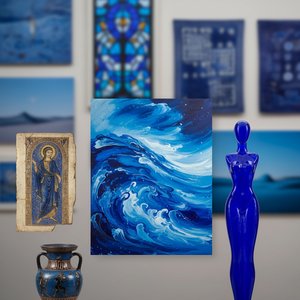
The Allure of Azure: Exploring the Symbolic & Aesthetic Depths of Blue in Art History
Explore the rich history of blue in art! Discover its symbolism, from ancient pigments to modern masterpieces by Kandinsky & Seurat. Uncover the psychological impact and cultural meanings behind this captivating hue.

A kék árnyalatai: 10 ikonikus festmény a Slate Blue szín jegyében | TopImpressionists.com
Fedezze fel a 10 legikonikusabb festményt, melyeket a Slate Blue szín ural! Monet, Renoir és más mesterek művei inspirálnak. Vászonképek eladás, otthon dekoráció tippek a TopImpressionists.com-on. Explore the full collection online!

Victor Vasnetsov: Myth, Nationalism & the Revival of Russian Fairy Tale Painting
Explore the captivating world of Victor Vasnetsov, a co-founder of Russian folklorist painting. Discover his iconic works, influence on national identity, and lasting legacy in this expert guide.

Ivan Bilibin: A Synthesis of Folklore, Modernism & National Identity in Russian Illustration
Explore the enchanting world of Ivan Bilibin, a master Russian illustrator who synthesized folklore, Art Nouveau & national identity. Discover his iconic fairy tale illustrations and legacy with TopImpressionists.
Fedezze fel a műalkotásokat témák, stílusok és jellemzők szerint csoportosítva.


