
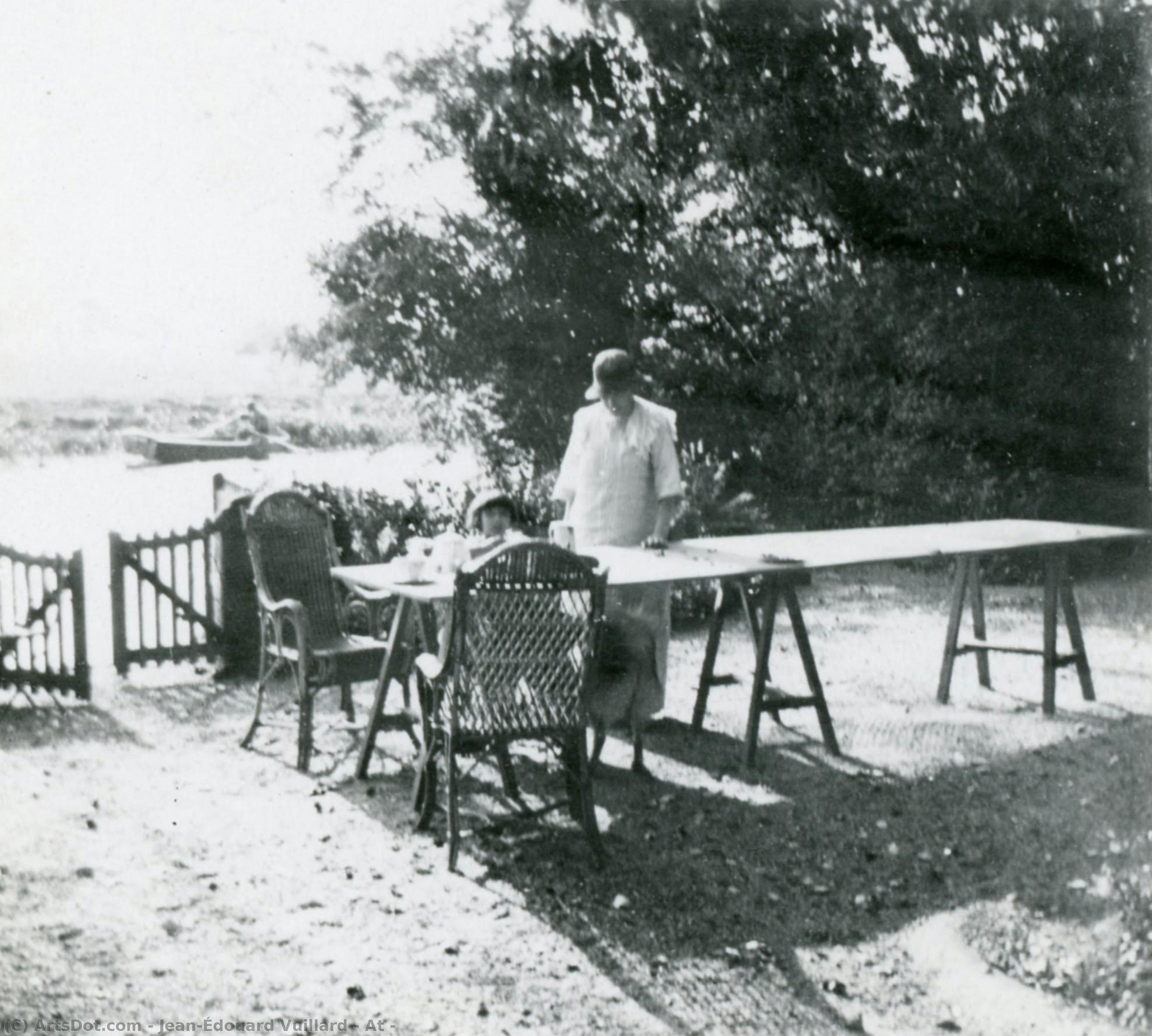
Shown: · With its frame:
 Küldés
 Megosztás
 Részletek
 Útmutató

 Letöltés
 Hasonló darabok
 Diavetítés
 Q&A
Q&A Statisztika
 Black and White Photography
- Photo
- Post-Impressionism
 1913
1913- Modern
 8.0 x 8.0 cm
 Musée des impressionnismes Giverny
Ft 103066
Kézzel készített olajfestmény reprodukció
Kézzel festett olajvastú vászon, az Ön által választott méretben és keretben, művészeink készítik meglévőre. ( Váltás nyomtatványra Áttérés digitális képre)
Size
·Standard méret
egyedi méretű
CM
INCH
Válasszon előre meghatározott méreteink közül, amelyek megfelelnek a műalkotás eredeti arányainak.
Loading sizes...

szélesség
magasság
Írja be a kívánt szélességet és magasságot, hogy illeszkedjen a keretéhez vagy a falához. Mivel ez kézzel festett alkotás, egy eltérő formájú méret esetén a művész akár festhet is valamivel többet a kép körül, vagy korolathat is belőle — az Ön döntésének megfelelően. A festés megkezdése előtt küldünk egy digitális tervezetet jóváhagyásra. Az oldalon látható kép nem tartalmazza a végeredményt — csak a tervezet mutatja meg a valódi eredményt.
 További információk
Finish
·
White Ft1

Blurside Ft1

Extended Ft1

P118B Ft10

P118H Ft10

P118W Ft10

P438Z Ft10

P508JH Ft12

P508YH Ft12

P805H Ft10

P805Z Ft10

P919BZ Ft10

P919G Ft10

P919XJ Ft10

P959ZH Ft10

P968JZ Ft12

W106C Ft8

W218G Ft10

W218JH Ft8

W218Y Ft10

W307PJ Ft10

W316G Ft10

W316PJ Ft8

W316Y Ft10

W398PJ Ft8

W4111J Ft10

W500HY Ft15

W500JH Ft15

W692G Ft12

W849H Ft8

W940BG Ft15

W953PJ Ft8

H24-GOLD Ft30

H24-SILVER Ft30

H36-GOLD Ft45

H36-SILVER Ft45
Shipped in a protective tube, ready for your own framer.
Above 105 cm the frame is shipped as a kit for a professional framer — read the details.
Extras
optionalWhat do the extras include?
Examples of what can be changed: Replace face with customer photo; Add pet (e.g., replace cat with dog); Include hidden message in background; Change background landscape or elements.
After order, TopImpressionists.com team will email client for instructions and provide a mockup preview
After order, TopImpressionists.com team will email client for instructions and provide a mockup preview
Világszerte elérhető szállítás () 3-4 hét alatt a szokásos 5 hét helyett. (29 október). A minőség nem kérdőjelezhető.
Védőréteg (Lakk)
Névtábla
A gravírozott bronztábla részletei
This elegant plaque features the artist's name and the title of the artwork, finely engraved for a timeless presentation.
It is made from bronze with a refined, elegant finish. The text is precisely laser-engraved for a sharp and permanent result. Measuring 9x2 cm, the plaque is compact yet easy to read. It's built to be durable and scratch-resistant, offering a professional, museum-quality look. Mounting is simple thanks to the included adhesive backing.
Átlátszó akril tábla részletei
The plaque includes essential engraved details such as the artist's name, the title of the artwork, the date it was created, the type of media used-like oil on canvas or watercolor-a brief description of the piece, and a QR code that links to the complete artwork information.
It is crafted from clear acrylic, offering a sleek, modern appearance. The text is UV-engraved in black to ensure strong visual contrast. With a size of 10x15 cm, it ensures optimal readability. It comes equipped with two metal hooks for secure wall mounting. The plaque is designed to be weather-resistant, making it suitable for various environments, and it includes interactive features that work seamlessly with smartphone scanning.
Fekete akril tábla részletei
This elegant plaque includes engraved information such as the artist's name, the title of the artwork, the date it was created, the type of media used (like oil on canvas or watercolor), a short description of the artwork, and a QR code for quick access to more information.
The plaque itself is made from refined black acrylic with a premium finish. The text is laser-engraved in white for high contrast and readability. Its size is 10x15 cm, designed to be easy to read. It comes with two metal hooks for professional mounting. The design is sleek and fits any interior style. It is also weather-resistant and durable, with built-in digital integration for mobile compatibility.
Az üvegkeretes opció csak 110 cm alatti méretben érhető el
 Az üvegkeretes opció csak 110 cm alatti méretben érhető el
- Ingyenes globális expressz szállítás
- Prémium minőségű len vászon
- Teljes körű szállítási biztosítás
- Vámvisszatérítési Garancia
- Hiteles színarányosság garancia
- 100 napos visszaküldési lehetőség (csak hibás termékek esetén)
- 100% pénzvisszatérítési garancia
- Több darab vásárlásakor kedvezmény


A gyűjtemény leírása
This photograph depicts Jean Vuillard's 1898 painting, 'At the Café-Concert,' showcasing an intimate interior scene characteristic of Impressionism and the Nabis movement. The artwork features loose brushwork, warm tones, and focuses on a contemplative woman amidst a café setting. It exemplifies Vuillard’s stylistic innovation and contribution to early modern art.
A művész életrajza
Vuillard, a Nabis festő, a francia modern művészet egyik legjelentősebb alakja. Intimista belsőépítészeti képeivel, innovatív színekkel és hatása a korai modernizmusra (pl. kubizmus) ismert.
About the painting
A Moment Frozen in Time: The Quiet Allure of Vuillard’s “At”
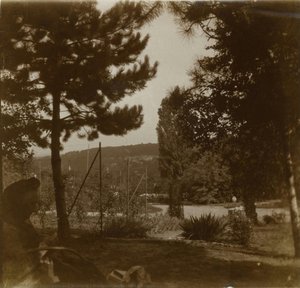
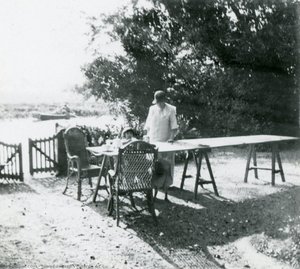
In the delicate tapestry of early 20th-century art, few works capture the ephemeral essence of a passing second as poignantly as Jean Vuillard’s 1913 masterpiece, “At.” This evocative scene serves as much more than a mere depiction of an outdoor gathering; it is a profound distillation of Impressionistic ideals filtered through the intimate, decorative lens of the Nabis movement. To gaze upon this work is to step into a world where time slows down, inviting the viewer to inhabit a space of quiet contemplation and subtle emotional resonance. The composition centers around a solitary figure seated at a table beneath an overcast sky, surrounded by the silent presence of empty chairs that suggest both companionship and the lingering traces of a shared moment.
The atmosphere is one of profound serenity, established through a masterful use of landscape and setting. Lush foliage frames the scene, hinting at a lakeside or coastal retreat where the air is still and the world feels momentarily paused. This deliberate choice of environment echoes the tranquil, pastoral landscapes favored by Vuillard’s contemporaries, yet he imbues it with a unique, psychological depth. There is a sense of domesticity brought into the wild, an intimate pocket of human existence carved out from the vastness of nature, making the piece particularly captivating for those who seek art that offers a sanctuary of peace within the home.
Technique and the Language of Color
Vuillard’s technical prowess is on full display through his signature approach to form and surface. Influenced heavily by the flattened perspectives of Japanese woodblock prints, the artist eschews traditional academic realism in favor of a more modern, sensory experience. He utilizes flattened planes of color and loose, rhythmic brushstrokes to build a sense of texture and movement. While the historical photograph of this work presents a monochrome view, the original artistic vision is rooted in the Nabis' revolutionary use of color to convey feeling rather than mere fact.
The composition is a sophisticated dance of lines and shapes. Strong horizontal planes, established by the table’s surface and the distant horizon, provide a grounding stability to the piece, while vertical elements like the chairs and trees create a rhythmic structure. These geometric foundations are softened by the organic, flowing shapes of the foliage and the human figures, creating a balanced tension between order and nature. For the discerning collector or interior designer, this interplay of structure and softness makes the artwork an incredibly versatile element, capable of anchoring a room with its classical weight while adding a layer of organic grace.
Historical Significance and Emotional Resonance
Created during a period of immense artistic upheaval in Europe, “At” stands as a pivotal contribution to the development of modern art. It reflects the burgeoning interest in abstraction and the rejection of rigid representational styles that defined the early 1900s. As a prominent member of Les Nabis, Vuillard helped bridge the gap between the fleeting light of Impressionism and the structured symbolism of the coming decades. His ability to transform an ordinary, everyday moment into something deeply symbolic—where a seated man might represent focused introspection or the quietude of the soul—is what gives this work its enduring power.
For those looking to bring a piece of art history into their personal spaces, a high-quality reproduction of “At” offers more than just aesthetic beauty; it offers an emotional connection to a bygone era. The painting evokes a sense of nostalgia and a longing for the stillness that is so often lost in our modern, frenetic lives. It is a piece designed for deep looking, rewarding the viewer with new layers of meaning and texture upon every encounter, making it an exquisite choice for any curated collection or thoughtfully designed interior.
Kérdések és válaszok
Mennyire intenzívek a „At”, Jean-Édouard Vuillard alkotása színei?
A „At”, Jean-Édouard Vuillard alkotása színei Monochromatic intenzitásúak.
Szabad-e jogilag másolni a(z) Musée des impressionnismes Giverny gyűjteményében található „At”, Jean-Édouard Vuillard alkotása alkotást?
A Musée des impressionnismes Giverny gyűjteményében található „At”, Jean-Édouard Vuillard alkotása közösségi tulajdon – a szerzői jog lejártt státuszú. Ez a státusz határozza meg, hogy a kép másolható-e.
A „At”, Jean-Édouard Vuillard alkotása a művész honcountryjában található?
Nem – a műtárgy külföldön található. Jean-Édouard Vuillard születési országa Francia, a „At” eredeti művét pedig Franciaország-ban tároló múzeum található.
Quick facts and art quiz
About Jean-Édouard Vuillard
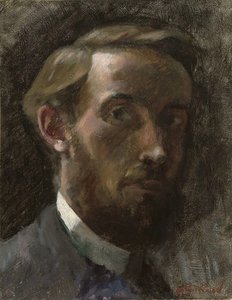
Jean-Édouard Vuillard
1868 - 1940, Francia
A művész életrajza
**early life and artistic beginnings**
Jean-Édouard Vuillard, a luminary of French painting, was born on November 11, 1868, in the quaint village of Cuiseaux, nestled within the Saône-et-Loire region of France. His early years were marked by a quiet domesticity—his father, a retired ship captain, and his mother, a seamstress, provided a stable yet modest upbringing. The family’s relocation to Paris when he was just ten years old proved pivotal, thrusting him into the vibrant, often challenging, atmosphere of the capital city. This move, though initially difficult due to their limited resources, ultimately laid the foundation for his artistic journey. Vuillard's education began at the Condorcet Lycée, a prestigious institution where he encountered and forged friendships with future artistic figures like Pierre Roussel, destined to become a prominent photographer, and Maurice Denis, whose influence would resonate throughout Vuillard’s career. These early connections fostered a shared intellectual curiosity and a nascent appreciation for art that would shape his future direction. He enrolled at the École des Beaux-Arts, immersing himself in the traditional techniques of academic painting while simultaneously absorbing the burgeoning avant-garde currents circulating within Parisian artistic circles. It was during this period that Vuillard began to develop his distinctive style, characterized by an intuitive understanding of color and form—a departure from the rigid conventions of the time.**the nabis movement and its influence**
Vuillard’s artistic trajectory took a significant turn with his involvement in the Nabis group – a collective of young artists who sought to redefine the boundaries of painting in the late 1890s. The term “Nabis,” derived from the Hebrew word for prophet, reflected their ambition to forge a new path, one that moved beyond the constraints of Impressionism and Academic art towards a more symbolic and expressive language. Inspired by Japanese woodblock prints—their flattened perspectives, bold colors, and simplified forms—the Nabis embraced a radical approach to composition. Vuillard’s interiors, in particular, became canvases for exploring spatial relationships and the interplay of light and shadow. He meticulously rendered the textures of wallpaper, fabrics, and furniture, creating richly layered scenes that seemed to shimmer with an inner life. The group's philosophy, rooted in the positivist theories of Auguste Comte and Hippolyte Taine, emphasized observation and the representation of reality through a subjective lens—a belief that art should capture not just what was seen but also what was felt. This intellectual framework profoundly influenced Vuillard’s artistic practice, encouraging him to delve deeper into the emotional resonance of his subjects.**vuillard's later work and legacy**
Following the dissolution of the Nabis in 1900, Vuillard continued to paint with remarkable consistency, though his style evolved subtly over time. He moved away from the overtly experimental techniques of his earlier years, adopting a more grounded approach that emphasized detail and realism. During the 1920s and 30s, he produced a series of portraits of prominent figures in French industry and the arts—a testament to his ability to capture the essence of his subjects within their familiar surroundings. These portraits were not merely likenesses; they conveyed a sense of intimacy and understanding, revealing Vuillard’s keen eye for capturing character and personality. In his later years, Vuillard found renewed inspiration in landscapes and interiors, returning to the techniques that had defined his early work but imbued with a newfound maturity and sophistication. His paintings from this period are characterized by their luminous colors, delicate brushwork, and an almost dreamlike quality—a reflection of his profound sensitivity to the beauty of everyday life. Vuillard’s legacy extends far beyond his individual works; he is considered a pivotal figure in the development of modernism, influencing generations of artists with his innovative use of color, form, and space.**key works and exhibitions**
Vuillard's artistic output has been meticulously documented and exhibited throughout the world. His paintings are proudly displayed in prestigious museums such as the Musée de la Révolution Française (France), a repository of historical artifacts and artworks related to the French Revolution, offering a unique perspective on Vuillard’s artistic journey. Notable works include “La Patrie en Danger” (1893), a poignant depiction of a young man condemned to death for blasphemy during the Ancien Régime—a powerful commentary on social injustice; and "Jean de la Barre" (1894), portraying a young man facing execution for heresy, capturing the drama and tragedy of the event. Furthermore, Vuillard’s later portraits, including those of figures from French industry and the arts, are showcased in various galleries across France and beyond. These works provide valuable insights into the social and cultural landscape of his time.**conclusion**
Jean-Édouard Vuillard remains a captivating figure in the history of art—a master of intimacy, color, and form. His unique vision, born from a confluence of influences—from Japanese prints to the philosophical currents of the Nabis movement—continues to resonate with audiences today. As a pioneer of modernism, Vuillard’s legacy endures as an inspiration for artists seeking to explore the depths of human experience through their art. To further immerse yourself in his world, we encourage you to discover more about the *intimism* art movement and explore Vuillard's extensive body of work on TopImpressionists.Quick facts about Jean-Édouard Vuillard
- Artistic Movement Or Style: Nabis
- Artists Or Movements Influenced By This Artist:
- Cubism
- Fauvism
- Artists Who Influenced This Artist: ['Paul Gauguin']
- Date Of Birth: November 11, 1868
- Date Of Death: June 21, 1940
- Full Name: Jean-Édouard Vuillard
- Nationality: Francia
- Notable Artworks:
- Woman Sweeping
- Sunlit Interior
- Place Of Birth: Cuiseaux, Francia
Hasonló műalkotások




Fedezze fel a műalkotásokat témák, stílusok és jellemzők szerint csoportosítva.


Jean-Édouard Vuillard
At
() ·
With its frame: · Hand-painted in oil on linen
Total