


 Előnézet
 Megosztás
 Megosztás
 Részletek
 Útmutató

 Letöltés
 Hasonló darabok
 X-ray felvétel
 Diavetítés
 Statisztika
Interior
 Oil On Canvas
- WallArt
- Post-Impressionism
 1902
1902- 19th Century
 51.0 x 67.0 cm
Experience the intimate post-impressionist mood of Vuillard's 'Interior,' featuring rich color planes from 1902; discover this cozy masterpiece today.
 Tovább olvasom
Vuillard, a Nabis festő, a francia modern művészet egyik legjelentősebb alakja. Intimista belsőépítészeti képeivel, innovatív színekkel és hatása a korai modernizmusra (pl. kubizmus) ismert.
Vásároljon nagy felbontású, javított digitális képet, amely minőségében messze felülmúlja az online előnézetet.
Minden fájlt szakembereink a legmodernebb eszközök és precíz, kézi retusálás segítségével készítenek el aprólékosan. Gondoskodunk arról, hogy minden kép kivételes tisztasággal, pontos színhelyességgel és részletgazdag finomsággal rendelkezzen.
A végleges fájl 72 órán belül e-mailben megérkezik, professzionális, szerkesztői és nyomtatási környezetbe optimalizálva az azonnali használathoz. Ez ugyanaz a minőség, amelyben a legmeghatározóbb tervezőstúdiók, kiadók és galériák is megbízhatnak.
Digitális kép
Töltsön le nagy felbontású fájlt személyes kiállításokhoz, nyomtatáshoz és kreatív projektekhez. ( Váltás nyomtatványra Kézzel festett másolat vásárlása)
Minden digitális kép rendeléséhez tartozó extrák
Szakértői digitális kézbesítés, garantáltan
Amikor a TopImpressionists.com szolgáltatást választja, nem csupán egy képet kap – professzionálisan felmagasított digitális műalkotást kap, amely precizitással készült, és amelyet megelégsedési gwarancia tesz biztoslássá. Az alábbiakban automatikusan minden benne 】

Gyors e-mail teslimítés
A nagy felbontású digitális képmásolatát a megrendelést követő 72 órán belül e-mailben elküldjük Önnek – azonnal használható formátumban.

MI-alapú digitális képjavítás
Műve professzionális módon kerül optimalizálásra fejlett mesterséges intelligencia eszközök és manuális szerkesztés segítségével, biztosítva a maximális részletességet, tisztaságot és színpontosságot.

Örök életű ingyenes újradatás
Véletlenül törölted vagy elvesztetted a fájlodat? Ne aggódj – bármikor ingyen újra megküldjük neked.

Nincs importköltség – soha
Élvezze műalkotásait azonnal, vám, illeték vagy szállítási költség nélkül – a digitális letöltések mindig adamentesek.

Színpontosság garantálása
Professzionális eszközök és színkezelés segítségével garantáljuk, hogy digitális képe a lehető legpontosabban tükrözze az eredeti színeket.

100 napos elégedettségi garancia
Ha nemມີ elégedett a digitális képével, 100 napon belül felülvizsgáljuk vagy 100% visszatérítjük az amountot – kérdés बिना.

100% Pénzvisszatérítési garancia
Nem tetszett a vásárlás? 100 napon belül teljes visszatérítést garantálunk a digitális fájl megvételétől számítva – kérdés nélkül.

Tömegrendelési kedvezmények
Vásároljon 3 képet, spóroljon 10%-et - Vásároljon 5-öt, spóroljon 15%-et - Vásároljon 10+ képet, spóroljon 20%-at. Kiváló kreatív projektekhez, galériákhoz és ügynökségekhez.
An Intimate Glimpse into Parisian Life
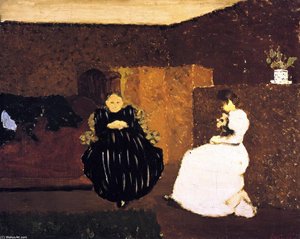
Jean-Édouard Vuillard’s "Interior," painted in 1902, transports us immediately into the hushed, warmly lit embrace of a private Parisian dwelling. This is not merely a depiction of furniture and figures; it is an immersion into a moment suspended in time—a tableau vivant of quiet companionship. The composition centers around two figures settled within the room, their presence lending an immediate sense of intimacy to the scene. One person occupies a chair near the left edge, while another rests closer to the heart of the picture plane. The arrangement suggests conversation, shared contemplation, and the deep comfort found in familiar company.
The Artistry of Les Nabis: Color and Pattern
To understand this work is to understand the revolutionary spirit of Les Nabis. As a key member of this avant-garde collective, Vuillard moved beyond the fleeting light captured by his predecessors. Instead, he focused on the decorative potential inherent in everyday life. In "Interior," we see this philosophy manifest through flattened planes of color and pattern. The room itself becomes an active participant in the narrative; patterned wallpaper, draped fabrics, and the arrangement of objects—the dining table set with a book, the nearby bowl, the two elegant vases—all contribute to a rich tapestry of visual texture. Vuillard masterfully uses these decorative elements not just for beauty, but to build up the very structure of the pictorial space.
Technique and Atmosphere: A Study in Domesticity
The technique employed here is characteristic of post-impressionism’s turn toward interiority. The light filtering in from an unseen source, perhaps near the window view glimpsed beyond, does not illuminate sharply; rather, it permeates, softening edges and deepening shadows into rich, velvety tones. This careful handling of color creates a palpable atmosphere—one that is both cozy and slightly melancholic. For those who appreciate interior design, the painting offers a profound study in domestic harmony. The inclusion of the couch on the right, alongside the structured dining area, suggests a life lived richly within these walls.
Symbolism of Shared Space
Beyond the visible objects, "Interior" resonates with deeper symbolic currents. The gathering of people and possessions speaks to the human need for connection against the backdrop of modern urbanity. The stillness captured by Vuillard is itself a statement—a celebration of the quiet moments that define a life well-lived. Owning a reproduction of this piece allows one to bring not just a painting, but an entire mood into your own space: one of cultured repose and deep, enveloping warmth.
Gyakran Ismételt Kérdések
Milyen telítettséget és intenzitást mutat „Interior”, Jean-Édouard Vuillard alkotása?
A „Interior”, Jean-Édouard Vuillard alkotása színei Balanced Soft telítettséget és Balanced intenzitást mutatnak be.
Milyen érzelmet közvetít a Post-Impressionism korszakból származó "Interior" című alkotás?
A "Interior" Comforting érzelmi hangulatot áraszt a Post-Impressionism kortól fel nem szabott stílusban.
Milyen témát és hangulatot ötvöz a „Interior”, Jean-Édouard Vuillard alkotása?
A "Interior" című alkotás interior scene, people indoors, dining table, cozy atmosphere, post-impressionism, french art témákat ábrázol, hangulata pedig Serene.
Hasonló műalkotások





Művész életrajza
**early life and artistic beginnings**
Jean-Édouard Vuillard, a luminary of French painting, was born on November 11, 1868, in the quaint village of Cuiseaux, nestled within the Saône-et-Loire region of France. His early years were marked by a quiet domesticity—his father, a retired ship captain, and his mother, a seamstress, provided a stable yet modest upbringing. The family’s relocation to Paris when he was just ten years old proved pivotal, thrusting him into the vibrant, often challenging, atmosphere of the capital city. This move, though initially difficult due to their limited resources, ultimately laid the foundation for his artistic journey. Vuillard's education began at the Condorcet Lycée, a prestigious institution where he encountered and forged friendships with future artistic figures like Pierre Roussel, destined to become a prominent photographer, and Maurice Denis, whose influence would resonate throughout Vuillard’s career. These early connections fostered a shared intellectual curiosity and a nascent appreciation for art that would shape his future direction. He enrolled at the École des Beaux-Arts, immersing himself in the traditional techniques of academic painting while simultaneously absorbing the burgeoning avant-garde currents circulating within Parisian artistic circles. It was during this period that Vuillard began to develop his distinctive style, characterized by an intuitive understanding of color and form—a departure from the rigid conventions of the time.**the nabis movement and its influence**
Vuillard’s artistic trajectory took a significant turn with his involvement in the Nabis group – a collective of young artists who sought to redefine the boundaries of painting in the late 1890s. The term “Nabis,” derived from the Hebrew word for prophet, reflected their ambition to forge a new path, one that moved beyond the constraints of Impressionism and Academic art towards a more symbolic and expressive language. Inspired by Japanese woodblock prints—their flattened perspectives, bold colors, and simplified forms—the Nabis embraced a radical approach to composition. Vuillard’s interiors, in particular, became canvases for exploring spatial relationships and the interplay of light and shadow. He meticulously rendered the textures of wallpaper, fabrics, and furniture, creating richly layered scenes that seemed to shimmer with an inner life. The group's philosophy, rooted in the positivist theories of Auguste Comte and Hippolyte Taine, emphasized observation and the representation of reality through a subjective lens—a belief that art should capture not just what was seen but also what was felt. This intellectual framework profoundly influenced Vuillard’s artistic practice, encouraging him to delve deeper into the emotional resonance of his subjects.**vuillard's later work and legacy**
Following the dissolution of the Nabis in 1900, Vuillard continued to paint with remarkable consistency, though his style evolved subtly over time. He moved away from the overtly experimental techniques of his earlier years, adopting a more grounded approach that emphasized detail and realism. During the 1920s and 30s, he produced a series of portraits of prominent figures in French industry and the arts—a testament to his ability to capture the essence of his subjects within their familiar surroundings. These portraits were not merely likenesses; they conveyed a sense of intimacy and understanding, revealing Vuillard’s keen eye for capturing character and personality. In his later years, Vuillard found renewed inspiration in landscapes and interiors, returning to the techniques that had defined his early work but imbued with a newfound maturity and sophistication. His paintings from this period are characterized by their luminous colors, delicate brushwork, and an almost dreamlike quality—a reflection of his profound sensitivity to the beauty of everyday life. Vuillard’s legacy extends far beyond his individual works; he is considered a pivotal figure in the development of modernism, influencing generations of artists with his innovative use of color, form, and space.**key works and exhibitions**
Vuillard's artistic output has been meticulously documented and exhibited throughout the world. His paintings are proudly displayed in prestigious museums such as the Musée de la Révolution Française (France), a repository of historical artifacts and artworks related to the French Revolution, offering a unique perspective on Vuillard’s artistic journey. Notable works include “La Patrie en Danger” (1893), a poignant depiction of a young man condemned to death for blasphemy during the Ancien Régime—a powerful commentary on social injustice; and "Jean de la Barre" (1894), portraying a young man facing execution for heresy, capturing the drama and tragedy of the event. Furthermore, Vuillard’s later portraits, including those of figures from French industry and the arts, are showcased in various galleries across France and beyond. These works provide valuable insights into the social and cultural landscape of his time.**conclusion**
Jean-Édouard Vuillard remains a captivating figure in the history of art—a master of intimacy, color, and form. His unique vision, born from a confluence of influences—from Japanese prints to the philosophical currents of the Nabis movement—continues to resonate with audiences today. As a pioneer of modernism, Vuillard’s legacy endures as an inspiration for artists seeking to explore the depths of human experience through their art. To further immerse yourself in his world, we encourage you to discover more about the *intimism* art movement and explore Vuillard's extensive body of work on TopImpressionists.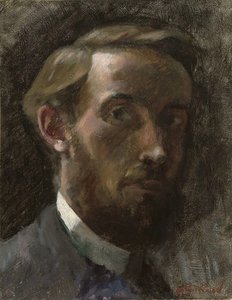
Jean-Édouard Vuillard
1868 - 1940 , Francia
Rövid tények
- Artistic Movement Or Style: Nabis
- Artists Or Movements Influenced By This Artist:
- Cubism
- Fauvism
- Artists Who Influenced This Artist: ['Paul Gauguin']
- Date Of Birth: November 11, 1868
- Date Of Death: June 21, 1940
- Full Name: Jean-Édouard Vuillard
- Nationality: Francia
- Notable Artworks:
- Woman Sweeping
- Sunlit Interior
- Place Of Birth: Cuiseaux, Francia