

A képen: · A kerettel együtt:
 Megtekintés
 Küldés
 Megosztás
 Részletek
 Útmutató

 Letöltés
 Hasonló darabok
 X-ray felvétel
 Diavetítés
 Kérdések és válaszok
 Statisztika

Ft 88133
Kézzel készített olajfestmény reprodukció
Kézzel festett olajvastú vászon, az Ön által választott méretben és keretben, művészeink készítik meglévőre. ( Váltás nyomtatványra Áttérés digitális képre)
Ez a műalkotás szerzői jogi védelem alatt áll
Az ezen az oldalon megjelenített műalkotások szerzői jogi védelem alatt állnak, ami azt jelenti, hogy törvényileg nem készíthetünk és nem adhatunk el belőlük pontos másolatokat. Ez a védelem olyan nemzetközi megállapodások alapján érvényesül, mint például a Berni Egyezmény és a nemzeti jogszabályok által, beleértve azokat is, amelyeket meghatározott Az USA szerzői jogi törvénye – 17. cím.
Mint tiszteletes és törvényes alternatívát, olyan egyedi, kézzel festett alkotásokat kínálunk, amelyek az eredetiből merítnek inspirációt. Tapasztalt és professzionális művészeink alaposan tanulmányozzák az eredeti stílusát, hangulatát és művészeti esszenciáját, hogy egy olyan új, egyedi alkotást hozzunk létre, amely ugyanazt az érzést kelti – miközben önálló, eredeti alkotásként létezik.
Ez a módszer teljes mértékben megfelel a szerzői jogi szabályozásnak, mivel nem tartalmazza a védett műalkotás másolását vagy duplikálását. Ehelyett ez egy kreatív újinterpretáció – egy új festmény, amely az eredetivel való összefüggései miatt hatással van rá, de nem az az.
 További információk
Méret
·Standard méret
egyedi méretű
CM
INCH
Válasszon előre meghatározott méreteink közül, amelyek megfelelnek a műalkotás eredeti arányainak.
Méretek betöltése...

szélesség
magasság
Írja be a kívánt szélességet és magasságot, hogy illeszkedjen a keretéhez vagy a falához. Mivel ez kézzel festett alkotás, egy eltérő formájú méret esetén a művész akár festhet is valamivel többet a kép körül, vagy korolathat is belőle — az Ön döntésének megfelelően. A festés megkezdése előtt küldünk egy digitális tervezetet jóváhagyásra. Az oldalon látható kép nem tartalmazza a végeredményt — csak a tervezet mutatja meg a valódi eredményt.
Befejezés
·
Fehér Ft1

Elmosódott szélek Ft1

Kiterjesztett Ft1

P118B Ft10

P118H Ft10

P118W Ft10

P438Z Ft10

P508JH Ft12

P508YH Ft12

P805H Ft10

P805Z Ft10

P919BZ Ft10

P919G Ft10

P919XJ Ft10

P959ZH Ft10

P968JZ Ft12

W106C Ft8

W218G Ft10

W218JH Ft8

W218Y Ft10

W307PJ Ft10

W316G Ft10

W316PJ Ft8

W316Y Ft10

W398PJ Ft8

W4111J Ft10

W500HY Ft15

W500JH Ft15

W692G Ft12

W849H Ft8

W940BG Ft15

W953PJ Ft8

H24-GOLD Ft30

H24-SILVER Ft30

H36-GOLD Ft45

H36-SILVER Ft45
Védődobozban, feltekercselve szállítva, készen a saját keretbe helyezésre.
Extrák
opcionálisMit tartalmaznak a plusz szolgáltatások?
Példák a módosíthatóságra: Az arc kicserélése a vásárló fotójára; háziállat hozzáadása (pl. macska kicserélése kutyára); rejtett üzenet elhelyezése a háttérben; a háttér tájéképének vagy elemeinek megváltoztatása.
A megrendelést követően a TopImpressionists.com csapat e-mailt küld a vásárlónak az instrukciókkal, és biztosítja a tervezeti előnézetet
A megrendelést követően a TopImpressionists.com csapat e-mailt küld a vásárlónak az instrukciókkal, és biztosítja a tervezeti előnézetet
Világszerte elérhető szállítás () 3-4 hét alatt a szokásos 5 hét helyett. (3 november). A minőség nem kérdőjelezhető.
Védőréteg (Lakk)
Névtábla
A gravírozott bronztábla részletei
This elegant plaque features the artist's name and the title of the artwork, finely engraved for a timeless presentation.
It is made from bronze with a refined, elegant finish. The text is precisely laser-engraved for a sharp and permanent result. Measuring 9x2 cm, the plaque is compact yet easy to read. It's built to be durable and scratch-resistant, offering a professional, museum-quality look. Mounting is simple thanks to the included adhesive backing.
Átlátszó akril tábla részletei
The plaque includes essential engraved details such as the artist's name, the title of the artwork, the date it was created, the type of media used-like oil on canvas or watercolor-a brief description of the piece, and a QR code that links to the complete artwork information.
It is crafted from clear acrylic, offering a sleek, modern appearance. The text is UV-engraved in black to ensure strong visual contrast. With a size of 10x15 cm, it ensures optimal readability. It comes equipped with two metal hooks for secure wall mounting. The plaque is designed to be weather-resistant, making it suitable for various environments, and it includes interactive features that work seamlessly with smartphone scanning.
Fekete akril tábla részletei
This elegant plaque includes engraved information such as the artist's name, the title of the artwork, the date it was created, the type of media used (like oil on canvas or watercolor), a short description of the artwork, and a QR code for quick access to more information.
The plaque itself is made from refined black acrylic with a premium finish. The text is laser-engraved in white for high contrast and readability. Its size is 10x15 cm, designed to be easy to read. It comes with two metal hooks for professional mounting. The design is sleek and fits any interior style. It is also weather-resistant and durable, with built-in digital integration for mobile compatibility.
Az üvegkeretes opció csak 110 cm alatti méretben érhető el
 Az üvegkeretes opció csak 110 cm alatti méretben érhető el
- Ingyenes globális expressz szállítás
- Prémium minőségű len vászon
- Teljes körű szállítási biztosítás
- Vámvisszatérítési Garancia
- Hiteles színarányosság garancia
- 100 napos visszaküldési lehetőség (csak hibás termékek esetén)
- 100% pénzvisszatérítési garancia
- Több darab vásárlásakor kedvezmény


A gyűjtemény leírása
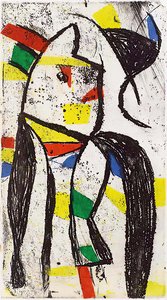
Explore Joan Miró's surrealist masterpiece "Del libre Ruban," featuring a vibrant horse and ribbon motif. Discover its symbolism, artistic style & significance within the abstract art movement at TopImpressionists!
A művész életrajza
Fedezd fel Joan Miró világát! Szürrealista és absztrakt műalkotásokkal, katalán szimbólumokkal és játékos formákkal! Egy igaz úttörő a modern művészetben – nézd meg minden egyes alkotását!
A festményről
Introduction to Joan Miró and Abstract Art
Joan Miró (1893–1983) stands as a monumental figure in the annals of 20th-century art, an artist whose singular vision irrevocably altered the landscape of modern expression. Born in Barcelona during a period of profound artistic ferment—marked by the burgeoning Surrealist movement and the echoes of Cubism—Miró embarked on a journey characterized not merely by stylistic evolution but by an unwavering pursuit of inner realms, translating dreams, memories, and Catalan identity onto canvas with a visual language imbued with poetic nuance.
The Surrealist impulse, championed by André Breton and fellow artists, sought to liberate creativity from the constraints of rational thought, tapping into the subconscious mind as a source of inspiration. Miró embraced this ethos wholeheartedly, employing techniques like automatism—chance operations designed to bypass conscious control—to generate imagery rooted in spontaneous association. This approach yielded works that defy easy categorization, blending organic forms with geometric abstractions and conveying emotions that transcend literal representation.
His distinctive style is instantly recognizable: bold colors juxtaposed against simplified shapes, reminiscent of Matisse’s Fauvist paintings, yet infused with a uniquely Miróesque spirit. Recurring motifs—birds, insects, fantastical creatures—appear throughout his oeuvre, symbolizing freedom, metamorphosis, and the primal forces of nature. These images are not merely decorative; they embody complex psychological states and convey profound philosophical ideas.
Exploring the Artistic Style of Joan Miró
Miró’s artistic vocabulary is remarkably consistent across his prolific output. He favored a palette dominated by vibrant hues—yellows, reds, blues—creating canvases that pulsate with energy and luminosity. His brushstrokes are loose and expressive, conveying movement and texture without striving for photorealistic detail. This deliberate rejection of conventional realism reflects Miró’s belief in the primacy of feeling over observation.
Consider Tirador in the Arc—a captivating piece that exemplifies Miró’s signature style. The central horse figure dominates the composition, its mane rendered in swirling brushstrokes of brilliant yellow and orange, capturing a sense of restless dynamism. Around its neck encircles a ribbon of crimson, adding a touch of theatrical color and hinting at themes of confinement and liberation.
The overall effect is one of dreamlike beauty—a visual meditation on the interplay between order and chaos, rationality and imagination. Miró’s art invites contemplation, prompting viewers to confront their own subconscious desires and anxieties while simultaneously appreciating the sublime grandeur of nature.
Historical Context and Significance
Miró's work emerged during a period of intense artistic experimentation—the aftermath of World War I and the rise of Surrealism—a time when artists sought to challenge established conventions and explore new frontiers of creative expression. Influenced by Cubist fragmentation and Dada nihilism, Miró nevertheless forged his own path, developing a distinctive visual language that resonated with audiences worldwide.
His paintings are housed in prestigious institutions such as the Fundació Joan Miró in Barcelona—a testament to his enduring legacy and a beacon for contemporary art—and the Rugby Art Gallery and Museum in the United Kingdom. These venues offer visitors the opportunity to immerse themselves in Miró’s artistic universe and appreciate the profound impact of his work on subsequent generations of artists.
To delve deeper into Miró's life and oeuvre, visit TopImpressionists.com for comprehensive information and stunning reproductions of his celebrated paintings.
Kérdések és válaszok
Hol függene jól a „Del libre Ruban de Michel Leiris”, Joan Miró alkotása reprodukciója?
A „Del libre Ruban de Michel Leiris”, Joan Miró alkotása Tall formátumú alkotása egy Living Room számára ajánlott. A formátum és a tér együtt segítik a reprodukció elhelyezését.
„Del libre Ruban de Michel Leiris”, Joan Miró alkotása egy világos vagy egy sötét tónusú alkotás?
A "Del libre Ruban de Michel Leiris" alkotás fényerisége összességében brilliant, luminanciája pedig Bright Balance.
Ki készítette a "Del libre Ruban de Michel Leiris" alkotást, és milyen stílusú?
A "Del libre Ruban de Michel Leiris" mögött Joan Miró és a Surrealism irányzat áll.
Gyors tények és művészeti kvíz
Joan Miró életrajza

Joan Miró
1893 - 1983, Spanyolország
A művész életrajza
A Catalan Visionary: The Life and Art of Joan Miró
Joan Miró i Ferrà, born in Barcelona in 1893, stands as one of the most significant figures in 20th-century art. His journey was not merely a progression through styles but an exploration of inner worlds, translating dreams, memories, and Catalan identity onto canvas with a uniquely poetic visual language. From humble beginnings marked by illness and initial parental reservations about his artistic pursuits, Miró persevered, driven by an innate need to express the intangible—the emotions, sensations, and subconscious currents that lie beneath the surface of reality. His early life was steeped in the traditions of Barcelona, a city brimming with architectural marvels thanks to Antoni Gaudí, whose organic forms would subtly influence Miró’s later abstractions. The goldsmithing profession of his father instilled an appreciation for meticulous craftsmanship, while the rugged Catalan landscape became a recurring motif and source of inspiration throughout his career.Early Influences and the Path to Surrealism
Miró's formal artistic training began at La Llotja in Barcelona, where he honed his skills in traditional techniques. However, it was exposure to the avant-garde movements sweeping through Paris that truly ignited his creative evolution. The vibrant colors of Fauvism and the fragmented forms of Cubism resonated deeply, prompting him to move to Paris in 1920. This period proved pivotal as he encountered artists like Pablo Picasso and began experimenting with increasingly abstract compositions. Yet, Miró didn’t simply adopt these styles; he synthesized them, forging a path toward his own distinctive aesthetic. He sought to distill forms to their essence, stripping away representational details in favor of symbolic shapes and evocative colors. This exploration led him to the Surrealist group in 1924, aligning him with artists such as Max Ernst and Salvador Dalí. While embracing the Surrealist interest in the subconscious, Miró maintained a unique sensibility—his work was less about shocking imagery or Freudian symbolism than it was about creating a world of playful forms and poetic suggestion. He rejected the prevailing artistic conventions of his time, prioritizing intuition and imagination over rational representation.The Language of Symbols: Key Works and Artistic Innovations
Throughout the 1920s and 30s, Miró developed his signature visual vocabulary—a universe populated by biomorphic shapes, floating forms, and vibrant colors. The Farm (1922), often considered a cornerstone of his oeuvre, exemplifies this transition. It’s not merely a depiction of rural life but an evocation of Catalan identity and a symbolic representation of the natural world. The painting utilizes bold hues—primarily yellows and reds—to convey a sense of energy and vitality, mirroring the dynamism of the Catalan landscape. Miró's technique involved layering paint onto canvas in multiple passes, creating textured surfaces that contribute to the overall atmosphere of dreamlike wonder. His collaborative spirit led to innovative techniques like *grattage*, pioneered with Max Ernst in 1926 for designs intended for Sergei Diaghilev's ballet, where textures were revealed by scraping paint across canvas. The Dutch Interiors (1928) series demonstrated his ability to reinterpret the Old Masters through a distinctly modern lens, transforming domestic scenes into dreamlike abstractions. He skillfully employed geometric shapes—circles and squares—to juxtapose with organic forms, creating visual tension that reflects the complexities of human experience. Painting (1933), with its striking palette and simplified compositions, encapsulates Miró’s exploration of the subconscious and his rejection of conventional artistic boundaries. This monumental canvas embodies his belief in art as a vehicle for conveying profound emotional truths. Beyond painting, Miró fearlessly experimented with sculpture, ceramics, and printmaking, expanding his creative horizons and demonstrating a remarkable versatility.Legacy and Enduring Influence
Joan Miró's impact on 20th-century art is undeniable. He wasn’t simply a painter; he was a visionary who challenged the very definition of artistic expression. His work paved the way for abstract expressionism and continues to inspire artists across disciplines. He established two foundations—the Fundació Joan Miró in Barcelona (1975) and the Fundació Pilar i Joan Miró in Palma de Mallorca (1981)—ensuring that his legacy would endure, providing spaces for artistic exploration and education. Throughout his long career, he remained committed to pushing boundaries, questioning conventions, and exploring the depths of human imagination. Miró’s art is a testament to the power of abstraction, symbolism, and poetic expression—a vibrant celebration of life, dreams, and the enduring spirit of Catalan culture. His work continues to resonate with audiences worldwide, inviting us to enter a world where anything is possible and the boundaries between reality and fantasy blur into a captivating dance of color and form. He died in Palma de Mallorca in 1983, leaving behind an unparalleled body of work that remains a beacon of artistic innovation and imaginative vision.Gyors információk Joan Miró művészről
- Artistic Movement Or Style: Szürrealizmus
- Artists Who Influenced This Artist:
- Van Gogh
- Cézanne
- Date Of Birth: 1893
- Date Of Death: 1983
- Full Name: Joan Miró i Ferrà
- Nationality: Spanyolország
- Notable Artworks:
- Háza a pálmalébennel
- Nude with Mirror
- A Tűzeső a Flamboyant Tollak
- Place Of Birth: Barcelona, Spanien
Fedezze fel a műalkotásokat témák, stílusok és jellemzők szerint csoportosítva.


Joan Miró
Del libre Ruban de Michel Leiris
() ·
A kerettel együtt: · Kézzel festve, olajfesték, vászonon
Összesen