

Shown: · With its frame:
 Megtekintés
 Küldés
 Megosztás
 Részletek
 Útmutató

 Letöltés
 Hasonló darabok
 X-ray felvétel
 Diavetítés
 Q&A
Q&A Statisztika


Ft 88090
Kézzel készített olajfestmény reprodukció
Kézzel festett olajvastú vászon, az Ön által választott méretben és keretben, művészeink készítik meglévőre. ( Váltás nyomtatványra Áttérés digitális képre)
Size
·Standard méret
egyedi méretű
CM
INCH
Válasszon előre meghatározott méreteink közül, amelyek megfelelnek a műalkotás eredeti arányainak.
Loading sizes...

szélesség
magasság
Írja be a kívánt szélességet és magasságot, hogy illeszkedjen a keretéhez vagy a falához. Mivel ez kézzel festett alkotás, egy eltérő formájú méret esetén a művész akár festhet is valamivel többet a kép körül, vagy korolathat is belőle — az Ön döntésének megfelelően. A festés megkezdése előtt küldünk egy digitális tervezetet jóváhagyásra. Az oldalon látható kép nem tartalmazza a végeredményt — csak a tervezet mutatja meg a valódi eredményt.
 További információk
Finish
·
White Ft1

Blurside Ft1

Extended Ft1

P118B Ft10

P118H Ft10

P118W Ft10

P438Z Ft10

P508JH Ft12

P508YH Ft12

P805H Ft10

P805Z Ft10

P919BZ Ft10

P919G Ft10

P919XJ Ft10

P959ZH Ft10

P968JZ Ft12

W106C Ft8

W218G Ft10

W218JH Ft8

W218Y Ft10

W307PJ Ft10

W316G Ft10

W316PJ Ft8

W316Y Ft10

W398PJ Ft8

W4111J Ft10

W500HY Ft15

W500JH Ft15

W692G Ft12

W849H Ft8

W940BG Ft15

W953PJ Ft8

H24-GOLD Ft30

H24-SILVER Ft30

H36-GOLD Ft45

H36-SILVER Ft45
Shipped in a protective tube, ready for your own framer.
Above 105 cm the frame is shipped as a kit for a professional framer — read the details.
Extras
optionalWhat do the extras include?
Examples of what can be changed: Replace face with customer photo; Add pet (e.g., replace cat with dog); Include hidden message in background; Change background landscape or elements.
After order, TopImpressionists.com team will email client for instructions and provide a mockup preview
After order, TopImpressionists.com team will email client for instructions and provide a mockup preview
Világszerte elérhető szállítás () 3-4 hét alatt a szokásos 5 hét helyett. (1 november). A minőség nem kérdőjelezhető.
Védőréteg (Lakk)
Névtábla
A gravírozott bronztábla részletei
This elegant plaque features the artist's name and the title of the artwork, finely engraved for a timeless presentation.
It is made from bronze with a refined, elegant finish. The text is precisely laser-engraved for a sharp and permanent result. Measuring 9x2 cm, the plaque is compact yet easy to read. It's built to be durable and scratch-resistant, offering a professional, museum-quality look. Mounting is simple thanks to the included adhesive backing.
Átlátszó akril tábla részletei
The plaque includes essential engraved details such as the artist's name, the title of the artwork, the date it was created, the type of media used-like oil on canvas or watercolor-a brief description of the piece, and a QR code that links to the complete artwork information.
It is crafted from clear acrylic, offering a sleek, modern appearance. The text is UV-engraved in black to ensure strong visual contrast. With a size of 10x15 cm, it ensures optimal readability. It comes equipped with two metal hooks for secure wall mounting. The plaque is designed to be weather-resistant, making it suitable for various environments, and it includes interactive features that work seamlessly with smartphone scanning.
Fekete akril tábla részletei
This elegant plaque includes engraved information such as the artist's name, the title of the artwork, the date it was created, the type of media used (like oil on canvas or watercolor), a short description of the artwork, and a QR code for quick access to more information.
The plaque itself is made from refined black acrylic with a premium finish. The text is laser-engraved in white for high contrast and readability. Its size is 10x15 cm, designed to be easy to read. It comes with two metal hooks for professional mounting. The design is sleek and fits any interior style. It is also weather-resistant and durable, with built-in digital integration for mobile compatibility.
Az üvegkeretes opció csak 110 cm alatti méretben érhető el
 Az üvegkeretes opció csak 110 cm alatti méretben érhető el
- Ingyenes globális expressz szállítás
- Prémium minőségű len vászon
- Teljes körű szállítási biztosítás
- Vámvisszatérítési Garancia
- Hiteles színarányosság garancia
- 100 napos visszaküldési lehetőség (csak hibás termékek esetén)
- 100% pénzvisszatérítési garancia
- Több darab vásárlásakor kedvezmény


A gyűjtemény leírása
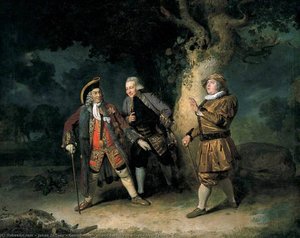
Admire Johann Zoffany’s ‘George III,’ a stunning 1771 royal portrait showcasing the King's power & elegance. A historical masterpiece by a renowned artist, now available as a handmade oil painting.
A művész életrajza
"meta_description": "Zoffany, a német festő, a 18. század egyik legkiemelkedőbb alakja, a 'beszélgetős tájak' mestere. Művei a londoni múzeumok és Franciaországban is megtalálhatók, bemutatva a kor társadalmi életét és a királyi családot."
About the painting
The Majesty of a King: An Exploration of Zoffany’s ‘George III’
Johann Zoffany's “George III” is more than just a portrait; it’s a meticulously constructed tableau vivant, a frozen moment brimming with historical significance and subtle theatricality. Completed in 1771, this oil on canvas painting offers a rare glimpse into the life of King George III during a period of profound political and personal upheaval. Zoffany, a German-born artist who found his most enduring success in England, masterfully blended elements of Italian portraiture with the burgeoning conventions of the ‘conversation piece’ – a genre that favored informal group settings and layered symbolism.
The painting immediately commands attention through its opulent setting. The King is seated within a richly appointed room, reminiscent of an Italian villa or a grand salon, complete with a meticulously rendered violoncello, a symbol of musical refinement and aristocratic leisure. However, the true brilliance lies in the details – the intricate patterns on the wallpaper, the carefully chosen objects adorning the walls, each contributing to a complex web of meaning. This isn’t merely a depiction of royalty; it's an assertion of power, a visual declaration of George III’s status as both a sovereign and a cultivated gentleman.
A Stage for Power: Symbolism and Context
Zoffany was acutely aware of the political climate surrounding his subject. George III inherited a throne beset by challenges – a fragile peace following the Seven Years' War, mounting debts, and growing tensions with the American colonies. The King’s posture, his gaze directed towards an unseen observer (often interpreted as a young boy), conveys a sense of both authority and vulnerability. He is dressed in the formal attire of a General, complete with medals and a sash – emblems of military prowess and royal rank. The inclusion of the Order of the Garter, one of the most prestigious chivalric orders in Britain, further reinforces his position as a key figure within the nation’s elite.
Beyond the obvious symbols of power, Zoffany employs subtle visual cues to suggest the complexities of George III's reign. The presence of the violoncello, for instance, is not simply decorative; it alludes to the King’s musical interests and his patronage of artists and musicians – a carefully cultivated image designed to project an aura of sophistication and refinement. The inclusion of a young boy in the painting has been interpreted as representing the future of the monarchy, but also perhaps hinting at the challenges George III faced in securing a legitimate heir.
Technique and Artistic Legacy
Zoffany’s skill lies not only in his ability to capture likenesses with remarkable accuracy but also in his masterful use of light and shadow. The dramatic lighting highlights the King's face, emphasizing his features and conveying a sense of gravitas. The artist employs a technique reminiscent of both Italian portraiture and Dutch genre painting, creating a rich, textured surface that is both visually engaging and historically informative. His attention to detail is astonishing – from the folds in the fabric to the reflections on the polished surfaces – demonstrating a deep understanding of his subject matter and a commitment to realism.
“George III” stands as one of Zoffany’s most celebrated works, alongside “Queen Charlotte and Her Six Eldest Children.” Reproductions of this iconic painting continue to captivate art lovers today, offering a window into the world of Georgian England and the complex personality of its King. The Royal Collection Trust holds the original, ensuring that this remarkable piece of history remains accessible for generations to come.
Further Information:
Kérdések és válaszok
Mikor készült a "George III", és mely művészeti irányba tartozik?
A "George III" 1771-ben készült, a Neoclassicism irányzat egyik alkotásaként. A dátum és az irányzat rögzíti a művet a művészettörténetben.
Mennyire intenzívek a „George III”, Zoffany alkotása színei?
A „George III”, Zoffany alkotása színei Monochromatic intenzitásúak.
Milyen témát és hangulatot ötvöz a „George III”, Zoffany alkotása?
A „George III”, Zoffany alkotása portrait, royalty, british history, 18th century, military, formal, dignified, zoffany-t ábrázolja, Elegant hangulatban. A tárgy és a légkör együtt határozza meg a művet.
Quick facts and art quiz
About Zoffany

Zoffany
1733 - 1810, Németország
A művész életrajza
Johann Zoffany: A Master of Conversation and Observation
Johann Zoffany, born Johannes Josephus Zaufallij in Frankfurt am Main in 1733, stands as a pivotal figure in the history of 18th-century art. His career, spanning from his formative years in Germany to his flourishing period in England and India, is marked by an extraordinary ability to capture not just likenesses but also the very essence of social interaction and cultural nuance. Zoffany’s legacy rests primarily on his innovative “conversation pieces,” a genre that redefined portraiture and offered unprecedented glimpses into the lives of Britain's elite – a remarkable feat achieved through meticulous observation, technical skill, and a keen understanding of human psychology.
Zoffany’s early artistic training was a crucial foundation for his later success. Initially apprenticed to a sculptor in Ellwangen, he then studied under Martin Speer in Regensburg, absorbing the foundational principles of classical composition and technique. These initial experiences instilled in him a rigorous approach to artmaking, which would later manifest in the astonishing detail and realism of his paintings. His relocation to Rome in 1750 proved equally formative, allowing him to immerse himself within the vibrant artistic environment of the Italian Baroque tradition under the tutelage of Agostino Masucci. This exposure to Italian artistry broadened his stylistic horizons and honed his skills in color, light, and shadow – elements that would become hallmarks of his distinctive style.
The English Stage: Patronage and Artistic Innovation
In 1760, Zoffany embarked on a new chapter of his career by migrating to England. Initially finding work as a decorative designer for the clocks of Stephen Rimbault, he quickly gained recognition for his ability to create intricate and visually arresting patterns. However, it was his burgeoning relationship with King George III and Queen Charlotte that truly propelled him to artistic prominence. The Royal couple’s patronage afforded Zoffany unparalleled access to high society, allowing him to document their lives in informal settings – a departure from the stiff formality of traditional court portraits. These “conversation pieces,” as they became known, were not merely representations of individuals; they were carefully constructed narratives that captured the dynamics of social gatherings, revealing the personalities and relationships within the group.
Zoffany’s genius lay in his ability to portray subjects in moments of relaxed interaction. He eschewed static poses and instead focused on capturing fleeting expressions, subtle gestures, and the unspoken connections between individuals. His masterpiece, *Queen Charlotte and Her Two Eldest Children* (1765), exemplifies this approach – a remarkably intimate portrayal of the royal family that feels less like a formal portrait and more like a candid snapshot of domestic life. This painting, along with others such as *The Cope Family* (1775) and *Colonel Mordaunt's Cock Match* (1784-1786), established Zoffany’s reputation as the “master of conversation pieces” – an artist who had redefined the possibilities of portraiture.
A Journey to India: Exotic Subjects and New Perspectives
Driven by a restless spirit and a desire for new artistic challenges, Zoffany embarked on a significant sojourn to India in 1783. This extended period marked a profound shift in his subject matter and artistic style. He spent several years documenting the lives of prominent Indian figures – including Warren Hastings and Asaf-ud-Daula – capturing their regality and cultural richness with remarkable detail. The experience profoundly impacted Zoffany’s work, introducing elements of exoticism and a heightened awareness of diverse cultures into his oeuvre. The vibrant colors, intricate costumes, and dynamic compositions of these Indian portraits stand in stark contrast to the more restrained palette and formal arrangements of his earlier English works.
Legacy and Influence
Johann Zoffany’s artistic legacy extends far beyond his individual masterpieces. He was a pivotal figure in the development of British portraiture, pioneering a new approach that emphasized informality, psychological insight, and social observation. His “conversation pieces” not only captured the likenesses of prominent individuals but also offered invaluable insights into the customs, values, and social dynamics of 18th-century England and India. Zoffany’s influence can be seen in the works of subsequent artists who followed in his footsteps, demonstrating the enduring impact of his innovative techniques and artistic vision. His paintings remain treasured possessions within major museums worldwide, offering a captivating window into a bygone era.
Historical Significance
Johann Zoffany’s paintings provide invaluable insights into the social customs, intellectual life, and cultural values of his time. His “conversation pieces” offer intimate portraits of prominent individuals and their world, while his depictions of India contribute to our understanding of colonial history. He remains a significant figure in the history of art, celebrated for his technical skill, insightful observations, and unique artistic vision.
Quick facts about Zoffany
- Artistic Movement Or Style: Neoklasszicizmus, Realizmus
- Artists Or Movements Influenced By This Artist: ['Fuseli']
- Artists Who Influenced This Artist:
- Masucci
- Speer
- Date Of Birth: 1733. március 13.
- Date Of Death: 1810. november 11.
- Full Name: Johann Zoffany
- Nationality: Német
- Notable Artworks:
- Uffizi Tribuna
- Dr Hunter
- Királyi család
- Csellós játék
- Place Of Birth: Frankfurt, Németország
Fedezze fel a műalkotásokat témák, stílusok és jellemzők szerint csoportosítva.


Zoffany
George III
() ·
With its frame: · Hand-painted in oil on linen
Total