


 Előnézet
 Megosztás
 Megosztás
 Részletek
 Útmutató

 Letöltés
 Hasonló darabok
 X-ray felvétel
 Diavetítés
 Statisztika
Space concept
 Acrylic On Canvas
- WallArt
- Spatial Minimalism
 5.0 x 110.0 cm
 MAGA - Museo Arte Gallarate
 Tovább olvasom
Fontana Lucio: A révolutionnaire artiste italien! Döntő szerepet játszott a modern művészet fejlődésében, ikonikus szúrással teli festményei és térbeli alkotásai forradalmasították az építészeti és művészi világot. Fedezze fel a Spatialism legendáját!
Az ezen az oldalon megjelenített műalkotások szerzői jogi védelem alatt állnak, ami azt jelenti, hogy törvényileg nem készíthetünk és nem adhatunk el belőlük pontos másolatokat. Ez a védelem olyan nemzetközi megállapodások alapján érvényesül, mint például a Berni Egyezmény és a nemzeti törvények által, beleértve azokat is, amelyeket meghatározott Az USA szerzői jogi törvénye – 17. cím.
Mint tiszteletes és törvényes alternatívát, olyan egyedi, kézzel festett alkotásokat kínálunk, amelyek az eredetiből merítnek inspirációt. Tapasztalt és professzionális művészeink alaposan tanulmányozzák az eredeti stílusát, hangulatát és művészeti esszenciáját, hogy egy olyan új, egyedi alkotást hozzunk létre, amely ugyanazt az érzést kelti – miközben önálló, eredeti alkotásként létezik.
Ez a módszer teljes mértékben megfelel a szerzői jogi szabályozásnak, mivel nem tartalmazza a védett műalkotás másolását vagy duplikálását. Ehelyett ez egy kreatív újinterpretáció – egy új festmény, amely az eredetivel való összefüggései miatt hatással van rá, de nem az az.
Kézzel készített olajfestmény reprodukció
Kézzel festett olajvastú vászon, az Ön által választott méretben és keretben, művészeink készítik meglévőre. ( Váltás nyomtatványra Áttérés digitális képre)




P118B Ft10

P118H Ft10

P118W Ft10

P438Z Ft10

P508JH Ft12

P508YH Ft12

P805H Ft10

P805Z Ft10

P919BZ Ft10

P919G Ft10

P919XJ Ft10

P959ZH Ft10

P968JZ Ft12

W106C Ft8

W218G Ft10

W218JH Ft8

W218Y Ft10

W307PJ Ft10

W316G Ft10

W316PJ Ft8

W316Y Ft10

W398PJ Ft8

W4111J Ft10

W500HY Ft15

W500JH Ft15

W692G Ft12

W849H Ft8

W940BG Ft15

W953PJ Ft8




Standard méret
egyedi
CM
INCH
Válasszon előre meghatározott méreteink közül, amelyek megfelelnek a műalkotás eredeti arányainak.
Loading sizes...

szélesség
magasság
Ön megadhat saját méreteket egy adott kerethez vagy térhez igazításhoz. Ha a kiválasztott méret nem egyezik az eredeti kép arányával, akkor a műalkotást levágjuk, vagy további kézzel festett elemekkel meghosszabbítjuk a festményt. A gyártás megkezdése előtt küldünk Önnek egy digitális előnézetet jóváhagyásra.
Kérjük, vegye figyelembe, hogy a képernyőn megjelenő előnézet nem tükrözi a tényleges vágást vagy kiterjesztést. Csak az előnézet fog pontosan mutatni a végső kompozíciót.
Bár egyedi méretek állnak rendelkezésre, javasoljuk, hogy válasszon egy méretet az előre meghatározott listából az eredeti arányok megőrzése érdekében.
Példák arra, mit lehet módosítani: az arc kicserélése az ügyfél fotójára; háziállat hozzáadása (pl. macska helyett kutya); rejtett üzenet elhelyezése a háttérben; a háttér tájának vagy elemeinek megváltoztatása.
A rendelést követően a TopImpressionists.com csapata e-mailt küld az ügyfélnek az instrukciókért, és biztosít egy előnézeti képet (mockup).
A rendelést követően a TopImpressionists.com csapata e-mailt küld az ügyfélnek az instrukciókért, és biztosít egy előnézeti képet (mockup).
Világszerte elérhető szállítás () 3-4 hét alatt a szokásos 5 hét helyett. (7 október). A minőség nem kérdőjelezhető.

Ingyenes globális expressz szállítás

Prémium minőségű len vászon

Teljes körű szállítási biztosítás

Vámvisszatérítési Garancia

Tökéletes színarányosság garancia

100 napos visszaküldési garancia (csak gyártási hibás termékek esetén)

100% pénzvisszatérítési garancia

Több darab vásárlásakor kedvezmény
 Az üvegkeretes opció csak 110 cm alatti méretben érhető el

Space concept
Reprodukciós technika
Reprodukció méretei
-


Összesített ár
Ft 84099
Exploring Spatial Horizons: Lucio Fontana’s “Space Concept”
Lucio Fontana's "Space Concept," a deceptively simple painting featuring a stark white canvas punctuated by meticulously placed black dots, transcends mere visual representation. It embodies the core tenets of Spatialism—a revolutionary artistic movement that sought to dismantle traditional notions of flatness and explore the infinite possibilities inherent in three-dimensional space. Created sometime before Fontana’s death in 1968, this unassuming piece resides at MAGA - Museo Arte Gallarate in Italy, offering visitors a tangible connection to the genesis of conceptual art.The Genesis of Spatialism
Fontana's artistic breakthrough occurred during his formative years in Milan and Buenos Aires. Influenced by Surrealist explorations of subconsciousness and Dada’s rejection of bourgeois conventions, he began experimenting with techniques that challenged conventional painting practices. Spatialism wasn’t merely about depicting space; it was about actively disrupting its boundaries—a deliberate provocation against the established visual language of his time. Artists like Fontana recognized that painting could be transformed into a tool for conceptual inquiry, prioritizing ideas over purely aesthetic considerations.A Technique Defined by Precision
The execution of “Space Concept” speaks volumes about Fontana’s meticulous approach to artmaking. Employing oil paint on canvas—a familiar medium but reimagined with radical intent—Fontana achieved remarkable precision in the placement of his black dots. These aren't random marks; they are carefully calculated points that create a subtle ripple effect across the surface, mimicking the appearance of waves or ripples within space itself. This technique underscores Fontana’s fascination with mathematics and geometry, reflecting his belief that artistic expression could be governed by rational principles.Symbolism Beyond Surface Appearance
Beyond its technical mastery lies a profound symbolic resonance. The white canvas represents the void—the infinite expanse of space—while the black dots symbolize punctures or incisions into this emptiness. Fontana famously referred to these perforations as “cuts into the fourth dimension,” elevating them beyond mere decoration and transforming them into emblems of liberation from representational constraints. This gesture embodies a desire to transcend materiality, inviting viewers to contemplate the intangible realm of thought and imagination.Emotional Impact: A Dialogue with Infinity
“Space Concept” isn’t intended to elicit immediate emotional gratification; rather, it compels contemplation. Its understated elegance encourages viewers to engage in a dialogue with infinity—to consider the vastness of existence and the limitations of human perception. The painting's simplicity serves as a powerful reminder that art can communicate complex ideas through deceptively simple forms. It’s a piece that lingers in the mind long after viewing, prompting reflection on fundamental questions about space, time, and consciousness.Gyakran Ismételt Kérdések
Mely paletta és domináns szín határozza meg a "Space concept" alkotást?
A „Space concept”, Lucio Fontana alkotása színek identitása: egy Monochrome paletta, amelyet Putty (#d3c5b2) dominál.
Milyen színharmóniát mutat be „Space concept”, Lucio Fontana alkotása?
A „Space concept”, Lucio Fontana alkotása egy Unified Palette színharmóniát mutat be.
Hogyan írható le „Space concept”, Lucio Fontana alkotása hangulata?
A "Space concept" Minimalist hangulatú.
Hogyan tudok nyomtatványt vásárolni a(z) „Space concept”, Lucio Fontana alkotása alkotásból?
A „Space concept”, Lucio Fontana alkotása nyomata közvetlenül megrendelhető a(z) ez az oldal oldalon: minőségi giclée nyomat pamutvászonon vagy archiváló vászonpapíron.
Ki készítette a(t): "Space concept"?
A "Space concept" alkotója Lucio Fontana. A mű Lucio Fontana nevére van katalógusozva.
Szabadon reprodukálható-e a/az „Space concept”, Lucio Fontana alkotása képe?
A „Space concept”, Lucio Fontana alkotása szerzői jogi státusza: a mű még szerzői jogにより védi. Ez határozza meg, hogy a kép másolatai szabadon készíthetők-e.
Hol vásárolható „Space concept”, Lucio Fontana alkotása képmű kézzel festett másolata?
A "Space concept" kézzel festett olajfesték reprodukció lino vászonon formátumban is elérhető. A rendelés ez az oldal felületen adható le, különböző méretválasztékban.
A művész életrajza
A Life Forged in Spatialism
Lucio Fontana, a name synonymous with radical innovation in 20th-century art, was born into a world poised between tradition and modernity. His journey began not in Italy, the nation he would come to define within the artistic landscape, but in Rosario, Argentina, in 1899. The son of an Italian sculptor, Luigi Fontana, young Lucio inherited a craftsman’s sensibility alongside a burgeoning artistic vision. This early exposure to form and material proved foundational, even as his life became a series of geographical and stylistic explorations. Returning to Italy with his family, he absorbed the rich cultural heritage of Europe, studying at the Brera Academy in Milan and immersing himself in the avant-garde movements that were beginning to challenge established norms. However, the pull of his origins remained strong; multiple returns to Argentina punctuated his career, shaping his perspective and fueling a desire to transcend conventional artistic boundaries. Fontana’s early work reflected this duality – initially rooted in figurative sculpture and painting, it gradually evolved towards abstraction, hinting at the revolutionary path he was destined to forge.Breaking the Canvas: The Birth of Spatialism
The devastation of World War II proved a catalyst for Fontana's most groundbreaking artistic endeavor. Witnessing the destruction and upheaval firsthand, he felt compelled to redefine art’s purpose in a world irrevocably altered. This led to the formulation of *Spatialism*, a movement that sought not merely to represent space but to incorporate it as an integral element of the artwork itself. Fontana believed traditional painting was limited by its two-dimensionality, confining art within a static plane. He envisioned a new form of expression that would break down these barriers, acknowledging the infinite depth and potential of space beyond the canvas. This wasn’t simply about creating illusions of depth; it was about physically opening up the artwork to reveal what lay *beyond*. Beginning in the late 1940s, Fontana began his now-iconic series of slashed and punctured canvases – the *Concetti Spaziali* (Spatial Concepts). These weren't acts of destruction but rather deliberate interventions, revealing a void that symbolized the vastness of the cosmos. The slashes, often executed with a razor blade, were precise and purposeful, transforming the canvas into a window onto another dimension. He wasn’t destroying the painting; he was liberating it from its limitations.Influences and Artistic Kinship
Fontana's artistic development wasn’t born in isolation. He engaged with a diverse range of influences, absorbing and transforming them into his unique visual language. The expressive power of Vincent van Gogh resonated deeply within him, particularly the emotional intensity conveyed through brushwork. He also admired the satirical edge of Pieter Bruegel the Elder, finding inspiration in the older master’s ability to critique societal flaws. However, a pivotal encounter with the work of Polish artist Jan Grzegorz Stanisławski proved particularly transformative. Stanisławski's exploration of light and color within his 'Mullein' series profoundly impacted Fontana’s approach to abstraction and spatial representation. Furthermore, his participation in groups like *Abstraction-Création* in Paris exposed him to a broader network of avant-garde artists, fostering an exchange of ideas that fueled his experimentation. While distinctively original, Fontana’s work also shares affinities with other post-war movements such as Zero and Nouveau Réalisme, all striving to redefine the boundaries of art and challenge conventional perceptions.The Iconic Cuts: *Concetti Spaziali*
Fontana's most famous works are undoubtedly his *Concetti Spaziali*, or “Spatial Concepts.” These canvases, initially executed in monochrome, became a symbol of the movement he pioneered. The act of slashing – often described as "cutting into space" – was not merely decorative but a fundamental shift in how artists approached their materials and the very nature of painting. Fontana didn’t simply cut holes; he created precise, deliberate interventions that disrupted the surface of the canvas and invited viewers to contemplate the void beneath. The *Concetti Spaziali* series evolved over time, incorporating techniques such as “hole paintings,” where the canvas was entirely pierced, and “soffitto spaziale” (spatial ceiling) installations, which enveloped entire rooms in a three-dimensional space. These works challenged traditional notions of painting, sculpture, and architecture, blurring the boundaries between them and creating immersive experiences for the viewer.A Lasting Legacy
Lucio Fontana’s death in Comabbio, Italy, in 1968, marked the end of a remarkable career but not the end of his influence. His work continues to be exhibited worldwide, celebrated for its radical innovation and profound impact on contemporary art. Fontana's legacy extends beyond the slashed canvases; he fundamentally altered our understanding of space, materiality, and the role of the artist in shaping perception. He demonstrated that art could be more than representation—it could be an exploration of existence itself. His influence can be seen in countless artists who followed in his footsteps, pushing the boundaries of artistic expression and challenging conventional notions of what art *can* be. Fontana remains a pivotal figure in post-war abstract art, celebrated for his courage to challenge conventions and redefine the very essence of artistic expression. He opened up new possibilities for artists, inviting them to engage with space itself and create works that invite viewers to contemplate the infinite.
Lucio Fontana
1899 - 1968 , Argentína
Gyors információk
- Artistic Movement Or Style: Spatializmus
- Artists Or Movements Influenced By This Artist:
- Zero
- Nouveau Réalisme
- Artists Who Influenced This Artist:
- Jan Grzegorz Stanisławski
- Vincent van Gogh
- Date Of Birth: 1899
- Date Of Death: 1968
- Full Name: Lucio Fontana
- Nationality: Olasz-Argentin
- Notable Artworks:
- Concetto Spaziale
- Soffitto Spaziale
- Place Of Birth: Rosario, Argentína
Kapcsolódó cikkek

A sötét szépség: 10 híres festmény a 'Mars Black' árnyalataiban | TopImpressionists
Fedezze fel a 10 leghíresebb festményt, melyeket a 'Mars Black' mély árnyalatai dominálnak! Rembrandt, Goya és Picasso remekművei – történetük, technikájuk és időtlenségük. Múzeumi minőségű művészeti reprodukciók otthonába. Fedezze fel a teljes gyűjteményt a TopImpressionists.com-on!

Minimalista Művészet: A Top 10 Legikonikusabb Darab a Lakberendezésben
Fedezze fel a top 10 minimalista műalkotást! Mark Rothko, Agnes Martin és más ikonikus festők letisztult világát. Inspirálódjon modern képekkel, absztrakt vászonképekkel és hozzon létre nyugtató belső teret. Prémium minőségű reprodukciók a TopImpressionists.com-on!

A Fekete Szín Mesterei: 10 Híres Festmény, Amelyek Elvarázsolnak – TopImpressionists.com
Fedezze fel a 10 leghíresebb, fekete tónusú festményt! Rembrandt, Goya és Manet remekművei elvarázsolják. Művészettörténet, inspiráció otthonába – TopImpressionists.com kínálatából. Fedezze fel a teljes gyűjteményt online!
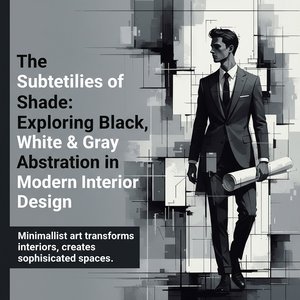
A Monokrómia Rejtélye: Fekete, Fehér és Szürke Absztrakciók a Modern Belsőépítészetben – A Világítás, Textúra és Építészeti Elevek Harmonikus Egysége
Fedezze fel a monokróm belsőépítészet rejtélyeit! Szakértői útmutató a fekete, fehér és szürke harmonikus egységéhez. Inspiráció hotelprojektekhez és elegáns otthonokhoz. Tippek a textúráktól a világításig!

Vászon és keretezési lehetőségek belsőépítészek számára: Útmutató a tökéletes megjelenéshez
Professzionális útmutató belsőépítészeknek a vászonképek és keretezési lehetőségekről. Ismerje meg a legújabb trendeket, anyagokat és praktikus tanácsokat a tökéletes megjelenéshez! Bízza szakértőinkre.
Fedezze fel a műalkotásokat témák, stílusok és jellemzők szerint csoportosítva.


