Műterem — Ingyenes világszerte történő szállítás — Szállítás: 2–6 hét
      Előnézet AR előnézet Kézzel festett másolat vásárlása Áttérés digitális képre Megosztás
      Részletek Útmutató Kedvencekhez ad Letöltés Hasonló darabok X-ray felvétel Diavetítés Statisztika

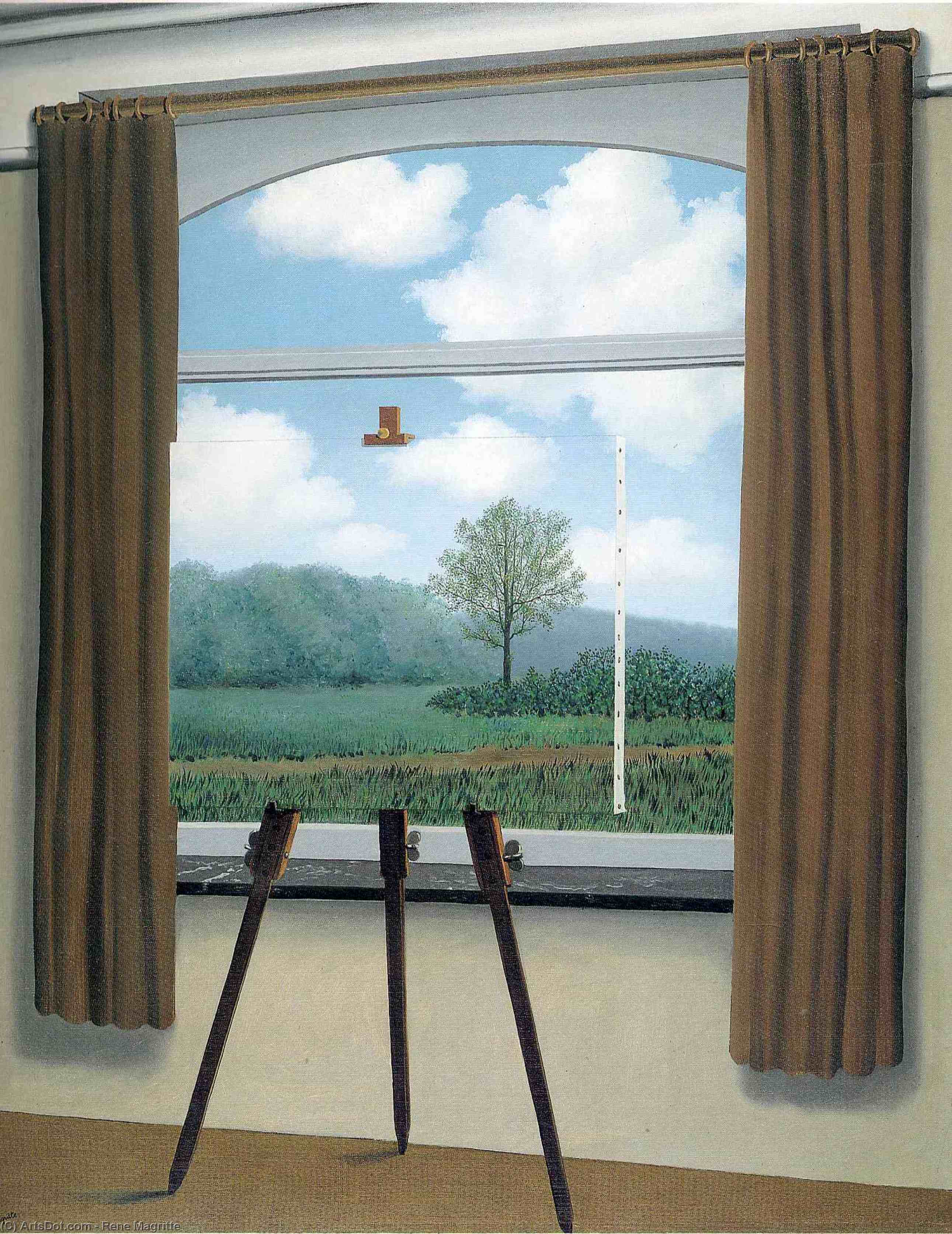
      Az emberi állapot

      Magritte lenyűgöző művében, Az emberi állapotban, a valóság és az illúzió határmenete olvadt össze. Fedezze fel ezt a szürrealista mesterművet, mely gondolatébresztő kompozíciója és mély jelentéseivel hódít.

      Magritte: A szürrealista festő, aki a valóságot megkérdőjelezte! Képei a 'Szívszorító csók', 'A lovagló' és más ikonikus művekkel kihívják az elképzeléseinket. Nézze meg a szokatlan világát!

      Az ezen az oldalon megjelenített műalkotások szerzői jogi védelem alatt állnak, ami azt jelenti, hogy törvényileg nem készíthetünk és nem adhatunk el belőlük pontos másolatokat. Ez a védelem olyan nemzetközi megállapodások alapján érvényesül, mint például a Berni Egyezmény és a nemzeti törvények által, beleértve azokat is, amelyeket meghatározott Az USA szerzői jogi törvénye – 17. cím.

      Ez a módszer teljes mértékben megfelel a szerzői jogi szabályozásnak, mivel nem tartalmazza a védett műalkotás másolását vagy duplikálását. Ehelyett ez egy kreatív újinterpretáció – egy új festmény, amely az eredetivel való összefüggései miatt hatással van rá, de nem az az.

      Giclée / Műnyomat

      Múzeumi minőségű giclée vagy vászonnyomat, gyors gyártással és rugalmas finomítási lehetőségekkel. ( Kézzel festett másolat vásárlása Áttérés digitális képre)

      Corner sample of the P118B picture frame: moulded polystyrene, 5 cm wide and 3 cm thick
      P118B Ft10
      Corner sample of the P118H picture frame: moulded polystyrene, 5 cm wide and 3 cm thick
      P118H Ft10
      Corner sample of the P118W picture frame: moulded polystyrene, 5 cm wide and 3 cm thick
      P118W Ft10
      Corner sample of the P438Z picture frame: moulded polystyrene, 5.5 cm wide and 3.5 cm thick
      P438Z Ft10
      Corner sample of the P508JH picture frame: moulded polystyrene, 7 cm wide and 3.5 cm thick
      P508JH Ft12
      Corner sample of the P508YH picture frame: moulded polystyrene, 7 cm wide and 3.5 cm thick
      P508YH Ft12
      Corner sample of the P805H picture frame: moulded polystyrene, 5 cm wide and 3.5 cm thick
      P805H Ft10
      Corner sample of the P805Z picture frame: moulded polystyrene, 5 cm wide and 3.5 cm thick
      P805Z Ft10
      Corner sample of the P919BZ picture frame: moulded polystyrene, 7 cm wide and 3.5 cm thick
      P919BZ Ft10
      Corner sample of the P919G picture frame: moulded polystyrene, 7 cm wide and 3.5 cm thick
      P919G Ft10
      Corner sample of the P919XJ picture frame: moulded polystyrene, 7 cm wide and 3.5 cm thick
      P919XJ Ft10
      Corner sample of the P959ZH picture frame: moulded polystyrene, 5 cm wide and 3 cm thick
      P959ZH Ft10
      Corner sample of the P968JZ picture frame: moulded polystyrene, 6 cm wide and 4 cm thick
      P968JZ Ft12
      Corner sample of the W106C picture frame: solid wood, 5 cm wide and 3 cm thick
      W106C Ft8
      Corner sample of the W218G picture frame: solid wood, 5 cm wide and 3 cm thick
      W218G Ft10
      Corner sample of the W218JH picture frame: solid wood, 5 cm wide and 3 cm thick
      W218JH Ft8
      Corner sample of the W218Y picture frame: solid wood, 5 cm wide and 3 cm thick
      W218Y Ft10
      Corner sample of the W307PJ picture frame: solid wood, 6 cm wide and 3 cm thick
      W307PJ Ft10
      Corner sample of the W316G picture frame: solid wood, 6 cm wide and 3 cm thick
      W316G Ft10
      Corner sample of the W316PJ picture frame: solid wood, 6 cm wide and 3 cm thick
      W316PJ Ft8
      Corner sample of the W316Y picture frame: solid wood, 6 cm wide and 3 cm thick
      W316Y Ft10
      Corner sample of the W398PJ picture frame: solid wood, 5 cm wide and 3 cm thick
      W398PJ Ft8
      Corner sample of the W4111J picture frame: solid wood, 6.5 cm wide and 3.5 cm thick
      W4111J Ft10
      Corner sample of the W500HY picture frame: solid wood, 7 cm wide and 5 cm thick
      W500HY Ft15
      Corner sample of the W500JH picture frame: solid wood, 7 cm wide and 5 cm thick
      W500JH Ft15
      Corner sample of the W692G picture frame: solid wood, 8 cm wide and 4 cm thick
      W692G Ft12
      Corner sample of the W849H picture frame: solid wood, 5 cm wide and 3 cm thick
      W849H Ft8
      Corner sample of the W940BG picture frame: solid wood, 7.5 cm wide and 4.5 cm thick
      W940BG Ft15
      Corner sample of the W953PJ picture frame: solid wood, 6 cm wide and 3.5 cm thick
      W953PJ Ft8

      Standard méret
      egyedi
      CM
      INCH

      Válasszon előre meghatározott méreteink közül, amelyek megfelelnek a műalkotás eredeti arányainak.

      szélesség
      magasság

      Megadhat saját méreteket is egy konkrét kerethez vagy helyszínhez igazítva. Amennyiben a kiválasztott méret nem egyezik az eredeti kép arányokkal, a műalkotást le fogjuk vágni, vagy kiegészítjük a képet tükrözött vagy egyszínű szélekkel. A gyártás megkezdése előtt egy digitális tervezetet küldünk jóváhagyásra.
      Kérjük, vegye figyelembe, hogy a képernyőn látható előnézet nem tükrözi a tényleges levágást vagy kiegészítést. Csak a tervezet mutatja pontosan a végső kompozíciót.
      Bár az egyedi méretek is elérhetőek, az eredeti arányok megőrzése érdekében azt javasoljuk, hogy válasszon a előre meghatározott listából származó méretet.

      Világszerte történő kiszállítás területére mindössze 2 hét alatt, a szokásos 4-5 hét helyett. (9 október)

      Ingyenes globális expressz szállítás
      Prémium minőségű len vászon
      Teljes körű szállítási biztosítás
      Vámvisszatérítési Garancia
      Tökéletes színarányosság garancia
      100 napos visszaküldési garancia (csak gyártási hibás termékek esetén)
      100% pénzvisszatérítési garancia
      Több darab vásárlásakor kedvezmény

      Összesített ár

      Ft 21669

      Az emberi állapot

      Giclée / Műnyomat

      Reprodukció méretei

      -

      Összesített ár

      Ft 21669

      Rövid tények

      • medium: Oil on canvas
      • title: The Human Condition
      • artist: René Magritte
      • year: 1933
      • style: Surrealist
      • notable_elements:
        • Large arched window as the central focus
        • Two easels positioned symmetrically inside the window frame
        • Serene landscape with rolling hills and a solitary tree
        • Muted yet vibrant color palette

      Művészeti kvíz

      Minden kérdésre csak egy helyes válasz létezik.

      Kérdés 1:
      Who is the artist of 'The Human Condition'?
      Kérdés 2:
      In what year was 'The Human Condition' created?
      Kérdés 3:
      What is the central focus of 'The Human Condition'?
      Kérdés 4:
      Which artistic movement does 'The Human Condition' belong to?
      Kérdés 5:
      What is the primary color palette of 'The Human Condition'?

      René Magritte és az Emberi Léthelyzet: A Valóság Kérdéses Határán

      René Magritte 1933-ban festett "Az emberi léthelyzet" című műve nem csupán egy kép, hanem egy gondolatkísérlet, egy meghívás a valóság természetének megkérdőpezésére. A festmény, melynek négy változata is ismert, a maga egyszerűségében lenyűgözően komplex, és máig élteti a néző fantáziáját. Az alkotás középpontjában egy íves ablak áll, amelyen keresztül egy nyüzsgő táj tárul elénk: lágy zöld mezők, hullámzó dombok, és a távolban egy magányos fa. A szoba belső terében két faragott vászonállvány szimmetrikusan helyezkedik el, mintha valami titokzatos látványt mutatnának a nézőnek – ám a vásznakon semmi látható nem pihen.

      A Szürrealizmus Játéka: Illúzió és Valóság

      Magritte mesteri módon ötvözi a realista ábrázolást a szürrealista gondolkodással. A kép tárgyai, az ablak, a vászonállványok, a táj mind élethűen vannak lefestve, mégis a kontextusuk teljesen szokatlan, zavaró. Ez a diszharmónia ébreszti bennünk a kérdéseket: Mit akar nekünk mondani az alkotó? Mi a valóság igazi jellege? A festmény nem mutatja meg a tájat, hanem egy képben ábrázolt tájat – egy tükörkép a világunkról. Ez a kettősség, ez a valóság és illúzió közötti feszültség adja a műnek az erejét. Magritte itt nem csupán a látványt mutatja be, hanem a látás folyamatát, a képalkotást, a reprezentáció természetét vizsgálja.

      Festészeti Technika és Színek Harmóniája

      A festmény színvilága visszafogott, de annál kifejezőbb. A táj lágy zöldjeivel, az ég könnyű kékes árnyalataival kontrasztban áll a falak halvány zöldes tónusa és a függönyök földszíne. Magritte olajfestészeti technikája kiválóan szolgálja a kép célját: a sima felületek, a gazdag textúrák élethűnek tűnnek, ugyanakkor a szürrealista atmoszférát is fenntartják. A finom ecsetvonások részletgazdagon ábrázolják mind a belső, mind a külső elemeket, létrehozva egy harmonikus egységet a valós és a képzelet között. A fény diffúziója lágy árnyékokat vet a szobába, míg a tájat világosabban megvilágítja, ezzel is erősítve a perspektívát és a mélységet.

      Történelmi Kontekstus és Szimbolizmus

      "Az emberi léthelyzet" a 20. század egyik legfontosabb szürrealista alkotása. Magritte ekkoriban éppen a szürrealizmus témáival foglalkozott: az alázatlan valósággal, az álomvilág logikájával és az emberi tudat mélyebb rétegeivel. A kép nem csupán egy festmény a festésről, hanem egy meditáció a valóság természetéről, a perspektíváról és a reprezentációról. Az üres vászonállványok szimbolikus jelentése sokrétű: talán az alkotás folyamatát jelképezik, vagy éppen a képzettárság hiányát hangsúlyozzák. A táj pedig a kívánság beteljesülését, a valóságtól való menekülést szimbolizálhatja – ám Magritte soha nem volt hajlandó egyértelműen értelmezni műveit, hagyva a nézőre a feladatot, hogy saját jelentéseiket találják meg. A kép így egyfajta tükörré válik számunkra, melyben önmagunkat és a világot új szemszögből láthatjuk.

      Az Érzelmi Hatás: Elgondolkodtató Csend

      A "Az emberi léthelyzet" nem egy feltűnő, emocionális kép. Inkább csendes, elgondolkodtató atmoszférát teremt. A nézőt a kép furcsa harmóniája vonzza és egyszerre zavarja is. Az alkotás nem ad könnyen megválaszolható kérdéseket, hanem inkább újabbakat vet fel. Ez az ambivalencia teszi "Az emberi léthelyzet"-et olyan időtlenné és univerzálissá – egy művet, mely a mai napig képes arra, hogy elgondolkodtassa minket a valóság természetéről és az emberi lét mélységeiről.

      Gyakran Ismételt Kérdések

      Mikor készült a "Az emberi állapot", és mely művészeti irányba tartozik?

      A „Az emberi állapot”, Magritte alkotása alkotás 1933-ból származik, és a Surrealism stílushoz tartozik.

      Mennyi volt Magritte életkora, amikor a "Az emberi állapot" készült?

      Amikor a "Az emberi állapot" alkotása 1933-ben készült, Magritte – aki 1898-ben született – 35 éves volt.

      Elérhető-e a "Az emberi állapot" minőségi nyomtatványként?

      A „Az emberi állapot”, Magritte alkotása nyomtatványa megrendelhető a ez az oldal oldalon: minőségi giclée nyomat pamutvászonon vagy archiváló vászonpapíron.

      A "Az emberi állapot" egy híres Surrealism művészeti alkotás?

      A katalógban a Surrealism művek körében a "Az emberi állapot" Ikonikus rangsorolást kapott.

      Mikor készült a "Az emberi állapot"?

      A „Az emberi állapot”, Magritte alkotása alkotása 1933-ben készült.

      Mekkora a mérete az eredeti „Az emberi állapot”, Magritte alkotása alkotásnak?

      A „Az emberi állapot”, Magritte alkotása dokumentált méretei 100 x 81 cm. A reprodukciók más méretben is megrendelhetők, az eredeti arányok megtartásával.

      Mely művészhez köthető a "Az emberi állapot"?

      A "Az emberi állapot" alkotását Magritte készítette. Az ezen az oldalon található információk Magritte eredeti művészetét mutatják be.


      A művész életrajza

      Early Life and the Seeds of Surrealism

      René Magritte, born René François Ghislain Magritte on November 21, 1898, in Lessines, Belgium, emerged into a world that would profoundly shape his enigmatic artistic vision. His early years were marked by an unsettling event – the suicide of his mother when he was just thirteen. The image of her body being recovered from the River Sambre, with her dress obscuring her face, became a haunting motif that would subtly permeate his later work, manifesting in veiled figures and a persistent exploration of hidden realities. This early trauma instilled within him a fascination with mystery, loss, and the unsettling power of what remains unseen. While details of his childhood remain somewhat elusive, it’s clear this formative experience laid the groundwork for his lifelong questioning of perception and representation. He began drawing lessons at age ten, revealing an innate inclination towards visual expression, but initially explored Impressionism before embarking on a path that would lead him to become one of the most significant figures in Surrealist art.

      Artistic Development and Influences

      Magritte’s artistic journey was not immediate or straightforward. He studied at the Académie Royale des Beaux-Arts in Brussels, yet found its traditional methods stifling. His early work experimented with Futurism and Cubism, absorbing elements of these avant-garde movements but ultimately rejecting their purely formal concerns. It wasn't until encountering Giorgio de Chirico’s painting *The Song of Love* in 1922 that Magritte discovered a resonance that would irrevocably alter his artistic course. De Chirico’s dreamlike landscapes and unsettling juxtapositions unlocked within Magritte a new way of seeing – a world where the familiar could be rendered strange, and the ordinary imbued with profound mystery. This encounter sparked his commitment to Surrealism, though he often maintained a unique distance from its more overtly psychological or automatic approaches. He preferred a meticulous, almost clinical precision in his painting, using realistic techniques to depict illogical scenarios.

      The Heart of Surrealism: Challenging Reality

      By 1926, Magritte had fully embraced the tenets of Surrealism, producing *Le Jockey Perdu (The Lost Jockey)*, widely considered his first truly surrealist work. However, his brand of Surrealism was distinct. He wasn’t interested in exploring the subconscious through free association or dream imagery in the manner of some of his contemporaries. Instead, Magritte sought to challenge viewers' perceptions of reality by presenting ordinary objects in unexpected contexts, forcing them to question their assumptions about the world around them. Iconic works like *The Treachery of Images (This is not a pipe)* (1929) brilliantly deconstructs the relationship between image and object, reminding us that a representation is never the thing itself. *Les Amants (The Lovers)* (1927-1928), with its shrouded figures, echoes the trauma of his mother’s death while simultaneously exploring themes of concealment and intimacy. *Time Transfixed* (1938) presents a locomotive bursting through a brick wall, disrupting our sense of space and time. And *The Human Condition* (1933), a canvas within a canvas, blurs the boundaries between representation and reality, prompting us to consider how we perceive and interpret the world.

      Later Life, Recognition, and Enduring Legacy

      Despite initial struggles for recognition, Magritte’s work gradually gained prominence, particularly in the United States with exhibitions in 1936 and later retrospective shows at the Museum of Modern Art (1965) and the Metropolitan Museum of Art (1992). He remained politically engaged throughout his life, advocating for artistic autonomy. He continued to refine his signature style, exploring themes of repetition, illusion, and the power of language in paintings that are both intellectually stimulating and visually arresting. Magritte died on August 15, 1967, leaving behind a body of work that continues to captivate and challenge audiences worldwide. His influence extends far beyond the realm of painting, impacting pop art, minimalist art, conceptual art, and even advertising and film. Today, his paintings are held in major museum collections around the globe, including the Musées royaux des beaux-arts de Belgique in Brussels, which houses the Magritte Museum – dedicated entirely to his work and boasting the world’s largest collection of his creations.
      • Museum Collections: Musées royaux des beaux-arts de Belgique, Brussels; Magritte Museum.
      Magritte's enduring legacy lies in his ability to make us see the familiar anew, to question our assumptions about reality, and to appreciate the power of art to provoke thought and inspire wonder. He wasn’t simply painting images; he was crafting visual paradoxes that continue to resonate with viewers decades after their creation, solidifying his position as a true master of Surrealism and a pivotal figure in 20th-century art.

      Magritte

      Magritte

      1898 - 1967 , Belgium

      Gyors információk

      • Artistic Movement Or Style: Szürrealizmus
      • Artists Or Movements Influenced By This Artist:
        • Pop art
        • Minimalista művészet
      • Artists Who Influenced This Artist: ['Giorgio de Chirico']
      • Date Of Birth: November 21, 1898
      • Date Of Death: August 15, 1967
      • Full Name: René François Ghislain Magritte
      • Nationality: Belga
      • Notable Artworks:
        • Les Amants
        • A kép árulása
        • Idő vetve
      • Place Of Birth: Lessines, Belgium
      Fedezze fel a műalkotásokat témák, stílusok és jellemzők szerint csoportosítva.
      © TopImpressionists.com — Minden jog fenntartva  ·  100% Kézzel festett · Elégedettség garantálva · Ingyenes világszerte történő szállítás
      VISA MASTERCARD