


 Megtekintés
 Küldés
 Megosztás
 Részletek
 Útmutató

 Letöltés
 Hasonló darabok
 X-ray felvétel
 Diavetítés
 Q&A
Q&A Statisztika
Eustoma russelianum
 Acrylic On Canvas
- WallArt
- Botanical Watercolor Painting
 1930
1930 25.0 x 17.0 cm
 Smithsonian American Art Múzeum
This artwork is available under CC0 license for unrestricted use.
 Összes részlet megjelenítése
Mary Vaux Walcott (1860-1940) volt a "Botanikus Audubon", aki gyönyörű akvarelljeivel és botanikai munkásságával hódított. Fedezze fel részletes virágmázas művészetét!
Giclée / Műnyomat
Múzeumi minőségű giclée vagy vászonnyomat, gyors gyártással és rugalmas finomítási lehetőségekkel. ( Kézzel festett másolat rendelése Áttérés digitális képre)




P118B Ft10

P118H Ft10

P118W Ft10

P438Z Ft10

P508JH Ft12

P508YH Ft12

P805H Ft10

P805Z Ft10

P919BZ Ft10

P919G Ft10

P919XJ Ft10

P959ZH Ft10

P968JZ Ft12

W106C Ft8

W218G Ft10

W218JH Ft8

W218Y Ft10

W307PJ Ft10

W316G Ft10

W316PJ Ft8

W316Y Ft10

W398PJ Ft8

W4111J Ft10

W500HY Ft15

W500JH Ft15

W692G Ft12

W849H Ft8

W940BG Ft15

W953PJ Ft8




Standard méret
egyedi méretű
CM
INCH
Válasszon előre meghatározott méreteink közül, amelyek megfelelnek a műalkotás eredeti arányainak.
Loading sizes...

szélesség
magasság
Írja be a keretének vagy a falának megfelelő szélességet és magasságot. A nyomatot csak le lehet vágni, soha nem tehető nagyobbá, mint az eredeti kép, így egy eltérő alakú méretnél a kép egy része elveszik. Mielőtt bármit kinyatintanánk, küldünk egy digitális próbamodellt jóváhagyásra. Az oldalon látható kép nem tartalmazza a valós levágást — ezt csak a próbamodell mutatja meg.
Világszerte történő kiszállítás területére mindössze 2 hét alatt, a szokásos 4-5 hét helyett. (29 október)

Ingyenes globális expressz szállítás

Prémium minőségű len vászon

Teljes körű szállítási biztosítás

Vámvisszatérítési Garancia

Hiteles színarányosság garancia

100 napos visszaküldési lehetőség (csak hibás termékek esetén)

100% pénzvisszatérítési garancia

Több darab vásárlásakor kedvezmény
 Az üvegkeretes opció csak 110 cm alatti méretben érhető el

Eustoma russelianum
Giclée / Műnyomat
Reprodukció mérete
-


Összesített ár
Ft 22293
Eustoma russelianum: A Watercolor Symphony of Resilience
Mary Vaux Walcott’s “Eustoma russelianum,” completed circa early 1930s, stands as a testament to the enduring power of observation and artistic dedication. More than just a depiction of purple flowers—specifically the Russian eustoma—it embodies Walcott's profound connection with the American landscape and her unwavering commitment to documenting its botanical treasures for the Smithsonian Institution.
Botanical Precision Meets Artistic Impression
Walcott’s meticulous technique is immediately apparent. Employing watercolor on paper, she achieved remarkable detail through layering translucent washes of pigment—a hallmark of her style—capturing the subtle variations in petal texture and leaf coloration with astonishing accuracy. Yet, this scientific precision never overshadows an underlying artistic impulse; instead, it serves as a foundation for conveying emotion and capturing the ethereal beauty characteristic of wildflower paintings.
A Window into Early 20th Century Botany
The painting emerged during a period of significant botanical exploration and conservation efforts in the United States. Walcott’s work aligns with the broader movement to catalog and preserve North American flora, reflecting the burgeoning interest in scientific inquiry alongside an appreciation for artistic representation. Her meticulous illustrations were invaluable in furthering understanding of plant species and their habitats—a legacy that continues to inspire botanists and artists alike.
Symbolism of Color and Form
The dominant purple hue speaks to themes of dignity, spirituality, and transformation – colors frequently associated with royalty and rebirth. The arrangement of the flowers—grouped together in a stylized bouquet—suggests harmony and interconnectedness within the natural world. Furthermore, the delicate rendering of individual petals emphasizes fragility and beauty—a poignant reminder of the ephemeral nature of life itself.
Emotional Resonance: Finding Beauty Amidst Change
"Eustoma russelianum" transcends mere botanical illustration; it evokes a sense of wonder and contemplation. Walcott’s masterful watercolor captures not only the visual splendor of the flower but also its inherent resilience—a quality mirrored in her own life journey as she navigated familial responsibilities while pursuing her artistic passions. The painting serves as an enduring symbol of perseverance, creativity, and the transformative potential of engaging with the natural world.
- Artist: Mary Vaux Walcott
- Year Created: Circa Early 1930s
- Medium: Watercolor on Paper
- Dimensions: 25 x 17 cm
- Collection: Smithsonian American Art Museum, Gift of the Artist
This stunning reproduction captures the essence of Walcott’s artistic vision—a celebration of botanical beauty and a testament to her unwavering dedication to documenting America's flora.
Kérdések és válaszok
„Eustoma russelianum”, Mary Vaux Walcott alkotása színei élénkek vagy fakók?
A „Eustoma russelianum”, Mary Vaux Walcott alkotása alkotás Subtle Color telítettségű és Balanced intenzitású.
Milyen az „Eustoma russelianum”, Mary Vaux Walcott alkotása általános hangulata?
„Eustoma russelianum”, Mary Vaux Walcott alkotása művészeti alkotásának összhangulata Serene. Ez az érzet foglalja össze a mű általános atmoszféráját.
Milyen színek jellemzik a(z) „Eustoma russelianum”, Mary Vaux Walcott alkotása alkotást?
A "Eustoma russelianum" alkotást egy Neutrals színekből álló paletta határozza meg, melyet Cobalt Violet (#837199) dominál.
A művész életrajza
A Life Blossoming in Watercolor: The World of Mary Vaux Walcott
Born into the refined world of Philadelphia’s Quaker society in 1860, Mary Morris Vaux seemed destined for a life of quiet domesticity. Yet, from an early age, a vibrant artistic spirit stirred within her, ignited by a simple gift – a set of watercolor paints at the tender age of eight. These weren't merely tools for recreation; they were keys unlocking a lifelong passion for capturing the delicate beauty of the natural world, particularly wildflowers. Little could anyone have predicted that this early inclination would blossom into a remarkable career, earning her the affectionate title “the Audubon of Botany.” Her story is not simply one of artistic talent, but also of resilience, scientific curiosity, and a pioneering spirit that defied societal expectations. The weight of familial responsibility fell upon young Mary after her mother’s death in 1880, compelling her to dedicate herself to caring for her father and two younger brothers. This devotion didn't extinguish her creative flame; rather, it fueled a deep connection with the landscapes they explored during their annual summer expeditions to the Canadian Rockies.The Allure of the Rockies: Nature as Muse and Subject
These journeys were transformative. The rugged grandeur of the Canadian Rockies became Mary’s artistic laboratory. Alongside her brothers, she didn't merely observe the landscape; she meticulously documented it – studying mineralogy, charting glacial movements through drawings and photographs, and immersing herself in the intricate details of alpine flora. This wasn’t passive observation but active engagement with the scientific underpinnings of nature. It was during these expeditions that Mary began to hone her skills as a botanical illustrator, initially at the request of botanists eager for accurate depictions of rare species. Her approach was revolutionary for its time: she rendered plants to scale, showcasing their delicate structures and vibrant colors with unparalleled precision. Unlike many floral paintings of the era, which often romanticized or stylized their subjects, Walcott’s work prioritized scientific accuracy alongside artistic expression. The vastness of the landscape also fostered a spirit of adventure; in 1900, she became the first woman recorded to summit Mount Stephen, a feat that underscored her physical courage and unwavering determination. She meticulously documented not just the appearance of each flower but its habitat, growth patterns, and relationship to the surrounding environment – a testament to her holistic approach to art and science.A Partnership Forged in Science and Art
Mary’s life took another significant turn in 1914 when she married Charles Doolittle Walcott, then Secretary of the Smithsonian Institution and a renowned paleontologist. This union wasn't merely a personal connection; it was a meeting of minds deeply committed to scientific exploration. Their marriage fostered a unique partnership where art and science intertwined seamlessly. They continued their annual expeditions to the Rockies, with Charles pursuing his geological research while Mary dedicated herself to her botanical paintings. These weren’t separate endeavors but complementary pursuits, each enriching the other. The Smithsonian Institution became a crucial platform for showcasing Mary's work, culminating in the publication of *North American Wild Flowers* in 1925 – a monumental five-volume collection featuring over 400 of her meticulously crafted illustrations. This publication cemented her reputation as a leading botanical artist and earned her the enduring moniker “the Audubon of Botany,” acknowledging the parallel between her detailed floral studies and John James Audubon’s iconic depictions of birds. Walcott's meticulous attention to detail, combined with Charles's scientific expertise, resulted in a truly collaborative masterpiece – a visual record of North America's botanical treasures.The Scientific Method Meets Artistic Vision
Mary Vaux Walcott’s artistic process was deeply rooted in the scientific method. She didn’t simply paint what she saw; she meticulously studied each flower, measuring its dimensions, noting its growth habits, and documenting its habitat. Her watercolors were not idealized representations but scientifically accurate depictions, showcasing the intricate details of each plant's structure – from the delicate veins of a petal to the complex arrangement of stamens. She employed a unique technique of painting to scale, ensuring that her illustrations accurately reflected the true size and proportions of the flowers. This commitment to scientific rigor was evident in her detailed notes accompanying each illustration, which provided valuable information about the plant's distribution, ecology, and botanical characteristics. Her work stands as a remarkable example of how art and science can be combined to create a deeper understanding of the natural world.Legacy in Bloom: A Lasting Contribution
Mary Vaux Walcott’s influence extends far beyond the beauty of her paintings. Her work represents a unique synthesis of artistic skill, scientific observation, and adventurous spirit. She wasn't simply documenting flowers; she was capturing their essence, revealing their intricate structures, and celebrating their vital role in the natural world. Her illustrations continue to be valued by both art enthusiasts and botanists alike, serving as invaluable resources for identifying and studying North American flora. Beyond her artistic achievements, Walcott also demonstrated a commitment to public service, serving on the federal Board of Indian Commissioners from 1927 to 1932 and actively advocating for improved conditions on Native American reservations. Upon her death in 1940, she bequeathed a significant sum to the Smithsonian Institution to support scientific research. A mountain peak in Jasper National Park, Mount Mary Vaux, stands as a lasting tribute to her adventurous spirit and enduring legacy. Her story serves as an inspiration, demonstrating how passion, dedication, and a deep connection with nature can blossom into a life of remarkable achievement.Key Achievements & Recognition
- Pioneering Botanical Illustration: Renowned for her scientifically accurate and artistically exquisite watercolor paintings of wildflowers.
- “The Audubon of Botany”: Affectionately known by this title, recognizing the significance of her work in botanical art.
- *North American Wild Flowers* (1925): Publication of a five-volume collection showcasing over 400 of her illustrations, solidifying her reputation.
- First Woman to Summit Mount Stephen: A testament to her adventurous spirit and physical endurance.
- Contributions to Glacial Geology: Documented glacial recession in the Canadian Rockies alongside her brothers, providing valuable data for climate change studies.
- Philanthropic Legacy: Bequeathed a significant sum to the Smithsonian Institution to support scientific research.

Mary Vaux Walcott
1860 - 1940 , Egyült Államok
Rövid információk
- Artistic Movement Or Style: Botanikai illusztráció
- Artists Or Movements Influenced By This Artist: ['Audubon']
- Artists Who Influenced This Artist: ['John James Audubon']
- Date Of Birth: 1860. július 31.
- Date Of Death: 1940. augusztus 22.
- Full Name: Mary Vaux Walcott
- Nationality: Amerikai
- Notable Artworks:
- Őszi levelek
- Gaillardia aristata
- Rosa bourgeauiana
- Fremontodendron mexicanum
- Place Of Birth: Philadelphia, USA
Kapcsolódó cikkek
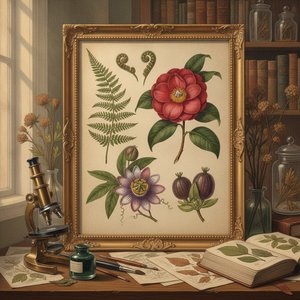
The Timeless Elegance of Victorian Botanical Painting: A Journey Through Nature's Intricate Detail and Scientific Artistry
Discover the exquisite world of Victorian botanical painting, where scientific precision meets profound aesthetic grace. Explore a journey through nature's intricate details, from legendary illustrators to the untamed beauty of Marianne North’s vibrant floral masterpieces.
Fedezze fel a műalkotásokat témák, stílusok és jellemzők szerint csoportosítva.


