
 Megtekintés
 Küldés
 Megosztás
 Részletek
 Útmutató

 Letöltés
 Hasonló darabok
 X-ray felvétel
 Diavetítés
 Q&A
Q&A Statisztika
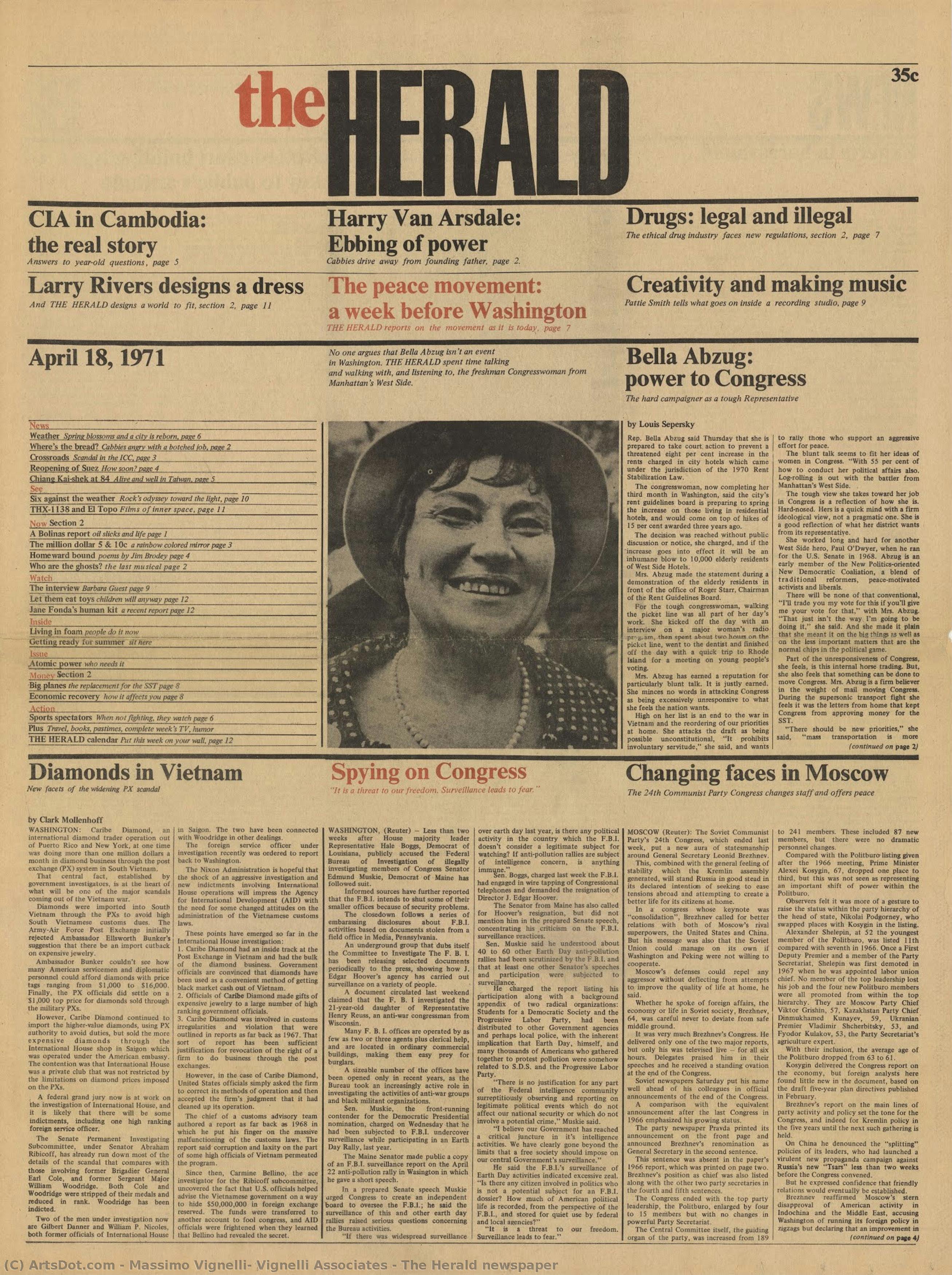
The Herald newspaper

- 43.0 x 57.0 cm


Experience the modernist grid design of The Herald newspaper by Massimo Vignelli (1971), showcasing vintage graphic communication art; discover this iconic piece today.
 Összes részlet megjelenítése
"hu_meta_description": "Massimo Vignelli (1931-2014) olasz tervező ikonja, a minimalista grafikus design mestere, legismertebb a NYC metrótávolsági térképe és a vállalatok logói. Érdemes megismerni a munkásságát!"
Az ezen az oldalon megjelenített műalkotások szerzői jogi védelem alatt állnak, ami azt jelenti, hogy törvényileg nem készíthetünk és nem adhatunk el belőlük pontos másolatokat. Ez a védelem olyan nemzetközi megállapodások alapján érvényesül, mint például a Berni Egyezmény és a nemzeti jogszabályok által, beleértve azokat is, amelyeket meghatározott Az USA szerzői jogi törvénye – 17. cím.
Ez a módszer teljes mértékben megfelel a szerzői jogi szabályozásnak, mivel nem tartalmazza a védett műalkotás másolását vagy duplikálását. Ehelyett ez egy kreatív újinterpretáció – egy új festmény, amely az eredetivel való összefüggései miatt hatással van rá, de nem az az.
Giclée / Műnyomat
Múzeumi minőségű giclée vagy vászonnyomat, gyors gyártással és rugalmas finomítási lehetőségekkel. ( Kézzel festett másolat rendelése Áttérés digitális képre)




P118B Ft10

P118H Ft10

P118W Ft10

P438Z Ft10

P508JH Ft12

P508YH Ft12

P805H Ft10

P805Z Ft10

P919BZ Ft10

P919G Ft10

P919XJ Ft10

P959ZH Ft10

P968JZ Ft12

W106C Ft8

W218G Ft10

W218JH Ft8

W218Y Ft10

W307PJ Ft10

W316G Ft10

W316PJ Ft8

W316Y Ft10

W398PJ Ft8

W4111J Ft10

W500HY Ft15

W500JH Ft15

W692G Ft12

W849H Ft8

W940BG Ft15

W953PJ Ft8




Standard méret
egyedi méretű
CM
INCH
Válasszon előre meghatározott méreteink közül, amelyek megfelelnek a műalkotás eredeti arányainak.
Loading sizes...

szélesség
magasság
Írja be a keretének vagy a falának megfelelő szélességet és magasságot. A nyomatot csak le lehet vágni, soha nem tehető nagyobbá, mint az eredeti kép, így egy eltérő alakú méretnél a kép egy része elveszik. Mielőtt bármit kinyatintanánk, küldünk egy digitális próbamodellt jóváhagyásra. Az oldalon látható kép nem tartalmazza a valós levágást — ezt csak a próbamodell mutatja meg.
Világszerte történő kiszállítás területére mindössze 2 hét alatt, a szokásos 4-5 hét helyett. (1 november)

Ingyenes globális expressz szállítás

Prémium minőségű len vászon

Teljes körű szállítási biztosítás

Vámvisszatérítési Garancia

Hiteles színarányosság garancia

100 napos visszaküldési lehetőség (csak hibás termékek esetén)

100% pénzvisszatérítési garancia

Több darab vásárlásakor kedvezmény
 Az üvegkeretes opció csak 110 cm alatti méretben érhető el

The Herald newspaper
Giclée / Műnyomat
Reprodukció mérete
-


Összesített ár
Ft 22596
The Grid of Modern Communication: Vignelli's The Herald
To encounter this piece is to step directly into the vibrant, structured chaos of mid-century New York journalism. This reproduction of The Herald newspaper from April 1971, conceived by Massimo Vignelli and his associates, is far more than mere ephemera; it is a meticulously designed artifact of visual communication history. It captures a moment when design principles—simplicity, functionality, and rigorous structure—were being aggressively applied to the seemingly unruly medium of print journalism. The very act of presenting this newspaper front page transforms what might be considered disposable media into a profound study in modernist graphic discipline.
A Masterclass in Structured Design
Vignelli’s genius, always rooted in an almost architectural understanding of space, is on full display here. The description notes the structure: a rigid grid of six columns and sixteen modules per column. This underlying skeleton dictates every element—the placement of headlines like "Diamonds in Vietnam," the accompanying portrait of the smiling woman, and the smaller articles detailing everything from spying congress to changing leaves in Moscow. Vignelli’s commitment to using a single typeface, Times Roman, across various weights and sizes, speaks volumes about his belief in universal legibility. It is a powerful testament to the idea that restraint—the disciplined use of negative space and consistent typography—can generate an overwhelming sense of order and sophistication.
Historical Resonance and Materiality
The year 1971 places this work within a fascinating cultural nexus, post-war modernism grappling with the burgeoning media landscape. While the paper itself ultimately folded due to distribution issues, its surviving design remains potent. For the collector or designer, understanding this context is key. This piece speaks to an era obsessed with efficiency and clarity in information transfer. When considering a reproduction for your space, you are not just acquiring art; you are curating a dialogue about how we consume knowledge—a conversation between the fleeting headline and the enduring power of good design.
Symbolism of the Grid
The grid itself functions as the primary symbolic element. In an age where digital information often feels overwhelming, this physical manifestation of order offers a visual anchor. It symbolizes control, but not oppressive control; rather, it suggests that even complex narratives—the confluence of international events and local interest—can be organized into digestible, beautiful patterns. The interplay between the large, arresting photograph and the tightly packed textual modules creates a dynamic tension, mirroring the very energy of a bustling city like New York in that era.
Bringing Modernist Precision Home
For interior design or gallery display, this piece offers an unparalleled opportunity to inject intellectual rigor into a space. It pairs beautifully with minimalist furniture, mid-century modern accents, or any setting that appreciates the clean lines of 20th-century industrial aesthetics. Owning this reproduction is an homage to Massimo Vignelli’s lifelong dedication to elevating the mundane—the daily newspaper—into something enduringly beautiful and intellectually stimulating.
Kérdések és válaszok
Milyen stílusba tartozik a "The Herald newspaper"?
A „The Herald newspaper”, Massimo Vignelli, Vignelli Associates alkotása művészeti irányata a Modernism. Ez a klasszifikáció a művet a kapcsolódó alkotók és alkotások közé sorolja.
Milyen felhasználásra ajánlott a "The Herald newspaper" nyomata?
A „The Herald newspaper” nyomtatvány ajánlott felhasználása: Statement.
Milyen arányú „The Herald newspaper”, Massimo Vignelli, Vignelli Associates alkotása, és milyen méretű?
A "The Herald newspaper" formátuma Portrait, az eredeti mérete pedig 43 x 57 cm. Mindkét információ hasznos, ha reprodukciót tervezünk.
A művész életrajza
A formnak szentelt élet: Massimo Vignelli világa
Massimo Vignelli 1931-ben született Milánóban, és pályája a modernista design elkötelezett híveinek egyik legmeghatározóbb útvonala volt. Már fiatal korában is megmutatta, hogy őszinte, veleszületett érzéket擁 有 a vizuális kommunikáció tekintetében; építészeti képzése a milánói Politecnico di Milanóban, majd a velencei Università Iuav Egyetemen vette fel az alapokat. Azonban az igazi szenvedélye egy tanúsítvány jellegűapprentizátussal gyulladt meg a neves Castiglioni testvérnél – az olasz ipari design úttörőinél –, akik megtanították őt, hogy a gondos tervezés erejével formálhatja át a világot. Ez a korai tapasztalat rögzítette benne a funkcionalitás, az egyszerűség és a mindennapi problémákra talált elegáns megoldások erejét. Ő nem csupán tárgyakat tervezett; élményeket alkotott, interakciókat finomított, és a hétköznapi pillanatokat emelte fel a maradandó emlékek közé. Ez a formálódó időszak fektette le az alapokat egy olyan karrier számára, amely kontinenseken keresztül határozta újra a vizuális kultúrát.Olaszországtól New Yorkig: Egy transzatlantikus vízió
Vignelli útja 1966-ban Amerikába vezette őt, ahol kulcsszerepet játszott az Unimark International New York-i irodájának megalapsításában. Ez egy fordulópont volt nemcsak számára, hanem az amerikai design tájformálásában is. Az Unimark gyorsan felrajzolta helyét a világ színeiben, és Vignelli hozzájárulásai – legkiemelkedebben az American Airlines tartós logója – megszilárdították hírnevét a vállalati identitás mestereként. A kreatív filozófiák közötti növekvő különbség azonban arra késztette, hogy önálló utat keressen. 1971-ben feleségével és élettársával, Lella Vignellivel együtt alapította meg a Vignelli Associates irodát. Ez a partnerség rendkívül termékenynek bizonyult, és a kifinomult designmegoldások szinonimájává vált, amely kiterjedt a grafikai tervezéstől a belsőépítészeten, a termékdesignon át egészt a világtörténeti jelentőségű építészetig. A vállalat etikája abban a meggyőződésben gyökerezett, hogy a jó designnak elérhetőnek, időtlennek és mélyen hasznosnak kell lennie – elveket, amelyeket pályafutásuk során állandóan hívdettek fel.Ikonikus alkotások: A tisztaság öröksége
Massimo Vignelli hatása szervesen beágyazódott a modern élet szövetébe. Talán legismertebb teljesítménye az 1972-es New York metrótávolsági térkép újratervezése volt. Bár kezdetben megkavargató volt a szigorú földrajzi pontatlanság miatt, ez egy bátor kijelentés volt a tisztaság és a használhatóság mellett. Vignelli a könnyen olvasható és intuitív navigációt részesítette előnyben a szó szerinti ábrázolás helyett, létrehozva egy diagrammás térképet, amely ma is nap mint nap milliók utatvalója. Ez a projekt testreszabott példája alapvető tervezési filozófiájának: az üzenet közvetítése minden mással szemben. A metrótérképön túl a Vignelli Associates megkérdőjelezhetetlen nyomot hagyott számtalan márka és intézményben. A Bloomingdale’s számára végzett munkája – beleértve az ikonikus barna papírtáskát egyszerű fehér logójával – a vásárlási élményt stílusvállalkozássá formálta. Megteremtették a Knoll bútorait, a Heller csomagolásait és olyan vállalati identitásokat, amelyek a minőség és az innováció azonnal felismerhető szimbólumaivá váltak. *Heller Rainbow Dinnerware* kollekciója minimalista esztétikájának bizonyítéka, ahol vibráló színek találkoznak tiszta, geometrikus formákkal. A *Tredicesima Triennale di Milano* plakát a szín és az alak bátor használatát mutatja be, míg a *Knoll Design* borító a neves márkák számára alkotott lenyűgöző vizualitás képességét demonstrálja.Tartós hatás: Az esztétikén túl
Massimo Vignelli hatása messze túlmutat egyéni projekteken; ő alapvetően átformálta azt, ahogyan magát a designt is érzékeljük. Szilárdan védte a tipográfiai fegyelmet, híresen hirdetve a betűtípusok korlátozott palettáját – úgy vélt, hogy az igazi kreativitás nem a végtelen lehetőségekben, hanem a megfontolt eszközökkel végrehajtott mesteri precizitásban rejlik. Könyve, a *The Vignelli Canon*, a tervezők manifesztumává vált, amely világosság, egyszerűség és maradandó elegancia elveit vázolta fel. Nem csupán vizuálisan plăúcsa tárgyakat alkotott; a káoszból rendet akart létrehozni, hatékonyan kommunikálni, és az emberi tapasztalást gondos tervezéssel magasabb szintre emelni. Munkássága továbbra is inspirálja a tervezők generációit, emlékeztetve őket arra, hogy az igazi innováció az szükségtelenek levetésében és a lényegre való összpontosításban rejlik. A Rochester Institute of Technology Vignelli Designkutató Központja örökhűségének szentelt emlékműként szolgál, őrizve munkásságának kiterjedt archívumát és elősegítve hadiragok felfedezését feltörő ötleteinek. 2014-ben távozott, de alkotásai hatalmas erővel jelen vannak tovább, formálva világunkat tartós eleganciájukkal és a tisztaság iránti rendíthetetlen elkötelezettségükkel.
Massimo Vignelli, Vignelli Associates
1931 - 2014 , Olaszország
Rövid információk
- Artistic Movement Or Style: Modernista
- Artists Or Movements Influenced By This Artist: ['Heinz Waibl']
- Artists Who Influenced This Artist:
- Achille Castiglioni
- Pier Giacomo Castiglioni
- Date Of Birth: 1931
- Full Name: Massimo Vignelli
- Nationality: Italiano
- Notable Artworks:
- American Airlines logo
- NYC Subway mappa
- Bloomingdale's sacchetti marroni
- Place Of Birth: Milan, Itália
Kapcsolódó cikkek

TopImpressionists.com F.A.Q.: Discover the Vibrant Beauty of Our Premium Art Poster Prints
Explore the technical excellence of TopImpressionists.com's premium art poster prints. Discover how our 12-color pigment system and archival inks capture the luminous beauty of Impressionist masterpieces with unmatched color fidelity and museum-grade durability for the discerning collector.
Fedezze fel a műalkotásokat témák, stílusok és jellemzők szerint csoportosítva.


