

 Megtekintés
 Küldés
 Megosztás
 Részletek
 Útmutató

 Letöltés
 Hasonló darabok
 X-ray felvétel
 Diavetítés
 Kérdések és válaszok
 Statisztika
Lighthouse


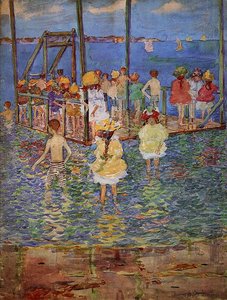
Maurice Brazil Prendergast’s “Lighthouse” is a captivating Impressionist masterpiece depicting a lively beach scene illuminated by a towering lighthouse against an overcast sky. Known for his distinctive style, Prendergast skillfully employs loose brushstrokes and brilliant hues to convey the essence of coastal life.
 Összes részlet megjelenítése
Prendergast Maurice: A szomorú szívű fiú virágokkal, modern élet és mozaik stílusművész. Fedezze fel a világát! (Maurice Prendergast: The sad-hearted boy with flowers, scenes of modern life and mosaic style. Explore his world!)
Giclée / Műnyomat
Múzeumi minőségű giclée vagy vászonnyomat, gyors gyártással és rugalmas finomítási lehetőségekkel. ( Kézzel festett másolat rendelése Áttérés digitális képre)




P118B Ft10

P118H Ft10

P118W Ft10

P438Z Ft10

P508JH Ft12

P508YH Ft12

P805H Ft10

P805Z Ft10

P919BZ Ft10

P919G Ft10

P919XJ Ft10

P959ZH Ft10

P968JZ Ft12

W106C Ft8

W218G Ft10

W218JH Ft8

W218Y Ft10

W307PJ Ft10

W316G Ft10

W316PJ Ft8

W316Y Ft10

W398PJ Ft8

W4111J Ft10

W500HY Ft15

W500JH Ft15

W692G Ft12

W849H Ft8

W940BG Ft15

W953PJ Ft8




Standard méret
egyedi méretű
CM
INCH
Válasszon előre meghatározott méreteink közül, amelyek megfelelnek a műalkotás eredeti arányainak.
Loading sizes...

szélesség
magasság
Írja be a keretének vagy a falának megfelelő szélességet és magasságot. A nyomatot csak le lehet vágni, soha nem tehető nagyobbá, mint az eredeti kép, így egy eltérő alakú méretnél a kép egy része elveszik. Mielőtt bármit kinyatintanánk, küldünk egy digitális próbamodellt jóváhagyásra. Az oldalon látható kép nem tartalmazza a valós levágást — ezt csak a próbamodell mutatja meg.
Világszerte történő kiszállítás területére mindössze 2 hét alatt, a szokásos 4-5 hét helyett. (3 november)

Ingyenes globális expressz szállítás

Prémium minőségű len vászon

Teljes körű szállítási biztosítás

Vámvisszatérítési Garancia

Hiteles színarányosság garancia

100 napos visszaküldési lehetőség (csak hibás termékek esetén)

100% pénzvisszatérítési garancia

Több darab vásárlásakor kedvezmény
 Az üvegkeretes opció csak 110 cm alatti méretben érhető el

Lighthouse
Giclée / Műnyomat
Reprodukció mérete
-


Összesített ár
Ft 22934
A Symphony of Light at St. Malo
In his 1902 masterpiece, Lighthouse, Maurice Brazil Prendergast invites the viewer into a luminous world where the boundaries between sea, sky, and shore dissolve into a rhythmic dance of color. This captivating work captures the essence of a coastal scene at dusk, specifically set against the rugged beauty of the St. Malo coastline. The painting is far more than a mere landscape; it is an immersive experience that celebrates the fleeting magic of twilight. As the day wanes, the light transforms into diffused, ethereal hues, casting a soft glow over a bustling beach where life unfolds in vibrant, mosaic-like patches. In the foreground, figures move with a sense of leisurely joy, strolling along the sandy shore or enjoying the refreshing sea breeze, their forms rendered through loose, expressive lines that prioritize atmosphere and movement over rigid detail.
The composition finds its steadying force in the lighthouse itself, which stands tall against the skyline. Surrounded by structures that lend a sense of depth to the coastal settlement, the lighthouse serves as a brilliant focal point, drawing the eye upward toward the vast expanse of the sea and the cloud-swept sky. The water, dotted with scattered boats, stretches toward a horizon where the elements meet in a harmonious blend of texture and tone. Through this orchestration of light and subject, Prendergast captures a moment of profound tranquility, making the piece an ideal centerpiece for those seeking to bring a sense of serene energy into a sophisticated interior.
Technique and the Impressionist Spirit
Prendergast’s approach to Lighthouse is a testament to his mastery of Post-Impressionist aesthetics. Eschewing the heavy, academic realism of his predecessors, he employed a technique rooted in optical mixing, meticulously layering thin washes of pigment to create vibrant color harmonies. This method results in a shimmering, mosaic-like quality on the paint surface, an illusion of light that mirrors the actual glow of the lighthouse beam piercing through the dusk. His brushwork is famously loose and spontaneous, conveying the very breath of the ocean and the shifting weather patterns of an overcast day.
This stylistic innovation places the work within a significant historical dialogue, echoing the revolutionary spirit of artists like Claude Monet and Camille Pissarro. By focusing on the immediacy of perception rather than precise anatomical or architectural accuracy, Prendergast achieves a sense of modern vitality. The painting carries a deep emotional resonance; the lighthouse acts as a powerful symbol of guidance, resilience, and steadfastness. Its light, cutting through the encroaching darkness, serves as a metaphor for hope and the illumination of one's path. For collectors and designers, this artwork offers not just a beautiful visual element, but a profound emotional connection—a window into a world where color, pattern, and light converge to evoke feelings of wonder and contemplation.
Kérdések és válaszok
Mely művészhez köthető a "Lighthouse"?
A "Lighthouse" alkotását Maurice Prendergast készítette. Az ezen az oldalon található információk Maurice Prendergast eredeti művészetét mutatják be.
Hol vásárolhatok egy nyomtatványt a(z) „Lighthouse”, Maurice Prendergast alkotása alkotásból?
A "Lighthouse" minőségi giclée nyomat pamutvászonon vagy archiváló vászonpapíron formátumban is elérhető. A rendelést a Művészeti nyomtatvány oldalon lehet megtenni, a kívánt méretben.
Mely művészeti irány része a „Lighthouse”, Maurice Prendergast alkotása?
A „Lighthouse”, Maurice Prendergast alkotása a Post-Impressionism irányzat része. Ez az irányzat adja a mű stilisztikai kontextusát.
Hasonló műalkotások


A művész életrajza
A Life Painted in Light: The World of Maurice Brazil Prendergast
Maurice Brazil Prendergast, a name perhaps less immediately recognizable than some of his contemporaries, nevertheless occupies a vital and luminous space within the narrative of American modernism. Born on October 10, 1858, amidst the rugged beauty of St. John’s, Newfoundland, his early life was shaped by an unusual upbringing – a family operating a subarctic trading post. This initial exposure to a stark, elemental landscape would subtly inform his later artistic vision, even as his world shifted dramatically with the family's relocation to Boston following the failure of their business venture. It was in Boston that young Maurice’s artistic inclinations began to blossom, nurtured by an apprenticeship with a commercial artist – a formative experience that instilled within him a sensitivity to color and pattern which would become hallmarks of his mature style. This early training wasn’t about grand academic tradition; it was about visual communication, about capturing attention, and this pragmatic foundation proved surprisingly potent as he evolved into a sophisticated Post-Impressionist painter.Parisian Influences and the Shaping of a Style
The true crucible for Prendergast's artistic development lay in Paris. From 1891 to 1895, he immersed himself in the vibrant art scene, studying at both the Académie Colarossi and the Académie Julian. These institutions provided him with technical grounding, but it was his encounters with the burgeoning avant-garde that truly ignited his imagination. He wasn’t simply absorbing techniques; he was witnessing a revolution in artistic thought. The influence of James McNeill Whistler, discovered through Canadian painter James Morrice, proved particularly significant, fostering an appreciation for aestheticism and harmonious color arrangements. Later exposure to artists like Édouard Vuillard and Pierre Bonnard cemented his path towards Post-Impressionism, while enco- his encounters with the works of Vincent van Gogh and Georges Seurat during retrospectives in Paris broadened his understanding of expressive form and color theory.
The Eight and Beyond: Finding His Place in American Art
Upon returning to Boston in 1895, Prendergast began to forge his distinctive artistic identity. He initially worked primarily in watercolor and monotype, mediums that allowed him to explore the delicate nuances of light and color with remarkable freedom. His subject matter often centered on scenes of modern life – leisurely moments in parks, bustling city streets, and vibrant waterfronts. These weren’t merely depictions of reality; they were carefully constructed compositions designed to evoke a sense of joy, vitality, and urban energy. He sought to capture the essence of these scenes rather than their literal representation. His growing reputation led to inclusion among *The Eight*—a group of American artists including William Glackens, Robert Henri, and John French Sloan who sought to break away from academic conventions and depict the realities of modern American life. While Prendergast shared their desire for artistic independence, his aesthetic sensibilities differed significantly from the more socially conscious realism favored by many of his colleagues. He remained somewhat apart, a quiet observer whose work offered a different kind of commentary on modernity – one focused on beauty, harmony, and the fleeting pleasures of everyday existence. His participation in the landmark 1913 Armory Show further solidified his position within the American art world, showcasing his stylistic maturity to a wider audience.A Legacy of Light and Pattern
Despite facing health challenges throughout much of his career, Prendergast continued to exhibit and refine his artistic vision until his death in 1924. He remained a bachelor, finding companionship and support in his close relationship with his brother Charles, also an artist. His works, often overlooked during his lifetime, have since been recognized for their pioneering spirit and enduring beauty. Prendergast’s influence can be seen in the work of later American artists who embraced abstraction and explored the expressive potential of color and pattern. He was a master of capturing atmosphere and mood, transforming ordinary scenes into captivating visual experiences. His paintings are not simply representations of places; they are evocations of feelings – a sense of warmth, light, and the simple joys of being alive. He stands as a testament to the power of individual vision, an artist who dared to forge his own path and create a world painted in light and pattern, leaving behind a legacy that continues to inspire and delight audiences today.Exploring Prendergast’s World Today
Fortunately, experiencing Maurice Brazil Prendergast's artistry is readily accessible. His works are held in prominent collections such as the Smithsonian American Art Museum and the National Gallery of Art, offering opportunities for direct engagement with his vibrant canvases. Numerous online resources, including those provided by these institutions, allow art enthusiasts to delve deeper into his life and work. Furthermore, reproductions and scholarly analyses are available through platforms like TopImpressionists, providing a comprehensive overview of his artistic journey and lasting impact on the landscape of American art. His paintings continue to resonate with contemporary viewers, reminding us of the enduring power of beauty, observation, and the transformative potential of color.
Maurice Prendergast
1858 - 1924 , Kanada
Rövid információk
- Artistic Movement Or Style: Posztimpresszionizmus
- Artists Or Movements Influenced By This Artist:
- The Eight
- Amerikai művészet
- Artists Who Influenced This Artist:
- James McNeill Whistler
- Édouard Vuillard
- Date Of Birth: 1858. 10. 10.
- Date Of Death: 1924. 2. 1.
- Full Name: Maurice Brazil Prendergast
- Nationality: Kanadai-amerikai
- Notable Artworks:
- Umbrellas in the Rain
- Central Park
- Three Nudes
- Place Of Birth: St. John's, Kanada
Kapcsolódó cikkek

Evocations of Place: A Historical Journey Through Landscape Art
Explore the rich history of landscape art with TopImpressionists. Discover renowned artists, movements like Impressionism & Romanticism, and expert guidance for collecting timeless pieces. Find your perfect serene escape today!

Paul Cézanne 25 Mesterműve: A Modern Művészet Úttörői | TopImpressionists
Fedezze fel Paul Cézanne 25 legikonikusabb művét! Ismerje meg a posztimpresszionizmus úttörőjének festményeit, technikáját és inspirációit. Vászonképek, portrék, tájképfestmények – minden otthonba. Böngéssze gyűjteményünket a TopImpressionists-on!

Evocations of Place: A Historical Journey Through Landscape Art
Explore the rich history of landscape art with TopImpressionists. Discover renowned artists, movements like Impressionism & tonalism, and expert guidance for collecting timeless pieces. Find your perfect serene escape today!

Maurice Prendergast: Pioneering Abstraction & the Poetics of Modern American Life
Explore the captivating world of Maurice Brazil Prendergast, a pioneer of American Modernism. Discover his unique mosaic style, influence on abstract art, and investment potential. Expert analysis & collecting guide.

A 10 legikonikus impresszionista tájkép: művészeti remekművek otthonába | TopImpressionists.com
Fedezze fel a 10 legikonikus impresszionista tájkép festményt! Monet, Renoir, Degas és más művészek remekművei. Vászonképek, faliképek otthonába – inspirálódjon TopImpressionists.com-on! Explore the full collection online.
Fedezze fel a műalkotásokat témák, stílusok és jellemzők szerint csoportosítva.


