A Voice for Paraguayan Resilience
Olga Blinder was far more than a mere observer of her era; she was a profound witness to the turbulent soul of Paraguay. Born in 1921 into a Jewish family in Asunción, her early life was framed by the shadows of monumental historical shifts, including the Chaco War, the global upheaval of World War II, and the internal scars of the 1947 Paraguayan Civil War. These formative years, steeped in both personal and national struggle, forged an artist whose work would become a sanctuary for the marginalized and a powerful instrument of social resistance. Blinder possessed a rare ability to translate the psychological weight of political repression into a visual language that spoke of both profound anguish and an unyielding human dignity.
Her intellectual journey was as diverse as the themes she explored, characterized by a unique blend of analytical precision and pedagogical passion. Before fully committing to the canvas, Blinder pursued degrees in engineering and education at the Universidad Nacional de As::unción. This dual foundation—the structural logic of an engineer and the empathetic insight of an educator—deeply informed her artistic vision. She did not merely seek to depict reality; she sought to understand its underlying architecture and to teach others how to see it. Her formal training was further enriched by private instruction from influential Argentinian and Brazilian masters such as Lívio Abramo, Ofelia Echagüe Vera, and João Rossi, whose techniques allowed her to expand the boundaries of Paraguayan modernism.
The Dawn of Modernity and Expressionism
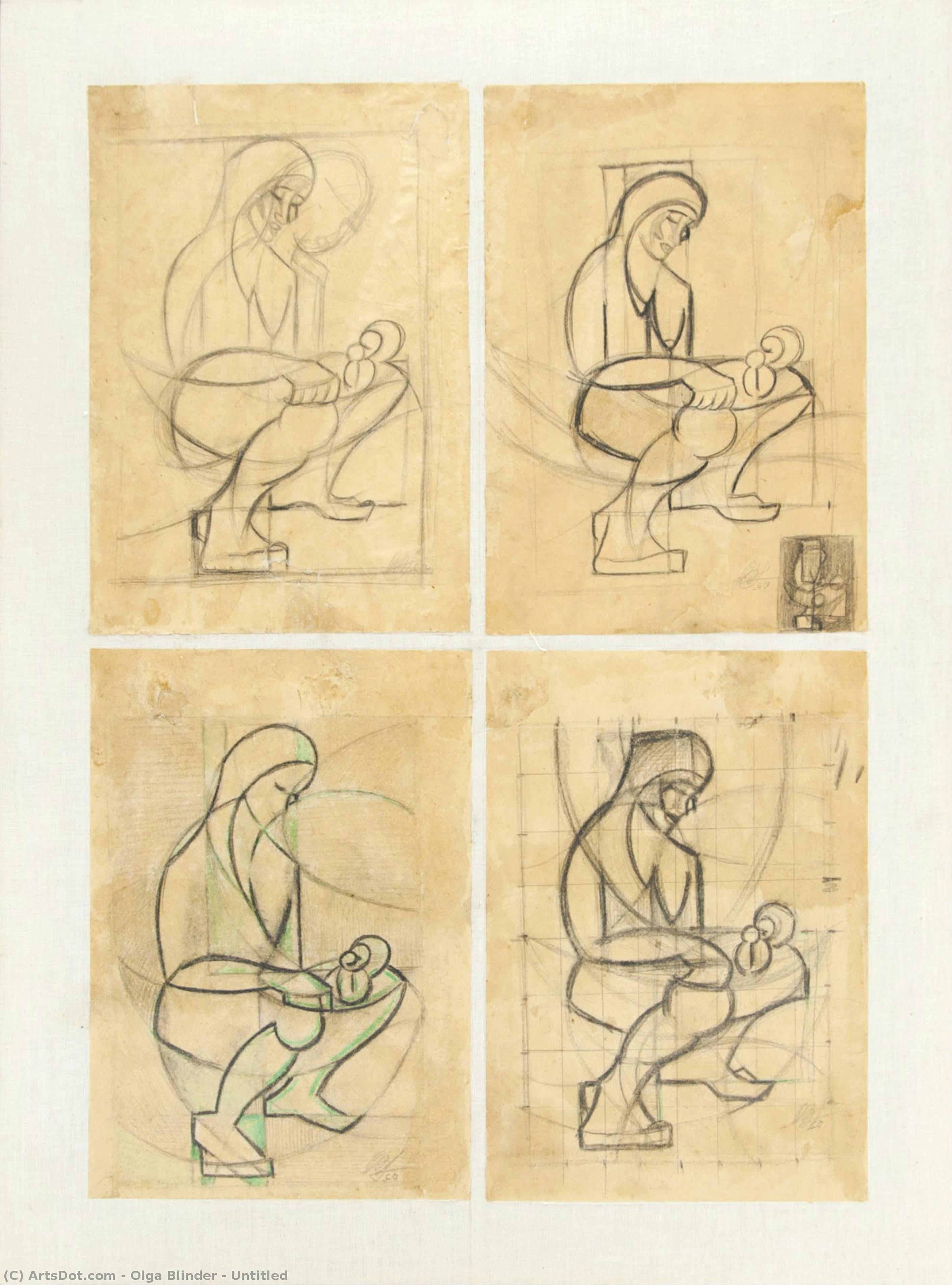
The mid-20th century marked a decisive rupture in the Paraguayan art scene, a revolution led by Blinder and her contemporaries. In 1954, alongside visionaries like Josefina Plá, Lilí del Mónico, and José Laterza Parodi, she co-founded the Grupo Arte Nuevo. This collective was born from a desire to dismantle the stifling academic conservatism that had long dominated the nation's artistic discourse. By embracing expressionism, Blinder moved away from the meticulous imitation of reality toward an art form that prioritized emotional intensity and subjective truth. Her work became a manifesto in itself, challenging established paradigms and introducing a new, modern vocabulary to the local landscape.
This period of innovation was not confined to the gallery walls; Blinder believed that "new art" should permeate the very fabric of everyday life. During the 1950s, she sought out public spaces, painting murals in schools and sports clubs throughout Asunción to bring her message of social consciousness to the working class. Her subjects were often those overlooked by history: the quiet strength of women, the innocence of children, and the weary but resilient faces of laborers. Through these works, she elevated the ordinary to the level of the monumental, ensuring that the struggles of the common person were etched into the cultural memory of her country.
Mastery of Form and Lasting Legacy
While her paintings captured the breadth of Paraguayan life, Blinder achieved international renown through her mastery of printmaking. Her graphic works, particularly her woodcuts from the 1960s and later zincographs in the 1970s, became a primary vehicle for her social commentary. In these prints, she utilized a striking economy of line, simplifying and synthesizing the human form to its most essential, emotive characteristics. This stylistic distillation allowed her messages of resistance and humanity to travel far beyond Paraguay’s borders, finding resonance in international print biennials across Latin America, Europe, and Japan.
Beyond her visual output, Blinder's legacy is inextricably linked to her role as a transformative educator. As the director of institutions like the Escolinha de Arte of Paraguay, she shaped generations of artists, instilling in them a commitment to both technical excellence and social responsibility. Her life’s work stands as a testament to the power of art to serve as a tool for denouncing violence and celebrating the human condition. Even under the oppressive atmosphere of the Stroessner dictatorship, Blinder remained a steadfast beacon of creativity and truth, leaving behind an oeuvre that continues to inspire a profound respect for the enduring spirit of Paraguayan resistance.


 Preview
 Nyomat vásárlása
 Megosztás
 Megosztás
 Részletek

 Letöltés
 Hasonló alkotások
 X-ray felvétel
 Diavetítés

 Tovább olvasom






































 Az üvegkeretes opció csak 110 cm alatti méretben érhető el



