


 Előnézet
 Megosztás
 Megosztás
 Részletek
 Útmutató

 Letöltés
 Hasonló darabok
 X-ray felvétel
 Diavetítés
 Statisztika
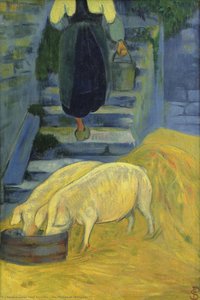
The Wall


Experience Sérusier's vibrant Synthetism in The Wall (1890), a Post-Impressionist mosaic echoing Gauguin's bold color theory; discover this masterpiece today.
 Tovább olvasom
Paul Sérusier (1864-1927) francia festő, a Nabis csoport egyik alapítója és a modern művészet úgymeg kezdeteinek meghatározó alakja. Cloisonnism stílusával, a tájak és figurák expresszív ábrázolásával jelent meg, inspirálva ezzel a tömegét.
Vásároljon nagy felbontású, javított digitális képet, amely minőségében messze felülmúlja az online előnézetet.
Minden fájlt szakembereink a legmodernebb eszközök és precíz, kézi retusálás segítségével készítenek el aprólékosan. Gondoskodunk arról, hogy minden kép kivételes tisztasággal, pontos színhelyességgel és részletgazdag finomsággal rendelkezzen.
A végleges fájl 72 órán belül e-mailben megérkezik, professzionális, szerkesztői és nyomtatási környezetbe optimalizálva az azonnali használathoz. Ez ugyanaz a minőség, amelyben a legmeghatározóbb tervezőstúdiók, kiadók és galériák is megbízhatnak.
Digitális kép
Töltsön le nagy felbontású fájlt személyes kiállításokhoz, nyomtatáshoz és kreatív projektekhez. ( Váltás nyomtatványra Kézzel festett másolat vásárlása)
Minden digitális kép rendeléséhez tartozó extrák
Szakértői digitális kézbesítés, garantáltan
Amikor a TopImpressionists.com szolgáltatást választja, nem csupán egy képet kap – professzionálisan felmagasított digitális műalkotást kap, amely precizitással készült, és amelyet megelégsedési gwarancia tesz biztoslássá. Az alábbiakban automatikusan minden benne 】

Gyors e-mail teslimítés
A nagy felbontású digitális képmásolatát a megrendelést követő 72 órán belül e-mailben elküldjük Önnek – azonnal használható formátumban.

MI-alapú digitális képjavítás
Műve professzionális módon kerül optimalizálásra fejlett mesterséges intelligencia eszközök és manuális szerkesztés segítségével, biztosítva a maximális részletességet, tisztaságot és színpontosságot.

Örök életű ingyenes újradatás
Véletlenül törölted vagy elvesztetted a fájlodat? Ne aggódj – bármikor ingyen újra megküldjük neked.

Nincs importköltség – soha
Élvezze műalkotásait azonnal, vám, illeték vagy szállítási költség nélkül – a digitális letöltések mindig adamentesek.

Színpontosság garantálása
Professzionális eszközök és színkezelés segítségével garantáljuk, hogy digitális képe a lehető legpontosabban tükrözze az eredeti színeket.

100 napos elégedettségi garancia
Ha nemມີ elégedett a digitális képével, 100 napon belül felülvizsgáljuk vagy 100% visszatérítjük az amountot – kérdés बिना.

100% Pénzvisszatérítési garancia
Nem tetszett a vásárlás? 100 napon belül teljes visszatérítést garantálunk a digitális fájl megvételétől számítva – kérdés nélkül.

Tömegrendelési kedvezmények
Vásároljon 3 képet, spóroljon 10%-et - Vásároljon 5-öt, spóroljon 15%-et - Vásároljon 10+ képet, spóroljon 20%-at. Kiváló kreatív projektekhez, galériákhoz és ügynökségekhez.
A Visionary Echo of Gauguin's Influence
Paul Sérusier’s “The Wall,” painted in 1890, stands as a testament to the burgeoning spirit of abstraction within Post-Impressionism and represents a crucial juncture in artistic history. Executed during his formative years alongside Vincent van Gogh and Paul Gauguin at Pont-Aven, Brittany, this unassuming landscape transcends mere depiction; it embodies a deliberate quest for expressive simplification—a technique championed by Gauguin himself—that would profoundly shape the trajectory of modern art.
- Subject Matter: The painting captures a tranquil rural scene featuring a man seated beside a weathered fence, framed against a backdrop of lush greenery and scattered trees.
- Style: Sérusier’s style aligns squarely with Synthetism, an avant-garde movement born from Gauguin's exploration of pure color and form. It eschews meticulous realism in favor of conveying emotion and spiritual resonance through flattened planes of pigment.
Technique: Cloisonnism – A Bold Departure From Tradition
Sérusier’s masterful application of cloisonnism—a technique popularized by Gauguin—is immediately apparent. Unlike traditional oil painting, where colors blend seamlessly, cloisonnism employs thin layers of pigment separated by lines of white gesso or bole. This method creates a mosaic-like effect, emphasizing distinct areas of color and enhancing the textural quality of the artwork. The deliberate use of white adds luminosity and contributes to the overall sense of serenity.
Historical Context: Gauguin’s Pont-Aven Circle & The Seeds of Abstraction
“The Wall” emerged from the influential Pont-Aven circle, where Sérusier collaborated closely with Gauguin on groundbreaking artistic experiments. Gauguin's unwavering belief in the power of color and symbolic representation served as a catalyst for artists like Sérusier to push beyond Impressionistic conventions. This painting represents not merely a beautiful landscape but also an active engagement with philosophical ideas concerning spirituality and the relationship between humanity and nature—themes central to the broader artistic discourse of the period.
Symbolism & Emotional Resonance: Beyond Representation
The composition itself speaks volumes about Sérusier’s intentions. The solitary figure, positioned near the fence, suggests contemplation and introspection. While seemingly simple in its visual elements, “The Wall” vibrates with emotional depth—a quiet stillness punctuated by the vibrant hues of the surrounding landscape. It invites viewers to consider not what is seen but what is felt; a subtle echo of Gauguin’s desire to capture the essence of experience rather than merely reproducing it.
A Legacy of Influence
"The Wall" solidified Sérusier's position as one of the foremost figures in Synthetism and profoundly impacted subsequent generations of artists. Its understated beauty combined with its innovative technique continues to inspire admiration and serves as a poignant reminder of the transformative potential inherent within artistic exploration—a legacy that resonates powerfully even today.
Gyakran Ismételt Kérdések
Hol függene jól a „The Wall”, Paul Sérusier alkotása reprodukciója?
A formátum (Landscape) és a javasolt helyiség (Living Room) az a két elhelyezési adat, amely a „The Wall”, Paul Sérusier alkotása alkotáshoz tartozik.
„The Wall”, Paul Sérusier alkotása egy világos vagy egy sötét tónusú alkotás?
A „The Wall”, Paul Sérusier alkotása rögzített értékei: balanced fényerő, Gentle Luminance luminancia.
Hol tudom letölteni a(t) „The Wall”, Paul Sérusier alkotása?
A „The Wall”, Paul Sérusier alkotása letölthető a mű Letöltés oldaláról, magas felbontású digitális kép letöltés formátumban.
Hasonló műalkotások




Művész életrajza
Early Life and Artistic Beginnings
Paul Sérusier, a pivotal figure in the development of modern art, was born on November 9th, 1864, in the heart of Paris. His upbringing within a prosperous middle-class family provided him with an exceptional education, beginning at the Lycée Fontane – later known as Lycée Condorcet – where he immersed himself in classical philosophy, Greek and Latin studies, and the sciences. This rigorous foundation laid the groundwork for his future artistic explorations. Notably, Sérusier’s classmates included fellow artists who would profoundly influence his trajectory, including Maurice Denis, Édouard Vuillard, and Ker-Xavier Roussel. His father, a successful businessman involved in the perfume industry, ensured that Paul received an upbringing conducive to pursuing his passions, recognizing his innate talent and desire for artistic expression. This familial support allowed Sérusier to dedicate himself fully to his burgeoning career as a painter, free from the constraints of immediate financial concerns.The Pont-Aven Years: Gauguin’s Influence and Cloisonnism
Sérusier's artistic journey truly took shape during the summer of 1888 when he traveled to Pont-Aven in Brittany. This picturesque coastal village became a vibrant hub for artists seeking inspiration and camaraderie, drawing figures like Paul Gauguin, Emile Bernard, and many others. It was within this environment that Sérusier encountered Gauguin, whose artistic philosophy and techniques exerted a powerful influence on the young painter. Gauguin encouraged Sérusier to break free from traditional academic painting practices, urging him to embrace pure colors, simplified forms, and a more intuitive approach to representation. This guidance culminated in the creation of *Bois d’Amour* (1888), a seminal work that exemplifies Sérusier's pioneering use of cloisonnism – a technique characterized by bold, flat shapes delineated by dark outlines, creating an almost mosaic-like effect. This innovative approach marked a significant departure from conventional painting methods and foreshadowed the development of abstract art.The Nabis Movement: Synthesis and Symbolism
Building upon his experiences at Pont-Aven, Sérusier became a key figure in the formation of the *Nabis* (meaning “prophet”) group – a collective of artists united by their desire to synthesize diverse artistic influences. Alongside Paul Gauguin, Maurice Denis, Pierre Bonnard, and Édouard Vuillard, the Nabis sought to create a new visual language that blended elements of Post-Impressionism, Symbolism, and even hints of Japanese aesthetics. The group met regularly at Ranson’s studio in Paris, engaging in spirited discussions about art, philosophy, and spirituality. Sérusier's work during this period reflected the Nabis’ emphasis on subjective experience, emotional expression, and a rejection of purely representational painting. He explored themes of melancholy, solitude, and the beauty of the natural world, often employing muted colors and evocative compositions to convey his inner state.Notable Works and Lasting Legacy
Throughout his career, Sérusier produced a remarkable body of work that continues to captivate viewers today. Key pieces include *L’Averse* (1893), a poignant depiction of a rainy day in Paris, which showcases his mastery of color and composition; the portrait of Paul Ranson (1890), offering a glimpse into the artist's personality; and *The Snake Eaters* (1894), a striking image that reflects the group’s interest in symbolism and mythology. Later in life, Sérusier taught at the École Ranson, further disseminating his artistic ideas and mentoring a new generation of artists. He also published “ABC de la peinture” in 1921, a seminal work exploring the fundamentals of painting. Paul Sérusier passed away on October 7th, 1927, in Morlaix, leaving behind a legacy as one of the most influential figures in the transition from Impressionism to modern art. His pioneering use of abstraction and his contributions to the Nabis movement continue to inspire artists today.
Paul Sérusier
1864 - 1927 , Franciaország
Rövid tények
- Artistic Movement Or Style: Post-Impressionista
- Artists Or Movements Influenced By This Artist:
- Les Nabis
- Synthetizmus
- Artists Who Influenced This Artist:
- Paul Gauguin
- Maurice Denis
- Date Of Birth: November 9, 1864
- Date Of Death: October 7, 1927
- Full Name: Louis-Paul-Henri Sérusier
- Nationality: Francia
- Notable Artworks:
- A Talisman
- L'averse
- Melancholy
- Place Of Birth: Párizs, Franciaország