

Shown: · With its frame:
 Megtekintés
 Küldés
 Megosztás
 Részletek
 Útmutató

 Letöltés
 Hasonló darabok
 X-ray felvétel
 Diavetítés
 Q&A
Q&A Statisztika

Ft 88091
Kézzel készített olajfestmény reprodukció
Kézzel festett olajvastú vászon, az Ön által választott méretben és keretben, művészeink készítik meglévőre. ( Váltás nyomtatványra Áttérés digitális képre)
Size
·Standard méret
egyedi méretű
CM
INCH
Válasszon előre meghatározott méreteink közül, amelyek megfelelnek a műalkotás eredeti arányainak.
Loading sizes...

szélesség
magasság
Írja be a kívánt szélességet és magasságot, hogy illeszkedjen a keretéhez vagy a falához. Mivel ez kézzel festett alkotás, egy eltérő formájú méret esetén a művész akár festhet is valamivel többet a kép körül, vagy korolathat is belőle — az Ön döntésének megfelelően. A festés megkezdése előtt küldünk egy digitális tervezetet jóváhagyásra. Az oldalon látható kép nem tartalmazza a végeredményt — csak a tervezet mutatja meg a valódi eredményt.
 További információk
Finish
·
White Ft1

Blurside Ft1

Extended Ft1

P118B Ft10

P118H Ft10

P118W Ft10

P438Z Ft10

P508JH Ft12

P508YH Ft12

P805H Ft10

P805Z Ft10

P919BZ Ft10

P919G Ft10

P919XJ Ft10

P959ZH Ft10

P968JZ Ft12

W106C Ft8

W218G Ft10

W218JH Ft8

W218Y Ft10

W307PJ Ft10

W316G Ft10

W316PJ Ft8

W316Y Ft10

W398PJ Ft8

W4111J Ft10

W500HY Ft15

W500JH Ft15

W692G Ft12

W849H Ft8

W940BG Ft15

W953PJ Ft8

H24-GOLD Ft30

H24-SILVER Ft30

H36-GOLD Ft45

H36-SILVER Ft45
Shipped in a protective tube, ready for your own framer.
Above 105 cm the frame is shipped as a kit for a professional framer — read the details.
Extras
optionalWhat do the extras include?
Examples of what can be changed: Replace face with customer photo; Add pet (e.g., replace cat with dog); Include hidden message in background; Change background landscape or elements.
After order, TopImpressionists.com team will email client for instructions and provide a mockup preview
After order, TopImpressionists.com team will email client for instructions and provide a mockup preview
Világszerte elérhető szállítás () 3-4 hét alatt a szokásos 5 hét helyett. (1 november). A minőség nem kérdőjelezhető.
Védőréteg (Lakk)
Névtábla
A gravírozott bronztábla részletei
This elegant plaque features the artist's name and the title of the artwork, finely engraved for a timeless presentation.
It is made from bronze with a refined, elegant finish. The text is precisely laser-engraved for a sharp and permanent result. Measuring 9x2 cm, the plaque is compact yet easy to read. It's built to be durable and scratch-resistant, offering a professional, museum-quality look. Mounting is simple thanks to the included adhesive backing.
Átlátszó akril tábla részletei
The plaque includes essential engraved details such as the artist's name, the title of the artwork, the date it was created, the type of media used-like oil on canvas or watercolor-a brief description of the piece, and a QR code that links to the complete artwork information.
It is crafted from clear acrylic, offering a sleek, modern appearance. The text is UV-engraved in black to ensure strong visual contrast. With a size of 10x15 cm, it ensures optimal readability. It comes equipped with two metal hooks for secure wall mounting. The plaque is designed to be weather-resistant, making it suitable for various environments, and it includes interactive features that work seamlessly with smartphone scanning.
Fekete akril tábla részletei
This elegant plaque includes engraved information such as the artist's name, the title of the artwork, the date it was created, the type of media used (like oil on canvas or watercolor), a short description of the artwork, and a QR code for quick access to more information.
The plaque itself is made from refined black acrylic with a premium finish. The text is laser-engraved in white for high contrast and readability. Its size is 10x15 cm, designed to be easy to read. It comes with two metal hooks for professional mounting. The design is sleek and fits any interior style. It is also weather-resistant and durable, with built-in digital integration for mobile compatibility.
Az üvegkeretes opció csak 110 cm alatti méretben érhető el
 Az üvegkeretes opció csak 110 cm alatti méretben érhető el
- Ingyenes globális expressz szállítás
- Prémium minőségű len vászon
- Teljes körű szállítási biztosítás
- Vámvisszatérítési Garancia
- Hiteles színarányosság garancia
- 100 napos visszaküldési lehetőség (csak hibás termékek esetén)
- 100% pénzvisszatérítési garancia
- Több darab vásárlásakor kedvezmény


A gyűjtemény leírása
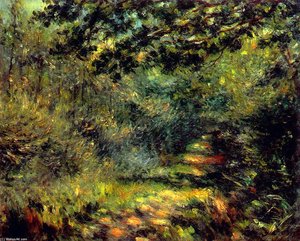
Pierre-Auguste Renoir's “Path Through the Woods,” painted in 1874, isn’t merely a landscape; it’s an invitation. This Impressionist masterpiece captures a golden hour bathed in dappled sunlight filtering through a dense forest, emphasizing peace and contemplation. Renoir’s loose brushstrokes and masterful use of light create a captivating scene.
A művész életrajza
Renoir Pierre-Auguste: Francia egyik legismertebb impresszionista festője! Életművei a fény, a szépség és a boldogság ünnepe, a párizsi élet és nők csodálatos ábrázolásával.
About the painting
A Serene Passage: Delving into Renoir’s “Path Through the Woods”
Pierre-Auguste Renoir's "Path Through the Woods," painted in 1874, isn’t merely a landscape; it’s an invitation. An invitation to step away from the bustle of Parisian life and immerse oneself within the tranquil embrace of nature. This quintessential Impressionist work, rendered in oil on canvas, captures a fleeting moment – a golden hour bathed in dappled sunlight filtering through a dense forest, creating an atmosphere of profound peace and quiet contemplation. The painting immediately draws the eye along the winding path, a subtle yet powerful directional element that guides us deeper into the scene’s heart. It's a testament to Renoir’s ability to distill the essence of a natural setting, not just its visual appearance, but also its emotional resonance.Composition and Technique: A Dance of Light and Brushstroke
Renoir masterfully employs Impressionist techniques to achieve this effect. The composition is deceptively simple – a winding path cutting through a tapestry of trees and grasses – yet it’s the *way* he renders these elements that truly captivates. Loose, expressive brushstrokes dominate the scene, avoiding sharp outlines and instead prioritizing the capture of light and color as they shift and change with every passing moment. The trees themselves aren't meticulously detailed; rather, they are suggested through a rapid succession of short, broken strokes in shades of green and brown, conveying movement and vitality. Similarly, the grasses ripple with an almost palpable sense of life, rendered with delicate, feathery textures that seem to shimmer in the sunlight. Notice how Renoir utilizes warm hues – ochres, yellows, and hints of red – in the background to create a sense of depth and distance, while cooler greens dominate the foreground, anchoring the viewer within the scene. The subtle inclusion of a solitary figure near the center adds a touch of scale and perspective, reminding us of our own presence within this natural world without disrupting its serenity.Contextualizing the Impression: Renoir and the Dawn of Modernity
“Path Through the Woods” firmly places itself within the broader artistic context of the late 19th century, a period marked by significant shifts in art and society. Pierre-Auguste Renoir was a pivotal figure in the burgeoning Impressionist movement, alongside artists like Claude Monet and Edgar Degas. Rejecting the rigid conventions of academic painting, the Impressionists sought to capture the fleeting effects of light and atmosphere – *impressions* – rather than striving for photographic realism. This focus on subjective experience is powerfully evident in “Path Through the Woods.” The painting reflects Renoir’s fascination with modern life and his desire to portray it with a sense of immediacy and spontaneity. Interestingly, this work also echoes the Realist movement, particularly in its depiction of everyday scenes and human interaction within nature – a bridge between the two styles that defined much of the era.Symbolism and Emotional Resonance: A Journey Within
Beyond its technical brilliance, “Path Through the Woods” possesses a subtle yet profound symbolic depth. The winding path itself can be interpreted as a metaphor for life’s journey – a meandering route through an uncertain world. The dappled sunlight suggests hope and optimism, while the dense forest represents both challenge and mystery. The solitary figure, though indistinct, embodies a sense of contemplation and connection with nature. It invites us to pause, breathe deeply, and reflect on our own place within the larger scheme of things. Renoir wasn’t simply painting a landscape; he was offering an experience – a momentary escape into a realm of beauty, tranquility, and quiet introspection. The painting's enduring appeal lies in its ability to evoke these emotions, transporting viewers to a world where time seems to slow down and the simple pleasures of nature take center stage.Bringing Renoir’s Vision Home: High-Quality Reproductions
TopImpressionists.com offers meticulously crafted oil painting reproductions that faithfully capture the essence of “Path Through the Woods.” Each reproduction is created using traditional techniques, employing hand-mixed pigments and archival-quality canvas to ensure lasting beauty and vibrancy. Whether you’re an art enthusiast seeking a stunning addition to your collection or an interior designer aiming to create a serene and inviting atmosphere, our reproductions provide a remarkable opportunity to bring Renoir's masterpiece into your own space. Explore the available sizes and options on TopImpressionists.com to discover the perfect way to experience the timeless beauty of “Path Through the Woods.”Kérdések és válaszok
Hogyan illeszkedik a "Path through the Woods" Pierre-Auguste Renoir témáiba és stílusába?
A "Path through the Woods" megosztja Pierre-Auguste Renoir többi művével a Impressionism stílust és a rögzített témákat: rubens, watteau, manet, realism, impressionist landscape, balance of nature & humanity, series exploration, leisure.
„Path through the Woods”, Pierre-Auguste Renoir alkotása színei tel愈tek vagy fakók?
A "Path through the Woods" színeinek telítettsége Balanced Soft.
Mely művészeti irányba tartozik a „Path through the Woods”, Pierre-Auguste Renoir alkotása?
A „Path through the Woods”, Pierre-Auguste Renoir alkotása művészeti irányata a Impressionism. Ez a klasszifikáció a művet a kapcsolódó alkotók és alkotások közé sorolja.
Quick facts and art quiz
About Pierre-Auguste Renoir

Pierre-Auguste Renoir
1841 - 1919, Franciaország
A művész életrajza
Egy élet a fényben: Pierre-Auguste Renoir világa
Pierre-Auguste Renoir, 1841-ben született Limoges tartományi francia városában, élete egy szerény porcelánfestőként kezdődött, és a lenyűgöző impresszionizmus mesterévé válása bizonyítja kitartását és művészi látásmódját. Korai éveit családjával Párizsba költözés jellemezte, amely gazdasági lehetőségeket keresett, egy tapasztalat, amely mélyen formálta művészi érzékenységét. A nyüzsgő város, élénk utcájával és sokszínű karakterével inspiráció forrása lett későbbi munkái nagy részének. Kezdetben porcelánfestéssel foglalkozott – egy gyakorlati szükséglet a pénzügyi korlátozások miatt –, de gyakori látogatásai a Louvre-ban nyújtottak számára vigaszt, ahol gondosan tanulmányozta a régi mestereket, elsajátítva technikájukat és fejlesztve a szépség iránti elismerését, amely stílusának védjegyévé vált. Ez a korai tapasztalat ébredtett benne egy szenvedélyt, amely messze túlmutatott a mesterségen; hivatás volt a fény és az élet mulandó tulajdonságainak megörökítésére. Később Charles Gleyre stúdiójába iratkozott be, ahol élethosszig tartó barátságot kötött Claude Monet, Alfred Sisley és Frédéric Bazille társával – egy kulcsfontosságú pillanat, amely megalapozta az impresszionista mozgalmat.A realizmustól a ragyogó benyomásokig
Renoir művészi fejlődése lenyűgöző evolúció volt, amelyet sokféle mester befolyásolt. Kezdetben Gustave Courbet és Édouard Manet realizmusához vonzódott, csodálva elkötelezettségüket a kortárs élet őszinte és közvetlen ábrázolásában. Peter Paul Rubens és Jean-Antoine Watteau ragyogó palettái és érzéki formái azonban igazán megragadták, mély szépségérzéket ébresztve benne, és hajlamot a boldogság és a szabadidő jeleneteinek ábrázolására. Ezek a korai hatások összefonódva alakították Renoir egyedi stílusát, amelyet élénk színek, törött ecsetvonások és a fény mulandó hatásainak megragadására való összpontosítás jellemezett. 1874-ben való részvétel az első impresszionista kiállításon mérföldkő volt, bár kezdetben a hagyományos művészeti körök kritikájával szembesült. Ez a merész lépés elutasította az akadémiai konvenciókat és egy új művészi vízió elfogadását jelentette – olyat, amely nemcsak azt akarta megragadni, amit a szem lát, hanem azt is, hogy milyen érzés megtapasztalni egy adott pillanatot. A Dance at Le Moulin de la Galette (1876) című festmény példázza ezt a megközelítést, elmerítve a nézőket a párizsi éjszakai élet élénk hangulatában, csillogó napfényével és vidám alakjaival.Az élet mulandó pillanatainak megragadása: kulcsfontosságú művek és témák
Renoir munkássága az élet egyszerű örömeinek ünnepe – meghitt találkozók, napsütötte tájak és az emberi forma ragyogó szépsége. A Luncheon of the Boating Party (1880-81) talán a legismertebb műve, amely egy társasági csoportot ábrázol, akik kellemes délutánt töltenek a Szajnán. A festmény mesterháztartás a fény és a mozgás megragadásában, alakok meleg napfényben fürdenek, a vízfelületen csillogó tükröződésekkel. Az After the Bath (1885-87) bemutatja Renoir finom képességét a női akt ábrázolására, hangsúlyozva a finom bőrárnyalatokat és az elegáns pózokat. Festményei nem csupán a valóság leképezései; melegséggel, intimitással és örömmel átitatottak, amelyek mélyen rezonálnak a nézőkkel. Nem a nagyszabású történelmi narratívák vagy a drámai allegóriák érdeklik, hanem az életben rejlő szépség megragadása, a hétköznapi pillanatok művészetté emelése. A Dance at Bougival egy másik ünnepelt alkotás, amely bemutatja képességét a múló benyomások és légköri hatások megragadására, mozgás- és spontaneitásérzetet teremtve.Egy eltolódás a formák felé: későbbi évek és örökség
Az 1890-es években Renoir stílusa jelentős átalakuláson ment keresztül. Bár soha nem hagyta teljesen el impresszionista gyökereit, egyre inkább szobrászati és klasszikus megközelítés felé fordult, amelyet olaszországi utazásai és a forma és a struktúra iránti megújult érdeklődése befolyásolt. Ezt az eltolódást részben fizikai korlátozások is kiváltották – az ízületi gyulladás fokozatosan korlátozta mozgékonyságát, kényszerítve a technikája alkalmazkodását. Ezeknek a kihívásoknak ellenállva Renoir kitartóan festett, alkotásai teltebb alakokkal és melegebb palettával jellemezhetők. Későbbi festményei gyakran kontemplatívabb hangulatot tükröznek, de megőrzik a korábbi munkáit meghatározó alapvető szépség ünnepét. Renoir öröksége művészi eredményein túl a családjában is tovább él; fia, Jean Renoir híres filmrendező lett, egy kreatív szellemet hordozva nemzedékek között. Pierre-Auguste Renoir 1919-ben halt meg, és maradandó munkásságot hagyott maga után, amely továbbra is inspirálja és ámulatba ejti a világ közönségét. Az art történelem egyik legkedveltebb alakjaként maradt fenn, aki képes volt az élet örömét és az emberi tapasztalat szépségét páratlan érzékenységgel és eleganciával megragadni.Tartós hatás
- Renoir hatása a következő generációkra vitathatatlan. A fényre, a színre és a múló pillanatok megragadására való hangsúly utat nyitott számos modern művészeti mozgalom számára.
- A szépség és az érzékiség ünnepe ma is rezonál a közönséggel, munkáit univerzálisan vonzóvá téve.
- Kulcsfontosságú szerepet játszott az impresszionizmus elismertségének megalapozásában mint jelentős erő az art történelemben, kihívva a hagyományos konvenciókat és új lehetőségeket nyitva a művészi kifejezés számára.
- Festményeinek tartós népszerűsége – számtalan poszteren, naptáron és egyéb árumárkákon reprodukálva – tanúskodik munkái időtálló minőségéről.
Quick facts about Pierre-Auguste Renoir
- Artistic Movement Or Style: impresszionizmus
- Artists Or Movements Influenced By This Artist: impresszionizmus
- Artists Who Influenced This Artist:
- Rubens
- Watteau
- Courbet
- Manet
- Date Of Birth: 1841. február 25.
- Date Of Death: 1919. december 3.
- Full Name: Pierre-Auguste Renoir
- Nationality: francia
- Notable Artworks:
- Dance at Le Moulin de la Galette
- Luncheon of the Boating Party
- After the Bath
- Dance at Bougival
- Place Of Birth (City And Country): Limoges, Franciaország
Hasonló műalkotások




Fedezze fel a műalkotásokat témák, stílusok és jellemzők szerint csoportosítva.


Pierre-Auguste Renoir
Path through the Woods
() ·
With its frame: · Hand-painted in oil on linen
Total