
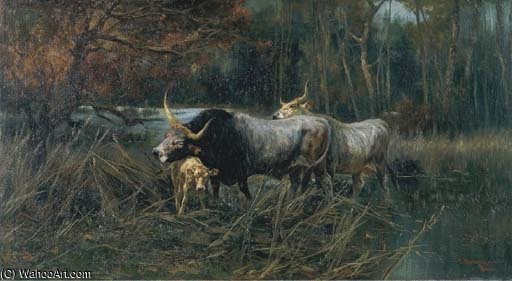
Shown: · With its frame:
 Megtekintés
 Küldés
 Megosztás
 Részletek
 Útmutató

 Letöltés
 Hasonló darabok
 X-ray felvétel
 Diavetítés
 Q&A
Q&A Statisztika
Ft 86911
Kézzel készített olajfestmény reprodukció
Kézzel festett olajvastú vászon, az Ön által választott méretben és keretben, művészeink készítik meglévőre. ( Váltás nyomtatványra Áttérés digitális képre)
Size
·Standard méret
egyedi méretű
CM
INCH
Válasszon előre meghatározott méreteink közül, amelyek megfelelnek a műalkotás eredeti arányainak.
Loading sizes...

szélesség
magasság
Írja be a kívánt szélességet és magasságot, hogy illeszkedjen a keretéhez vagy a falához. Mivel ez kézzel festett alkotás, egy eltérő formájú méret esetén a művész akár festhet is valamivel többet a kép körül, vagy korolathat is belőle — az Ön döntésének megfelelően. A festés megkezdése előtt küldünk egy digitális tervezetet jóváhagyásra. Az oldalon látható kép nem tartalmazza a végeredményt — csak a tervezet mutatja meg a valódi eredményt.
 További információk
Finish
·
White Ft1

Blurside Ft1

Extended Ft1

P118B Ft10

P118H Ft10

P118W Ft10

P438Z Ft10

P508JH Ft12

P508YH Ft12

P805H Ft10

P805Z Ft10

P919BZ Ft10

P919G Ft10

P919XJ Ft10

P959ZH Ft10

P968JZ Ft12

W106C Ft8

W218G Ft10

W218JH Ft8

W218Y Ft10

W307PJ Ft10

W316G Ft10

W316PJ Ft8

W316Y Ft10

W398PJ Ft8

W4111J Ft10

W500HY Ft15

W500JH Ft15

W692G Ft12

W849H Ft8

W940BG Ft15

W953PJ Ft8

H24-GOLD Ft30

H24-SILVER Ft30

H36-GOLD Ft45

H36-SILVER Ft45
Shipped in a protective tube, ready for your own framer.
Above 105 cm the frame is shipped as a kit for a professional framer — read the details.
Extras
optionalWhat do the extras include?
Examples of what can be changed: Replace face with customer photo; Add pet (e.g., replace cat with dog); Include hidden message in background; Change background landscape or elements.
After order, TopImpressionists.com team will email client for instructions and provide a mockup preview
After order, TopImpressionists.com team will email client for instructions and provide a mockup preview
Világszerte elérhető szállítás () 3-4 hét alatt a szokásos 5 hét helyett. (29 október). A minőség nem kérdőjelezhető.
Védőréteg (Lakk)
Névtábla
A gravírozott bronztábla részletei
This elegant plaque features the artist's name and the title of the artwork, finely engraved for a timeless presentation.
It is made from bronze with a refined, elegant finish. The text is precisely laser-engraved for a sharp and permanent result. Measuring 9x2 cm, the plaque is compact yet easy to read. It's built to be durable and scratch-resistant, offering a professional, museum-quality look. Mounting is simple thanks to the included adhesive backing.
Átlátszó akril tábla részletei
The plaque includes essential engraved details such as the artist's name, the title of the artwork, the date it was created, the type of media used-like oil on canvas or watercolor-a brief description of the piece, and a QR code that links to the complete artwork information.
It is crafted from clear acrylic, offering a sleek, modern appearance. The text is UV-engraved in black to ensure strong visual contrast. With a size of 10x15 cm, it ensures optimal readability. It comes equipped with two metal hooks for secure wall mounting. The plaque is designed to be weather-resistant, making it suitable for various environments, and it includes interactive features that work seamlessly with smartphone scanning.
Fekete akril tábla részletei
This elegant plaque includes engraved information such as the artist's name, the title of the artwork, the date it was created, the type of media used (like oil on canvas or watercolor), a short description of the artwork, and a QR code for quick access to more information.
The plaque itself is made from refined black acrylic with a premium finish. The text is laser-engraved in white for high contrast and readability. Its size is 10x15 cm, designed to be easy to read. It comes with two metal hooks for professional mounting. The design is sleek and fits any interior style. It is also weather-resistant and durable, with built-in digital integration for mobile compatibility.
Az üvegkeretes opció csak 110 cm alatti méretben érhető el
 Az üvegkeretes opció csak 110 cm alatti méretben érhető el
- Ingyenes globális expressz szállítás
- Prémium minőségű len vászon
- Teljes körű szállítási biztosítás
- Vámvisszatérítési Garancia
- Hiteles színarányosság garancia
- 100 napos visszaküldési lehetőség (csak hibás termékek esetén)
- 100% pénzvisszatérítési garancia
- Több darab vásárlásakor kedvezmény


A művész életrajza
Pietro Barucci (1845-1917) was an Italian landscape painter renowned for his depictions of the Roman countryside, including scenes of rural life, the Campagna romana, and the Pontine Marshes. Discover his serene paintings & historical significance.
About the painting
Quick facts and art quiz
About Pietro Barucci

Pietro Barucci
1845 - 1917, Italy
A művész életrajza
Pietro Barucci: A Roman Painter of the Campagna
Pietro Barucci (1845-1917) stands as a significant, yet often overlooked, figure in late 19th and early 20th century Italian landscape painting. Born in Rome amidst the burgeoning artistic energy of the city, Barucci’s career unfolded largely within the confines of his beloved Campagna Romana – the Roman countryside – offering viewers serene glimpses into a world both familiar and imbued with timeless beauty. His work isn't characterized by dramatic narratives or bold innovations; instead, it resides in a quiet mastery of light, color, and composition, capturing the essence of rural life and the evocative atmosphere of the Italian landscape.
Barucci’s artistic journey began without formal academic training. He initially honed his skills through self-study, absorbing the techniques of earlier masters while developing his own distinctive style. Crucially, he apprenticed under Achille Vertunni at the Accademia di San Luca in Rome, a prestigious institution that provided him with invaluable exposure to established artistic traditions and a network of fellow artists. This grounding in classical principles informed his approach, resulting in paintings that possess a remarkable sense of balance, harmony, and realism – though tempered by an undeniable romantic sensibility.
The Subject Matter: Roman Landscapes and Rural Life
Barucci’s oeuvre is overwhelmingly devoted to the landscapes surrounding Rome. He wasn't interested in grand vistas or dramatic mountain ranges; rather, he focused on the subtle beauties of the Campagna Romana – the rolling hills, vineyards, olive groves, and small villages that defined the region. His subjects included scenes of daily life: shepherds tending their flocks, farmers working the land, families gathering for meals, and solitary figures contemplating the landscape. These depictions weren’t merely topographical representations; they were imbued with a sense of nostalgia and an appreciation for the simple pleasures of rural existence.
The Pontine Marshes, a vast and often desolate area south of Rome, also featured prominently in his work. Barucci's paintings of this region are particularly striking, capturing the stark beauty of the wetlands – the shimmering reflections on the water, the muted colors of the reeds, and the sense of isolation and solitude. These landscapes weren’t always celebrated; they were often viewed as unproductive and challenging, but Barucci found within them a profound source of artistic inspiration.
Technique and Style: Realism with Romantic Touches
Barucci's technical skill is evident in his meticulous attention to detail – the way he rendered the texture of fabrics, the sheen of water, and the subtle variations in color. He employed a predominantly realistic style, favoring muted earth tones and soft lighting. However, his paintings are not devoid of romanticism; there’s an underlying sense of melancholy and longing that permeates many of his works. This is achieved through the use of atmospheric perspective, the suggestion of movement, and the portrayal of figures in moments of quiet contemplation.
His brushwork is generally smooth and controlled, contributing to a sense of serenity and stability. He skillfully utilized light to create depth and atmosphere, often employing diffused sunlight to evoke a feeling of warmth and tranquility. Barucci’s compositions are typically balanced and symmetrical, reflecting his adherence to classical principles, yet he avoids rigid formality, allowing for a natural flow and visual interest.
Historical Context and Legacy
Barucci's work emerged during a period of significant social and political change in Italy. The unification of the country in 1861 had brought about profound transformations, but also created new challenges – economic hardship, social unrest, and regional disparities. Barucci’s paintings can be seen as a reflection of this complex context, offering a nostalgic vision of a disappearing rural world.
Despite not achieving widespread fame during his lifetime, Barucci's work has gained increasing recognition in recent decades. His paintings are now held by prestigious collections and exhibited internationally. He is remembered as a master of the Roman landscape, whose serene depictions capture the enduring beauty and spirit of the Campagna Romana. His legacy lies not in revolutionary innovations but in a quiet, persistent dedication to capturing the essence of his subject matter with remarkable skill and sensitivity – a testament to the power of observation and artistic vision.
Quick facts about Pietro Barucci
- Full Name: Pietro Barucci
- Nationality: Italian
- Date Of Birth: 1845
- Date Of Death: 1917
- Place Of Birth: Rome, Italy
- Notable Artworks:
- I Primi Passi
- The Goat Keeper
- Campagna Landscape
- Artistic Movement Or Style: Landscape painting
- Artists Who Influenced This Artist: ['Achille Vertunni],\n "Artists or movements influenced by this artist": [']

Pietro Barucci
Nella Palude
() ·
With its frame: · Hand-painted in oil on linen
Total