


 Előnézet
 Megosztás
 Megosztás
 Részletek
 Útmutató

 Letöltés
 Hasonló darabok
 X-ray felvétel
 Diavetítés
 Statisztika
Electricity
 Watercolor
- WallArt
- Fauvism
 1937
1937- Modern
 50.0 x 65.0 cm
A vibrant watercolor capturing the bustling energy of a 1937 cityscape, this masterpiece by French Fauvist Raoul Dufy brings a joyful sense of urban life to your collection through its luminous colors and light.
 Tovább olvasom
Dufy Raoul (1877-1953) francia festő, a fauve mozgalom kiemelkedő képviselője. Élénk színekkel, dinamikus kompozíciókkal és modern élet ünneplő alkotásai világszerte ismertek. #DufyRaoul #Fauvisták
Kézzel készített olajfestmény reprodukció
Kézzel festett olajvastú vászon, az Ön által választott méretben és keretben, művészeink készítik meglévőre. ( Váltás nyomtatványra Áttérés digitális képre)




P118B Ft10

P118H Ft10

P118W Ft10

P438Z Ft10

P508JH Ft12

P508YH Ft12

P805H Ft10

P805Z Ft10

P919BZ Ft10

P919G Ft10

P919XJ Ft10

P959ZH Ft10

P968JZ Ft12

W106C Ft8

W218G Ft10

W218JH Ft8

W218Y Ft10

W307PJ Ft10

W316G Ft10

W316PJ Ft8

W316Y Ft10

W398PJ Ft8

W4111J Ft10

W500HY Ft15

W500JH Ft15

W692G Ft12

W849H Ft8

W940BG Ft15

W953PJ Ft8




Standard méret
egyedi
CM
INCH
Válasszon előre meghatározott méreteink közül, amelyek megfelelnek a műalkotás eredeti arányainak.
Loading sizes...

szélesség
magasság
Írja be a kívánt szélességet és magasságot, hogy illeszkedjen a keretéhez vagy a falához. Mivel ez kézzel festett alkotás, egy eltérő formájú méret esetén a művész akár festhet is valamivel többet a kép körül, vagy korolathat is belőle — az Ön döntésének megfelelően. A festés megkezdése előtt küldünk egy digitális tervezetet jóváhagyásra. Az oldalon látható kép nem tartalmazza a végeredményt — csak a tervezet mutatja meg a valódi eredményt.
Példák arra, mit lehet módosítani: az arc kicserélése az ügyfél fotójára; háziállat hozzáadása (pl. macska helyett kutya); rejtett üzenet elhelyezése a háttérben; a háttér tájának vagy elemeinek megváltoztatása.
A rendelést követően a TopImpressionists.com csapata e-mailt küld az ügyfélnek az instrukciókért, és biztosít egy előnézeti képet (mockup).
A rendelést követően a TopImpressionists.com csapata e-mailt küld az ügyfélnek az instrukciókért, és biztosít egy előnézeti képet (mockup).
Világszerte elérhető szállítás () 3-4 hét alatt a szokásos 5 hét helyett. (24 október). A minőség nem kérdőjelezhető.

Ingyenes globális expressz szállítás

Prémium minőségű len vászon

Teljes körű szállítási biztosítás

Vámvisszatérítési Garancia

Tökéletes színarányosság garancia

100 napos visszaküldési garancia (csak gyártási hibás termékek esetén)

100% pénzvisszatérítési garancia

Több darab vásárlásakor kedvezmény
 Az üvegkeretes opció csak 110 cm alatti méretben érhető el

Electricity
Reprodukciós technika
Reprodukció méretei
-


Összesített ár
Ft 86095
A Symphony of Urban Vitality
In his 1937 masterpiece, Electricity, Raoul Dufy captures the electric pulse of modern existence through a lens of pure, unadulterated joy. This watercolor serves as more than just a depiction of a cityscape; it is a rhythmic dance of light and movement that celebrates the burgeoning energy of the twentieth-century metropolis. As the eye wanders across the canvas, one encounters a bustling urban landscape where grand architectural structures stand alongside smaller, intimate buildings, all interconnected by the invisible currents of human activity. The scene is alive with the presence of people navigating their daily routines, some pausing near parked vehicles while others move through the streets, creating a sense of continuous, flowing motion that mirrors the very subject of the title.
Dufy’s signature style—a luminous blend of Fauvism and Impressionism—is on full display here. Eschewing heavy, somber outlines for a more fluid and decorative approach, he utilizes the transparency of watercolor to allow light to permeate the composition. The technique is characterized by spontaneous, sweeping brushstrokes that suggest form rather than strictly defining it, allowing the viewer's imagination to fill in the vibrant details of the windows, the silhouettes of pedestrians, and even the subtle suggestion of an umbrella, hinting at a recent or passing rain. This delicate interplay between light and pigment creates a shimmering effect, as if the painting itself is vibrating with the kinetic energy of the city.
Beyond its visual splendor, Electricity carries a profound historical resonance. Created in the late 1930s, a period of immense technological and social transformation, the work reflects the fascination with modern progress and the electrification of urban life. The title serves as a metaphor for both the literal power grids transforming cities and the metaphorical spark of human connection and vitality found within the crowd. For the collector or interior designer, this piece offers an unparalleled opportunity to introduce a sense of movement and optimism into a space. Its bright, airy composition and sophisticated use of color make it a versatile centerpiece, capable of breathing life into a contemporary gallery or adding a touch of French joie de vivre to a refined residential setting.
To possess a reproduction of this work is to invite the spirit of Raoul Dufy into one's home—a spirit that finds beauty in the mundane and magic in the mechanical. It is an invitation to pause amidst the chaos of modern life and find, as Dufy did, the rhythmic, colorful, and deeply human heartbeat that exists within the heart of the city.
Gyakran Ismételt Kérdések
Milyen technikával készült a "Electricity", és mikor készült?
A "Electricity" alkotása 1937-ben készült, Watercolor technikával.
Elérhető-e a "Electricity" minőségi nyomtatványként?
A "Electricity" minőségi giclée nyomat pamutvászonon vagy archiváló vászonpapíron formátumban is elérhető. A rendelést a Minőségi műalkotás nyomat oldalon lehet megtenni, a kívánt méretben.
Hogyan írják le „Electricity”, Dufy Raoul alkotása színezetét?
A "Electricity" színei egy Dark palettát alkotnak. Ez a besorolás a domináns színek családjait írja le.
Hasonló műalkotások


A művész életrajza
A Life Immersed in Color and Light
Raoul Dufy, born in the bustling port city of Le Havre, Normandy, on June 3, 1877, was an artist whose name became inextricably linked with joy, vibrant color, and a distinctly French *joie de vivre*. His artistic journey wasn’t forged amidst the traditional tools of a painter – palettes and easels – but rather within the practical realities of his early life. After leaving school at just fourteen, he found work in a coffee-importing company, a far cry from the world of art, yet it was during these years that the seeds of his passion were sown. Even amidst the daily grind, Dufy’s innate artistic sensibility refused to be suppressed; evening classes at Le Havre's École des Beaux-Arts ignited a flame within him, forging friendships with fellow artists Raimond Lecourt and Othon Friesz – companions who shared a studio in Montmartre and a mutual desire to explore new visual languages. These formative years were deeply influenced by the Impressionists, particularly the luminous landscapes of Claude Monet and Camille Pissarro, providing a foundational understanding of light, color, and composition that would inform his later artistic development. He was awarded a scholarship to study at the École Nationale supérieure des Beaux-Arts in Paris, further refining his skills and immersing himself in the dynamic artistic environment of the capital city.Embracing Fauvism and Finding His Voice
The early 20th century presented Dufy with a rapidly evolving art world. Initially, he experimented with Cubism, but it was Henri Matisse’s groundbreaking *Luxe, Calme et Volupté* at the 1905 Salon des Indépendants that proved to be a pivotal moment. The sheer audacity of color and expressive freedom unleashed by Matisse and his fellow “Fauves” – those wild beasts – resonated profoundly with Dufy, propelling him towards a style characterized by bold hues and liberated brushwork. However, Dufy didn’t simply mimic; he absorbed the energy of Fauvism and distilled it into something uniquely his own. He deliberately moved away from strict adherence to the movement's tenets, developing a more decorative and fluid approach. This period saw him experimenting with diverse mediums – illustration, textile design for Paul Poiret (a collaboration that brought vibrant color and pattern to fashion), even ceramics – demonstrating an impressive versatility that extended beyond the confines of traditional painting. His designs weren’t merely superficial ornamentation; they were integral expressions of his artistic vision, bringing a dynamic energy to everyday objects. Dufy's early engagement with the Fauves was documented in 1906 and 1907 at the Salon des Indépendants, solidifying his place within this revolutionary movement.A Stenographic Style: Capturing Modern Life
By the 1920s, Dufy had fully blossomed into a master of what became known as his “stenographic” style. This distinctive technique involved rapidly applying thin washes of color over skeletal structures – outlines that suggested form without detailed rendering – creating an impression of movement and spontaneity. It was a method perfectly suited to capturing the energy of modern life: yachting regattas, bustling city scenes, elegant social gatherings on the French Riviera, and the vibrant atmosphere of jazz clubs. Dufy wasn’t interested in meticulous detail; he sought to convey atmosphere, emotion, and the fleeting beauty of a moment. His paintings became celebrations of leisure, pleasure, and the spirited pulse of contemporary society. He painted orchestras, racecourses, and seascapes with an effervescent quality that captured the spirit of the Jazz Age. This period also saw him undertaking large-scale commissions, including the monumental *La Fée Electricité* for the 1937 Exposition Internationale in Paris – a vast work celebrating electricity’s impact on modern life, executed with remarkable speed and ingenuity using a new quick-drying medium. The sheer scale of this project showcased Dufy's ability to synthesize artistic vision with practical considerations.Influences and Artistic Development
Dufy’s artistic journey was shaped by a diverse range of influences. Initially, the Impressionists – Monet, Pissarro, and others – provided him with a foundational understanding of light, color, and landscape painting. The Fauves, particularly Matisse, liberated him from traditional constraints, encouraging him to embrace bold colors and expressive brushwork. Later, he found inspiration in Paul Cézanne’s emphasis on structure and form, incorporating these principles into his own style. Furthermore, the decorative arts – textile design and ceramics – profoundly influenced his approach, leading to a distinctive blend of artistic expression and functional design. Throughout his career, Dufy remained open to experimentation, constantly refining his technique and exploring new subjects. His work evolved organically, reflecting both his personal experiences and the changing cultural landscape of his time.Legacy and Enduring Appeal
Despite facing health challenges later in life due to rheumatoid arthritis, Raoul Dufy continued to paint with unwavering dedication until his death on March 23, 1953, in Forcalquier. His work is now held in prestigious collections worldwide – including the Musée d’Orsay in Paris, the Hermitage Museum in St. Petersburg, The Museum of Modern Art in New York, and the Art Institute of Chicago – a testament to his enduring artistic significance. Dufy's influence extends beyond painting; his designs continue to inspire textile and decorative arts. He left behind an impressive body of work – thousands of paintings, watercolors, drawings, prints, and applied art pieces – that collectively represent a vibrant celebration of life, color, and the beauty of the everyday. Raoul Dufy wasn’t merely a painter; he was a chronicler of his time, capturing the spirit of an era with a unique blend of Fauvist energy, decorative flair, and a distinctly optimistic vision. His art remains profoundly relevant today, offering a vibrant escape and a reminder to embrace the *joie de vivre* that permeated his life and work.Key Characteristics of Dufy’s Art
- Vibrant Color Palette: Dufy was renowned for his use of bright, saturated colors, often applied in thin washes.
- Dynamic Composition: His paintings frequently feature energetic compositions that convey a sense of movement and spontaneity.
- Decorative Style: A strong decorative element is present throughout his work, influenced by his designs for textiles and ceramics.
- Celebration of Modern Life: Dufy’s art often depicts scenes of leisure, social gatherings, and the pleasures of contemporary society.
- Stenographic Technique: His signature style involved rapidly applying thin washes of color over skeletal structures.

Dufy Raoul
1877 - 1953 , Franciaország
Gyors információk
- Artistic Movement Or Style: Fauvizmus
- Artists Or Movements Influenced By This Artist:
- Textil design
- Ceramika
- Artists Who Influenced This Artist:
- Monet
- Matisse
- Cézanne
- Date Of Birth: 1877. 6. 3.
- Date Of Death: 1953. 3. 23.
- Full Name: Raoul Dufy
- Nationality: Francia
- Notable Artworks:
- La Fée Electricité
- The Thoroughbred
- Portrét Mme. Dufy
- Place Of Birth: Le Havre, Francia
Kapcsolódó cikkek

Wild Colors & Raw Emotion: A Definitive Guide to the Fauvist Art Movement
Explore the vibrant world of Fauvism. Discover how masters like Matisse and Derain revolutionized art through bold colors and raw emotion in this expert guide to the 'Wild Beasts' movement.
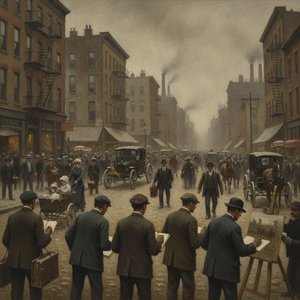
The Ashcan School: Capturing the Raw, Unfiltered Soul of Urban Life through American Realism
Discover the raw beauty of the Ashcan School. Explore how masters like Bellows and Henri captured the gritty, vibrant soul of early 20th-century New York through profound American Realism and evocative urban landscapes.