

 Megtekintés
 Küldés
 Megosztás
 Részletek
 Útmutató

 Letöltés
 Hasonló darabok
 X-ray felvétel
 Diavetítés
 Kérdések és válaszok
 Statisztika
Blue Rose

- 47.0 x 47.0 cm


Robert Mapplethorpe’s ‘Blue Rose’ – a striking 1988 black & white photograph of a solitary blue rose. Explore its poignant beauty, unique style & the artist's legacy.
 Összes részlet megjelenítése
Robert Mapplethorpe (1946-1989) amerikai fotós, aki a provokatív fekete-fehér portrékkal, nőkkel és virágokkal vált híressé. A BDSM képeivel és művészi szabadsággal kapcsolatos vitákban maradt fenn.
Az ezen az oldalon megjelenített műalkotások szerzői jogi védelem alatt állnak, ami azt jelenti, hogy törvényileg nem készíthetünk és nem adhatunk el belőlük pontos másolatokat. Ez a védelem olyan nemzetközi megállapodások alapján érvényesül, mint például a Berni Egyezmény és a nemzeti jogszabályok által, beleértve azokat is, amelyeket meghatározott Az USA szerzői jogi törvénye – 17. cím.
Ez a módszer teljes mértékben megfelel a szerzői jogi szabályozásnak, mivel nem tartalmazza a védett műalkotás másolását vagy duplikálását. Ehelyett ez egy kreatív újinterpretáció – egy új festmény, amely az eredetivel való összefüggései miatt hatással van rá, de nem az az.
Giclée / Műnyomat
Múzeumi minőségű giclée vagy vászonnyomat, gyors gyártással és rugalmas finomítási lehetőségekkel. ( Kézzel festett másolat rendelése Áttérés digitális képre)




P118B Ft10

P118H Ft10

P118W Ft10

P438Z Ft10

P508JH Ft12

P508YH Ft12

P805H Ft10

P805Z Ft10

P919BZ Ft10

P919G Ft10

P919XJ Ft10

P959ZH Ft10

P968JZ Ft12

W106C Ft8

W218G Ft10

W218JH Ft8

W218Y Ft10

W307PJ Ft10

W316G Ft10

W316PJ Ft8

W316Y Ft10

W398PJ Ft8

W4111J Ft10

W500HY Ft15

W500JH Ft15

W692G Ft12

W849H Ft8

W940BG Ft15

W953PJ Ft8




Standard méret
egyedi méretű
CM
INCH
Válasszon előre meghatározott méreteink közül, amelyek megfelelnek a műalkotás eredeti arányainak.
Loading sizes...

szélesség
magasság
Írja be a keretének vagy a falának megfelelő szélességet és magasságot. A nyomatot csak le lehet vágni, soha nem tehető nagyobbá, mint az eredeti kép, így egy eltérő alakú méretnél a kép egy része elveszik. Mielőtt bármit kinyatintanánk, küldünk egy digitális próbamodellt jóváhagyásra. Az oldalon látható kép nem tartalmazza a valós levágást — ezt csak a próbamodell mutatja meg.
Világszerte történő kiszállítás területére mindössze 2 hét alatt, a szokásos 4-5 hét helyett. (9 november)

Ingyenes globális expressz szállítás

Prémium minőségű len vászon

Teljes körű szállítási biztosítás

Vámvisszatérítési Garancia

Hiteles színarányosság garancia

100 napos visszaküldési lehetőség (csak hibás termékek esetén)

100% pénzvisszatérítési garancia

Több darab vásárlásakor kedvezmény
 Az üvegkeretes opció csak 110 cm alatti méretben érhető el

Blue Rose
Giclée / Műnyomat
Reprodukció mérete
-


Összesített ár
Ft 22828
Robert Mapplethorpe’s “Blue Rose”: A Study in Contrasts
The photograph "Blue Rose" by Robert Mapplethorpe stands as an arresting testament to the artist's singular vision—a stark black and white depiction of a solitary blue rose against a velvety dark background. More than just a botanical subject, it embodies Mapplethorpe’s fascination with formal beauty intertwined with unsettling psychological depth, reflecting his broader exploration of desire and taboo subjects within the realm of fine art. Captured in 1988, this image exemplifies his signature style: meticulous detail combined with dramatic lighting that elevates the rose beyond mere representation into a symbol of both exquisite fragility and profound contemplation.- Composition & Technique: Mapplethorpe’s masterful use of photographic technique is immediately apparent. He employs shallow depth of field, concentrating attention on the flower itself while blurring the surrounding black expanse—a deliberate tactic that isolates the subject and amplifies its textural qualities. The photograph utilizes a high contrast ratio, maximizing tonal range to accentuate the velvety surface of the petals and the subtle veins traversing them. Digital processing enhances sharpness and ensures accurate color rendition (despite the monochrome palette), demonstrating Mapplethorpe’s commitment to precision and artistic control.
- Historical Context: Mapplethorpe emerged as a prominent figure in the late 1970s and early 1980s, challenging conventional notions of beauty within the art world. His work provoked considerable controversy due to its explicit depictions of homosexual acts and erotic imagery—subjects considered unacceptable for artistic expression at the time. However, Mapplethorpe insisted that his photographs were driven by an aesthetic impulse rather than moral judgment, aiming to explore the formal possibilities inherent in capturing human sexuality with uncompromising honesty.
- Symbolism & Mood: The blue rose itself carries significant symbolic weight—a flower absent from nature due to genetic limitations, it represents rarity, unattainability, and perhaps a reimagining of idealized beauty. Its placement against the dark background creates an atmosphere of melancholy and introspection, mirroring Mapplethorpe’s preoccupation with confronting uncomfortable truths about human experience. The subtle white tape affixed to one petal serves as a visual reminder of artistic intervention—a deliberate gesture that underscores Mapplethorpe's desire to manipulate perception and elevate his subject matter beyond mere observation.
- Material Considerations: The artwork is produced using light-sensitive photographic paper and advanced digital processing software. These materials contribute to the image’s permanence and fidelity, ensuring that its visual impact remains consistent across time.
Further Exploration
To delve deeper into Robert Mapplethorpe’s artistic legacy, consider researching his broader oeuvre—particularly his series exploring homoerotic imagery and his pioneering use of photographic techniques to challenge societal norms. Examining critiques of his work alongside analyses of its aesthetic merits offers a richer understanding of Mapplethorpe's contribution to contemporary art history. Furthermore, exploring reproductions of “Blue Rose” in various interior design contexts can illuminate how this iconic image resonates with audiences today—a testament to its enduring power as a symbol of beauty and contemplation amidst darkness.Kérdések és válaszok
Hol vásárolható „Blue Rose”, Mapplethorpe Robert alkotása képmű kézzel festett másolata?
A „Blue Rose”, Mapplethorpe Robert alkotása kézzel festett reprodukcióját közvetlenül a(z) Kézzel festett másolat oldalon is megrendelheti: kézzel festett olajfesték reprodukció lino vászonon, egyedi igény szerinti gyártással.
Hol látható ma a(z) „Blue Rose”, Mapplethorpe Robert alkotása?
A „Blue Rose”, Mapplethorpe Robert alkotása eredeti darabja a Dulwich Picture Gallery, London, Egyesült Királyság gyűjteményében található. A reprodukció lehetővé teszi, hogy a mű otthonában is megjelenjen.
Melyik országból származik a Contemporary Realism irányzat Blue Rose című műve?
A Contemporary Realism korszak alkotása, a "Blue Rose", egy Egyesült Államok-ban született művész munkája.
A művész életrajza
A Life Forged in Form: The World of Robert Mapplethorpe
Robert Mapplethorpe, a name inextricably linked to both breathtaking beauty and profound controversy, remains one of the most influential photographers of the 20th century. Born in Floral Park, New York, in 1946, his journey was not one of immediate artistic recognition but rather a gradual evolution fueled by experimentation, mentorship, and an unwavering commitment to exploring the boundaries of form and desire. Initially drawn to graphic arts at Pratt Institute, Mapplethorpe quickly found himself chafing against traditional academic constraints, ultimately leaving before completing his degree. This departure wasn’t a rejection of art itself, but a search for a medium that could more directly translate his burgeoning vision – a vision deeply influenced by artists like Joseph Cornell and Marcel Duchamp, whose embrace of the found object and conceptual play resonated with his own developing aesthetic sensibilities. These early years were marked by mixed-media collages, intricate assemblages born from salvaged materials and cut images, hinting at the formal precision and thematic concerns that would later define his photographic work.The Polaroid Genesis and a Creative Partnership
The pivotal moment arrived with the acquisition of a Polaroid camera in 1970. This wasn’t merely a change in tools; it was a revelation. The immediacy of the Polaroid process allowed Mapplethorpe to bypass traditional darkroom techniques, focusing instead on composition, light, and shadow – elements that would become hallmarks of his style. Initially, these Polaroids were integrated into his collages, but they soon began to assert their independence, revealing a unique power in their stark black and white tonality. Simultaneously, a deeply significant relationship blossomed with poet and musician Patti Smith. Their connection, spanning from 1967 to 1972, was one of mutual artistic support and inspiration. Smith became a frequent subject for Mapplethorpe’s lens, her raw energy and bohemian spirit captured in images that possess an intimate vulnerability. This period wasn't just about romantic partnership; it was a crucible where both artists honed their craft, challenging each other to push creative boundaries. They shared a studio space, experimenting with visual and literary expression, creating a dynamic environment of artistic exchange.Mastering the Form: Style, Subjects, and Controversy
Mapplethorpe’s photographic style is characterized by a rigorous formalism – an emphasis on composition, symmetry, and the interplay of light and shadow reminiscent of classical sculpture. He wasn't simply documenting his subjects; he was *constructing* them, elevating everyday objects and human forms to iconic status through meticulous technique. His subject matter was remarkably diverse: celebrity portraits featuring figures like Andy Warhol and Deborah Harry, exquisitely rendered floral still lifes – particularly orchids and calla lilies – and strikingly intimate self-portraits. However, it was his exploration of the BDSM subculture in 1970s and 80s New York City that ignited significant controversy. These images, unflinching in their depiction of sexuality and power dynamics, challenged conventional notions of taste and morality, sparking debates about censorship and artistic freedom. Mapplethorpe didn’t shy away from these controversies; he embraced them as an inherent part of his artistic practice, believing that art should provoke thought and challenge societal norms. He frequently referenced religious or classical imagery within his work, creating a compelling dialogue between contemporary subjects and historical art forms, further complicating interpretations and adding layers of meaning. The influence of artists like Duchamp is evident in Mapplethorpe’s deliberate use of everyday objects as artistic statements, elevating the mundane to the level of high art.Influences and Development
Mapplethorpe's early work was profoundly shaped by several key influences. Joseph Cornell’s box constructions, with their carefully arranged found objects and symbolic imagery, instilled in him a fascination with assemblage and the creation of miniature worlds. Marcel Duchamp’s conceptual approach to art – challenging traditional notions of beauty and authorship – encouraged Mapplethorpe to question established artistic conventions. Furthermore, his exposure to the vibrant counterculture scene of 1960s New York, fueled by artists like Warhol and the burgeoning music scene, provided a fertile ground for experimentation and self-expression. He initially experimented with collage techniques, combining photographs, text, and other materials into layered compositions that reflected his interest in both visual and literary narratives. The transition to Polaroid photography marked a crucial turning point, allowing him to prioritize composition and light over the technical complexities of traditional darkroom processes.Legacy and Lasting Impact
The mentorship of art curator Sam Wagstaff proved instrumental in Mapplethorpe’s career trajectory, providing crucial financial support and guidance during his formative years. Throughout the 1980s, Mapplethorpe exhibited extensively, gaining increasing recognition within the art world culminating in a major retrospective at the Whitney Museum of American Art in 1988 – a landmark achievement that solidified his position as a significant contemporary artist. However, this success was shadowed by controversy surrounding *Robert Mapplethorpe: The Perfect Moment* exhibition, which ignited fierce debates about public funding for art deemed obscene. Tragically, Mapplethorpe succumbed to AIDS in 1989, leaving behind a vast and complex body of work that continues to resonate today. Following his death, the Robert Mapplethorpe Foundation was established to preserve his artistic legacy, support medical research related to HIV/AIDS, and promote photography as an art form. His influence extends far beyond the realm of photography, impacting generations of artists with his bold exploration of sexuality, formalist approach, and unwavering commitment to pushing creative boundaries. Robert Mapplethorpe’s work remains a subject of ongoing discussion and analysis, cementing his place as one of the most – and often challenging – American artists of the 20th century. He elevated photography to a respected art form, proving that it could be more than just documentation; it could be sculpture, poetry, and provocation all rolled into one striking image.
Mapplethorpe Robert
1946 - 1989 , Egyesült Államok
Rövid információk
- Artistic Movement Or Style: Formalisztikus fotográfia
- Artists Or Movements Influenced By This Artist:
- Korszerű művészek
- Fotográfusok
- Artists Who Influenced This Artist:
- Joseph Cornell
- Marcel Duchamp
- Date Of Birth: 1946. nov. 4.
- Date Of Death: 1989. március 9.
- Full Name: Robert Mapplethorpe
- Nationality: Amerikai
- Notable Artworks:
- Polaroidok
- Virágok
- Nudelemek
- Place Of Birth: Floral Park, USA
Kapcsolódó cikkek
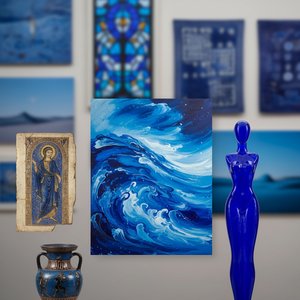
The Allure of Azure: Exploring the Symbolic & Aesthetic Depths of Blue in Art History
Explore the rich history of blue in art! Discover its symbolism, from ancient pigments to modern masterpieces by Kandinsky & Seurat. Uncover the psychological impact and cultural meanings behind this captivating hue.

Monochrome Visions: Exploring the Aesthetic & Historical Significance of Black & White Photography
Explore the rich history & artistic power of black and white photography. From early techniques to iconic masters like Ansel Adams, discover why monochrome continues to captivate art lovers today. Expert insights for collectors.

A kék árnyalatai: 10 ikonikus festmény a Slate Blue szín jegyében | TopImpressionists.com
Fedezze fel a 10 legikonikusabb festményt, melyeket a Slate Blue szín ural! Monet, Renoir és más mesterek művei inspirálnak. Vászonképek eladás, otthon dekoráció tippek a TopImpressionists.com-on. Explore the full collection online!

A Fehér Szín Mesterei: 10 Híres Festmény, Amelyek Elvarázsolnak – TopImpressionists.com
Fedezze fel a 10 legikonikusabb fehér tónusú festményt! Monet, Van Gogh és más mesterek alkotásainak története. Vászonképek, reprodukciók – inspiráció otthonába. TopImpressionists.com: minőségi művészet online.

A Fekete Szín Mesterei: 10 Híres Festmény, Amelyek Elvarázsolnak – TopImpressionists.com
Fedezze fel a 10 leghíresebb, fekete tónusú festményt! Rembrandt, Goya és Manet remekművei elvarázsolják. Művészettörténet, inspiráció otthonába – TopImpressionists.com kínálatából. Fedezze fel a teljes gyűjteményt online!