
Shown: · With its frame:
 Megtekintés
 Küldés
 Megosztás
 Részletek
 Útmutató

 Letöltés
 Hasonló darabok
 X-ray felvétel
 Diavetítés
 Q&A
Q&A Statisztika
- 20.0 x 27.0 cm


Ft 88091
Kézzel készített olajfestmény reprodukció
Kézzel festett olajvastú vászon, az Ön által választott méretben és keretben, művészeink készítik meglévőre. ( Váltás nyomtatványra Áttérés digitális képre)
Size
·Standard méret
egyedi méretű
CM
INCH
Válasszon előre meghatározott méreteink közül, amelyek megfelelnek a műalkotás eredeti arányainak.
Loading sizes...

szélesség
magasság
Írja be a kívánt szélességet és magasságot, hogy illeszkedjen a keretéhez vagy a falához. Mivel ez kézzel festett alkotás, egy eltérő formájú méret esetén a művész akár festhet is valamivel többet a kép körül, vagy korolathat is belőle — az Ön döntésének megfelelően. A festés megkezdése előtt küldünk egy digitális tervezetet jóváhagyásra. Az oldalon látható kép nem tartalmazza a végeredményt — csak a tervezet mutatja meg a valódi eredményt.
 További információk
Finish
·
White Ft1

Blurside Ft1

Extended Ft1

P118B Ft10

P118H Ft10

P118W Ft10

P438Z Ft10

P508JH Ft12

P508YH Ft12

P805H Ft10

P805Z Ft10

P919BZ Ft10

P919G Ft10

P919XJ Ft10

P959ZH Ft10

P968JZ Ft12

W106C Ft8

W218G Ft10

W218JH Ft8

W218Y Ft10

W307PJ Ft10

W316G Ft10

W316PJ Ft8

W316Y Ft10

W398PJ Ft8

W4111J Ft10

W500HY Ft15

W500JH Ft15

W692G Ft12

W849H Ft8

W940BG Ft15

W953PJ Ft8

H24-GOLD Ft30

H24-SILVER Ft30

H36-GOLD Ft45

H36-SILVER Ft45
Shipped in a protective tube, ready for your own framer.
Above 105 cm the frame is shipped as a kit for a professional framer — read the details.
Extras
optionalWhat do the extras include?
Examples of what can be changed: Replace face with customer photo; Add pet (e.g., replace cat with dog); Include hidden message in background; Change background landscape or elements.
After order, TopImpressionists.com team will email client for instructions and provide a mockup preview
After order, TopImpressionists.com team will email client for instructions and provide a mockup preview
Világszerte elérhető szállítás () 3-4 hét alatt a szokásos 5 hét helyett. (2 november). A minőség nem kérdőjelezhető.
Védőréteg (Lakk)
Névtábla
A gravírozott bronztábla részletei
This elegant plaque features the artist's name and the title of the artwork, finely engraved for a timeless presentation.
It is made from bronze with a refined, elegant finish. The text is precisely laser-engraved for a sharp and permanent result. Measuring 9x2 cm, the plaque is compact yet easy to read. It's built to be durable and scratch-resistant, offering a professional, museum-quality look. Mounting is simple thanks to the included adhesive backing.
Átlátszó akril tábla részletei
The plaque includes essential engraved details such as the artist's name, the title of the artwork, the date it was created, the type of media used-like oil on canvas or watercolor-a brief description of the piece, and a QR code that links to the complete artwork information.
It is crafted from clear acrylic, offering a sleek, modern appearance. The text is UV-engraved in black to ensure strong visual contrast. With a size of 10x15 cm, it ensures optimal readability. It comes equipped with two metal hooks for secure wall mounting. The plaque is designed to be weather-resistant, making it suitable for various environments, and it includes interactive features that work seamlessly with smartphone scanning.
Fekete akril tábla részletei
This elegant plaque includes engraved information such as the artist's name, the title of the artwork, the date it was created, the type of media used (like oil on canvas or watercolor), a short description of the artwork, and a QR code for quick access to more information.
The plaque itself is made from refined black acrylic with a premium finish. The text is laser-engraved in white for high contrast and readability. Its size is 10x15 cm, designed to be easy to read. It comes with two metal hooks for professional mounting. The design is sleek and fits any interior style. It is also weather-resistant and durable, with built-in digital integration for mobile compatibility.
Az üvegkeretes opció csak 110 cm alatti méretben érhető el
 Az üvegkeretes opció csak 110 cm alatti méretben érhető el
- Ingyenes globális expressz szállítás
- Prémium minőségű len vászon
- Teljes körű szállítási biztosítás
- Vámvisszatérítési Garancia
- Hiteles színarányosság garancia
- 100 napos visszaküldési lehetőség (csak hibás termékek esetén)
- 100% pénzvisszatérítési garancia
- Több darab vásárlásakor kedvezmény


A gyűjtemény leírása
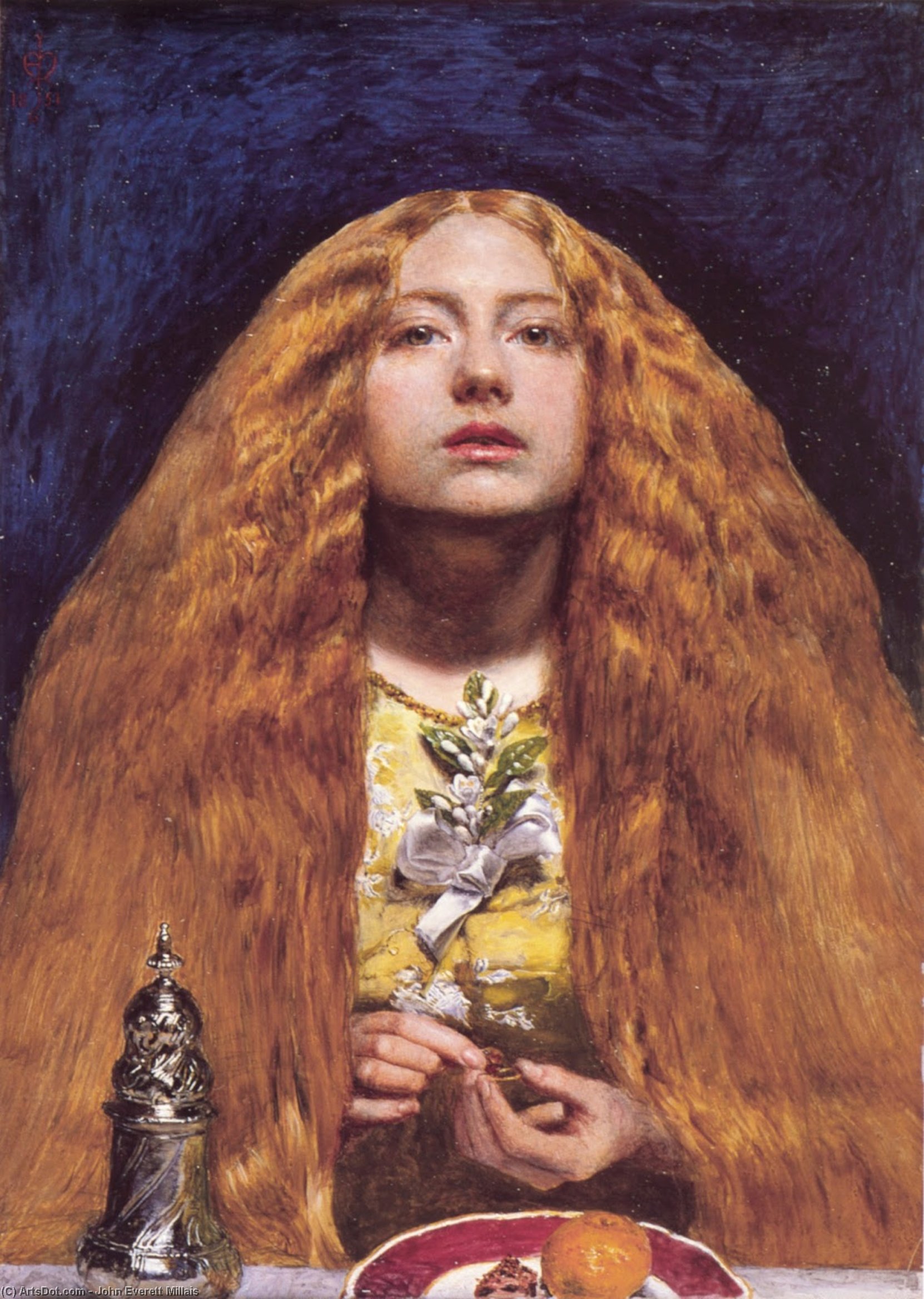
Millais' 'The Bridesmaid' (1851) captures Victorian tradition & romance. Explore symbolism of apples, clocks & the bridesmaid’s contemplative gaze in this Pre-Raphaelite masterpiece.
A művész életrajza
Millais, a Pre-Raphaelite mester, aki a természet és az érzelmek valóságtiszteletesen ábrázolása révén formálta meg a XIX. századi angol művészetet. Főbb alkotásai: Ophelia, Christ in the House of His Parents.
About the painting
The Bridesmaid: A Glimpse into Victorian Sentiment
“The Bridesmaid,” painted by Sir John Everett Millais in 1851, is more than just a portrait; it's a window into the intricate social customs and romantic sensibilities of Victorian England. This captivating work depicts a young woman, seemingly caught in a moment of quiet contemplation following her role as a bridesmaid at a wedding ceremony. The painting’s enduring appeal lies not only in Millais’ masterful technique but also in its subtle yet profound exploration of themes like love, expectation, and the passage of time.
Artistic Style and Influences: Pre-Raphaelitism and Realism
Millais' "The Bridesmaid" is a prime example of the Pre-Raphaelite Brotherhood’s artistic philosophy. Founded in 1848 by Millais, William Holman Hunt, and Dante Gabriel Rossetti, this movement sought to reject what they perceived as the artificiality of academic art and return to the detailed observation and vibrant colors of early Renaissance painting – before Raphael, hence "Pre-Raphaelite." However, Millais also incorporated elements of realism into his work. Notice the meticulous rendering of the woman’s hair, the textures of her dress, and the details of the objects in the background—all hallmarks of a commitment to portraying reality with exceptional accuracy.
Symbolism and Interpretation: A Narrative Unveiled
Beyond its aesthetic beauty, "The Bridesmaid" is rich in symbolic meaning. The scene depicts the woman performing a traditional Victorian custom – passing a piece of wedding cake through a ring nine times, hoping to foresee her future husband. This ritual speaks to the era’s emphasis on marriage and the societal expectations placed upon young women. The inclusion of two apples resting on a table adds another layer of interpretation; apples have long been associated with love, wisdom, and abundance, suggesting that the subject is contemplating her own life and relationships. The clock in the upper left corner subtly reinforces the theme of time's passage and the fleeting nature of youth and opportunity. The woman’s expression—a blend of hope and perhaps a touch of melancholy—invites viewers to ponder her inner thoughts and feelings.
Historical Context: Victorian Society and Artistic Innovation
“The Bridesmaid” was created during a period of significant social change in England. The Victorian era (1837-1901) was characterized by rapid industrialization, strict moral codes, and a growing emphasis on domesticity. Millais’ painting reflects these values while simultaneously challenging them through its realistic portrayal of everyday life and its exploration of female subjectivity. The Pre-Raphaelites were often critical of the materialism and social inequalities of their time, and "The Bridesmaid," with its quiet intimacy and subtle symbolism, can be seen as a commentary on the complexities of Victorian society.
A Timeless Masterpiece: Owning a Reproduction
“The Bridesmaid” remains a beloved work of art, admired for its beauty, technical skill, and evocative storytelling. Handmade oil painting reproductions are available, allowing you to bring this iconic piece into your own home or collection. Experience the charm and depth of Millais’ masterpiece—a testament to the power of art to capture the essence of a bygone era.
Kérdések és válaszok
Milyen technikával készült a "The Bridesmaid", és milyen méretű?
A "The Bridesmaid" alkotás Oil On Canvas technikával készült, eredeti mérete pedig 20 x 27 cm.
A „The Bridesmaid” művészeti alkotás mentes a szerzői jogoktól?
A „The Bridesmaid”, Millais, John Everett alkotása szerzői jogi státusza: a mű közösségi tulajdon – a szerzői jog lejártt. Ez határozza meg, hogy a kép másolatai szabadon készíthetők-e.
Milyen hangulatot árasztana egy szobában egy „The Bridesmaid”, Millais, John Everett alkotása reprodukció?
A „The Bridesmaid”, Millais, John Everett alkotása Romantic hangulata tökéletesen illeszkedik a javasolt helyszínhez: egy Living Room.
Quick facts and art quiz
About Millais, John Everett

Millais, John Everett
1829 - 1896, Egyesült Királyföld
A művész életrajza
A Prodigy of the Pre-Raphaelites: The Life and Art of Sir John Everett Millais
Born in Southampton in 1829, John Everett Millais entered the Royal Academy Schools at the astonishing age of eleven—the youngest student ever admitted. This early demonstration of prodigious talent foreshadowed a career that would not only define an artistic movement but also capture the Victorian imagination with its breathtaking realism and emotional depth. From his earliest days, Millais possessed a remarkable gift for observation, a quality that would become the cornerstone of his artistic style. He wasn’t merely painting what he saw; he was meticulously recreating it, imbuing each brushstroke with an almost photographic fidelity. This dedication to truth in representation set him apart and ultimately led him to challenge the established conventions of British art.The Birth of a Brotherhood and Artistic Rebellion
Millais’s artistic trajectory took a pivotal turn in 1848 when, alongside Dante Gabriel Rossetti and William Holman Hunt, he founded the Pre-Raphaelite Brotherhood. This wasn't simply an aesthetic choice; it was a deliberate rebellion against what they perceived as the artificiality of academic art—art that had strayed too far from the natural world and the sincerity of early Renaissance masters, those working *before* Raphael. The Pre-Raphaelites sought to revive the clarity, detail, and vibrant color palettes of artists like Jan van Eyck and Fra Angelico. Their manifesto was one of truth to nature, a rejection of idealized forms, and an embrace of subjects drawn from literature, mythology, and everyday life. Millais’s early works, such as *Isabella*, immediately showcased this new approach—a meticulous attention to detail combined with a narrative intensity that captivated and often provoked audiences. His most controversial work during this period, Christ in the House of His Parents (1849-50), depicted the Holy Family not as ethereal beings but as ordinary working-class people, sparking outrage among critics who found its realism unsettling and even blasphemous. The painting’s depiction of a young boy bathing in a stream, with his mother unaware, was considered shockingly unidealized for religious art at the time.Evolving Styles and Victorian Sensibilities
The mid-1850s marked a period of significant change for Millais, both personally and artistically. His marriage to Effie Gray, following the annulment of her marriage to John Ruskin, profoundly influenced his work. He moved away from the intensely detailed, symbolic style of his early Pre-Raphaelite paintings towards a broader, more atmospheric realism. This shift wasn’t simply a matter of stylistic preference; it reflected a growing engagement with contemporary life and a desire to capture the fleeting beauty of the natural world. Paintings like *Autumn Leaves* exemplify this new direction—a serene depiction of a group of young women drifting leaves on a river, imbued with a sense of melancholy and nostalgia. He also found considerable success as a portraitist, capturing the likenesses of prominent Victorian figures, including John Gladstone and Benjamin Disraeli. This period saw Millais achieve widespread popularity and financial security, but it also drew criticism from some who felt he had compromised his artistic principles.Major Works & Collections
- Christ in the House of His Parents (1849-1850): Tate Britain, London – A controversial masterpiece that exemplifies early Pre-Raphaelite realism.
- Ophelia (1851-1852): Tate Britain, London – Perhaps his most famous work, renowned for its haunting beauty and symbolic depth.
- A Huguenot (1851-1852): Private Collection – A dramatic depiction of religious conflict and forbidden love.
- Mariana (1850-1851): Manchester Art Gallery – Inspired by Shakespeare and Tennyson, showcasing Millais’s skill in capturing mood and atmosphere.
- Autumn Leaves (1855-1856): City of Manchester Art Galleries – A serene and evocative painting that reflects his evolving style.
Legacy and Lasting Influence
Despite these criticisms, Sir John Everett Millais remains one of the most important figures in 19th-century British art. His influence extends far beyond the Pre-Raphaelite Brotherhood; he helped to redefine the standards of realism and narrative painting, inspiring generations of artists. His iconic images—*Ophelia*, with its haunting beauty and symbolic richness, A Huguenot, depicting a moment of poignant drama, and countless others—continue to resonate with audiences today. Millais’s ability to blend meticulous observation with emotional depth, his mastery of color and composition, and his willingness to challenge artistic conventions cemented his place as a true innovator. In 1896, he was elected President of the Royal Academy, a testament to his enduring legacy—though sadly, he passed away only months later. His work continues to be celebrated in museums and collections worldwide, ensuring that the beauty and power of his art will endure for generations to come.Quick facts about Millais, John Everett
- Artistic Movement Or Style: Pre-Raffaello
- Artists Or Movements Influenced By This Artist: ['Pre-Raffaello']
- Artists Who Influenced This Artist: ['Raffaello']
- Date Of Birth: 8 czerwca 1829
- Date Of Death: 13 augusztus 1896
- Full Name: Sir John Everett Millais
- Nationality: Angol
- Notable Artworks:
- Ophelia
- Christ...
- A Huguenot
- Place Of Birth: Southampton, Anglia
Fedezze fel a műalkotásokat témák, stílusok és jellemzők szerint csoportosítva.


Millais, John Everett
The Bridesmaid
() ·
With its frame: · Hand-painted in oil on linen
Total