Megtekintés
 Küldés
 Megosztás
 Részletek
 Útmutató

 Letöltés
 Hasonló darabok
 X-ray felvétel
 Diavetítés
 Q&A
Q&A Statisztika
Interior
 Acrylic On Canvas
- WallArt
- Cubist Influences
 1938
1938 127.0 x 174.0 cm
 Royal Scottish Academy of Art - Architecture
Gillies’ artistic development was significantly shaped by his exposure to Cubist principles and the visionary aesthetics of Paul Klee.
 Összes részlet megjelenítése
"meta_description": "W.G. Gillies: A Scottish master of evocative landscapes & poignant still lifes. His work reflects Cubist influences, a vibrant 1922 Group legacy, and a profound connection to his homeland – explore his timeless art!"
Az ezen az oldalon megjelenített műalkotások szerzői jogi védelem alatt állnak, ami azt jelenti, hogy törvényileg nem készíthetünk és nem adhatunk el belőlük pontos másolatokat. Ez a védelem olyan nemzetközi megállapodások alapján érvényesül, mint például a Berni Egyezmény és a nemzeti jogszabályok által, beleértve azokat is, amelyeket meghatározott Az USA szerzői jogi törvénye – 17. cím.
Ez a módszer teljes mértékben megfelel a szerzői jogi szabályozásnak, mivel nem tartalmazza a védett műalkotás másolását vagy duplikálását. Ehelyett ez egy kreatív újinterpretáció – egy új festmény, amely az eredetivel való összefüggései miatt hatással van rá, de nem az az.
Giclée / Műnyomat
Múzeumi minőségű giclée vagy vászonnyomat, gyors gyártással és rugalmas finomítási lehetőségekkel. ( Kézzel festett másolat rendelése Áttérés digitális képre)




P118B Ft10

P118H Ft10

P118W Ft10

P438Z Ft10

P508JH Ft12

P508YH Ft12

P805H Ft10

P805Z Ft10

P919BZ Ft10

P919G Ft10

P919XJ Ft10

P959ZH Ft10

P968JZ Ft12

W106C Ft8

W218G Ft10

W218JH Ft8

W218Y Ft10

W307PJ Ft10

W316G Ft10

W316PJ Ft8

W316Y Ft10

W398PJ Ft8

W4111J Ft10

W500HY Ft15

W500JH Ft15

W692G Ft12

W849H Ft8

W940BG Ft15

W953PJ Ft8




Standard méret
egyedi méretű
CM
INCH
Válasszon előre meghatározott méreteink közül, amelyek megfelelnek a műalkotás eredeti arányainak.
Loading sizes...

szélesség
magasság
Írja be a keretének vagy a falának megfelelő szélességet és magasságot. A nyomatot csak le lehet vágni, soha nem tehető nagyobbá, mint az eredeti kép, így egy eltérő alakú méretnél a kép egy része elveszik. Mielőtt bármit kinyatintanánk, küldünk egy digitális próbamodellt jóváhagyásra. Az oldalon látható kép nem tartalmazza a valós levágást — ezt csak a próbamodell mutatja meg.
Világszerte történő kiszállítás területére mindössze 2 hét alatt, a szokásos 4-5 hét helyett. (31 október)

Ingyenes globális expressz szállítás

Prémium minőségű len vászon

Teljes körű szállítási biztosítás

Vámvisszatérítési Garancia

Hiteles színarányosság garancia

100 napos visszaküldési lehetőség (csak hibás termékek esetén)

100% pénzvisszatérítési garancia

Több darab vásárlásakor kedvezmény
 Az üvegkeretes opció csak 110 cm alatti méretben érhető el

Interior
Giclée / Műnyomat
Reprodukció mérete
-


Összesített ár
Ft 22561
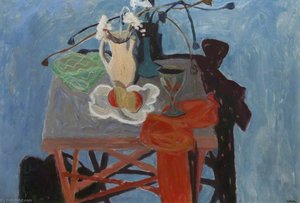
A Window Into Domestic Tranquility: Exploring William Gillies’ “Interior”
William George Gillies (1898 – 1973), a Scottish painter whose career spanned decades of artistic exploration, remains an enduring figure in British Modernism. His work embodies a quiet contemplation of everyday life, capturing the essence of domestic serenity with remarkable precision and subtle emotional resonance. “Interior,” completed in 1938, exemplifies Gillies’ distinctive approach – blending influences from Cézanne and Picasso with a burgeoning fascination for Paul Klee’s imaginative use of colour.
Subject Matter & Composition: The painting depicts a familial scene within a living room. A man and woman stand attentively near a window, bathed in diffused light—a deliberate choice that underscores the importance of natural illumination in Gillies' aesthetic vision. Two children are present, one playfully holding a ball, injecting an element of youthful energy into the otherwise tranquil composition. The arrangement is carefully considered, prioritizing balance and visual harmony.
Style & Technique: Gillies’ style leans heavily towards Cézanne’s geometric simplification and Picasso’s muted palette, yet he transcends mere imitation. He achieves a remarkable level of realism through meticulous observation—evident in the depiction of textures like the worn upholstery of the armchair and the smooth surface of the vases. However, unlike purely representational art, Gillies imbues his canvases with an underlying sense of abstraction. The fragmented planes of colour and form subtly suggest movement and depth, mirroring the complexities hidden beneath the surface of domestic life.
Historical Context: “Interior” was created during a period of significant artistic experimentation in Britain following World War I. Gillies’ engagement with Cubism reflected the broader intellectual currents of the time—a desire to challenge traditional perspectives and embrace new visual languages. Simultaneously, his encounter with Klee signaled a shift towards incorporating childlike spontaneity and emotional expression into his art – a reaction against the perceived rigidity of earlier artistic movements.
Symbolism & Emotional Impact: Beyond its formal qualities, “Interior” speaks to deeper themes of family connection and domestic comfort. The window serves as a visual metaphor for openness and contemplation—a reminder that beauty can be found in simplicity and stillness. The carefully placed objects – vases, bowls, apples – contribute to the overall atmosphere of refined elegance. Ultimately, Gillies’ masterpiece evokes a feeling of warmth, tranquility, and understated joy—capturing the quiet dignity of everyday life with an artist's unwavering eye.
Reproductions & Inspiration: Today, “Interior” continues to inspire artists and designers alike. High-quality reproductions allow viewers to appreciate Gillies’ masterful technique and capture the painting’s evocative mood. Consider incorporating elements of Cézanne’s geometric precision alongside Picasso’s muted palette into your own interior design projects – a testament to the enduring legacy of this remarkable Scottish painter.
Kérdések és válaszok
„Interior”, William George Gillies alkotása festmény, rajz vagy grafika?
A katalógusban a „Interior”, William George Gillies alkotása a WallArt kategóriába tartozik. Ez a besorolás segít hasonló művek megtalálásában.
Mennyire népszerű a "Interior" a Cubist Influences irányzatban?
A Cubist Influences irányzatban a "Interior" alkotásnak Recognized népszerűségi szintje van.
Ki a "Interior" szerzője, és mely művészeti irányból származik?
A „Interior” alkotását William George Gillies készítette Cubist Influences stílusban. A művész és a műveszetség meghatározza a mű hagyományát.
Hasonló műalkotások


A művész életrajza
Early Life and Artistic Beginnings
Sir William George Gillies, a name synonymous with the evocative beauty of Scottish landscapes and poignant still lifes, was born in Haddington, East Lothian, in 1898. His early life unfolded amidst the rolling hills and historic charm of his native region – a landscape that would profoundly shape his artistic vision. Initially enrolled at the Edinburgh College of Art, Gillies’ academic pursuits were abruptly interrupted by the exigencies of World War I, where he served with distinction as an engineer in the Royal Engineers. This experience, marked by both hardship and camaraderie, undoubtedly instilled within him a resilience and perspective that would later permeate his work. Following the war's conclusion, he returned to complete his education at the Edinburgh College of Art, ultimately securing a position as a dedicated teacher there for over four decades – a role that not only sustained his livelihood but also allowed him to nurture the talents of countless aspiring artists.A Journey Through Modernism: Influences and Early Style
Gillies’ artistic journey began with an enthusiastic exploration of Cubism after studying under the influential André Lhote in Paris during 1923, and a subsequent visit to Italy in 1924. This period exposed him to the radical innovations of European modern art, particularly the geometric explorations of Picasso and Braque. Early works such as “Two Pots, Saucer and Fruit” (1933) demonstrate this initial influence, showcasing a Cézanne-inspired arrangement – a careful consideration of form and space reminiscent of the master’s later work – combined with the understated color palettes characteristic of Braque and Picasso. However, a pivotal moment arrived in 1934 when he encountered the vibrant and imaginative works of Paul Klee. This encounter proved transformative, inspiring Gillies to embrace a more playful use of colour and to imbue his compositions with a sense of childlike wonder – a departure from the strict geometric constraints of Cubism that would ultimately define his distinctive style.The 1922 Group: A Hub for Scottish Innovation
In 1922, Gillies played a crucial role in establishing the “1922 Group,” alongside fellow artists including William Crozier, William Geissler, and William MacTaggart. This group, formed at the New Gallery in Edinburgh, served as a vital platform for emerging Scottish artists to showcase their work to a wider audience. The 1922 Group fostered a remarkable sense of community and collaboration within the burgeoning Scottish art scene – a period of significant experimentation and artistic growth. The exhibition society provided a space for these artists to share ideas, critique each other’s work, and collectively push the boundaries of contemporary art in Scotland.Themes and Subjects: A Reflection of Scotland
Gillies' oeuvre is deeply rooted in the landscapes and still lifes of his native Scotland. He became renowned for his sensitive depictions of the Lothian, Fife, and Border regions – capturing not just their physical beauty but also a profound sense of atmosphere and mood. His landscapes are characterized by a masterful use of light and colour, evoking the changing seasons and the dramatic shifts in weather that define these regions. Equally significant were his still life compositions, often featuring ceramics created by his younger sister, Emma Smith Gillies – whose untimely death in 1936 profoundly impacted the artist and imbued many of his works with a poignant sense of melancholy. Beyond these core themes, he occasionally explored portraiture, but it was primarily through his landscapes and still lifes that he established his enduring legacy.Recognition and Legacy
Throughout his distinguished career, Sir William George Gillies received numerous accolades recognizing his artistic merit and contributions to the Scottish art world. He was elected as an Associate of the Royal Scottish Academy in 1940 and a full Academician in 1947 – prestigious honors that affirmed his standing within the artistic community. In 1957, he was awarded the Commander of the Order of the British Empire (CBE), followed by knighthood in 1970. His influence extended beyond his own paintings; as Principal of the Edinburgh College of Art from 1959 to 1966, he shaped the artistic development of generations of students. Today, Gillies’ work is celebrated in museums and galleries across Scotland and internationally, a testament to his enduring vision and profound impact on the landscape of 20th-century art. His legacy continues to inspire artists and captivate viewers with its beauty, sensitivity, and deeply rooted connection to the Scottish spirit.
William George Gillies
1898 - 1973 , Egyesült Királyság
Rövid információk
- Artistic Movement Or Style: Kubbizmus, Skóti Színművészet
- Artists Or Movements Influenced By This Artist: ['Edinburgh School']
- Artists Who Influenced This Artist:
- André Lhote
- Paul Klee
- Cézanne
- Picasso
- Date Of Birth: 1898
- Date Of Death: 1973
- Full Name: Sir William George Gillies
- Nationality: Skót
- Notable Artworks:
- Two Pots, Saucer and Fruit
- The Origin of the Milky Way
- Place Of Birth: Haddington, Nagy-Britannia
Kapcsolódó cikkek

Capturing the Highlands: A Guide to Iconic Scottish Landscape Paintings and the Romantic Tradition
Explore the profound beauty of the Scottish Highlands through the lens of Romanticism. Discover the history, technique, and atmospheric mastery behind iconic landscape paintings from the Old Masters to museum-quality oil reproductions for collectors.

Paul Cézanne 25 Mesterműve: A Modern Művészet Úttörői | TopImpressionists
Fedezze fel Paul Cézanne 25 legikonikusabb művét! Ismerje meg a posztimpresszionizmus úttörőjének festményeit, technikáját és inspirációit. Vászonképek, portrék, tájképfestmények – minden otthonba. Böngéssze gyűjteményünket a TopImpressionists-on!

A Romantikus Tájképfestészet 10 Legikonikusabb Műalkotása – TopImpressionists.com
Fedezze fel a romantikus tájképfestészet 10 legikonikusabb műalkotását! Caspar David Friedrich, J.M.W. Turner és más mesterek festményeinek története – inspiráló olajfestmények otthonába. TopImpressionists.com: múzeumi minőségű reprodukciók és egyedi dekorációk online.

John Constable 25 Mesterműve: A Természet Lényege Vászonon – TopImpressionists.com
Fedezze fel John Constable 25 legszebb művészeti alkotását! Ismerje meg a romantika ikonikus tájképeit, Dedham Vale szépségét és a természet lenyűgöző ábrázolásait. Vászonkép reprodukcióinkkal eleganciát csempészhet otthonába – TopImpressionists.com

Sir William George Gillies: A Scottish Colourist's Journey Through Landscape & Abstraction
Explore the captivating world of Sir William George Gillies, a leading Scottish Colourist. Discover his journey from Cubism to iconic landscapes & still lifes. Expert insights for collectors and art enthusiasts.
Fedezze fel a műalkotásokat témák, stílusok és jellemzők szerint csoportosítva.