Előnézet
 Megosztás
 Megosztás
 Részletek
 Útmutató

 Letöltés
 Hasonló darabok
 X-ray felvétel
 Diavetítés
 Statisztika
Path through Trees
 Acrylic
- WallArt
- Post-Impressionistic Landscape
 112.0 x 114.0 cm
 Royal Scottish Academy of Art - Architecture
Explore the serene landscapes and evocative still lifes of Sir William George Gillies RA RSA PRSW, a Scottish Colourist celebrated for capturing the beauty of Lothian and Fife with masterful Impressionistic brushstrokes.
 Tovább olvasom
"meta_description": "W.G. Gillies: A Scottish master of evocative landscapes & poignant still lifes. His work reflects Cubist influences, a vibrant 1922 Group legacy, and a profound connection to his homeland – explore his timeless art!"
Az ezen az oldalon megjelenített műalkotások szerzői jogi védelem alatt állnak, ami azt jelenti, hogy törvényileg nem készíthetünk és nem adhatunk el belőlük pontos másolatokat. Ez a védelem olyan nemzetközi megállapodások alapján érvényesül, mint például a Berni Egyezmény és a nemzeti törvények által, beleértve azokat is, amelyeket meghatározott Az USA szerzői jogi törvénye – 17. cím.
Ez a módszer teljes mértékben megfelel a szerzői jogi szabályozásnak, mivel nem tartalmazza a védett műalkotás másolását vagy duplikálását. Ehelyett ez egy kreatív újinterpretáció – egy új festmény, amely az eredetivel való összefüggései miatt hatással van rá, de nem az az.
Giclée / Műnyomat
Múzeumi minőségű giclée vagy vászonnyomat, gyors gyártással és rugalmas finomítási lehetőségekkel. ( Kézzel festett másolat vásárlása Áttérés digitális képre)




P118B Ft10

P118H Ft10

P118W Ft10

P438Z Ft10

P508JH Ft12

P508YH Ft12

P805H Ft10

P805Z Ft10

P919BZ Ft10

P919G Ft10

P919XJ Ft10

P959ZH Ft10

P968JZ Ft12

W106C Ft8

W218G Ft10

W218JH Ft8

W218Y Ft10

W307PJ Ft10

W316G Ft10

W316PJ Ft8

W316Y Ft10

W398PJ Ft8

W4111J Ft10

W500HY Ft15

W500JH Ft15

W692G Ft12

W849H Ft8

W940BG Ft15

W953PJ Ft8




Standard méret
egyedi
CM
INCH
Válasszon előre meghatározott méreteink közül, amelyek megfelelnek a műalkotás eredeti arányainak.
Loading sizes...

szélesség
magasság
Írja be a keretének vagy a falának megfelelő szélességet és magasságot. A nyomatot csak le lehet vágni, soha nem tehető nagyobbá, mint az eredeti kép, így egy eltérő alakú méretnél a kép egy része elveszik. Mielőtt bármit kinyatintanánk, küldünk egy digitális próbamodellt jóváhagyásra. Az oldalon látható kép nem tartalmazza a valós levágást — ezt csak a próbamodell mutatja meg.
Világszerte történő kiszállítás területére mindössze 2 hét alatt, a szokásos 4-5 hét helyett. (25 október)

Ingyenes globális expressz szállítás

Prémium minőségű len vászon

Teljes körű szállítási biztosítás

Vámvisszatérítési Garancia

Tökéletes színarányosság garancia

100 napos visszaküldési garancia (csak gyártási hibás termékek esetén)

100% pénzvisszatérítési garancia

Több darab vásárlásakor kedvezmény
 Az üvegkeretes opció csak 110 cm alatti méretben érhető el

Path through Trees
Giclée / Műnyomat
Reprodukció méretei
-


Összesített ár
Ft 22084
A Journey Through Light and Texture: Exploring Gillies’ “Path through Trees”
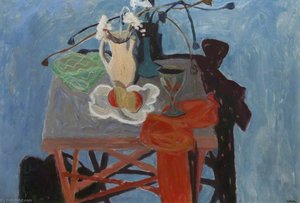
The painting "Path through Trees" by Sir William George Gillies stands as a testament to the enduring allure of Impressionism blended with a distinctly Scottish sensibility. Executed sometime before 1973, this piece captures not merely a visual representation of woodland scenery but delves into a deeper exploration of mood and atmosphere—a hallmark of Gillies’ artistic vision. Measuring 112 x 114 cm, the canvas invites contemplation as much as it pleases the eye with its harmonious blend of color and texture.The Impressionistic Embrace: Style and Technique
Gillies' stylistic choices firmly situate “Path through Trees” within the broader context of early 20th-century art movements. While undeniably influenced by Cubism’s geometric fragmentation – evident in his formative studies under André Lhote – Gillies swiftly moved beyond rigid formalism, prioritizing instead the expressive qualities of color and light. Characteristic Impressionistic brushstrokes dominate the composition, layering pigment onto the canvas with loose, visible marks that convey a palpable sense of spontaneity. Unlike meticulously rendered landscapes of earlier eras, Gillies eschewed detailed botanical accuracy; rather, he sought to distill the essence of the forest into its dominant hues—warm yellows and browns punctuated by subtle blues in the sky and foliage. This technique prioritizes capturing fleeting moments of illumination and shadow, mirroring the artist’s fascination with observing nature directly.Scottish Roots: Historical Context and Inspiration
Gillies' artistic development was profoundly shaped by his upbringing in Haddington, Scotland, where he absorbed the rugged beauty of the Lothian countryside. The painting reflects this connection to place, conveying a feeling of quiet contemplation and reverence for the natural world—a sentiment echoed throughout Gillies’ oeuvre. His encounter with Paul Klee proved particularly influential, prompting him to embrace a more imaginative approach to color palettes and compositional arrangements. Klee's playful use of childlike spontaneity resonated deeply with Gillies, encouraging him to infuse his paintings with an element of wonder and emotional resonance.Symbolism Within the Frame: Layers of Meaning
Beyond its aesthetic appeal, “Path through Trees” possesses symbolic depth. The dominant tree trunk serves as a focal point, representing resilience and strength—qualities associated with Scottish folklore and tradition. The dappled sunlight filtering through the branches symbolizes hope and renewal, mirroring the cyclical rhythms of nature. Furthermore, the fallen leaves at the base of the trunks subtly evoke themes of mortality and transformation, reminding viewers that beauty exists alongside impermanence. Gillies’ masterful manipulation of color and texture contributes to this layered interpretation, inviting contemplation on broader philosophical concepts.Emotional Resonance: A Tranquil Vista
Ultimately, “Path through Trees” succeeds in transporting the viewer into a serene woodland setting. The painting's subdued palette and expressive brushstrokes evoke feelings of peace and tranquility—a deliberate aim reflecting Gillies’ desire to capture not just what he saw but how he felt when observing the natural world. It is precisely this emotive quality, combined with Gillies’ skillful technique and stylistic innovation, that ensures “Path through Trees” continues to captivate audiences today, serving as an enduring emblem of Impressionistic beauty and Scottish artistic heritage.Gyakran Ismételt Kérdések
Hol vásárolható „Path through Trees”, William George Gillies alkotása képmű kézzel festett másolata?
A „Path through Trees”, William George Gillies alkotása kézzel festett reprodukcióját közvetlenül a(z) Kézzel festett másolat oldalon is megrendelheti: kézzel festett olajfesték reprodukció lino vászonon, egyedi igény szerinti gyártással.
Milyen viszonyban állnak egymáshoz a "Path through Trees" színei?
A "Path through Trees" színharmóniája úgy van rögzítve, mint Balanced Harmony.
Mely művészeti irányba és mely korszakba sorolható a „Path through Trees”, William George Gillies alkotása?
A „Path through Trees”, William George Gillies alkotása a Post-Impressionistic Landscape irányzat pripad, alkotójának Modern kor korszakából származva.
Hasonló műalkotások


A művész életrajza
Early Life and Artistic Beginnings
Sir William George Gillies, a name synonymous with the evocative beauty of Scottish landscapes and poignant still lifes, was born in Haddington, East Lothian, in 1898. His early life unfolded amidst the rolling hills and historic charm of his native region – a landscape that would profoundly shape his artistic vision. Initially enrolled at the Edinburgh College of Art, Gillies’ academic pursuits were abruptly interrupted by the exigencies of World War I, where he served with distinction as an engineer in the Royal Engineers. This experience, marked by both hardship and camaraderie, undoubtedly instilled within him a resilience and perspective that would later permeate his work. Following the war's conclusion, he returned to complete his education at the Edinburgh College of Art, ultimately securing a position as a dedicated teacher there for over four decades – a role that not only sustained his livelihood but also allowed him to nurture the talents of countless aspiring artists.A Journey Through Modernism: Influences and Early Style
Gillies’ artistic journey began with an enthusiastic exploration of Cubism after studying under the influential André Lhote in Paris during 1923, and a subsequent visit to Italy in 1924. This period exposed him to the radical innovations of European modern art, particularly the geometric explorations of Picasso and Braque. Early works such as “Two Pots, Saucer and Fruit” (1933) demonstrate this initial influence, showcasing a Cézanne-inspired arrangement – a careful consideration of form and space reminiscent of the master’s later work – combined with the understated color palettes characteristic of Braque and Picasso. However, a pivotal moment arrived in 1934 when he encountered the vibrant and imaginative works of Paul Klee. This encounter proved transformative, inspiring Gillies to embrace a more playful use of colour and to imbue his compositions with a sense of childlike wonder – a departure from the strict geometric constraints of Cubism that would ultimately define his distinctive style.The 1922 Group: A Hub for Scottish Innovation
In 1922, Gillies played a crucial role in establishing the “1922 Group,” alongside fellow artists including William Crozier, William Geissler, and William MacTaggart. This group, formed at the New Gallery in Edinburgh, served as a vital platform for emerging Scottish artists to showcase their work to a wider audience. The 1922 Group fostered a remarkable sense of community and collaboration within the burgeoning Scottish art scene – a period of significant experimentation and artistic growth. The exhibition society provided a space for these artists to share ideas, critique each other’s work, and collectively push the boundaries of contemporary art in Scotland.Themes and Subjects: A Reflection of Scotland
Gillies' oeuvre is deeply rooted in the landscapes and still lifes of his native Scotland. He became renowned for his sensitive depictions of the Lothian, Fife, and Border regions – capturing not just their physical beauty but also a profound sense of atmosphere and mood. His landscapes are characterized by a masterful use of light and colour, evoking the changing seasons and the dramatic shifts in weather that define these regions. Equally significant were his still life compositions, often featuring ceramics created by his younger sister, Emma Smith Gillies – whose untimely death in 1936 profoundly impacted the artist and imbued many of his works with a poignant sense of melancholy. Beyond these core themes, he occasionally explored portraiture, but it was primarily through his landscapes and still lifes that he established his enduring legacy.Recognition and Legacy
Throughout his distinguished career, Sir William George Gillies received numerous accolades recognizing his artistic merit and contributions to the Scottish art world. He was elected as an Associate of the Royal Scottish Academy in 1940 and a full Academician in 1947 – prestigious honors that affirmed his standing within the artistic community. In 1957, he was awarded the Commander of the Order of the British Empire (CBE), followed by knighthood in 1970. His influence extended beyond his own paintings; as Principal of the Edinburgh College of Art from 1959 to 1966, he shaped the artistic development of generations of students. Today, Gillies’ work is celebrated in museums and galleries across Scotland and internationally, a testament to his enduring vision and profound impact on the landscape of 20th-century art. His legacy continues to inspire artists and captivate viewers with its beauty, sensitivity, and deeply rooted connection to the Scottish spirit.
William George Gillies
1898 - 1973 , Egyesült Királyság
Gyors információk
- Artistic Movement Or Style: Kubbizmus, Skóti Színművészet
- Artists Or Movements Influenced By This Artist: ['Edinburgh School']
- Artists Who Influenced This Artist:
- André Lhote
- Paul Klee
- Cézanne
- Picasso
- Date Of Birth: 1898
- Date Of Death: 1973
- Full Name: Sir William George Gillies
- Nationality: Skót
- Notable Artworks:
- Two Pots, Saucer and Fruit
- The Origin of the Milky Way
- Place Of Birth: Haddington, Nagy-Britannia
Kapcsolódó cikkek

Beyond the Light: Discovering the Soul and Emotional Depth of Post-Impressionism
Embark on a cultural journey through Post-Impressionism. Discover the profound emotional depth of masters like Van Gogh and Cézanne, exploring how they moved beyond light to capture the very soul of human experience through vibrant color and symbolic form.

Beyond the Light: Capturing Raw Emotion and Subjective Vision in Post-Impressionist Landscapes
Explore the profound emotional depth of Post-Impressionist landscapes. Discover how masters like Van Gogh moved beyond light to capture raw human feeling through vibrant color and expressive texture in this expert art history retrospective.
Fedezze fel a műalkotásokat témák, stílusok és jellemzők szerint csoportosítva.