
Shown: · With its frame:
 Megtekintés
 Küldés
 Megosztás
 Részletek
 Útmutató

 Letöltés
 Hasonló darabok
 X-ray felvétel
 Diavetítés
 Q&A
Q&A Statisztika
 Oil On Canvas
- WallArt
- Cubist Abstract
 33.0 x 24.0 cm
 Grand Palais
Ft 87954
Kézzel készített olajfestmény reprodukció
Kézzel festett olajvastú vászon, az Ön által választott méretben és keretben, művészeink készítik meglévőre. ( Váltás nyomtatványra Áttérés digitális képre)
Ez a műalkotás szerzői jogi védelem alatt áll
Az ezen az oldalon megjelenített műalkotások szerzői jogi védelem alatt állnak, ami azt jelenti, hogy törvényileg nem készíthetünk és nem adhatunk el belőlük pontos másolatokat. Ez a védelem olyan nemzetközi megállapodások alapján érvényesül, mint például a Berni Egyezmény és a nemzeti jogszabályok által, beleértve azokat is, amelyeket meghatározott Az USA szerzői jogi törvénye – 17. cím.
Mint tiszteletes és törvényes alternatívát, olyan egyedi, kézzel festett alkotásokat kínálunk, amelyek az eredetiből merítnek inspirációt. Tapasztalt és professzionális művészeink alaposan tanulmányozzák az eredeti stílusát, hangulatát és művészeti esszenciáját, hogy egy olyan új, egyedi alkotást hozzunk létre, amely ugyanazt az érzést kelti – miközben önálló, eredeti alkotásként létezik.
Ez a módszer teljes mértékben megfelel a szerzői jogi szabályozásnak, mivel nem tartalmazza a védett műalkotás másolását vagy duplikálását. Ehelyett ez egy kreatív újinterpretáció – egy új festmény, amely az eredetivel való összefüggései miatt hatással van rá, de nem az az.
 További információk
Size
·Standard méret
egyedi méretű
CM
INCH
Válasszon előre meghatározott méreteink közül, amelyek megfelelnek a műalkotás eredeti arányainak.
Loading sizes...

szélesség
magasság
Írja be a kívánt szélességet és magasságot, hogy illeszkedjen a keretéhez vagy a falához. Mivel ez kézzel festett alkotás, egy eltérő formájú méret esetén a művész akár festhet is valamivel többet a kép körül, vagy korolathat is belőle — az Ön döntésének megfelelően. A festés megkezdése előtt küldünk egy digitális tervezetet jóváhagyásra. Az oldalon látható kép nem tartalmazza a végeredményt — csak a tervezet mutatja meg a valódi eredményt.
Finish
·
White Ft1

Blurside Ft1

Extended Ft1

P118B Ft10

P118H Ft10

P118W Ft10

P438Z Ft10

P508JH Ft12

P508YH Ft12

P805H Ft10

P805Z Ft10

P919BZ Ft10

P919G Ft10

P919XJ Ft10

P959ZH Ft10

P968JZ Ft12

W106C Ft8

W218G Ft10

W218JH Ft8

W218Y Ft10

W307PJ Ft10

W316G Ft10

W316PJ Ft8

W316Y Ft10

W398PJ Ft8

W4111J Ft10

W500HY Ft15

W500JH Ft15

W692G Ft12

W849H Ft8

W940BG Ft15

W953PJ Ft8

H24-GOLD Ft30

H24-SILVER Ft30

H36-GOLD Ft45

H36-SILVER Ft45
Shipped in a protective tube, ready for your own framer.
Above 105 cm the frame is shipped as a kit for a professional framer — read the details.
Extras
optionalWhat do the extras include?
Examples of what can be changed: Replace face with customer photo; Add pet (e.g., replace cat with dog); Include hidden message in background; Change background landscape or elements.
After order, TopImpressionists.com team will email client for instructions and provide a mockup preview
After order, TopImpressionists.com team will email client for instructions and provide a mockup preview
Világszerte elérhető szállítás () 3-4 hét alatt a szokásos 5 hét helyett. (31 október). A minőség nem kérdőjelezhető.
Védőréteg (Lakk)
Névtábla
A gravírozott bronztábla részletei
This elegant plaque features the artist's name and the title of the artwork, finely engraved for a timeless presentation.
It is made from bronze with a refined, elegant finish. The text is precisely laser-engraved for a sharp and permanent result. Measuring 9x2 cm, the plaque is compact yet easy to read. It's built to be durable and scratch-resistant, offering a professional, museum-quality look. Mounting is simple thanks to the included adhesive backing.
Átlátszó akril tábla részletei
The plaque includes essential engraved details such as the artist's name, the title of the artwork, the date it was created, the type of media used-like oil on canvas or watercolor-a brief description of the piece, and a QR code that links to the complete artwork information.
It is crafted from clear acrylic, offering a sleek, modern appearance. The text is UV-engraved in black to ensure strong visual contrast. With a size of 10x15 cm, it ensures optimal readability. It comes equipped with two metal hooks for secure wall mounting. The plaque is designed to be weather-resistant, making it suitable for various environments, and it includes interactive features that work seamlessly with smartphone scanning.
Fekete akril tábla részletei
This elegant plaque includes engraved information such as the artist's name, the title of the artwork, the date it was created, the type of media used (like oil on canvas or watercolor), a short description of the artwork, and a QR code for quick access to more information.
The plaque itself is made from refined black acrylic with a premium finish. The text is laser-engraved in white for high contrast and readability. Its size is 10x15 cm, designed to be easy to read. It comes with two metal hooks for professional mounting. The design is sleek and fits any interior style. It is also weather-resistant and durable, with built-in digital integration for mobile compatibility.
Az üvegkeretes opció csak 110 cm alatti méretben érhető el
 Az üvegkeretes opció csak 110 cm alatti méretben érhető el
- Ingyenes globális expressz szállítás
- Prémium minőségű len vászon
- Teljes körű szállítási biztosítás
- Vámvisszatérítési Garancia
- Hiteles színarányosság garancia
- 100 napos visszaküldési lehetőség (csak hibás termékek esetén)
- 100% pénzvisszatérítési garancia
- Több darab vásárlásakor kedvezmény


A gyűjtemény leírása
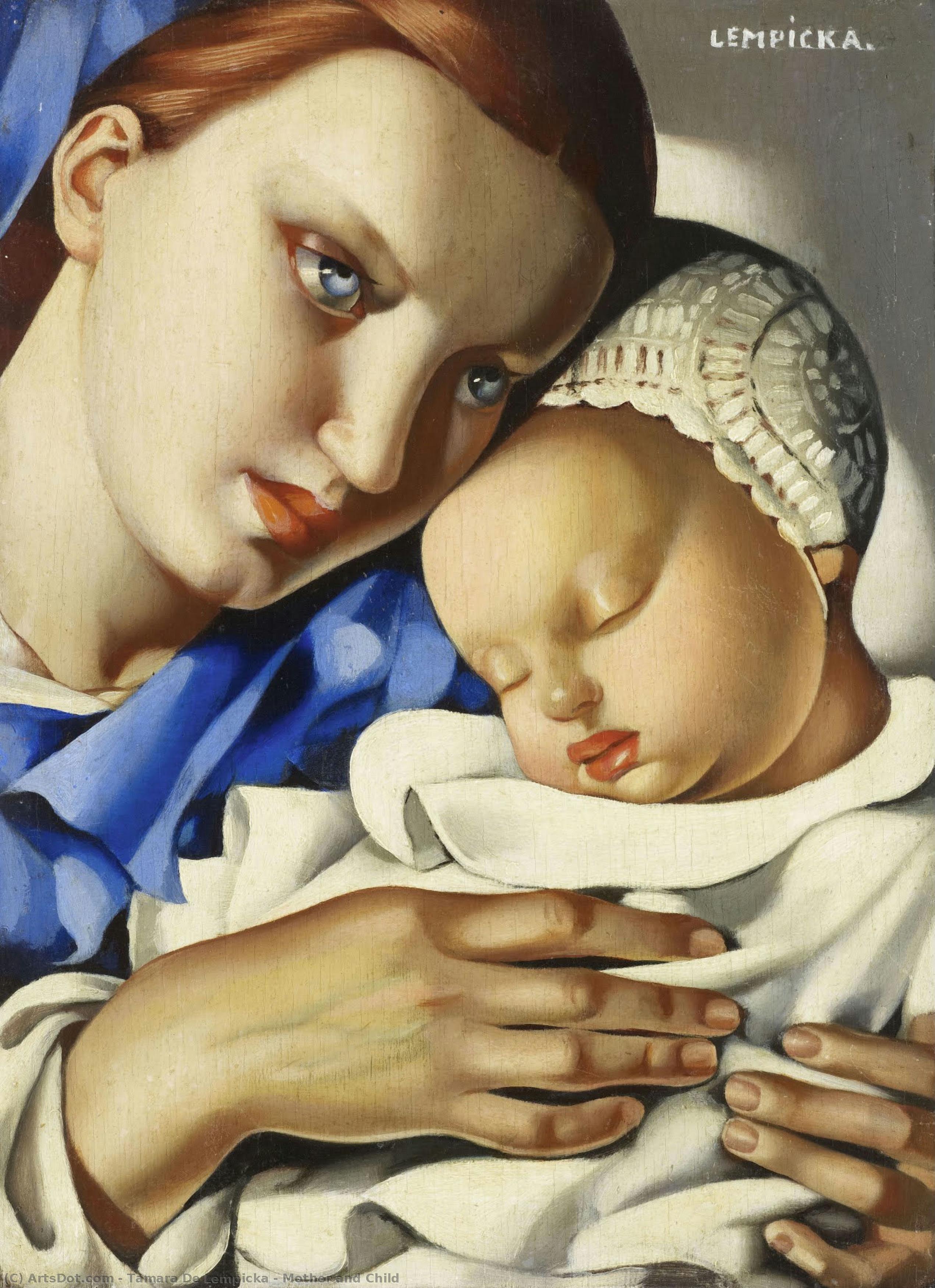
Experience Tamara de Lempicka's 'Mother and Child,' a captivating Art Deco portrait of a Polish aristocrat and her baby. Explore the beauty, intimacy, and historical context of this iconic masterpiece.
A művész életrajza
Fedezze fel Tamara de Lempicka (1898-1980) munkásságát, az Art Deco ikonikus festőjét! Élvezze a lenyűgöző portréit és stilizált aktjait, amelyek az arisztokráciát és a modern nőiséget ünneplik. Klasszikus precízió és kubista hatások egyedülálló ötvözete.
About the painting
A Portrait of Intimate Strength: Deconstructing Tamara de Lempicka's 'Mother and Child'
Tamara de Lempicka’s “Mother and Child,” painted in 1953, is more than just a depiction of familial love; it’s a carefully constructed tableau of aristocratic poise, quiet resilience, and the enduring power of maternal connection. Born Maria Teresa Górska in Warsaw in 1898, de Lempicka’s life was one of dramatic shifts – from a privileged Polish upbringing to a whirlwind romance with Tadeusz Łempicki, a tumultuous period during the Russian Revolution, and ultimately, a successful career as a celebrated Art Deco painter. This particular work, created later in her life, offers a poignant glimpse into her artistic evolution and her deeply personal understanding of motherhood.
The painting immediately draws the eye to the central figures: a woman, presumably Tamara herself, cradling a small child within her arms. The composition is strikingly formal, reminiscent of classical portraiture yet imbued with the sharp angles and geometric precision characteristic of de Lempicka’s signature style. She eschews loose brushstrokes or expressive gestures in favor of clean lines, precise modeling, and a deliberate flattening of perspective – techniques borrowed from Cubism but filtered through her own unique vision. The palette is restrained: muted browns, creams, and ochres dominate, creating a sense of understated elegance and timelessness. This careful control over color and form reflects de Lempicka’s meticulous approach to art, mirroring the precision she applied to her portraits.
Art Deco Elegance and Polish Roots
“Mother and Child” is firmly rooted in the Art Deco movement, a style that flourished in the 1920s and 30s, characterized by its geometric forms, luxurious materials, and celebration of modernity. De Lempicka embraced this aesthetic wholeheartedly, incorporating it into her portraits of wealthy patrons – industrialists, financiers, and socialites – who sought to project an image of sophistication and success. However, the painting also subtly hints at de Lempicka’s Polish heritage. The woman's posture, the rich fabrics of her clothing, and the overall sense of dignified reserve evoke a distinctly Eastern European sensibility—a quiet strength born from a history shaped by both privilege and upheaval.
The historical context is crucial to understanding the painting’s deeper meaning. De Lempicka had experienced significant personal turmoil – a divorce, the loss of her husband, and the challenges posed by World War II. “Mother and Child” can be interpreted as a reflection on these experiences, a yearning for stability and connection amidst a world in constant flux. The act of cradling the child represents not just maternal love but also a desire to nurture and protect—a powerful antidote to the anxieties and uncertainties of her life.
Symbolism of Protection and Legacy
The pose itself is laden with symbolism. The woman’s hand gently supporting the child conveys a sense of protection, security, and unwavering devotion. Her gaze is direct and confident, suggesting an inner strength that transcends mere motherhood. The child, nestled securely in her arms, embodies the future—a continuation of lineage, a promise of hope. It's not a sentimental depiction of blissful domesticity; rather, it’s a portrait of resilience and quiet determination.
Furthermore, the painting subtly references the concept of legacy. De Lempicka herself was a prolific artist who left behind a significant body of work—a testament to her enduring talent and artistic vision. “Mother and Child” can be seen as an extension of this legacy, a visual representation of the values she held dear: family, beauty, and the pursuit of excellence. It’s a poignant reminder that even in moments of personal struggle, the bonds of love and the desire to create something lasting can provide solace and purpose.
A Timeless Masterpiece for the Home
Reproductions of “Mother and Child” offer a beautiful addition to any interior space. The painting’s elegant composition and restrained palette complement a wide range of design styles, from classic to contemporary. Its powerful symbolism resonates with viewers on an emotional level, evoking feelings of warmth, security, and enduring love. Whether displayed in a formal living room or a more relaxed setting, this timeless masterpiece will undoubtedly serve as a focal point—a reminder of the beauty and strength found within the bonds of family.
Kérdések és válaszok
Hogyan írják le „Mother and Child”, Tamara De Lempicka alkotása színezetét?
A "Mother and Child" színei egy Neutrals palettát alkotnak. Ez a besorolás a domináns színek családjait írja le.
Mit ábrázol a "Mother and Child", és milyen hangulatot áraszt?
A "Mother and Child" című alkotás mother, child, tamara, lempicka, art deco, polish, family témákat ábrázol, hangulata pedig Elegant.
Ki a "Mother and Child" mögött álló művész?
A "Mother and Child" alkotását Tamara De Lempicka készítette. Az ezen az oldalon található információk Tamara De Lempicka eredeti művészetét mutatják be.
Quick facts and art quiz
About Tamara De Lempicka

Tamara De Lempicka
1898 - 1980, Lengyelország
A művész életrajza
A polsztai Art Deco arisztokráciája
Tamara de Lempicka, született Maria Teresa Górska néven 1898-ban Varsóban, olyan lenyűgöző és összetett alak volt, mint amilyen a portrék, amelyeket megörökített. Életútja olyan, mint egy regény – arisztokratikus nevelés, forradalmi viharok, művészeti ébredés és maradandó ragyogás lenyűgöző örvénye. Gazdag polgai-zsidó családban született, korai évei mélyen árasztottak európai kultúrával, amelyet gyógyfürdői utazások és a kifinomult társasági környezet prägelte. Ez a privilegizált háttér olyan mélyreható csapásokat hagyott benne a szépség és az elegancia iránti érzékiséget tekintetben, amely alapjaiban formálta esztétikai vízióját. Azonban ifjúsága idilli világát megtörte az orosz forradalom. Férjével, Tadeusz Łempickivel együtt, menekülve a politikai turbulencia elől, új fejezetet nyitott Párizsban, amely éppen arra készülhetett, hogy a művészeti innováció epicentrumává váljon. Itt, az ébredő Art Deco mozgalom közepén találta meg Tamara valódi hangját.
Egy egyedülálló esztétika kialakítása
Lempicka művészeti utazása nem formális akadémiai képzésből, hanem szenvedélyes önismeretből és mentorálásból fakadt. Rövid ideig Maurice Denis és André Lhote tanítványaként tanul, befogadva technikájukat, miközben egyidejűleg saját, egyedi stílusát kovácsolta. Jean-Dominique Ingres hatása érezhető neoklasszikus precizitásában és a formák hangsúlyozásában, ám ő ügyesen integrálta a kubizmus töredékes perspektíváit és geometriai absztrakcióját is – egy merész fúzió, amely meghatározta aláírását jelentő esztétikáját. Festményeit fényes felületek, letisztult vonalak és a figurák tudatos stilizálása jellemzi, amelyek mind az Art Deco modernitás és luxus iránti elkötelezettségének jellegzetességei. Ő nem csupán portrékat festett; ikonokat épített. Alakjai – gyakran az arisztokrácia vagy a gazdag elit tagjai – hideg kifinomultsággal áradva jelentek meg, testet adva a Jazzkor felszabadult szellemiségének. Öntпортré a zöld Bugattiban, talán legikonikusabb műve, tökéletesen példázza ezt: az önbizalommal teli függetlenség és az autóipari sebesség lenyűgöző képe, amely páratlan eleganciával örökíti meg a modern élet egy pillanatát.
Diadal és elismerés
A 1925-ös párizsi Exposition Internationale des Arts Décoratifs et Industriels Modernes döntő pillanattá bizonyult Lempicka számára. Résztvétele segített az Art Deco-t a mainstreambe juttatni, és megszilárdította hírnevét a kor egyik vezető művészekéntént. Ez a siker 1927-ben tovább megerősödött, amikor első díjat nyert a Bordeaux-i Kiállításon a Kizette a balkonon című portréjával, amely tökéletesen összefoglalja egyedi stílusát – a klasszikus méltóság és a modern szenzualitás ötvözetét. Az 1920-as évek végén és az 1930-as években Lempicka rendkívül keresett lett a gazdag megbízók körében, akik olyan portrékat kívántek megrendelni, amelyek örökítik státuszukat és vonzerőjüket. A Portrait of Marjorie Ferry című műve demonstrates az ő képességét, hogy ne csak a hasonlságot, hanem az alakok belső lényegét is megörökítse – ambíciójukat, magabizsgálatukat és kifinomult ízlésüket. A portretáláson túl mitológiai témákat is felfedezett, amint azt az Éden (Adam and Eve) című művében láthatjuk, bemutatva sokoldalúságát és intellektuális kíváncsiságát.
Örökség és újrafedezés
A második világháború kitörése Lempickát 1939-ben az Egyesült Államokba menekülésre kényszerítette, ahol folytatta festését, de úgy érezte, kissé elszakadt a változó művészeti távoltól. Stílusa, amely annyira szorosan kapcsolódott a háborék előtti Európa ragyogásához, kevésbé relevánsnak tűdött egy konfliktusokkal és bizonytalansággal küzdő világban. Műve azonban látványos népszerűségre került az 1960-as és 70-es évek Art Deco revival idején. Egy új generáció fedezte fel festményeit, lenyűgözve azok időtlen eleganciájukkal és merész esztétikai víziójukkal. Tamara de Lempicka 1980-ban halt meg Mexico Cityben, és úgy döntött, hogy hamvát a Popocatépetl vulkán szórják – egy végső dacolás és függetlenség jele, amely méltó egy olyan nőhöz, aki saját feltételei mellett élt. Ma az Art Deco művészet egyik legfontosabb alakjaként ünneplik, művészként, akinek festményei ma is awe-t és csodálatot ébresztenek szépségükkel, kifinomultságukkal és egy elmúlt kor megtestesülésével. Öröksége túl az esztétikán: ikonikus alak maradt, amely a női empowermentet és a művészeti innovációt képviseli egy történelmileg férfiak által dominált területen.
Jelentős művek
- Öntportré a zöld Bugattiban: Az Art Deco meghatározó képe, amely a függetlenséget és a modernitást mutatja be.
- Portrait of Marjorie Ferry: Portretálási készségének kiváló példája, amely az eleganciát és a rejtélyt örökíti meg.
- Adam és Éva: Mitológiai témák felfedezését mutatja be egy egyedi stílusban.
- A két barát: Korai kubista hatásait és kísérletezéseit tükrözi.
- Printemps: A tavasz vibráló ábrázolása, amely színhasználatának és formájának mesteri szintjét mutatja be.
- Spring: Egy másik gyönyörű példája Lempickának arra a képességére, hogy egy évszak lényegét kegyességgel és stílussal megörökítse.
Quick facts about Tamara De Lempicka
- Artistic Movement Or Style: Art Deco, Kubizmus
- Artists Or Movements Influenced By This Artist: ['Art Deco mozgalom']
- Artists Who Influenced This Artist: ['Jean-Dominique Ingres']
- Date Of Birth: 1898. május 16.
- Date Of Death: 1980. március 18.
- Full Name: Tamara de Lempicka
- Nationality: Lengyel
- Notable Artworks (List Of Titles):
- Önarckép zöld Bugattival
- Marjorie Ferry portréja
- Ádám és Éva
- Place Of Birth (City And Country): Varsó, Lengyelország
Fedezze fel a műalkotásokat témák, stílusok és jellemzők szerint csoportosítva.


Tamara De Lempicka
Mother and Child
() ·
With its frame: · Hand-painted in oil on linen
Total