


 Előnézet
 Megosztás
 Megosztás
 Részletek
 Útmutató

 Letöltés
 Hasonló darabok
 X-ray felvétel
 Diavetítés
 Statisztika
The Courtship


Experience Thomas Eakins' 'The Courtship,' a captivating 1878 oil painting showcasing intimate human connection with bold brushstrokes and warm lighting. Own a piece of American Realism history.
 Tovább olvasom
Eakins: amerikai realista festő, aki a valóságot ábrázolta a művészetben. Rengeteg portréja, dinamikus evezős jelenetei és anatómiai precizitása lenyűgöző. Fedezd fel örökségét!
Kézzel készített olajfestmény reprodukció
Kézzel festett olajvastú vászon, az Ön által választott méretben és keretben, művészeink készítik meglévőre. ( Váltás nyomtatványra Áttérés digitális képre)




P118B Ft10

P118H Ft10

P118W Ft10

P438Z Ft10

P508JH Ft12

P508YH Ft12

P805H Ft10

P805Z Ft10

P919BZ Ft10

P919G Ft10

P919XJ Ft10

P959ZH Ft10

P968JZ Ft12

W106C Ft8

W218G Ft10

W218JH Ft8

W218Y Ft10

W307PJ Ft10

W316G Ft10

W316PJ Ft8

W316Y Ft10

W398PJ Ft8

W4111J Ft10

W500HY Ft15

W500JH Ft15

W692G Ft12

W849H Ft8

W940BG Ft15

W953PJ Ft8




Standard méret
egyedi
CM
INCH
Válasszon előre meghatározott méreteink közül, amelyek megfelelnek a műalkotás eredeti arányainak.
Loading sizes...

szélesség
magasság
Ön megadhat saját méreteket egy adott kerethez vagy térhez igazításhoz. Ha a kiválasztott méret nem egyezik az eredeti kép arányával, akkor a műalkotást levágjuk, vagy további kézzel festett elemekkel meghosszabbítjuk a festményt. A gyártás megkezdése előtt küldünk Önnek egy digitális előnézetet jóváhagyásra.
Kérjük, vegye figyelembe, hogy a képernyőn megjelenő előnézet nem tükrözi a tényleges vágást vagy kiterjesztést. Csak az előnézet fog pontosan mutatni a végső kompozíciót.
Bár egyedi méretek állnak rendelkezésre, javasoljuk, hogy válasszon egy méretet az előre meghatározott listából az eredeti arányok megőrzése érdekében.
Példák arra, mit lehet módosítani: az arc kicserélése az ügyfél fotójára; háziállat hozzáadása (pl. macska helyett kutya); rejtett üzenet elhelyezése a háttérben; a háttér tájának vagy elemeinek megváltoztatása.
A rendelést követően a TopImpressionists.com csapata e-mailt küld az ügyfélnek az instrukciókért, és biztosít egy előnézeti képet (mockup).
A rendelést követően a TopImpressionists.com csapata e-mailt küld az ügyfélnek az instrukciókért, és biztosít egy előnézeti képet (mockup).
Világszerte elérhető szállítás () 3-4 hét alatt a szokásos 5 hét helyett. (8 október). A minőség nem kérdőjelezhető.

Ingyenes globális expressz szállítás

Prémium minőségű len vászon

Teljes körű szállítási biztosítás

Vámvisszatérítési Garancia

Tökéletes színarányosság garancia

100 napos visszaküldési garancia (csak gyártási hibás termékek esetén)

100% pénzvisszatérítési garancia

Több darab vásárlásakor kedvezmény
 Az üvegkeretes opció csak 110 cm alatti méretben érhető el

The Courtship
Reprodukciós technika
Reprodukció méretei
-


Összesített ár
Ft 84120
A Moment of Quiet Intimacy: Thomas Eakins’ “The Courtship”
Thomas Eakins' "The Courtship," painted in 1878, is more than just a portrait; it’s a meticulously observed study of human connection—a quiet tableau brimming with unspoken emotions and subtle gestures. This oil on canvas work, now residing within the Fine Arts Museums of San Francisco, offers a rare glimpse into the domestic life of late 19th-century America, rendered with Eakins' signature blend of realism and psychological insight. The painting immediately draws the viewer in with its warm palette—a rich tapestry of browns, reds, and golds that creates an atmosphere of comfortable intimacy, reminiscent of a fireside conversation.
Eakins’ genius lies not merely in his technical skill – though undeniably impressive, evidenced by the confident brushstrokes capturing the textures of fabric and skin – but in his ability to distill complex human interaction into a single, compelling scene. The arrangement of figures is deliberate: the woman, positioned slightly to the left and facing her companion, exudes an air of relaxed attentiveness. Her posture, coupled with the gentle curve of her hand as she gestures, suggests engagement and perhaps even a hint of playful anticipation. The man, seated beside her, mirrors this openness with his own gaze, creating a dynamic visual dialogue that transcends mere representation.
Deconstructing Reality: Eakins’ Realist Approach
“The Courtship” firmly establishes Eakins as a pivotal figure in the American Realist movement. Rejecting the romanticized depictions prevalent at the time, he sought to portray everyday life with unflinching honesty and scientific precision. This is evident in his detailed rendering of the room – the worn furniture, the ticking clock, the subtle details of the doll—each element contributing to a sense of authenticity. Eakins was fascinated by anatomy and observation; he dissected subjects, studying their posture, expressions, and interactions with an almost clinical eye, then rebuilt them on canvas with remarkable accuracy.
Notably, Eakins eschewed traditional portraiture conventions. He avoided idealized beauty or dramatic poses, instead opting for a naturalistic depiction of his subjects in a commonplace setting. The inclusion of the clock, for instance, isn’t merely decorative; it serves as a reminder of time passing and the potential trajectory of this quiet moment. The doll, a small, almost enigmatic presence, adds another layer of complexity—perhaps representing childhood innocence or the anticipation of future family life.
Symbolism and Emotional Resonance
Beyond its realistic depiction, “The Courtship” is rich in subtle symbolism. The arrangement of chairs suggests a comfortable familiarity, while the shared space fosters a sense of connection. The woman’s hand resting lightly on the man's arm speaks volumes about their relationship—a gesture of affection and trust. Eakins masterfully captures the unspoken language of intimacy, conveying a feeling of warmth, vulnerability, and quiet contentment.
Furthermore, the painting reflects the changing social landscape of the late 19th century, when courtship rituals were undergoing transformation. It offers a glimpse into a period where young people began to assert their independence and make choices about their own futures—a theme that resonates even today. The scene feels both familiar and subtly revolutionary, capturing a moment of genuine human connection amidst the complexities of social expectations.
A Timeless Masterpiece: Reproductions and Legacy
The original “The Courtship” is a treasured piece within the Fine Arts Museums of San Francisco’s collection. However, TopImpressionists.com offers exquisite, hand-painted reproductions that allow art lovers to experience this remarkable work in their own homes. These meticulously crafted copies faithfully recreate Eakins' masterful technique and evocative atmosphere, ensuring that the painting’s beauty and emotional depth are preserved for generations to come.
For those seeking a deeper understanding of Thomas Eakins and his artistic legacy, we encourage you to explore our website at https://TopImpressionists.com, where you can discover other works by the artist, including “Frank Jay St. John,” another significant piece in the museum’s collection. You can also find further information on Eakins and his artistic influences at https://TopImpressionists.com.
Gyakran Ismételt Kérdések
Milyen típusú alkotás a "The Courtship"?
A „The Courtship”, Eakins alkotása művészeti alkotás WallArt kategóriába tartozik. Ez a besorolás azt határozza meg, hogy az eredeti alkotás milyen típusú művészeti alkotás.
Szabad-e jogilag másolni a(z) Fine Arts Museums of San Francisco múzeum collectionsében található „The Courtship”, Eakins alkotása alkotást?
A „The Courtship”, Eakins alkotása, mely a Fine Arts Museums of San Francisco gyűjteményében található, a joghallgatói schützenesség körébe tartozik – a szerzői jog lejártt státuszú. Ez a státusz határozza meg, hogy a kép másolható-e.
Mikor készült a(z) „The Courtship”, Eakins alkotása?
A „The Courtship”, Eakins alkotása alkotása 1878-ben készült.
Ki a "The Courtship" alkotója?
A "The Courtship" alkotója Eakins. A mű Eakins nevére van katalógusozva.
Erős fény-árnyék kontrasztot mutat-e a "The Courtship"?
A "The Courtship" fény-sötét kontrasztja Bold értéket mutat. A kontraszt azt írja le, mennyire térnek el egymástól a világos és sötét részek.
Mennyire intenzívek a „The Courtship”, Eakins alkotása színei?
A „The Courtship”, Eakins alkotása Vivid szín intenzitást mutat be.
Mennyi volt Eakins életkora, amikor a "The Courtship" készült?
Amikor a "The Courtship" alkotása 1878-ben készült, Eakins – aki 1844-ben született – 34 éves volt.
A művész életrajza
A Life Devoted to Reality
Thomas Cowperthwait Eakins, born in Philadelphia on July 25, 1844, stands as a monumental figure in American art—a painter of unflinching realism who dedicated his life to capturing the essence of human experience. He wasn’t merely interested in *representing* the world; he sought to dissect it, understand its anatomy, both physical and psychological, and then reconstruct it on canvas with an honesty that often bordered on provocation. Eakins's path was not one of immediate acclaim, but rather a slow burn of dedication, controversy, and ultimately, enduring recognition as perhaps the most profound realist in 19th and early 20th-century American art. His Philadelphia wasn’t a city of grand landscapes or romantic ideals; it was a world of doctors, rowers, hunters, and everyday individuals—and these were his subjects, rendered with an almost scientific precision.Early Influences and Artistic Formation
Eakins's upbringing fostered both intellectual curiosity and artistic inclination. His father, Benjamin Eakins, a writing master and calligrapher, instilled in him a love of discipline and meticulous observation. This foundation was further strengthened by his education at Central High School and the Pennsylvania Academy of the Fine Arts, where he excelled in drawing and anatomy—a fascination that would permeate his entire oeuvre. However, it was his time in Europe, particularly under the tutelage of Jean-Léon Gérôme in Paris, that truly shaped his artistic approach. Gérôme’s emphasis on precise draftsmanship and historical accuracy resonated with Eakins's own inclinations, but he quickly moved beyond mere imitation. A sojourn in Spain further refined his understanding of light, shadow, and the power of direct observation. He wasn’t content to simply copy Old Masters; he wanted to understand *how* they achieved their effects, and then apply that knowledge to his own unique vision. This period was crucial in solidifying his commitment to painting directly from life, a practice that would define his career.The Pursuit of Truth: Themes and Techniques
Eakins’s work is characterized by an unwavering commitment to realism—a refusal to idealize or romanticize his subjects. His portraits, numbering several hundred, are not flattering representations designed to appease the sitter; they are penetrating studies of character, revealing both strength and vulnerability. He painted individuals engaged in their professions – surgeons at work in *The Gross Clinic*, rowers straining against the current in *Max Schmitt in a Single Scull*—capturing not just their physical appearance but also the intensity of their focus and the demands of their craft. This dedication to truth extended to his technique. Eakins was fascinated by motion, and he employed innovative methods to capture it accurately. He studied anatomy meticulously, often dissecting cadavers to understand the underlying structure of the human body. He even experimented with photography, using it as a tool for analyzing movement and achieving greater accuracy in his paintings. His use of chiaroscuro—the dramatic contrast between light and dark—further enhanced the sense of realism and psychological depth in his work.Controversy and Legacy
Despite his artistic brilliance, Eakins’s career was marked by controversy. His insistence on painting directly from life, often including nude models, clashed with the conservative sensibilities of Victorian Philadelphia. His teaching methods at the Pennsylvania Academy were equally unconventional; he emphasized the importance of studying the human form from life and encouraged his students to challenge traditional artistic conventions. This led to friction with his colleagues and ultimately resulted in his forced resignation in 1886. Personal scandals further damaged his reputation during his lifetime, leaving him largely ostracized by the art establishment. However, Eakins remained undeterred, continuing to paint and teach privately until his health began to fail. After his death in 1916, his work gradually gained recognition, and he is now celebrated as a pivotal figure in American art history. His unflinching realism, his dedication to anatomical accuracy, and his profound understanding of the human condition continue to inspire artists and captivate audiences today. He left behind not just paintings, but a legacy of artistic integrity and a relentless pursuit of truth—a testament to the power of observation and the enduring beauty of the human form.Key Works and Enduring Influence
Several works stand as hallmarks of Eakins’s genius. *Max Schmitt in a Single Scull* (1871), with its masterful depiction of movement and light, is arguably his most iconic painting. *The Gross Clinic* (1875), though controversial at the time for its unflinching portrayal of surgery, remains a powerful testament to the dedication and skill of medical professionals. *William Rush and His Model* (1908) showcases his later style, blending portraiture with allegorical elements. Beyond these specific paintings, Eakins’s influence can be seen in the work of countless artists who followed him—those who sought to capture the world around them with honesty, precision, and a deep understanding of the human spirit. His commitment to realism paved the way for later movements such as Ashcan School and continues to resonate with contemporary artists today. He remains a vital force in American art, a reminder that true artistry lies not in imitation or embellishment, but in the courageous pursuit of truth.
Eakins
1844 - 1916 , Egyesült Államok
Gyors információk
- Artistic Movement Or Style: Realista
- Artists Or Movements Influenced By This Artist: ['Amerikai Realizmus']
- Artists Who Influenced This Artist: ['Géróme']
- Date Of Birth: 1844. 7. 25.
- Date Of Death: 1916. 6. 25.
- Full Name: Thomas Eakins
- Nationality: Amerikai
- Notable Artworks:
- Max Schmitt
- Gross Klinika
- Úszók
- Place Of Birth: Philadelphia, USA
Kapcsolódó cikkek
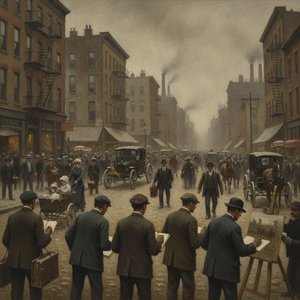
The Ashcan School: Capturing the Raw, Unfiltered Soul of Urban Life through American Realism
Discover the raw beauty of the Ashcan School. Explore how masters like Bellows and Henri captured the gritty, vibrant soul of early 20th-century New York through profound American Realism and evocative urban landscapes.

The Unvarnished Truth: A Cultural Journey Through the Soul of American Realism
Explore the profound beauty of American Realism. From the Ashcan School's urban grit to intimate portraits, discover how artists captured the authentic soul of a nation through unvarnished truth and masterful observation.
Fedezze fel a műalkotásokat témák, stílusok és jellemzők szerint csoportosítva.


