


 Megtekintés
 Küldés
 Megosztás
 Részletek
 Útmutató

 Letöltés
 Hasonló darabok
 X-ray felvétel
 Diavetítés
 Q&A
Q&A Statisztika
Island Hay


Experience Thomas Hart Benton’s ‘Island Hay,’ a powerful Regionalist Realism painting capturing the spirit of Midwestern farm life with thick impasto and earthy tones – a timeless testament to American labor and community. Discover this iconic artwork and bring its beauty into your home.
 Összes részlet megjelenítése
Thomas Hart Benton (1889-1975) amerikai festő, a regionalista művészet egyik kiemelkedő képviselője. A köztebbi élet, a tájak és a néprajz inspirálták őt. Bemutatjuk alkotásait és életútját!
Az ezen az oldalon megjelenített műalkotások szerzői jogi védelem alatt állnak, ami azt jelenti, hogy törvényileg nem készíthetünk és nem adhatunk el belőlük pontos másolatokat. Ez a védelem olyan nemzetközi megállapodások alapján érvényesül, mint például a Berni Egyezmény és a nemzeti jogszabályok által, beleértve azokat is, amelyeket meghatározott Az USA szerzői jogi törvénye – 17. cím.
Ez a módszer teljes mértékben megfelel a szerzői jogi szabályozásnak, mivel nem tartalmazza a védett műalkotás másolását vagy duplikálását. Ehelyett ez egy kreatív újinterpretáció – egy új festmény, amely az eredetivel való összefüggései miatt hatással van rá, de nem az az.
Giclée / Műnyomat
Múzeumi minőségű giclée vagy vászonnyomat, gyors gyártással és rugalmas finomítási lehetőségekkel. ( Kézzel festett másolat rendelése Áttérés digitális képre)




P118B Ft10

P118H Ft10

P118W Ft10

P438Z Ft10

P508JH Ft12

P508YH Ft12

P805H Ft10

P805Z Ft10

P919BZ Ft10

P919G Ft10

P919XJ Ft10

P959ZH Ft10

P968JZ Ft12

W106C Ft8

W218G Ft10

W218JH Ft8

W218Y Ft10

W307PJ Ft10

W316G Ft10

W316PJ Ft8

W316Y Ft10

W398PJ Ft8

W4111J Ft10

W500HY Ft15

W500JH Ft15

W692G Ft12

W849H Ft8

W940BG Ft15

W953PJ Ft8




Standard méret
egyedi méretű
CM
INCH
Válasszon előre meghatározott méreteink közül, amelyek megfelelnek a műalkotás eredeti arányainak.
Loading sizes...

szélesség
magasság
Írja be a keretének vagy a falának megfelelő szélességet és magasságot. A nyomatot csak le lehet vágni, soha nem tehető nagyobbá, mint az eredeti kép, így egy eltérő alakú méretnél a kép egy része elveszik. Mielőtt bármit kinyatintanánk, küldünk egy digitális próbamodellt jóváhagyásra. Az oldalon látható kép nem tartalmazza a valós levágást — ezt csak a próbamodell mutatja meg.
Világszerte történő kiszállítás területére mindössze 2 hét alatt, a szokásos 4-5 hét helyett. (29 október)

Ingyenes globális expressz szállítás

Prémium minőségű len vászon

Teljes körű szállítási biztosítás

Vámvisszatérítési Garancia

Hiteles színarányosság garancia

100 napos visszaküldési lehetőség (csak hibás termékek esetén)

100% pénzvisszatérítési garancia

Több darab vásárlásakor kedvezmény
 Az üvegkeretes opció csak 110 cm alatti méretben érhető el

Island Hay
Giclée / Műnyomat
Reprodukció mérete
-


Összesített ár
Ft 22293
A Heartland Vision: The Soul of American Labor
In the vast, undulating landscapes of the American Midwest, there exists a profound rhythm of life—a cycle of seasons, toil, and communal strength that defines the very essence of the heartland. Thomas Hart Benton, a titan of the Regionalist movement, captured this enduring spirit with unparalleled vitality in his 1945 masterpiece, Island Hay. This work is far more than a mere depiction of agricultural routine; it is a cinematic tableau of human resilience. As we gaze upon the scene, we are transported to a sprawling field where the air feels heavy with the scent of dried grass and the quiet determination of those who tend the land. The painting invites us into a world where the boundary between humanity and nature is blurred by the shared necessity of labor.
The composition is masterfully orchestrated to draw the viewer into the thick of the action. Positioned prominently, a sturdy wagon serves as the anchor for the scene, its presence grounding the movement occurring around it. Three farmers are caught in a moment of synchronized effort, their bodies sculpted by the physical demands of their task. One can almost feel the tension in their muscles as they pitch hay toward the waiting vessel. Benton utilizes a dynamic perspective that pulls our eyes across the textured expanse of the field, leading us toward a distant barn that stands as a silent sentinel of the homestead. This careful arrangement creates an immersive environment, fostering an immediate, visceral connection to the rhythmic, seasonal choreography of rural life.
The Mastery of Regionalist Realism
Benton’s technique is a triumph of Regionalist Realism, a style that rejected the abstract trends flowing from Europe in favor of a robust, uniquely American aesthetic. He eschewed the fleeting, light-drenched moments of Impressionism to pursue something more permanent and tactile. Through the use of thick, impasto brushstrokes, Benton imbues the canvas with a physical weight; the paint itself seems to possess the materiality of the earth it depicts. This heavy application of pigment creates a rugged texture that mirrors the grit and substance of the farmers' lives. The color palette is intentionally grounded in earthy tones—muted ochres, deep greens, and somber sky grays—which reinforces the painting’s connection to the soil and the unpretentious beauty of the natural world.
Beyond the technical prowess, Island Hay carries a profound symbolic weight. The act of loading the hay is a metaphor for the gathering of resources, the preparation for winter, and the collective effort required to sustain a community. There is a quiet camaraderie visible in the postures of the men, suggesting that while the work is solitary in its physical strain, it is communal in its purpose. For the collector or the interior designer, this piece offers more than just visual interest; it provides an emotional anchor. It brings a sense of stability, heritage, and groundedness to any space, making it an ideal centerpiece for those looking to evoke themes of tradition, hard work, and the timeless beauty of the American landscape.
Kérdések és válaszok
Hogyan írható le „Island Hay”, Thomas Hart Benton alkotása hangulata?
„Island Hay”, Thomas Hart Benton alkotása művészeti alkotásának összhangulata Serene. Ez az érzet foglalja össze a mű általános atmoszféráját.
„Island Hay”, Thomas Hart Benton alkotása színei élénkek vagy fakók?
A "Island Hay" színe Muted telítettségű és Monochromatic intenzitású.
Milyen hangulatot közvetít a „Island Hay”, Thomas Hart Benton alkotása a Regionalist irányzaton belül?
A "Island Hay" a Regionalist korszak Tranquil érzelmi hangulatát tükrözi.
A művész életrajza
A Midwestern Voice: The Life and Art of Thomas Hart Benton
Thomas Hart Benton emerged as a pivotal figure in American art, a painter who dedicated his life to capturing the essence of the nation’s spirit—particularly that of its heartland. His story is one of rebellion against societal expectations and a passionate embrace of distinctly American themes. Unlike many artists of his generation drawn to European modernism, Benton resolutely turned inward, seeking inspiration in the landscapes, people, and stories of the United States. This commitment placed him at the forefront of the Regionalist movement, alongside Grant Wood and John Steuart Curry, shaping a uniquely American artistic identity during a period of profound social and economic change. His father, Maecenas Benton, was a lawyer and congressman, intending for his son to follow a path in politics; however, young Thomas possessed an irrepressible creative spirit that led him away from the halls of power and toward the world of art. This divergence began with work as a cartoonist for the *Joplin American* newspaper, a formative experience that honed his observational skills and instilled a love for visual storytelling.From Paris to Regionalism: The Development of a Style
Benton’s formal artistic education took him first to the Art Institute of Chicago and then to Paris in 1909, where he studied at the Académie Julian. While exposed to European artistic traditions, he found himself increasingly disillusioned with their detachment from American life. A period of experimentation followed his return to the United States, marked by a search for a visual language that could authentically express his connection to the land and its people. This quest led him through various styles—from impressionism to synchromism—before culminating in the distinctive Regionalist aesthetic he would become known for. His figures became fluid and sculpted, imbued with a sense of dynamism and vitality. He wasn’t merely depicting scenes; he was conveying the energy and rhythm of American life. This stylistic evolution wasn't simply an artistic choice but a deliberate rejection of European dominance and an assertion of American cultural independence. He embraced naturalistic representation, focusing on everyday subjects—farmers, laborers, families—and portraying them with honesty and empathy. Benton’s work reflected his deep connection to the land and its people, capturing their struggles, triumphs, and enduring spirit.Murals and Masterpieces: Benton’s Artistic Achievements
Benton's artistic output was prolific and diverse, encompassing paintings, murals, prints, and illustrations. He is perhaps best known for his large-scale mural projects, which brought art directly into public spaces and made it accessible to a wider audience. The *America Today* murals, commissioned for the New School for Social Research in New York City (1930-31), stand as a monumental achievement—a sweeping panorama of American life during the Great Depression. These panels, now housed at the Metropolitan Museum of Art, depict scenes from across the country, capturing both the hardships and resilience of the American people. Beyond murals, his easel paintings like *The Sheepherder* and *Prodigal Son* demonstrate a mastery of composition, color, and narrative. He possessed an exceptional ability to imbue biblical or historical stories with contemporary relevance, grounding them in the realities of American experience. His work *City Building (Study for America Today)* exemplifies his dynamic style and raw energy. He wasn’t afraid to tackle complex social issues through his art, using it as a platform for commentary and critique. Benton's murals were not just decorative; they were powerful statements about American identity and the challenges faced by its citizens.A Legacy of American Identity
Thomas Hart Benton's influence on American art is undeniable. He helped define a distinctly American artistic voice, one that celebrated the nation’s unique character and challenged prevailing European aesthetic norms. His Regionalist approach paved the way for future generations of artists to explore their own regional identities and cultural heritage. He was also a dedicated educator, teaching at institutions like the Art Students League of New York and the Kansas City Art Institute, mentoring numerous aspiring artists—including Jackson Pollock. Benton’s commitment to social realism and his willingness to engage with contemporary issues continue to resonate today. He left behind a body of work that serves as a powerful testament to the enduring spirit of America, its people, and its landscapes. His legacy extends beyond the canvas, inspiring artists to find their own voices and tell their own stories—rooted in the places they call home. He died in 1975, leaving behind a rich artistic heritage that continues to captivate and inspire audiences worldwide.Key Influences and Connections
Benton’s artistic development was shaped by a confluence of factors – his family history, his travels, and the social and political climate of his time. His father's career as a politician exposed him to the realities of American life, particularly in rural Missouri, providing a rich source of subject matter for his art. The brief but impactful period he spent in Paris broadened his artistic horizons, introducing him to European modernism while simultaneously fueling his desire to forge an independent American style. Furthermore, Benton’s close association with figures like Diego Rivera and Stanton Macdonald-Wright during his Parisian years exposed him to innovative techniques and ideas that would later inform his own work. His friendship with President Harry S. Truman further cemented his place in the national narrative, as evidenced by their collaborative effort on the *Independence and the Opening of the West* mural at the Truman Library. Benton’s art was not created in a vacuum; it was deeply intertwined with the historical and cultural context of its time, reflecting both the challenges and opportunities facing America during the 20th century.Notable Works
Among Benton's most celebrated works are:- Prodigal Son (1938): A powerful depiction of a farmer returning to his family after years away, symbolizing the resilience of rural America.
- Flood (1936): A dramatic portrayal of a flood in Missouri, capturing both the devastation and the community’s response.
- The Sheepherder (1937): An iconic image of an American farmer, embodying the spirit of hard work and self-reliance.
- City Building (Study for America Today) (1930-31): A monumental mural depicting the growth and development of a Midwestern city.

Thomas Hart Benton
1889 - 1975 , Egyesült Államok
Rövid információk
- Artistic Movement Or Style: Regionális
- Date Of Birth: Április 15, 1889
- Date Of Death: Január 19, 1975
- Full Name: Thomas Hart Benton
- Nationality: Amerikai
- Notable Artworks:
- Prodigal Son I
- Flood
- City Building
- Place Of Birth: Neosho, USA
Kapcsolódó cikkek
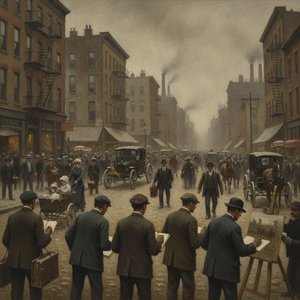
The Ashcan School: Capturing the Raw, Unfiltered Soul of Urban Life through American Realism
Discover the raw beauty of the Ashcan School. Explore how masters like Bellows and Henri captured the gritty, vibrant soul of early 20th-century New York through profound American Realism and evocative urban landscapes.

The Unvarnished Truth: A Cultural Journey Through the Soul of American Realism
Explore the profound beauty of American Realism. From the Ashcan School's urban grit to intimate portraits, discover how artists captured the authentic soul of a nation through unvarnished truth and masterful observation.

The Raw Truth: A Definitive Guide to the Power and Legacy of Social Realism Art
Explore the profound impact of Social Realism. Discover how masters like Courbet rejected idealism to capture the raw, socio-political truths of the working class through powerful, unvarnished art history and enduring visual critique.
Fedezze fel a műalkotásokat témák, stílusok és jellemzők szerint csoportosítva.

