

A képen: · A kerettel együtt:
 Megtekintés
 Küldés
 Megosztás
 Részletek
 Útmutató

 Letöltés
 Hasonló darabok
 X-ray felvétel
 Diavetítés
 Kérdések és válaszok
 Statisztika


Ft 88133
Kézzel készített olajfestmény reprodukció
Kézzel festett olajvastú vászon, az Ön által választott méretben és keretben, művészeink készítik meglévőre. ( Váltás nyomtatványra Áttérés digitális képre)
Méret
·Standard méret
egyedi méretű
CM
INCH
Válasszon előre meghatározott méreteink közül, amelyek megfelelnek a műalkotás eredeti arányainak.
Méretek betöltése...

szélesség
magasság
Írja be a kívánt szélességet és magasságot, hogy illeszkedjen a keretéhez vagy a falához. Mivel ez kézzel festett alkotás, egy eltérő formájú méret esetén a művész akár festhet is valamivel többet a kép körül, vagy korolathat is belőle — az Ön döntésének megfelelően. A festés megkezdése előtt küldünk egy digitális tervezetet jóváhagyásra. Az oldalon látható kép nem tartalmazza a végeredményt — csak a tervezet mutatja meg a valódi eredményt.
 További információk
Befejezés
·
Fehér Ft1

Elmosódott szélek Ft1

Kiterjesztett Ft1

P118B Ft10

P118H Ft10

P118W Ft10

P438Z Ft10

P508JH Ft12

P508YH Ft12

P805H Ft10

P805Z Ft10

P919BZ Ft10

P919G Ft10

P919XJ Ft10

P959ZH Ft10

P968JZ Ft12

W106C Ft8

W218G Ft10

W218JH Ft8

W218Y Ft10

W307PJ Ft10

W316G Ft10

W316PJ Ft8

W316Y Ft10

W398PJ Ft8

W4111J Ft10

W500HY Ft15

W500JH Ft15

W692G Ft12

W849H Ft8

W940BG Ft15

W953PJ Ft8

H24-GOLD Ft30

H24-SILVER Ft30

H36-GOLD Ft45

H36-SILVER Ft45
Védődobozban, feltekercselve szállítva, készen a saját keretbe helyezésre.
Extrák
opcionálisMit tartalmaznak a plusz szolgáltatások?
Példák a módosíthatóságra: Az arc kicserélése a vásárló fotójára; háziállat hozzáadása (pl. macska kicserélése kutyára); rejtett üzenet elhelyezése a háttérben; a háttér tájéképének vagy elemeinek megváltoztatása.
A megrendelést követően a TopImpressionists.com csapat e-mailt küld a vásárlónak az instrukciókkal, és biztosítja a tervezeti előnézetet
A megrendelést követően a TopImpressionists.com csapat e-mailt küld a vásárlónak az instrukciókkal, és biztosítja a tervezeti előnézetet
Világszerte elérhető szállítás () 3-4 hét alatt a szokásos 5 hét helyett. (3 november). A minőség nem kérdőjelezhető.
Védőréteg (Lakk)
Névtábla
A gravírozott bronztábla részletei
This elegant plaque features the artist's name and the title of the artwork, finely engraved for a timeless presentation.
It is made from bronze with a refined, elegant finish. The text is precisely laser-engraved for a sharp and permanent result. Measuring 9x2 cm, the plaque is compact yet easy to read. It's built to be durable and scratch-resistant, offering a professional, museum-quality look. Mounting is simple thanks to the included adhesive backing.
Átlátszó akril tábla részletei
The plaque includes essential engraved details such as the artist's name, the title of the artwork, the date it was created, the type of media used-like oil on canvas or watercolor-a brief description of the piece, and a QR code that links to the complete artwork information.
It is crafted from clear acrylic, offering a sleek, modern appearance. The text is UV-engraved in black to ensure strong visual contrast. With a size of 10x15 cm, it ensures optimal readability. It comes equipped with two metal hooks for secure wall mounting. The plaque is designed to be weather-resistant, making it suitable for various environments, and it includes interactive features that work seamlessly with smartphone scanning.
Fekete akril tábla részletei
This elegant plaque includes engraved information such as the artist's name, the title of the artwork, the date it was created, the type of media used (like oil on canvas or watercolor), a short description of the artwork, and a QR code for quick access to more information.
The plaque itself is made from refined black acrylic with a premium finish. The text is laser-engraved in white for high contrast and readability. Its size is 10x15 cm, designed to be easy to read. It comes with two metal hooks for professional mounting. The design is sleek and fits any interior style. It is also weather-resistant and durable, with built-in digital integration for mobile compatibility.
Az üvegkeretes opció csak 110 cm alatti méretben érhető el
 Az üvegkeretes opció csak 110 cm alatti méretben érhető el
- Ingyenes globális expressz szállítás
- Prémium minőségű len vászon
- Teljes körű szállítási biztosítás
- Vámvisszatérítési Garancia
- Hiteles színarányosság garancia
- 100 napos visszaküldési lehetőség (csak hibás termékek esetén)
- 100% pénzvisszatérítési garancia
- Több darab vásárlásakor kedvezmény


A gyűjtemény leírása
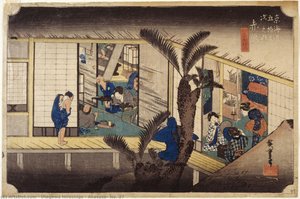
Utagawa Hiroshige’s “Wakasa” depicts a picturesque fishing boat traversing calm waters, populated by thirteen figures enjoying the day. Inspired by the Fifty-Three Stations of the Tokaido highway, this masterpiece embodies Hiroshige's signature style—a harmonious blend of observation and artistic interpretation—influencing Impressionist painters like Monet and Van Gogh.
A művész életrajza
"HungarianMetaDescription": "Utagawa Hiroshige (1797-1858) a legutóbbi nagy ukiyo-e mester, aki a japán tájakat poétikus látlényével ábrázolta. A Fifty-three Stations of the Tōkaidō és One Hundred Famous Views of Edo művei világszerte ismerték fel, és jelentősen befolyásolták a nyugati művészetet."
A festményről
A Poetic Vision of Edo Japan: The Life and Art of Utagawa Hiroshige
Utagawa Hiroshige (1797-1858) stands as an unparalleled luminary in the realm of *ukiyo-e*, or “pictures of the floating world,” forever etching his name into the annals of Japanese art history. More than merely capturing visual impressions, Hiroshige possessed a singular ability to distill the spirit of Edo Japan—a period characterized by burgeoning urban growth, social stratification, and an evolving cultural landscape—into breathtaking landscapes imbued with profound emotional resonance. His artistic journey began humbly, apprenticed under Utagawa Toyohiro, mastering the intricate craft of woodblock printing while simultaneously cultivating a deeply personal aesthetic rooted in observation and contemplation. This formative experience would ultimately shape his distinctive style and propel him to become Japan’s final great *ukiyo-e* master, leaving an indelible mark on both Japanese artistic tradition and its subsequent influence on Western art movements like Impressionism.- Subject Matter & Composition: Hiroshige's canvases rarely depict grand narratives or heroic figures; instead, he favored serene scenes of nature—mountain vistas, riverscapes, cherry blossoms in bloom—often populated by solitary travelers or fishermen. These subjects were deliberately chosen to evoke feelings of tranquility and contemplation, mirroring the philosophical currents prevalent during his time.
- Style & Technique: Hiroshige’s signature style is defined by its meticulous attention to detail and masterful use of perspective—particularly *ma*, or negative space—to create a sense of depth and atmosphere. He employed a technique known as *bokashi*, blending tonal gradations with subtle shading to achieve remarkable realism while simultaneously conveying an ethereal quality.
The Fifty-Three Stations of the Tōkaidō: A Journey Through Time & Landscape
Perhaps Hiroshige’s most celebrated series, “The Fifty-Three Stations of the Tōkaidō,” exemplifies his artistic prowess and captures the essence of Edo Japan's commercial artery. This ambitious undertaking involved painstakingly documenting each station along the Tokaido highway—the main route connecting Kyoto and Tokyo—resulting in sixty-six prints that offer a panoramic view of the region’s topography, flora, and fauna. Each print is rendered with breathtaking precision, capturing not only the physical environment but also the subtle nuances of daily life—farmers tending their fields, merchants traversing the road, pilgrims embarking on sacred pilgrimages.- Symbolism & Emotion: Hiroshige’s landscapes are laden with symbolic meaning. Cherry blossoms represent impermanence and beauty fleetingly grasped; mountains symbolize strength and resilience—themes central to Zen Buddhism, which profoundly influenced Japanese culture during Hiroshige's lifetime.
- Influence on Impressionism: Hiroshige’s innovative use of *ma* and tonal gradations captivated European artists like Claude Monet and Vincent van Gogh who were experimenting with new approaches to painting. They recognized in Hiroshige’s work a kindred spirit—a desire to capture the immediacy of experience and convey emotion through color and light, mirroring the core tenets of Impressionism.
Hiroshige's Legacy: An Enduring Aesthetic Influence
Despite the decline of *ukiyo-e* by the late 19th century due to shifting economic conditions and Western artistic dominance, Hiroshige’s influence continues to resonate today. His landscapes remain admired for their beauty, tranquility, and masterful execution—inspiring artists and designers alike. Reproductions of his prints adorn homes and galleries worldwide, testifying to the enduring power of his vision—a testament to a Japanese artist who transformed landscape painting into an art form capable of conveying profound emotional depth and capturing the sublime spirit of Edo Japan.Kérdések és válaszok
Milyen elhelyezés illik „Wakasa”, Hiroshige alkotása formátumához?
A Portrait formájú, a „Wakasa” című alkotás reprodukcióját egy Living Room számára javasoljuk.
A „Wakasa” 1853-es dátuma Hiroshige pályájának mely szakaszára tekintthető?
A 1853 évszám a "Wakasa" alkotást Hiroshige fejlődésének Mature Period szakaszába helyezi.
Milyen domináns alapszín jellemzi „Wakasa”, Hiroshige alkotása alkotást?
A „Wakasa” egy Green to Violet Spectrum tónus felé hajlik.
Gyors tények és művészeti kvíz
Hiroshige életrajza

Hiroshige
1797 - 1858, Japán
A művész életrajza
A Poetic Vision of Edo Japan: The Life and Art of Utagawa Hiroshige
Utagawa Hiroshige, born Andō Tokutarō in 1797 in the bustling city of Edo (modern Tokyo), stands as a pivotal figure in the world of *ukiyo-e*, or “pictures of the floating world.” Though deeply rooted in the traditions of Japanese woodblock printing, Hiroshige transcended mere replication, imbuing his landscapes with a poetic sensibility that resonated profoundly both within Japan and, later, across the Western art world. His life unfolded during a period of relative peace and prosperity under the Tokugawa shogunate, yet also one marked by increasing social change and eventual westernization – forces that would ultimately contribute to the decline of *ukiyo-e* even as they amplified Hiroshige’s enduring legacy. Initially destined for a more conventional path within a samurai family—his father served as a fire warden—Hiroshige's artistic inclinations led him to apprenticeship under Utagawa Toyohiro, a master of the Utagawa school. This proved a crucial turning point, steering him away from the popular depictions of courtesans and actors favored by many *ukiyo-e* artists toward a focus on landscape, a genre he would ultimately redefine.From Genre Scenes to Evocative Landscapes
Hiroshige’s early work adhered to the conventions of his school, featuring portraits and scenes from daily life. These prints, often characterized by their meticulous detail and vibrant colors, demonstrated a mastery of traditional *ukiyo-e* techniques. However, it was his embrace of landscape that truly distinguished him. Influenced by earlier masters like Hokusai—whose *Thirty-six Views of Mount Fuji* had already captivated audiences—Hiroshige developed a unique style characterized by atmospheric perspective, subtle color palettes, and a profound sensitivity to the changing seasons. He didn’t merely depict places; he evoked their mood, capturing the essence of a particular moment in time. The series *The Fifty-three Stations of the Tōkaidō* (1833–1834), perhaps his most celebrated achievement, exemplifies this approach. This monumental work documented the journey along the Tōkaidō road, the main route connecting Edo and Kyoto, not as a straightforward travelogue but as a series of evocative vignettes—a sudden rain shower at Shono, a distant view of Mount Fuji from Kanaya, the bustling activity at Odawara. Each print is imbued with a sense of transience and quiet beauty, inviting viewers to experience the journey alongside the travelers. He masterfully employed *bokashi*, a technique involving multiple impressions to create subtle gradations of color, adding depth and atmosphere to his compositions. The use of layered blocks allowed him to build up complex textures and suggest the play of light and shadow with remarkable subtlety.A Master of Atmosphere and Technique
Hiroshige’s technical skill was as remarkable as his artistic vision. He wasn't simply interested in accurate representation; he sought to capture the *feeling* of a place. His use of color, though often restrained compared to some of his contemporaries, was crucial in achieving this effect. He frequently employed multiple blocks for a single color, allowing him to create nuanced shades and atmospheric effects that were incredibly difficult to replicate. The delicate washes of blue in his depictions of rain or mist, the warm hues of autumn foliage—these weren’t accidental; they were carefully considered elements designed to evoke specific emotions and sensations. Beyond *bokashi*, Hiroshige was adept at utilizing blank space – *ma* – a concept central to Japanese aesthetics, allowing areas of the print to “breathe” and enhancing the overall sense of tranquility. His series *One Hundred Famous Views of Edo* (1856–1858) further showcased his mastery, offering intimate glimpses into the life and landscapes of his beloved city. These prints moved beyond simple depictions of buildings and streets, instead focusing on capturing the atmosphere and mood of different districts—the smoky alleys of Yoshiwara, the serene gardens of Shinjuku, the vibrant markets of Tsukiji.The Enduring Legacy: Japonisme and Beyond
Though the *ukiyo-e* tradition began to wane after Hiroshige’s death in 1858—a decline accelerated by the Meiji Restoration and the subsequent influx of Western culture—his influence on the art world proved remarkably enduring. In the late 19th century, Japanese prints flooded Europe, sparking a phenomenon known as *Japonisme*. Artists like Édouard Manet, Claude Monet, and Edgar Degas were captivated by the bold compositions, flattened perspectives, and unconventional color schemes of *ukiyo-e*, incorporating these elements into their own work. Vincent van Gogh was particularly enthralled with Hiroshige’s prints, creating copies of several, including “Flowering Plum Tree after Hiroshige,” demonstrating his deep admiration for the Japanese master's use of color and composition. Hiroshige’s influence extended beyond painting; it can be seen in architecture, design, and even literature. Today, Utagawa Hiroshige is remembered not only as a brilliant artist but also as a cultural ambassador who helped bridge the gap between East and West, leaving an indelible mark on the history of art. His serene landscapes continue to inspire awe and contemplation, reminding us of the beauty and transience of the natural world.Notable Works
- The Fifty-three Stations of the Tōkaidō: Hiroshige’s most famous series, depicting the journey along the main road between Edo and Kyoto.
- One Hundred Famous Views of Edo: A captivating portrayal of life and landscapes in his beloved city.
- Influence on Vincent van Gogh's Japonaiserie Series: Including “Flowering Plum Tree after Hiroshige,” demonstrating Van Gogh’s deep admiration for the Japanese master.
Gyors információk Hiroshige művészről
- Artistic Movement Or Style: *Ukiyo-e*
- Artists Or Movements Influenced By This Artist:
- Manet
- Monet
- Artists Who Influenced This Artist: ['Hokusai']
- Date Of Birth: 1797
- Date Of Death: 1858
- Full Name: Utagawa Hiroshige
- Nationality: Japán
- Notable Artworks:
- Fifty-three Stations
- One Hundred Views
- Place Of Birth: Tokió, Japán
Fedezze fel a műalkotásokat témák, stílusok és jellemzők szerint csoportosítva.




Hiroshige
Wakasa
() ·
A kerettel együtt: · Kézzel festve, olajfesték, vászonon
Összesen