Előnézet
 Megosztás
 Megosztás
 Részletek
 Útmutató

 Letöltés
 Hasonló darabok
 X-ray felvétel
 Diavetítés
 Statisztika
Louisiana

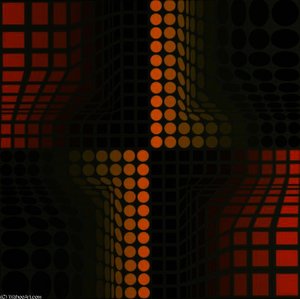
Egy lenyűgöző Op Art alkotás Victor Vasarelytől – dinamikus geometriai mintázat és élénk színek együtt. Egy igazán különleges műalkotás modern építészethez és dekorációhoz.
 Tovább olvasom
Fedezd fel Victor Vasarely (1906-1997) világát! Op art, kinetikus művészet, geometriai absztrakt képei és a modern művészet meghatározó alakja. Magyar művészettörténet egyik legkiemelkedőbb képviselője.
Az ezen az oldalon megjelenített műalkotások szerzői jogi védelem alatt állnak, ami azt jelenti, hogy törvényileg nem készíthetünk és nem adhatunk el belőlük pontos másolatokat. Ez a védelem olyan nemzetközi megállapodások alapján érvényesül, mint például a Berni Egyezmény és a nemzeti törvények által, beleértve azokat is, amelyeket meghatározott Az USA szerzői jogi törvénye – 17. cím.
Mint tiszteletes és törvényes alternatívát, olyan egyedi, kézzel festett alkotásokat kínálunk, amelyek az eredetiből merítnek inspirációt. Tapasztalt és professzionális művészeink alaposan tanulmányozzák az eredeti stílusát, hangulatát és művészeti esszenciáját, hogy egy olyan új, egyedi alkotást hozzunk létre, amely ugyanazt az érzést kelti – miközben önálló, eredeti alkotásként létezik.
Ez a módszer teljes mértékben megfelel a szerzői jogi szabályozásnak, mivel nem tartalmazza a védett műalkotás másolását vagy duplikálását. Ehelyett ez egy kreatív újinterpretáció – egy új festmény, amely az eredetivel való összefüggései miatt hatással van rá, de nem az az.
Kézzel készített olajfestmény reprodukció
Kézzel festett olajvastú vászon, az Ön által választott méretben és keretben, művészeink készítik meglévőre. ( Váltás nyomtatványra Áttérés digitális képre)




P118B Ft10

P118H Ft10

P118W Ft10

P438Z Ft10

P508JH Ft12

P508YH Ft12

P805H Ft10

P805Z Ft10

P919BZ Ft10

P919G Ft10

P919XJ Ft10

P959ZH Ft10

P968JZ Ft12

W106C Ft8

W218G Ft10

W218JH Ft8

W218Y Ft10

W307PJ Ft10

W316G Ft10

W316PJ Ft8

W316Y Ft10

W398PJ Ft8

W4111J Ft10

W500HY Ft15

W500JH Ft15

W692G Ft12

W849H Ft8

W940BG Ft15

W953PJ Ft8




Standard méret
egyedi
CM
INCH
Válasszon előre meghatározott méreteink közül, amelyek megfelelnek a műalkotás eredeti arányainak.
Loading sizes...

szélesség
magasság
Ön megadhat saját méreteket egy adott kerethez vagy térhez igazításhoz. Ha a kiválasztott méret nem egyezik az eredeti kép arányával, akkor a műalkotást levágjuk, vagy további kézzel festett elemekkel meghosszabbítjuk a festményt. A gyártás megkezdése előtt küldünk Önnek egy digitális előnézetet jóváhagyásra.
Kérjük, vegye figyelembe, hogy a képernyőn megjelenő előnézet nem tükrözi a tényleges vágást vagy kiterjesztést. Csak az előnézet fog pontosan mutatni a végső kompozíciót.
Bár egyedi méretek állnak rendelkezésre, javasoljuk, hogy válasszon egy méretet az előre meghatározott listából az eredeti arányok megőrzése érdekében.
Példák arra, mit lehet módosítani: az arc kicserélése az ügyfél fotójára; háziállat hozzáadása (pl. macska helyett kutya); rejtett üzenet elhelyezése a háttérben; a háttér tájának vagy elemeinek megváltoztatása.
A rendelést követően a TopImpressionists.com csapata e-mailt küld az ügyfélnek az instrukciókért, és biztosít egy előnézeti képet (mockup).
A rendelést követően a TopImpressionists.com csapata e-mailt küld az ügyfélnek az instrukciókért, és biztosít egy előnézeti képet (mockup).
Világszerte elérhető szállítás () 3-4 hét alatt a szokásos 5 hét helyett. (8 október). A minőség nem kérdőjelezhető.

Ingyenes globális expressz szállítás

Prémium minőségű len vászon

Teljes körű szállítási biztosítás

Vámvisszatérítési Garancia

Tökéletes színarányosság garancia

100 napos visszaküldési garancia (csak gyártási hibás termékek esetén)

100% pénzvisszatérítési garancia

Több darab vásárlásakor kedvezmény
 Az üvegkeretes opció csak 110 cm alatti méretben érhető el

Louisiana
Reprodukciós technika
Reprodukció méretei
-


Összesített ár
Ft 84120
Victor Vasarely és Louisiana – Egy geometriai álom megközelítése
Louisiana, vagy más néven „Északi Franciaország”, Victor Vasarely egyik legismertebb művének számít, mely egy lenyűgöző Op Art alkotás. Ez a címen ismert művészi irányzat az 1960-as évek közepén született és azonnal nagy sikert ért el világszerte, különösen az építészet és a dekorációs szakmák körében. Egy egyszerű geometriai alakból – egy nagy körből álló komplex tervezésből –, Vasarely új perspektívát mutatott meg az alkotás számára és az idő múlásával még ikonikusabbá vált. A kép színei különösen fontos szerepet játszanak az alkotás氛mérődésében. Egy intenzív piros és narancs szín kombinációját használja Vasarely, mely egy apró kockákat tartalmazó körökkel alkotott felületre helyezi el. Ezek a kockák egymást követik és egy szabályos vetést képeznek körülötte, ami hatalmas optikai csalódásokat okozhat az szem számára. Ez a technikája nem csak vizuális érdekességt jelent hanem egy olyan tudományos megközelítést is tükröz, mely arra ösztönzi az embert, hogy vizsgálja meg saját percepcióját és azt, hogyan érzékeli meg körülötte található világot. Louisiana művének történelmi kontextusa szintén érdekes tényező. Vasarely műve egy időszakban született amikor az európai művészek nagy figyelmét keltették és új irányokat mutatottak előre a hagyományos művészet számára. Az Op Art nem csak egy új vizuális stílus volt hanem egy olyan filozófiai megközelítés is, mely arra kérdezte rá magát, hogy milyen módon lehet megváltoztatni az alkotás érzékiségét és azt, hogyan érzi meg az átévező közönség. Ez a művészi irányzat nagyban befolyásolta az építészetet és a dekorációt egyaránt és még ma is inspirációt jelent számos kreatív szakember számára. A műalkotás különös jellegét tovább erősíti annak egyszerű geometriai alakja és az anyaghasználatának precízisége. Vasarely nagy gonddal választotta ki az anyagokat és technikákat, melyek egyedülálló megjelenést biztosítanak. Egy magas színvonalú reprodukció megközelítésével Ön is részévé válhat ez új világításban és felfedezheti Louisiana művészi szépségét és komplexitását. Egy különleges alkotás, mely mindenképpen díszíti otthonának vagy irodájának falát és emlékezetes lesz minden látogató számára.Gyakran Ismételt Kérdések
Hol vásárolhatok egy nyomtatványt a(z) „Louisiana”, Vasarely alkotása alkotásból?
A "Louisiana" elérhető minőségi giclée nyomat pamutvászonon vagy archiváló vászonpapíron formátumban. A rendeléseket a ez az oldal oldalon lehet leadni, a kívánt méretben.
Hol és milyen célra ajánlott a "Louisiana"?
A „Louisiana”, Vasarely alkotása ajánlott Akcentus célokra, lehetőleg egy Nappali helyiségbe. A felhasználás módja és a tér kialakítása együtt segít eldönteni, hogy melyik reprodukció illik bele.
Milyen érzelmi hangulat kíséri a "Louisiana" alkotás Geometric Abstraction stílusát?
A "Louisiana" Nyugodt érzelmi hangulatot áraszt a Geometric Abstraction kortól fel nem szabott stílusban.
Ki készítette a(t): "Louisiana"?
A "Louisiana" alkotója Vasarely. A mű Vasarely nevére van katalógusozva.
Ki árul „Louisiana”, Vasarely alkotása kézzel festett másolatait?
A „Louisiana”, Vasarely alkotása kézzel festett másolataival a ez a weboldal oldalon találkozhat: kézzel festett olajfesték reprodukció lino vászonon, megrendelve a ez az oldal felületén.
A „Louisiana”, Vasarely alkotása jogtalanul védett (public domain)?
A „Louisiana”, Vasarely alkotása még szerzői jogにより védi státuszú mű. Ez a jogi státusz határozza meg, hogy a mű képmásolata hogyan reproduzható.
Miről szól a "Louisiana", és milyen hangulatot áraszt?
A "Louisiana" című alkotás op art, circular design, geometric patterns, optical illusion, color field painting, hungarian art, modern art reproduction témákat ábrázol, hangulata pedig Békés, nyugodt.
A művész életrajza
A Life Forged in Geometry: The World of Victor Vasarely
Victor Vasarely’s journey to becoming a pioneer of Op Art and kinetic art was anything but predetermined. Born Károly Vaszary in 1906 in Pécs, a city then nestled within Austria-Hungary (now Croatia), his early life hinted at a path far removed from the canvas; he initially pursued medical studies at Eötvös Loránd University in Budapest. However, the allure of visual expression proved too strong, leading him to abandon medicine for the world of painting in 1927, enrolling at the Podolini-Volkmann Academy. This decision marked not merely a change in vocation but the beginning of a lifelong exploration into the fundamental principles governing perception and form. A pivotal moment arrived with his enrollment in Sándor Bortnyik’s workshop – Műhely – a school deeply influenced by the Bauhaus movement. Here, Vasarely absorbed the tenets of functional design and geometric abstraction, seeds that would blossom into his signature style. These formative years weren't simply about acquiring technique; they were about dismantling traditional artistic conventions and embracing a new visual language rooted in logic and precision.From Early Abstraction to the Dawn of Op Art
The late 1920s and early 1930s witnessed Vasarely’s gradual departure from representational art, as he delved deeper into the realm of geometric abstraction. Works like “Blue Study” and “Green Study,” created in 1929, exemplify this transition – a deliberate shedding of narrative content in favor of pure form and color relationships. While influenced by masters such as Piet Mondrian and Kazimir Malevich, Vasarely wasn’t content to simply emulate their styles. He sought to transcend the static compositions of his predecessors, aiming for a dynamism that would actively engage the viewer's perception. This quest led him to Paris in 1930, where he established himself as a graphic designer and advertising artist, honing his skills while continuing to develop his unique artistic vision. It was during this period that he began experimenting with techniques that would later become hallmarks of Op Art – manipulating shapes and colors to create illusions of movement and depth. The seeds were sown for a revolution in visual experience.The Systematic Illusion: Defining a Movement
By the 1960s, Victor Vasarely had fully emerged as a leading figure in the burgeoning Op Art movement. Unlike many artists who relied on intuition and spontaneous expression, Vasarely approached his work with a distinctly systematic methodology. He employed grids and mathematical principles to generate patterns that created powerful optical illusions – visual vibrations, swirling effects, and sensations of depth where none physically existed. This wasn’t about trickery; it was about revealing the inherent dynamism within perception itself. He believed in reproducibility and mass appeal, aiming to democratize art by making it accessible beyond the confines of galleries and museums. His work challenged viewers to question their own visual experience, forcing them to actively participate in the creation of meaning. He wasn’t merely painting pictures; he was constructing experiences.Beyond the Canvas: Kinetic Exploration and a Lasting Legacy
Vasarely’s artistic exploration didn’t stop at static illusions. He increasingly ventured into kinetic art, creating works that incorporated actual movement or appeared to move through carefully orchestrated visual effects. “Georges Pompidou” (1976), a large kinematic object installed at the Centre Pompidou in Paris, stands as a testament to this ambition – an integration of art with architecture and urban design on a grand scale. He also demonstrated remarkable innovation by applying his designs to commercial products, most notably through his collaboration with Rosenthal porcelain, resulting in the iconic “Suomi” tableware series. This willingness to blur the boundaries between fine art and functional objects further underscored his belief in art’s potential to permeate everyday life. The establishment of the Fondation Vasarely in Aix-en-Provence ensured the preservation and promotion of his extensive body of work, while a remarkable event – the inclusion of serigraphs aboard the French-Soviet spacecraft Salyut 7 in 1982 – symbolized the global recognition of his art and its connection to the broader human endeavor of exploration. Victor Vasarely’s legacy extends far beyond the realm of painting; he profoundly influenced graphic design, fashion, interior design, and even early computer graphics, inspiring generations with his innovative vision and unwavering commitment to exploring the possibilities of perception. He remains a pivotal figure in modern art history, a true visionary who dared to challenge our understanding of what art could be.Historical Significance
Vasarely’s contribution to art history is multifaceted. He moved beyond traditional painting techniques to create works that actively engage the viewer’s perception. His systematic approach challenged conventional notions of artistic creativity and paved the way for computer-generated art and digital design. By embracing reproducibility and commercial applications, Vasarely blurred the boundaries between fine art and popular culture, leaving an enduring mark on both. He wasn't simply creating aesthetically pleasing objects; he was conducting visual experiments that revealed fundamental truths about how we see the world. His work continues to resonate today, reminding us of the power of abstraction, the beauty of geometry, and the endless possibilities of human creativity.
Vasarely
1906 - 1997 , Kroatia
Gyors információk
- Artistic Movement Or Style: Op Art, kinetikus művészet
- Artists Or Movements Influenced By This Artist:
- Grafikai tervezés
- Belsőépítészet
- Artists Who Influenced This Artist:
- Mondrian
- Malevich
- Date Of Birth: 1906. ápril 9.
- Date Of Death: 1997. március 15.
- Full Name: Victor Vasarely
- Nationality: Magyar–francia
- Notable Artworks:
- Blue Study
- Zebra
- Suomi
- Place Of Birth: Pécs, Kárpátia
Kapcsolódó cikkek

The Beauty of Less: A Sophisticated Guide to the Soul of Minimalist Art and Geometric Harmony
Discover the profound elegance of minimalist art. Explore how geometric abstraction and the beauty of reduction create serene, sophisticated spaces through our expert guide to finding soul and harmony in every line and shape.
Fedezze fel a műalkotásokat témák, stílusok és jellemzők szerint csoportosítva.