

 Előnézet
 Megosztás
 Megosztás
 Részletek
 Útmutató

 Letöltés
 Hasonló darabok
 X-ray felvétel
 Diavetítés
 Statisztika
Fields, The

 Tovább olvasom
Vincent van Gogh (1853-1890): Fedezze fel a holland posztimpresszionista mester életét és művészetét, aki a 'Csillagos éjszaka' és a 'Napfélvirágok' alkotója. Ismerje meg bátor stílusát és maradandó hatását a modern művészetre.
Kézzel készített olajfestmény reprodukció
Kézzel festett olajvastú vászon, az Ön által választott méretben és keretben, művészeink készítik meglévőre. ( Váltás nyomtatványra Áttérés digitális képre)




P118B Ft10

P118H Ft10

P118W Ft10

P438Z Ft10

P508JH Ft12

P508YH Ft12

P805H Ft10

P805Z Ft10

P919BZ Ft10

P919G Ft10

P919XJ Ft10

P959ZH Ft10

P968JZ Ft12

W106C Ft8

W218G Ft10

W218JH Ft8

W218Y Ft10

W307PJ Ft10

W316G Ft10

W316PJ Ft8

W316Y Ft10

W398PJ Ft8

W4111J Ft10

W500HY Ft15

W500JH Ft15

W692G Ft12

W849H Ft8

W940BG Ft15

W953PJ Ft8




Standard méret
egyedi
CM
INCH
Válasszon előre meghatározott méreteink közül, amelyek megfelelnek a műalkotás eredeti arányainak.
Loading sizes...

szélesség
magasság
Írja be a kívánt szélességet és magasságot, hogy illeszkedjen a keretéhez vagy a falához. Mivel ez kézzel festett alkotás, egy eltérő formájú méret esetén a művész akár festhet is valamivel többet a kép körül, vagy korolathat is belőle — az Ön döntésének megfelelően. A festés megkezdése előtt küldünk egy digitális tervezetet jóváhagyásra. Az oldalon látható kép nem tartalmazza a végeredményt — csak a tervezet mutatja meg a valódi eredményt.
Példák arra, mit lehet módosítani: az arc kicserélése az ügyfél fotójára; háziállat hozzáadása (pl. macska helyett kutya); rejtett üzenet elhelyezése a háttérben; a háttér tájának vagy elemeinek megváltoztatása.
A rendelést követően a TopImpressionists.com csapata e-mailt küld az ügyfélnek az instrukciókért, és biztosít egy előnézeti képet (mockup).
A rendelést követően a TopImpressionists.com csapata e-mailt küld az ügyfélnek az instrukciókért, és biztosít egy előnézeti képet (mockup).
Világszerte elérhető szállítás () 3-4 hét alatt a szokásos 5 hét helyett. (22 október). A minőség nem kérdőjelezhető.

Ingyenes globális expressz szállítás

Prémium minőségű len vászon

Teljes körű szállítási biztosítás

Vámvisszatérítési Garancia

Tökéletes színarányosság garancia

100 napos visszaküldési garancia (csak gyártási hibás termékek esetén)

100% pénzvisszatérítési garancia

Több darab vásárlásakor kedvezmény
 Az üvegkeretes opció csak 110 cm alatti méretben érhető el

Fields, The
Reprodukciós technika
Reprodukció méretei
-


Összesített ár
Ft 84995
Introduction
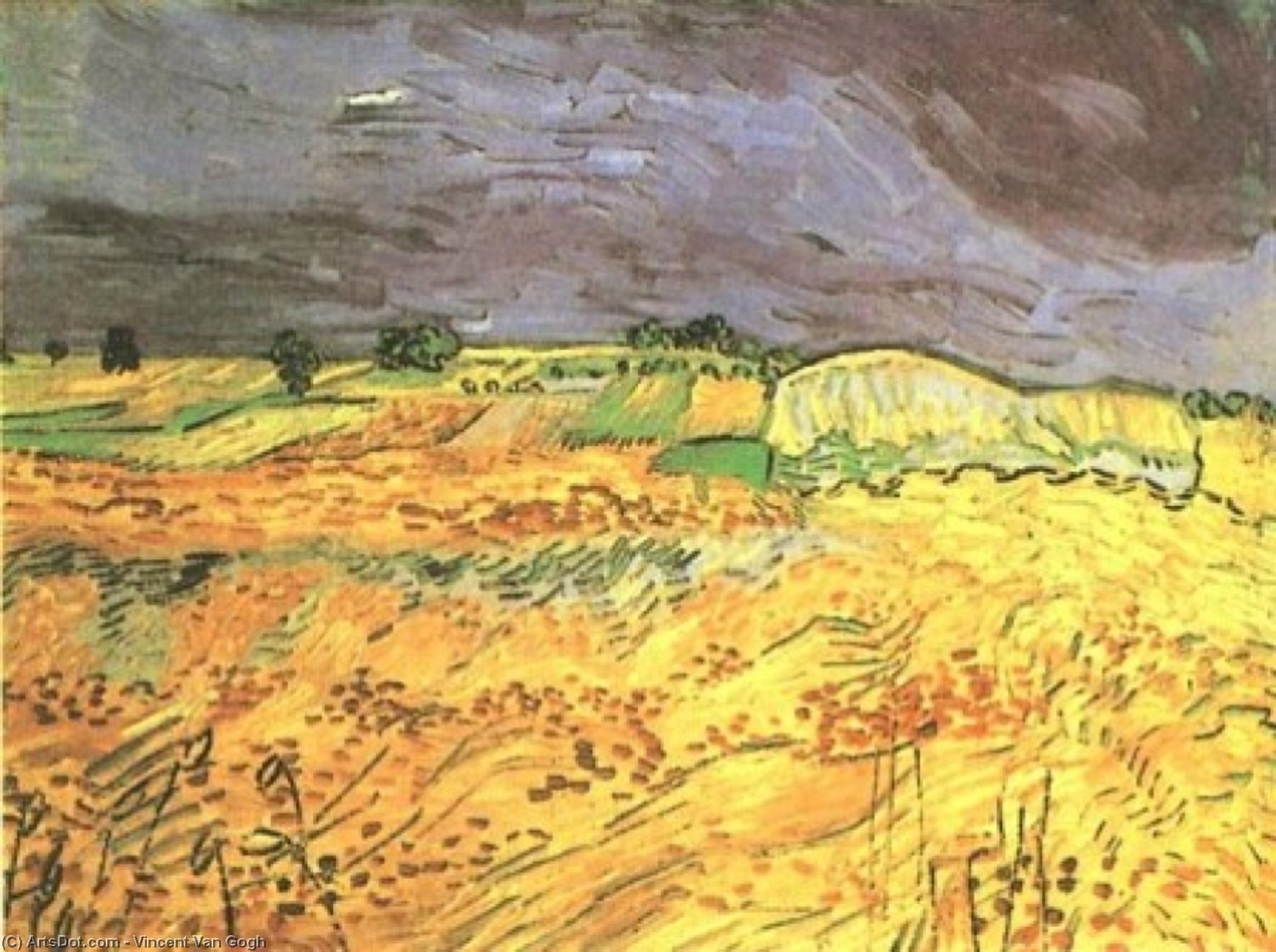
Vincent Van Gogh, one of the most famous and influential figures in Western art, created approximately 2100 artworks during his career. Among these masterpieces is "The Fields, The," a stunning depiction of nature's beauty that showcases Van Gogh's unique style and technique.Background
Created in 1890, "The Fields, The" (View Painting) is an oil on canvas painting that measures 73 x 92 cm. This work of art was produced during Van Gogh's final years when he created most of his iconic pieces, including "The Starry Night" and "Sunflowers."Artistic Style
Van Gogh's style is characterized by bold colors, dramatic brushwork, and emotive spontaneity. His unique approach to painting contributed to the rise of expressionism in modern art. In "The Fields, The," Van Gogh used vibrant yellows, greens, and blues to capture the beauty of nature.Interpretation
"The Fields, The" is a visual representation of nature's beauty and its ability to evoke emotions in the viewer. Van Gogh used his unique style to create a sense of movement and depth in the painting, making it an immersive experience for the viewer.Legacy
Van Gogh's work gained widespread critical and commercial success in the following decades, and he has become a lasting icon of the romantic ideal of the tortured artist. Today, Van Gogh's works are among the world's most expensive paintings ever sold, with "The Fields, The" being no exception.Conclusion
Vincent Van Gogh's "The Fields, The" is a stunning masterpiece that showcases the artist's unique style and technique. This work of art is a visual representation of nature's beauty and its ability to evoke emotions in the viewer. As with all of Van Gogh's works, "The Fields, The" has left a lasting impact on the world of modern art. Vincent Van Gogh: View More Paintings by Vincent Van Gogh.Gyakran Ismételt Kérdések
Ismer-e más neveket a "Fields, The" alkotója, Vincent Van Gogh?
Vincent Van Gogh más néven is ismert: Gogh, Vinszent Van Góg, Vinszent Van Gog, Vincent Willem Van Gogh.
Melyik országból származik a Post-Impressionism irányzat Fields, The című műve?
A "Fields, The" alkotását Vincent Van Gogh készítette, aki Hollandia-ban született, a Post-Impressionism irányzat keretein belül. A művész származása összeköti a művet a Post-Impressionism stílusával, amelyet Hollandia művészei gyakoroltak.
Hogyan tudok nyomtatványt vásárolni a(z) „Fields, The”, Vincent Van Gogh alkotása alkotásból?
A "Fields, The" minőségi giclée nyomat pamutvászonon vagy archiváló vászonpapíron formátumban is elérhető. A rendelést a Minőségi műalkotás nyomat oldalon lehet megtenni, a kívánt méretben.
Hasonló műalkotások


A művész életrajza
A Life Painted in Emotion: The World of Vincent van Gogh
Vincent Willem van Gogh, a name synonymous with artistic passion and turbulent genius, remains one of the most recognizable and beloved figures in Western art history. Born on March 30, 1853, in Groot-Zundert, Netherlands, his journey was not one of immediate acclaim but rather a slow burn of dedication, struggle, and ultimately, profound influence. The eldest of six children born to a Protestant minister, Theodorus van Gogh, Vincent’s early life was steeped in religious contemplation, a sensibility that would subtly permeate much of his later work. Though he displayed an inclination towards drawing from a young age, his path wasn't immediately clear; he explored various vocations – art dealer, teacher, and missionary – before fully embracing the artist’s life. These experiences, though seemingly disparate, proved formative, instilling in him a deep empathy for the working class and a profound sense of spiritual seeking that would become hallmarks of his artistic vision. Early influences included the Dutch Masters like Rembrandt van Rijn and Frans Hals, whose masterful use of light and shadow resonated with young Vincent, as well as contemporary French painters Jean-François Millet and Camille Corot, who depicted scenes of rural life with a poignant realism.From Darkness to Light: Artistic Development and Style
Van Gogh’s serious engagement with painting began around 1880, largely self-taught, driven by an inner compulsion to express the world as he perceived it. His initial works reflected his compassion for the marginalized, focusing on the lives of peasants and laborers – exemplified in pieces like The Potato Eaters. These early paintings are characterized by dark, earthy tones and a raw, almost brutal honesty that sought to capture the hardship and dignity of rural existence. The figures in *The Potato Eaters* aren’t idealized; they're depicted with unflinching realism, their faces etched with weariness and toil. This wasn’t simply a matter of documenting reality; it was an attempt to convey the soul of these people, their resilience in the face of adversity. A pivotal moment arrived with his move to Paris in 1886, where he was exposed to the vibrant world of Impressionism and Post-Impressionism. This encounter proved transformative, injecting brighter colors into his palette and encouraging experimentation with new techniques. He absorbed the lessons of artists like Monet, Renoir, and Pissarro, but never fully adopted their style; instead, he forged a path uniquely his own. His brushstrokes became more energetic, looser, and expressive, moving away from the meticulous detail of earlier works. He began to use color not just to represent objects, but to evoke emotions—a fiery sunset, a vibrant field of sunflowers, or the oppressive darkness of a rainy night.Periods of Intensity: Key Works and Artistic Phases
Van Gogh’s artistic journey can be broadly divided into distinct periods, each marked by unique characteristics and significant works. The Dutch Period (1880-1886), as mentioned, was defined by somber tones and depictions of peasant life—scenes of rural labor, portraits of working families, and landscapes imbued with a sense of melancholy. These paintings, like *The Potato Eaters*, are characterized by their muted colors and dramatic lighting, creating a powerful atmosphere of hardship and dignity. The subsequent Parisian Period (1886-1888) saw a dramatic shift towards brighter colors and experimentation with Impressionist techniques. He was particularly influenced by the work of Toulouse-Lautrec and Degas, absorbing their interest in depicting modern life and capturing fleeting moments. However, it was during the Arles Period (1888-1889), in the south of France, that Van Gogh reached a peak of creative intensity. Surrounded by the radiant light and vibrant landscapes of Provence, he produced some of his most iconic works: Sunflowers, bursting with golden hues; *The Night Café*, rendered in jarring, almost hallucinatory colors; and *Starry Night Over the Rhône*, capturing the shimmering beauty of a summer evening. These paintings are not merely depictions of scenes; they are emotional landscapes, pulsating with life and imbued with a sense of longing—a yearning for connection, for beauty, for something beyond the mundane. His distinctive style rapidly evolved, becoming instantly recognizable for its bold colors, expressive brushwork, and emotional intensity.A Legacy Forged in Suffering: Achievements and Historical Significance
Despite facing rejection and struggling with mental illness throughout his life, Van Gogh created over 2,100 artworks in just over a decade—approximately 860 oil paintings. This astonishing output is testament to his unwavering dedication and relentless creative drive. Remarkably, during his lifetime, only one painting – The Red Vineyard – was sold. Recognition came posthumously, slowly at first, then with increasing momentum in the early 20th century. His work profoundly influenced the development of modern art, particularly Expressionism and Fauvism, inspiring artists to prioritize emotional expression over realistic representation. His bold use of color, distorted forms, and expressive brushwork paved the way for new artistic possibilities. Today, Van Gogh’s paintings are among the most recognizable and valuable artworks in the world, commanding record prices at auction and drawing millions of visitors to museums worldwide. But his legacy extends far beyond monetary value; he remains a cultural icon, representing the archetype of the “tortured artist” – though this narrative often overshadows his skill, dedication, and artistic vision. The Van Gogh Museum in Amsterdam stands as a testament to his enduring influence, showcasing his work and celebrating his life for generations to come. His art continues to resonate with audiences because it speaks to universal human experiences—love, loss, hope, despair—with an honesty and vulnerability that transcends time and culture.- Major Influences: Dutch Masters (Rembrandt, Hals), Millet, Corot.
- Key Periods: Dutch, Parisian, Arles, Saint-Rémy/Auvers-sur-Oise.
- Notable Works: The Potato Eaters, Sunflowers, Starry Night, The Night Café.

Vincent Van Gogh
1853 - 1890 , Hollandia
Gyors információk
- Artistic Movement Or Style: Posztimpresszionizmus
- Artists Or Movements Influenced By This Artist:
- Expressionizmus
- Fauvizmus
- Artists Who Influenced This Artist:
- Rembrandt van Rijn
- Jean-François Millet
- Date Of Birth: March 30, 1853
- Date Of Death: July 29, 1890
- Full Name: Vincent Willem van Gogh
- Nationality: Hollandi
- Notable Artworks:
- A Régi gabonafésű
- Napkitörők
- Éjszakai kávézó
- Place Of Birth: Zundert, Hollandia
Kapcsolódó cikkek

Beyond the Light: Capturing Raw Emotion and Subjective Vision in Post-Impressionist Landscapes
Explore the profound emotional depth of Post-Impressionist landscapes. Discover how masters like Van Gogh moved beyond light to capture raw human feeling through vibrant color and expressive texture in this expert art history retrospective.

Beyond the Light: Discovering the Soul and Emotional Depth of Post-Impressionism
Embark on a cultural journey through Post-Impressionism. Discover the profound emotional depth of masters like Van Gogh and Cézanne, exploring how they moved beyond light to capture the very soul of human experience through vibrant color and symbolic form.

Capturing the Light: A Journey Through the Ethereal Magic of Impressionism and Post-Impressionism
Embark on a cultural journey through the luminous world of Impressionism. Discover the profound beauty of Monet, Van Gogh, and Cézanne through expert art history insights and explore how to bring these timeless masterpieces into your home with museum-quality hand-painted reproductions.

The Soul of the Brushstroke: Decoding Van Gogh's Emotional Impasto
Explore the profound emotional depth of Van Gogh's impasto technique. Discover how his sculptural brushstrokes and textured oil layers define Post-Impressionism through an expert art-historical lens, perfect for discerning collectors and fine art enthusiasts.
Fedezze fel a műalkotásokat témák, stílusok és jellemzők szerint csoportosítva.


