

A képen: · A kerettel együtt:
 Megtekintés
 Küldés
 Megosztás
 Részletek
 Útmutató

 Letöltés
 Hasonló darabok
 X-ray felvétel
 Diavetítés
 Kérdések és válaszok
 Statisztika

Ft 103955
Kézzel készített olajfestmény reprodukció
Kézzel festett olajvastú vászon, az Ön által választott méretben és keretben, művészeink készítik meglévőre. ( Váltás nyomtatványra Áttérés digitális képre)
Méret
·Standard méret
egyedi méretű
CM
INCH
Válasszon előre meghatározott méreteink közül, amelyek megfelelnek a műalkotás eredeti arányainak.
Méretek betöltése...

szélesség
magasság
Írja be a kívánt szélességet és magasságot, hogy illeszkedjen a keretéhez vagy a falához. Mivel ez kézzel festett alkotás, egy eltérő formájú méret esetén a művész akár festhet is valamivel többet a kép körül, vagy korolathat is belőle — az Ön döntésének megfelelően. A festés megkezdése előtt küldünk egy digitális tervezetet jóváhagyásra. Az oldalon látható kép nem tartalmazza a végeredményt — csak a tervezet mutatja meg a valódi eredményt.
 További információk
Befejezés
·
Fehér Ft1

Elmosódott szélek Ft1

Kiterjesztett Ft1

P118B Ft10

P118H Ft10

P118W Ft10

P438Z Ft10

P508JH Ft12

P508YH Ft12

P805H Ft10

P805Z Ft10

P919BZ Ft10

P919G Ft10

P919XJ Ft10

P959ZH Ft10

P968JZ Ft12

W106C Ft8

W218G Ft10

W218JH Ft8

W218Y Ft10

W307PJ Ft10

W316G Ft10

W316PJ Ft8

W316Y Ft10

W398PJ Ft8

W4111J Ft10

W500HY Ft15

W500JH Ft15

W692G Ft12

W849H Ft8

W940BG Ft15

W953PJ Ft8

H24-GOLD Ft30

H24-SILVER Ft30

H36-GOLD Ft45

H36-SILVER Ft45
Védődobozban, feltekercselve szállítva, készen a saját keretbe helyezésre.
Extrák
opcionálisMit tartalmaznak a plusz szolgáltatások?
Példák a módosíthatóságra: Az arc kicserélése a vásárló fotójára; háziállat hozzáadása (pl. macska kicserélése kutyára); rejtett üzenet elhelyezése a háttérben; a háttér tájéképének vagy elemeinek megváltoztatása.
A megrendelést követően a TopImpressionists.com csapat e-mailt küld a vásárlónak az instrukciókkal, és biztosítja a tervezeti előnézetet
A megrendelést követően a TopImpressionists.com csapat e-mailt küld a vásárlónak az instrukciókkal, és biztosítja a tervezeti előnézetet
Világszerte elérhető szállítás () 3-4 hét alatt a szokásos 5 hét helyett. (7 november). A minőség nem kérdőjelezhető.
Védőréteg (Lakk)
Névtábla
A gravírozott bronztábla részletei
This elegant plaque features the artist's name and the title of the artwork, finely engraved for a timeless presentation.
It is made from bronze with a refined, elegant finish. The text is precisely laser-engraved for a sharp and permanent result. Measuring 9x2 cm, the plaque is compact yet easy to read. It's built to be durable and scratch-resistant, offering a professional, museum-quality look. Mounting is simple thanks to the included adhesive backing.
Átlátszó akril tábla részletei
The plaque includes essential engraved details such as the artist's name, the title of the artwork, the date it was created, the type of media used-like oil on canvas or watercolor-a brief description of the piece, and a QR code that links to the complete artwork information.
It is crafted from clear acrylic, offering a sleek, modern appearance. The text is UV-engraved in black to ensure strong visual contrast. With a size of 10x15 cm, it ensures optimal readability. It comes equipped with two metal hooks for secure wall mounting. The plaque is designed to be weather-resistant, making it suitable for various environments, and it includes interactive features that work seamlessly with smartphone scanning.
Fekete akril tábla részletei
This elegant plaque includes engraved information such as the artist's name, the title of the artwork, the date it was created, the type of media used (like oil on canvas or watercolor), a short description of the artwork, and a QR code for quick access to more information.
The plaque itself is made from refined black acrylic with a premium finish. The text is laser-engraved in white for high contrast and readability. Its size is 10x15 cm, designed to be easy to read. It comes with two metal hooks for professional mounting. The design is sleek and fits any interior style. It is also weather-resistant and durable, with built-in digital integration for mobile compatibility.
Az üvegkeretes opció csak 110 cm alatti méretben érhető el
 Az üvegkeretes opció csak 110 cm alatti méretben érhető el
- Ingyenes globális expressz szállítás
- Prémium minőségű len vászon
- Teljes körű szállítási biztosítás
- Vámvisszatérítési Garancia
- Hiteles színarányosság garancia
- 100 napos visszaküldési lehetőség (csak hibás termékek esetén)
- 100% pénzvisszatérítési garancia
- Több darab vásárlásakor kedvezmény


A gyűjtemény leírása
Explore Walter Ufer’s ‘Sleep,’ a poignant oil painting of Native American women in Taos. Discover realism, rich detail & cultural symbolism – a unique 20th-century artwork.
A művész életrajza
Walter Ufer (1876-1936) német származású amerikai művész volt, aki Taos, New Mexico indián életének lenyűgöző festményeiről ismert. A 'Taos Ten' tagja, akit műtermi jelenetei és vibráló tájképei tesznek különlegessé.
A festményről
The Weight of Tradition: An Encounter with Walter Ufer’s “Sleep”
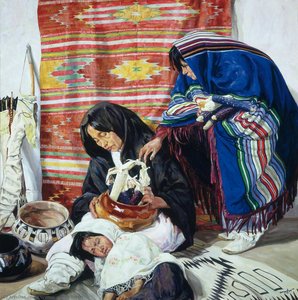
Walter Ufer's "Sleep," painted in 1923, isn’t merely a depiction of three Native American women; it’s an immersion into a world steeped in ritual and profound reverence. The painting immediately draws the viewer in with its rich tapestry of color – predominantly warm reds, oranges, and browns that evoke the earth itself, grounded by cooler blues and greens woven through the textiles and pottery. This palette isn't simply decorative; it speaks to the cultural heritage of the subjects, hinting at a deep connection to the land and ancestral traditions. The composition is carefully orchestrated, centering on the kneeling woman as a focal point, yet subtly inviting us into the periphery of the scene, suggesting an active participation in this sacred space.
Ufer’s masterful technique reveals layers of painstaking detail. He employs a layered oil painting approach, building up texture with deliberate brushstrokes that create a palpable sense of roughness on the clothing – perhaps representing the wear and tear of daily life intertwined with ceremonial garb – while simultaneously rendering the pottery with smooth, almost polished surfaces. This juxtaposition speaks to the duality inherent in Native American culture: the balance between practicality and spirituality, the tangible and the intangible. The lighting, soft and diffused, isn’t dramatic; it's deliberately muted, casting subtle shadows that lend a sense of solemnity and depth to the figures and objects, as if illuminating a secret whispered within a sacred space.
A Window into Taos: Contextualizing Ufer’s Vision
To fully appreciate “Sleep,” it's crucial to understand its historical context. Painted in 1923, during his time in Taos Pueblo, New Mexico, the artwork represents a pivotal moment in Walter Ufer’s career and his deep engagement with Native American culture. He was part of the "Taos Ten," a group of artists who sought to document and celebrate the lives and traditions of the region's indigenous communities. This wasn’t simply an act of observation; it was a deliberate attempt at understanding and portraying these cultures with respect and authenticity, a rare undertaking for American art at the time.
Ufer’s background as a German-born artist profoundly shaped his approach. His training in Europe instilled a meticulous attention to detail and a sophisticated understanding of composition – elements he skillfully translated into his depictions of Native American life. However, it was his immersion within the Taos community that truly informed his work, allowing him to capture not just appearances but also the spirit and essence of these traditions. The painting’s realism is tempered by an underlying sense of mystery, inviting viewers to contemplate the deeper meanings embedded within the scene.
Symbolism Woven into the Fabric
The details within “Sleep” are laden with symbolic significance. The intricately patterned rug serves as a visual anchor, framing the central figures and providing a rich backdrop that speaks to the importance of storytelling and communal life within Native American culture. The pottery, often adorned with geometric designs and natural motifs, represents both artistic skill and spiritual connection – a tangible link to ancestors and the earth. The women themselves, engaged in what appears to be a ritualistic activity, are not simply subjects; they embody generations of tradition, wisdom, and connection to the divine.
The act depicted—kneeling in reverence—suggests healing or a profound spiritual ceremony. The quiet dignity of the figures, coupled with the muted colors and soft lighting, evokes a sense of solemnity and timelessness. It’s an image that transcends mere representation, offering a glimpse into a world governed by ancient beliefs and deeply rooted traditions.
A Legacy of Authenticity: Reproductions and Beyond
Walter Ufer's "Sleep" remains a powerful testament to the beauty and complexity of Native American culture. TopImpressionists offers high-quality, hand-painted reproductions that faithfully capture the painting’s rich detail and evocative atmosphere. These reproductions are more than just images; they are windows into another world—a world of sacred rituals, profound traditions, and enduring wisdom. Investing in a reproduction is an investment in preserving this important piece of American art history and honoring the legacy of Walter Ufer's insightful portrayal.
Kérdések és válaszok
Hogyan egyensúlyozza a fényt és a sötétséget a "Sleep"?
A „Sleep”, Walter Ufer alkotása rögzített értékei: bright fényerő és Gentle Luminance luminancia.
Milyen hangulatot közvetít a „Sleep”, Walter Ufer alkotása a Contemporary Realism irányzaton belül?
A „Sleep” Melancholic hangulata kíséri a Contemporary Realism stílusát.
Ki a "Sleep" szerzője, és mely művészeti irányból származik?
A „Sleep” alkotását Walter Ufer készítette Contemporary Realism stílusban. A művész és a műveszetség meghatározza a mű hagyományát.
Gyors tények és művészeti kvíz
Walter Ufer életrajza

Walter Ufer
1876 - 1936, Németország
A művész életrajza
A Délnyugat Lélek: Walter Ufer élete és öröksége
Walter Ufer az amerikai impresszionizmus kulcsfontosságú alakjaként áll fent, egy olyan festőként, akinek ecsetvonala túlmutatott a fény egyszerű megörökítésén; ő egy kultúra ኣብ lamang szívütését tudta lefesteni. 1876-ban született Hückeswagen, Németország településén, és útját New Mexico magashegyi sivatagai felé a szigorú európai képzés és az emberi létezés iránti mély kíváncsiság övezte. Korai éveket Kentucky állam Louisville városa német-amerikai diaszpórája formált, ahol először kezdte befogadni öröksége gazdag textúráit. Ez az alapozó időszak, amelyet a litográfia és a grafikai tanulmányok jellemeztek, olyan technikai precizitást adott neki, amely később lehetővé tette számára, hogy a fény és az árnyék összetettségét példátlan mesterségességgel örökítse meg.
Művészeti tökéletességre irányuló törekvése átalakító odysséává vezette őt Európa ántján. Vándorló mesterként Ufer elmerült a kontinens változatos művészeti hagyományaiban, finomítva technikáját Hamburg és Dresden tekintélyes akadémiáin. Az intenzív intellektuális és kreatív terjeszkedés csúcspontját Münchenben töltött ideje jelentette, ahol mélyen elkötelezte magát a folyamatos műtermi gyakorlat mellett. Amikor végül 1 मद्देन 1911-ben visszatért az Egyesült Államokba, magával hozta a kifinomult európai érzékiséget, amely készen állt a találkozásra az amerikai Nyugat vad, napsütötte tájaival.
A Taos Ten víziósa
1914 egy határozott fordulópontot jelentett Ufer életében és az amerikai művészet pályáján. Amikor New Mexico Taos Pueblo területére érkezett, egy rendkívüli művészeti forradalom részévé vált. A befolyásos "Taos Ten" néven ismert csoport tagjaként Ufer központi alakja lett egy olyan kollektívnak, amely törekedett a tiszta tájképfestészet túlmutatására, és az amerikai őslakos élet hitelesebb, érzelmes ábrázolására. Ellentétben sok kortársával, akik a Délnyugatot romantizált vagy koloniális szemsz的角度ból láttak, Ufer mély tisztelettel és a mindennapi létezés méltósága iránti érzékességgel közelítette meg alanyait.
Művészete hidat képezett az európai impresszionista technikák és a Pueblo nép nyers, spirituális energiája közé. Nem csupán megfigyelő volt, hanem a rituálék, a tájak és a közösségi élet csendes ritmusának krónikása. Ennek a kreatív fejlődésnek központi eleme volt kapcsolata Jim Mirabalal, egy Taos indiánnal, aki Ufer múzsaként és kollaboratorként is szolgált. Ezen kapcsolat révén Ufer intim megértésre tett szert a régió kulturális árnyalataira, lehetővé téve számára, hogy vászlei olyan élő igazság érzését árasztják, amely New Mexico határain túl is visszhangzott.
Technika, szimbolizmus és történelmi jelentőség
Ufer életművét a színek mesteri uralma és a festék merész, kifejező alkalmazása jellemzi. Stílusa, bár gyökerezik az amerikai impresszionizmus elveiben, gyakran向 egy robusztusabb és texturáltabb megközelítés felé hajlt, amely megörökítette a sivatagi napsütés hőségét és a föld súlyát. A fényt nem csupán a formák megvilágítására használta, hanem az érzelmek felidézésére is – olyan jeleneteket alkotva, ahol az atmoszféra tele van a történelemmel és a hagyományokkal.
Walter Ufer történelmi jelentősége abban rejlik, hogy képes volt a műfajfestészetet mély társadalmi és kulturális üzenetté emelni. Főbb eredményei közé tartozik:
- Hiteles ábrázolás: Az amerikai őslakos élet "szépköltői" sztereotípiáitól való szakítást, a Taos nép árnyaltabb és emberibb portréját prezentálva.
- Művészeti szintézis: A német akadémiai képzés és az amerikai Délnyugat vibráló, féktelen szellemiségének sikeres egyesítése.
Gyors információk Walter Ufer művészről
- Artistic Movement Or Style: Taos impresszionizmus
- Artists Or Movements Influenced By This Artist: ['']
- Artists Who Influenced This Artist: ['']
- Date Of Birth: 1876
- Date Of Death: 1936
- Full Name: Walter Ufer
- Nationality: Német-amerikai
- Notable Artworks:
- Her Daughter
- Builders Of The Desert
- After Them
- Place Of Birth: Hückeswagen, Németország


Walter Ufer
Sleep
() ·
A kerettel együtt: · Kézzel festve, olajfesték, vászonon
Összesen