

 Megtekintés
 Küldés
 Megosztás
 Részletek
 Útmutató

 Letöltés
 Hasonló darabok
 X-ray felvétel
 Diavetítés
 Kérdések és válaszok
 Statisztika
Chez Mouquin


Delve into William James Glackens' masterpiece 'Chez Mouquin,' a captivating Ashcan School painting depicting Parisian social life and capturing the spirit of early 1905 New York.
 Összes részlet megjelenítése
William Glackens egy amerikai festő és illusztrátor volt, aki az Ashcan Szkólnak köszönhetően ismertté vált. Kézzel festett műalkotásaival foglalkozott és főként új york város életének részleteit ábrázolta nagy hangsúlyt fektetve a realista stílusra és a közösségi élet tükrözésére. Nézze meg az ő alkotásait és ismerje meg életrajzát!
Giclée / Műnyomat
Múzeumi minőségű giclée vagy vászonnyomat, gyors gyártással és rugalmas finomítási lehetőségekkel. ( Kézzel festett másolat rendelése Áttérés digitális képre)




































Standard méret
egyedi méretű
CM
INCH
Válasszon előre meghatározott méreteink közül, amelyek megfelelnek a műalkotás eredeti arányainak.
Loading sizes...

szélesség
magasság
Írja be a keretének vagy a falának megfelelő szélességet és magasságot. A nyomatot csak le lehet vágni, soha nem tehető nagyobbá, mint az eredeti kép, így egy eltérő alakú méretnél a kép egy része elveszik. Mielőtt bármit kinyatintanánk, küldünk egy digitális próbamodellt jóváhagyásra. Az oldalon látható kép nem tartalmazza a valós levágást — ezt csak a próbamodell mutatja meg.
Világszerte történő kiszállítás területére mindössze 2 hét alatt, a szokásos 4-5 hét helyett. (3 november)

Ingyenes globális expressz szállítás

Prémium minőségű len vászon

Teljes körű szállítási biztosítás

Vámvisszatérítési Garancia

Hiteles színarányosság garancia

100 napos visszaküldési lehetőség (csak hibás termékek esetén)

100% pénzvisszatérítési garancia

Több darab vásárlásakor kedvezmény
 Az üvegkeretes opció csak 110 cm alatti méretben érhető el

Chez Mouquin
Giclée / Műnyomat
Reprodukció mérete
-


Összesített ár
Ft 22934
Chez Mouquin: A Snapshot of Parisian Bohemia
William James Glackens’ “Chez Mouquin,” completed in 1905, stands as a quintessential emblem of the Ashcan School—a movement that irrevocably altered the course of American art. Rejecting the idealized landscapes and mythological narratives favored by their predecessors, Glackens and his fellow artists sought to portray the gritty realities of urban life with unflinching honesty.
The painting depicts a scene within Mouquin’s Restaurant, a popular Parisian establishment frequented by artists and intellectuals during the Belle Époque. At its center is Jeanne Mouquin, the proprietor's wife, engaged in conversation with James B. Moore, a wealthy playboy known for his patronage of the arts. Glackens himself subtly captures the atmosphere of the dining room, reflecting the faces of fellow attendees—Charles Fitzgerald, an art critic and Edith Glackens, his wife—creating a tableau vivant that encapsulates the spirit of artistic camaraderie.
Glackens’ masterful technique exemplifies Ashcan Realism. Employing muted tones—primarily browns, ochres, and blacks—he skillfully captures the dim lighting of the restaurant, enhancing the sense of intimacy and immediacy. The brushstrokes are loose and expressive, conveying movement and capturing the subtle nuances of facial expressions. Glackens' deliberate use of chiaroscuro – dramatic contrasts between light and dark – draws attention to key figures and contributes to the painting’s overall mood.
A Reflection of Artistic Vision
“Chez Mouquin” isn’t merely a depiction of a social gathering; it’s a profound statement about Glackens' artistic philosophy. Like many Ashcan artists, he eschewed grand narratives in favor of capturing everyday moments—the conversations, gestures, and expressions that define human experience. This approach aligns with the broader Ashcan ethos: to portray American life as it truly is – flawed, vibrant, and brimming with potential.
Glackens’ influence extends beyond his stylistic choices. He championed a rejection of academic conventions, prioritizing observation and emotional resonance over meticulous detail. His work anticipates the modernist impulse toward simplification and abstraction, foreshadowing developments that would reshape art in subsequent decades.
Historical Context: The Belle Époque
The painting’s setting—Paris during the Belle Époque (roughly 1871-1914)—provides crucial context for understanding its significance. This era witnessed unprecedented social and cultural transformation, fueled by industrialization, urbanization, and burgeoning artistic experimentation. Artists like Glackens sought to document these changes, capturing the dynamism of a society undergoing rapid modernization.
Mouquin’s Restaurant itself was a hub of intellectual discourse and artistic activity—a place where writers, painters, and musicians convened to discuss ideas and inspire one another. Glackens' portrayal captures this atmosphere perfectly, reflecting the optimism and ambition that characterized the Belle Époque.
Symbolism & Emotional Impact
"Chez Mouquin" speaks volumes about the human condition—the desire for connection, the pursuit of beauty amidst chaos, and the celebration of shared experience. The muted palette contributes to a contemplative mood, inviting viewers to linger on the faces of the figures depicted.
Glackens’ ability to convey emotion through subtle gestures and expressions underscores his commitment to realism as a means of capturing psychological truth. “Chez Mouquin” remains a powerful reminder that art can illuminate the complexities of human life and inspire us to appreciate the beauty found in ordinary moments—a legacy cemented by its prominent place within the Art Institute of Chicago’s collection.
Kérdések és válaszok
Melyik szín tűnik ki leginkább a(z) "Chez Mouquin" alkotásból?
A „Chez Mouquin”, William James Glackens alkotása domináns színe a Gray (#959982).
Milyen technika és stílus jellemzi a(z) „Chez Mouquin”, William James Glackens alkotása alkotást?
A „Chez Mouquin”, William James Glackens alkotása egyesíti a Oil On Canvas technikát a Contemporary Realism stílussal. A technika és a művészeti irány a mű elkészítésének módját és stílusát jellemzi.
Milyen méretű "Chez Mouquin" ajánlott egy Living Room-hoz?
A Living Room helyiségbe a "Chez Mouquin" alkotáshoz egy Large méretű nyomtatást javasoljuk.
Hasonló műalkotások


A művész életrajza
William James Glackens: A Pioneer of the Ashcan School
William James Glackens, a name synonymous with gritty realism and vibrant urban life in early 20th-century America, was more than just an artist; he was a documentarian of his time. Born in Philadelphia in 1870, his artistic journey began not within the hallowed halls of formal academies, but amidst the bustling streets and working-class neighborhoods that would become the very subject of his paintings. Glackens’ early years were marked by an innate talent for drawing, nurtured through self-study and a keen observation of the world around him – a foundation that would prove crucial to his later success as a leading figure in the Ashcan School movement.Early Influences and Artistic Training
Glackens' artistic development was profoundly shaped by several key influences. He initially attended the Pennsylvania Academy of the Fine Arts, where he studied under Thomas Anshutz, a renowned realist painter known for his meticulous depictions of everyday life. However, Glackens’ approach diverged from the more traditional academic style favored at the academy. Simultaneously, he found himself immersed in the world of newspaper illustration, working for publications like *The Philadelphia Record* and *The Philadelphia Press*. This experience proved invaluable, honing his skills in capturing fleeting moments and conveying a sense of immediacy – qualities that would later define his artistic vision. It was during this period that Glackens began to develop his distinctive style, characterized by bold brushstrokes, dark palettes, and an unflinching portrayal of the realities of urban existence.The Ashcan School and Urban Realism
Glackens’ most significant contribution to American art lies in his association with the Ashcan School. This movement, emerging around the turn of the 20th century, rejected the idealized subjects and polished techniques of academic painting, instead focusing on depicting contemporary life – often the less glamorous aspects – in a raw and honest manner. Artists like Robert Henri championed this approach, encouraging their followers to paint what they saw, where they saw it: the crowded streets, the bustling markets, the smoky bars, and the diverse faces of New York City and Philadelphia. Glackens embraced this ethos wholeheartedly, producing a prolific body of work that captured the energy, vitality, and sometimes-rough edges of urban America. His paintings weren’t romanticized fantasies; they were snapshots of real life, imbued with a sense of immediacy and authenticity.Notable Works and Artistic Evolution
Glackens' oeuvre is rich in memorable images, each reflecting his unique artistic vision. *Hammerstein’s Roof Garden* (1901) stands as a particularly significant work, capturing the vibrant atmosphere of a popular rooftop entertainment venue – a microcosm of urban life during a period of rapid social and technological change. His series depicting Coney Island, such as “Papa, Carry Me—Take Me Up in Your Arms,” offers glimpses into the leisure activities and social dynamics of working-class communities. Later in his career, Glackens’ style evolved, influenced by the Impressionist painter Pierre Auguste Renoir. He shifted towards brighter colors and softer brushstrokes, while continuing to explore themes of urban life and everyday experiences. His masterpiece, “The Shoppers,” exemplifies this transition, retaining a sense of realism while embracing a more luminous palette.Legacy and Historical Significance
William James Glackens’ legacy extends far beyond his individual paintings. He played a crucial role in shaping the course of American art by challenging conventional artistic norms and paving the way for future generations of realist painters. His work helped to elevate the status of urban life as a subject worthy of serious artistic attention, contributing significantly to the development of modern American painting. Furthermore, Glackens’ collaboration with Albert C. Barnes in acquiring European paintings for the Barnes Foundation enriched the collection and solidified its place as a cornerstone of American art history. Glackens' work continues to resonate today, offering a valuable window into the social and cultural landscape of early 20th-century America – a testament to his enduring artistic vision and his profound impact on the development of modern American painting.
William James Glackens
1870 - 1938 , Egyesült Államok
Rövid információk
- Artistic Movement Or Style: Ashcan School
- Artists Or Movements Influenced By This Artist: ['Pierre Auguste Renoir']
- Artists Who Influenced This Artist: ['Thomas Anshutz']
- Date Of Birth: Philadelphia, ÜSÁ (1870)
- Date Of Death: Westport, CT (1938)
- Full Name: William James Glackens
- Nationality: Amerikai
- Notable Artworks:
- A Nagy Ördög és Az Éjszaka Ruhával Megölt Nő
- Az Égi Üdvözítő
- Place Of Birth: Philadelphia
Kapcsolódó cikkek

Capturing the Light: A Journey Through the Soul of American Impressionism and the Hudson River School
Explore the luminous beauty of American Impressionism and the Hudson River School. Discover a curated journey through light, landscape, and history, celebrating the enduring legacy of masters through exquisite, hand-painted oil reproductions for the discerning art lover.

The Unvarnished Truth: A Cultural Journey Through the Soul of American Realism
Explore the profound beauty of American Realism. From the Ashcan School's urban grit to intimate portraits, discover how artists captured the authentic soul of a nation through unvarnished truth and masterful observation.
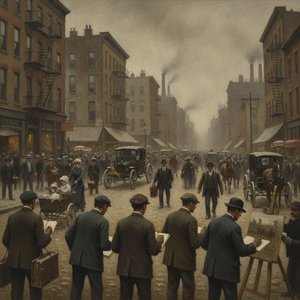
The Ashcan School: Capturing the Raw, Unfiltered Soul of Urban Life through American Realism
Discover the raw beauty of the Ashcan School. Explore how masters like Bellows and Henri captured the gritty, vibrant soul of early 20th-century New York through profound American Realism and evocative urban landscapes.
Fedezze fel a műalkotásokat témák, stílusok és jellemzők szerint csoportosítva.

