


 Előnézet
 Megosztás
 Megosztás
 Részletek
 Útmutató

 Letöltés
 Hasonló darabok
 X-ray felvétel
 Diavetítés
 Statisztika
Parade, Washington Square


Experience the vibrancy of early 20th-century New York in William Glackens' 'Parade, Washington Square.' A stunning Ashcan School oil painting capturing a lively urban scene.
 Tovább olvasom
William Glackens egy amerikai festő és illusztrátor volt, aki az Ashcan Szkólnak köszönhetően ismertté vált. Kézzel festett műalkotásaival foglalkozott és főként új york város életének részleteit ábrázolta nagy hangsúlyt fektetve a realista stílusra és a közösségi élet tükrözésére. Nézze meg az ő alkotásait és ismerje meg életrajzát!
Giclée / Műnyomat
Múzeumi minőségű giclée vagy vászonnyomat, gyors gyártással és rugalmas finomítási lehetőségekkel. ( Kézzel festett másolat vásárlása Áttérés digitális képre)




P118B Ft10

P118H Ft10

P118W Ft10

P438Z Ft10

P508JH Ft12

P508YH Ft12

P805H Ft10

P805Z Ft10

P919BZ Ft10

P919G Ft10

P919XJ Ft10

P959ZH Ft10

P968JZ Ft12

W106C Ft8

W218G Ft10

W218JH Ft8

W218Y Ft10

W307PJ Ft10

W316G Ft10

W316PJ Ft8

W316Y Ft10

W398PJ Ft8

W4111J Ft10

W500HY Ft15

W500JH Ft15

W692G Ft12

W849H Ft8

W940BG Ft15

W953PJ Ft8




Standard méret
egyedi
CM
INCH
Válasszon előre meghatározott méreteink közül, amelyek megfelelnek a műalkotás eredeti arányainak.
Loading sizes...

szélesség
magasság
Megadhat saját méreteket is egy konkrét kerethez vagy helyszínhez igazítva. Amennyiben a kiválasztott méret nem egyezik az eredeti kép arányokkal, a műalkotást le fogjuk vágni, vagy kiegészítjük a képet tükrözött vagy egyszínű szélekkel. A gyártás megkezdése előtt egy digitális tervezetet küldünk jóváhagyásra.
Kérjük, vegye figyelembe, hogy a képernyőn látható előnézet nem tükrözi a tényleges levágást vagy kiegészítést. Csak a tervezet mutatja pontosan a végső kompozíciót.
Bár az egyedi méretek is elérhetőek, az eredeti arányok megőrzése érdekében azt javasoljuk, hogy válasszon a előre meghatározott listából származó méretet.
Világszerte történő kiszállítás területére mindössze 2 hét alatt, a szokásos 4-5 hét helyett. (11 október)

Ingyenes globális expressz szállítás

Prémium minőségű len vászon

Teljes körű szállítási biztosítás

Vámvisszatérítési Garancia

Tökéletes színarányosság garancia

100 napos visszaküldési garancia (csak gyártási hibás termékek esetén)

100% pénzvisszatérítési garancia

Több darab vásárlásakor kedvezmény
 Az üvegkeretes opció csak 110 cm alatti méretben érhető el

Parade, Washington Square
Giclée / Műnyomat
Reprodukció méretei
-


Összesített ár
Ft 21633
Parade, Washington Square: A Glimpse of Early 20th Century New York
William James Glackens' "Parade, Washington Square," housed within the esteemed Whitney Museum of American Art, offers a vibrant snapshot of pre-World War I New York City life. Created in 1912, this oil on canvas painting captures a bustling parade scene unfolding against the backdrop of Washington Square. The artwork exemplifies Glackens' unique blend of realism and impressionistic flair, showcasing his keen observation skills and ability to convey movement and energy.
Artistic Style and Influences
Glackens was a pivotal figure in the Ashcan School, a movement that championed depicting everyday urban life with unflinching honesty. Rejecting the formal constraints of the National Academy of Design, Glackens and his contemporaries focused on portraying the realities of working-class and middle-class neighborhoods. While rooted in realism, "Parade, Washington Square" reveals the influence of Renoir, particularly evident in its brighter tones and looser brushwork compared to earlier works. This blend resulted in a style that is both grounded in observation and imbued with a sense of dynamism.
Composition and Technique
The painting's composition is characterized by a lively arrangement of figures and forms, creating a palpable sense of movement. The parade winds through Washington Square, populated by a diverse crowd engaged in the festivities. Glackens masterfully uses short, broken brushstrokes to capture the energy of the scene, layering colors to create depth and texture. The perspective is somewhat flattened, prioritizing an immediate impression over strict realism—a hallmark of Impressionism. The use of light and shadow further enhances the vibrancy of the scene, highlighting the flags and banners carried by the parade participants.
Historical Context and Symbolism
"Parade, Washington Square" provides a valuable window into early 20th-century American society. The painting reflects a period of rapid urbanization and social change in New York City. The parade itself likely commemorates a significant event or celebration, possibly related to the 1904 World’s Fair. The flags displayed symbolize national pride and internationalism. Beyond its documentary value, the artwork captures a sense of collective joy and community spirit—a moment of shared experience amidst the bustling urban landscape.
Emotional Impact and Legacy
Glackens' "Parade, Washington Square" evokes feelings of excitement, energy, and optimism. The vibrant colors and dynamic composition create an immersive experience for the viewer, transporting them to a lively scene in early 20th-century New York. As a significant work within the Ashcan School, it stands as a testament to Glackens' ability to capture the essence of urban life with both realism and artistic sensitivity. The painting’s enduring appeal lies in its ability to resonate with viewers across generations, offering a glimpse into a bygone era while celebrating the vibrancy of human connection.
Gyakran Ismételt Kérdések
Mire ajánlott használni a „Parade, Washington Square”, William James Glackens alkotása reprodukcióját?
A „Parade, Washington Square”, William James Glackens alkotása javasolt felhasználása Focal. Emellett más célokra is alkalmas lehet.
Melyik évben készült a „Parade, Washington Square”, William James Glackens alkotása?
A „Parade, Washington Square”, William James Glackens alkotása alkotása 1912-ben készült.
Milyen érzelmet közvetít a American realism korszakból származó "Parade, Washington Square" című alkotás?
A „Parade, Washington Square” Nostalgic érzelme kíséri a American realism stílusát.
Milyen stílusba tartozik a "Parade, Washington Square"?
A "Parade, Washington Square" a American realism egyik alkotása. A művészeti irány jelzi azt a művészeti hagyományt, amelybe a mű tartozik.
Ki a "Parade, Washington Square" alkotója?
A "Parade, Washington Square" alkotója William James Glackens. A mű William James Glackens nevére van katalógusozva.
„Parade, Washington Square”, William James Glackens alkotása festmény, rajz vagy grafika?
A „Parade, Washington Square”, William James Glackens alkotása művészeti alkotás WallArt kategóriába tartozik. Ez a besorolás azt határozza meg, hogy az eredeti alkotás milyen típusú művészeti alkotás.
Hány éves volt William James Glackens, amikor megalkotta a "Parade, Washington Square" című alkotást?
Amikor a "Parade, Washington Square" alkotása 1912-ben készült, William James Glackens – aki 1870-ben született – 42 éves volt.
Hasonló műalkotások


A művész életrajza
William James Glackens: A Pioneer of the Ashcan School
William James Glackens, a name synonymous with gritty realism and vibrant urban life in early 20th-century America, was more than just an artist; he was a documentarian of his time. Born in Philadelphia in 1870, his artistic journey began not within the hallowed halls of formal academies, but amidst the bustling streets and working-class neighborhoods that would become the very subject of his paintings. Glackens’ early years were marked by an innate talent for drawing, nurtured through self-study and a keen observation of the world around him – a foundation that would prove crucial to his later success as a leading figure in the Ashcan School movement.Early Influences and Artistic Training
Glackens' artistic development was profoundly shaped by several key influences. He initially attended the Pennsylvania Academy of the Fine Arts, where he studied under Thomas Anshutz, a renowned realist painter known for his meticulous depictions of everyday life. However, Glackens’ approach diverged from the more traditional academic style favored at the academy. Simultaneously, he found himself immersed in the world of newspaper illustration, working for publications like *The Philadelphia Record* and *The Philadelphia Press*. This experience proved invaluable, honing his skills in capturing fleeting moments and conveying a sense of immediacy – qualities that would later define his artistic vision. It was during this period that Glackens began to develop his distinctive style, characterized by bold brushstrokes, dark palettes, and an unflinching portrayal of the realities of urban existence.The Ashcan School and Urban Realism
Glackens’ most significant contribution to American art lies in his association with the Ashcan School. This movement, emerging around the turn of the 20th century, rejected the idealized subjects and polished techniques of academic painting, instead focusing on depicting contemporary life – often the less glamorous aspects – in a raw and honest manner. Artists like Robert Henri championed this approach, encouraging their followers to paint what they saw, where they saw it: the crowded streets, the bustling markets, the smoky bars, and the diverse faces of New York City and Philadelphia. Glackens embraced this ethos wholeheartedly, producing a prolific body of work that captured the energy, vitality, and sometimes-rough edges of urban America. His paintings weren’t romanticized fantasies; they were snapshots of real life, imbued with a sense of immediacy and authenticity.Notable Works and Artistic Evolution
Glackens' oeuvre is rich in memorable images, each reflecting his unique artistic vision. *Hammerstein’s Roof Garden* (1901) stands as a particularly significant work, capturing the vibrant atmosphere of a popular rooftop entertainment venue – a microcosm of urban life during a period of rapid social and technological change. His series depicting Coney Island, such as “Papa, Carry Me—Take Me Up in Your Arms,” offers glimpses into the leisure activities and social dynamics of working-class communities. Later in his career, Glackens’ style evolved, influenced by the Impressionist painter Pierre Auguste Renoir. He shifted towards brighter colors and softer brushstrokes, while continuing to explore themes of urban life and everyday experiences. His masterpiece, “The Shoppers,” exemplifies this transition, retaining a sense of realism while embracing a more luminous palette.Legacy and Historical Significance
William James Glackens’ legacy extends far beyond his individual paintings. He played a crucial role in shaping the course of American art by challenging conventional artistic norms and paving the way for future generations of realist painters. His work helped to elevate the status of urban life as a subject worthy of serious artistic attention, contributing significantly to the development of modern American painting. Furthermore, Glackens’ collaboration with Albert C. Barnes in acquiring European paintings for the Barnes Foundation enriched the collection and solidified its place as a cornerstone of American art history. Glackens' work continues to resonate today, offering a valuable window into the social and cultural landscape of early 20th-century America – a testament to his enduring artistic vision and his profound impact on the development of modern American painting.
William James Glackens
1870 - 1938 , Egyesült Államok
Gyors információk
- Artistic Movement Or Style: Ashcan School
- Artists Or Movements Influenced By This Artist: ['Pierre Auguste Renoir']
- Artists Who Influenced This Artist: ['Thomas Anshutz']
- Date Of Birth: Philadelphia, ÜSÁ (1870)
- Date Of Death: Westport, CT (1938)
- Full Name: William James Glackens
- Nationality: Amerikai
- Notable Artworks:
- A Nagy Ördög és Az Éjszaka Ruhával Megölt Nő
- Az Égi Üdvözítő
- Place Of Birth: Philadelphia
Kapcsolódó cikkek
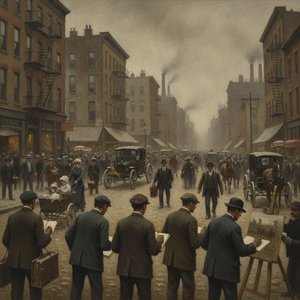
The Ashcan School: Capturing the Raw, Unfiltered Soul of Urban Life through American Realism
Discover the raw beauty of the Ashcan School. Explore how masters like Bellows and Henri captured the gritty, vibrant soul of early 20th-century New York through profound American Realism and evocative urban landscapes.

The Unvarnished Truth: A Cultural Journey Through the Soul of American Realism
Explore the profound beauty of American Realism. From the Ashcan School's urban grit to intimate portraits, discover how artists captured the authentic soul of a nation through unvarnished truth and masterful observation.
Fedezze fel a műalkotásokat témák, stílusok és jellemzők szerint csoportosítva.

