Anteprima in scala reale
 Invia
Invia Condividi
 Dettagli opera
 Guida
Guida

 Scarica
 Simili
 Radiografia
 Slideshow
 Statistiche
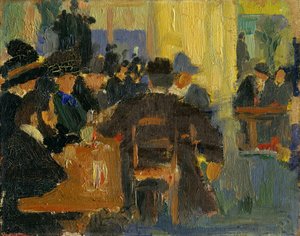
Testa
 Olio su tavola
- Arte da parete
- Espressionismo cubista
 1915
1915 23.0 x 17.0 cm
 Museo Nazionale d'Arte Contemporanea - Museo del Chiado
Testa (1915) è un ritratto espressionista intenso e astratto. Scopri le influenze cubiste e i richiami a Rouault in questo capolavoro.
 Espandi i dettagli
Scopri Amadeo de Souza-Cardoso (1887-1918), pittore portoghese innovativo e pioniere del modernismo, influenzato da Cubismo e Futurismo. Esplora le sue opere vivaci e astratte!
Giclée / Stampe d'arte
Stampa giclée o su tela di qualità museale, con produzione rapida e diverse opzioni di finitura. ( Acquista il dipinto realizzato a mano Passa all'immagine digitale)




P118B €10

P118H €10

P118W €10

P438Z €10

P508JH €12

P508YH €12

P805H €10

P805Z €10

P919BZ €10

P919G €10

P919XJ €10

P959ZH €10

P968JZ €12

W106C €8

W218G €10

W218JH €8

W218Y €10

W307PJ €10

W316G €10

W316PJ €8

W316Y €10

W398PJ €8

W4111J €10

W500HY €15

W500JH €15

W692G €12

W849H €8

W940BG €15

W953PJ €8




Formato standard
su misura
CM
INCH
Scegli tra le nostre dimensioni predefinite, che rispettano le proporzioni originali dell'opera d'arte.
Loading sizes...

larghezza
altezza
Inserisci la larghezza e l'altezza desiderate, per adattarle alla tua cornice o alla tua parete. Una stampa può essere solo ritagliata, mai resa più grande dell'immagine originale; pertanto, un formato con una forma differente comporterà la perdita di una parte dell'opera. Ti invieremo un mockup digitale da approvare prima di procedere con la stampa. L'immagine mostrata in questa pagina non rappresenta il ritaglio reale — solo il mockup lo mostra.
Consegna in tutto il mondo () in 2 settimane invece delle normali 4/5 settimane. (27 Ottobre)

Spedizione espressa gratuita in tutto il mondo

Tela in lino di alta qualità

Assicurazione completa sulla spedizione

Garanzia di rimborso dei dazi doganali

Garanzia di fedeltà cromatica assoluta

Politica di reso entro 100 giorni (solo per difetti di fabbricazione)

Garanzia di rimborso al 100%

Offerta per acquisti multipli
 L'opzione vetro è disponibile solo per dimensioni inferiori a 110 cm

Testa
Giclée / Stampe d'arte
Dimensioni riproduzione
-


Prezzo finale calcolato
€ 61
A Fragmented Soul: Unpacking Amadeo de Souza-Cardoso's 'Head'
Amadeo de Souza-Cardoso’s “Head,” painted in 1915, isn’t merely a portrait; it’s a distilled essence of the anxieties and artistic ferment swirling through early 20th-century Europe. This small yet powerfully evocative canvas captures a profound sense of isolation and introspection, rendered with a striking blend of Cubist fragmentation and Expressionistic intensity. The painting immediately draws the eye to its central subject – a figure whose features are deliberately obscured, dissolving into planes of dark pigment and sharp angles. This deliberate distortion isn’t an exercise in mere visual trickery; it speaks volumes about the artist's exploration of identity and the fractured nature of modern experience.
Souza-Cardoso, a pivotal figure in Portuguese Modernism, was deeply influenced by the avant-garde movements of Paris. He sought to break free from traditional representational techniques, embracing abstraction and exploring new ways to convey emotion through form and color. “Head” exemplifies this ambition perfectly. The background, a somber expanse of muted tones – predominantly browns and blacks – serves as a stark counterpoint to the figure’s face, emphasizing its vulnerability and drawing attention to the internal turmoil suggested by the composition. The use of thick impasto adds texture and depth, creating a tactile quality that invites close examination.
Cubism's Echoes: Deconstructing Form and Perception
While often associated with Picasso and Braque, Souza-Cardoso’s engagement with Cubism is distinct. Here, the fragmentation isn’t solely about geometric deconstruction; it’s a means of conveying psychological states. The head itself is broken down into interlocking planes, reminiscent of a shattered mirror reflecting a fragmented self. This technique forces the viewer to actively participate in the construction of meaning, piecing together the image and confronting its inherent ambiguity. The influence of Cézanne's emphasis on structure and form is also evident, particularly in the careful manipulation of volume and shadow.
Souza-Cardoso’s use of color further enhances this sense of unease. The predominantly dark palette – punctuated by flashes of yellow – evokes a feeling of melancholy and perhaps even despair. The strategic placement of these brighter hues acts as visual anchors, drawing the eye to specific areas of the face while simultaneously contributing to the overall atmosphere of somber contemplation. It’s a masterful demonstration of how color can be used not just to represent reality but to shape our emotional response to it.
Symbolism and the Weight of the Unspoken
Beyond its formal qualities, “Head” is rich in symbolic potential. The obscured features suggest a loss of identity, a sense of alienation from oneself and the world. The dark tones could represent grief, sorrow, or perhaps even the burden of consciousness. Some art historians have linked the painting to Souza-Cardoso’s own struggles with mental health, which were exacerbated by his travels through Europe and his experiences within the Parisian avant-garde. The overall impression is one of profound introspection – a portrait not just of a face but of a soul grappling with its own complexities.
The border between the head and the background is particularly significant. It’s a deliberate attempt to isolate the figure, creating a sense of claustrophobia and reinforcing the feeling of isolation. The use of color within this border – a vibrant contrast against the muted tones of the background – suggests a desperate yearning for connection or perhaps simply a futile struggle against encroaching darkness. “Head” remains a hauntingly beautiful testament to the power of art to capture the most elusive aspects of human experience.
Domande e risposte
I colori di "Testa" di Amadeo de Souza-Cardoso sono vivaci o tenui?
"Testa" di Amadeo de Souza-Cardoso presenta una saturazione di Saturazione morbida e bilanciata e un'intensità di Equilibrato.
"Testa" di Amadeo de Souza-Cardoso è un'opera dai toni chiari o scuri?
In termini di luminosità percepita, "Testa" di Amadeo de Souza-Cardoso è chiaroscuro.
Quali sono la tecnica e lo stile di "Testa"?
In "Testa", la tecnica del Olio su tavola incontra il movimento Espressionismo cubista.
Biografia dell'artista
Primi anni e formazione
Amadeo de Souza-Cardoso, pittore portoghese pioniere, nacque il 14 novembre 1887 a Mancelos, una parrocchia di Amarante. All'età di 18 anni, si iscrisse alla Superior School of Fine Arts di Lisbona, segnando l'inizio del suo percorso artistico. Un anno dopo, si trasferì a Parigi, dove inizialmente intraprese studi in architettura ma presto spostò il suo focus sulla pittura, eccellendo particolarmente nei caricaturisti.Evoluzione artistica e influenze
Già nel 1910, lo stile di Amadeo de Souza-Cardoso iniziò a riflettere le influenze del cubismo e del futurismo, affermandolo come uno dei primi pittori portoghesi moderni. Le sue opere sono caratterizzate da forme e colori aggressivi e vividi, con una struttura compositiva che può apparire casuale o caotica a prima vista ma è in realtà chiaramente definita ed equilibrata.- Saut du Lapin (1911): Un'opera giovanile che mostra il suo stile unico.
- Cabeça (1913): Riflette la sua sperimentazione con forma e colore.
- Entrada (1917) e Pintura (1917): Dimostrano la sua crescita verso l'astrazione.
Mostre ed associazioni importanti
Amadeo de Souza-Cardoso ebbe modo di interagire con artisti come Umberto Boccioni, Amedeo Modigliani e altri esponenti dell’avanguardia parigina. La sua opera è stata oggetto di due importanti retrospettive, una nel 1958 e un'altra nel 2016 al Grand Palais a Parigi. Le sue opere si possono ammirare in diversi musei, tra cui il Plymouth City Museum and Art Gallery, che ospita anche lavori di Harold Riley, Henry Harris Lines ed Edmund John Niemann.Carriera e riconoscimento internazionale
Nonostante la sua breve vita, Amadeo de Souza-Cardoso lasciò un segno indelebile nel mondo dell'arte. Nel 1913, ottenne il riconoscimento internazionale con l'esposizione di otto delle sue opere all’Armory Show, la prima International Exhibition of Modern Art che contribuì a introdurre la pittura modernista negli Stati Uniti. In quell'occasione, si classificò tra i dieci pittori più venduti!Eredità e significato storico
La sua prematura scomparsa, avvenuta il 25 ottobre 1918 all’età di soli 30 anni, non ha offuscato la sua eredità. Amadeo de Souza-Cardoso è considerato uno dei primi artisti portoghesi moderni, un pioniere che ha contribuito a rompere con le tradizioni accademiche e ad aprire nuove strade per l'espressione artistica. La sua opera continua a ispirare e influenzare gli artisti contemporanei, testimoniando la sua importanza nel panorama dell’arte moderna.
Amadeo de Souza-Cardoso
1887 - 1918 , Portogallo
Dettagli rapidi
- Artisti Influenti:
- Amedeo Modigliani
- Umberto Boccioni
- Data Di Morte: 25 ottobre 1918
- Data Di Nascita: 14 novembre 1887
- Luogo Di Nascita: Mancelos, Portogallo
- Movimento Artistico: Cubismo e Futurismo
- Nazionalità: Portoghese
- Nome Completo: Amadeo de Souza-Cardoso
- Opere Notevoli:
- Saut du Lapin (1911)
- Cabeça (1913)
- Entrada (1917)
- Pintura (1917)
Articoli correlati

Deconstructing Reality: Cubist Expressionism's Aesthetic & Philosophical Foundations
Explore the profound aesthetic & philosophical foundations of Cubist Expressionism. Discover key artists, movements, and lasting influence on modern art history. A guide for discerning collectors.

Goya: I 25 Capolavori Immortali dell'Anima Spagnola | TopImpressionists
Esplora i 25 capolavori di Francisco Goya, il genio spagnolo tra Romanticismo e Realismo. Ritratti iconici, 'Los Caprichos' e le toccanti 'Disastri della Guerra'. Trova stampe su tela e riproduzioni artistiche di alta qualità per la tua casa su TopImpressionists.com.

Riguardo a noi
Scopri la nostra storia! Portiamo l'arte di livello mondiale nella tua vita grazie a una selezione esperta, creazioni personalizzate e anteprime gratuite. Approvato da privati e aziende dal 2000.

Cubism Unveiled: How Picasso and Braque Redefined Reality Through Geometric Abstraction
Explore the revolutionary world of Cubism. Discover how masters Pablo Picasso and Georges Braque dismantled reality through geometric abstraction to redefine modern art history.

Deconstructing Reality: Cubism's Revolutionary Impact on 20th-Century Art
Explore the revolutionary world of Cubism with TopImpressionists. Discover Picasso & Braque's groundbreaking techniques, its philosophical roots, and lasting impact on modern art. Expert insights for collectors.
Esplora le opere d'arte organizzate per temi, stili e caratteristiche.