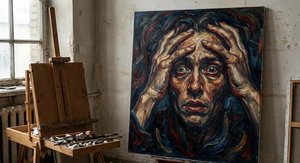
The Enigmatic Beauty of Untitled (4160)
“Untitled (4160)” by Amedeo Clemente Modigliani stands as a testament to the artist’s singular vision—a portrait that transcends mere representation, delving into the depths of human emotion and embodying the spirit of Expressionism. Executed in 1920, shortly before his untimely death, this painting exemplifies Modigliani's distinctive style: elongated figures rendered with subtle shading and a masterful use of color to convey an aura of melancholy and profound introspection.
A Study in Form and Technique
Modigliani’s technique is characterized by a deliberate simplification of anatomical forms, achieved through painstaking observation and meticulous drawing. He eschewed academic conventions, favoring instead a stylized approach that prioritized expressive gesture over precise realism. The canvas itself is treated with thin layers of oil paint—a hallmark of École de Paris—allowing for luminous tonal gradations and capturing the delicate interplay between light and shadow. This technique lends an ethereal quality to the portrait, emphasizing the contours of the figure and highlighting its inherent vulnerability.
Symbolism Within Stillness
Despite its apparent stillness, “Untitled (4160)” is laden with symbolic significance. The woman’s gaze—directed outwards yet simultaneously inward—suggests a contemplation of existence and an awareness of mortality. Her elongated neck and stylized facial features are not merely stylistic choices but deliberate distortions intended to convey inner turmoil and spiritual yearning. Modigliani's use of muted colors—primarily ochre, ivory, and pale blues—further reinforces this mood of quiet sorrow and underscores the painting’s preoccupation with themes of beauty and suffering.
Historical Context: The Expressionist Landscape
Created during the turbulent years leading up to World War I, “Untitled (4160)” reflects the broader artistic currents of the Expressionist movement. Artists like Ludwig Meidner and Bohumil Kubista sought to capture the anxieties and disillusionments of their time through emotionally charged imagery—often depicting landscapes scarred by violence and upheaval. Modigliani’s work aligns with this aesthetic impulse, rejecting decorative conventions in favor of a raw honesty that confronts viewers with uncomfortable truths about human experience.
Emotional Resonance: A Portrait of Longing
Ultimately, “Untitled (4160)” succeeds in conveying an enduring emotional resonance. It captures the essence of Modigliani’s artistic philosophy—a belief that art should strive to express profound feelings and illuminate the complexities of human consciousness. The painting's haunting beauty resides not merely in its formal qualities but in its ability to evoke a sense of melancholy, tenderness, and quiet contemplation—qualities that continue to captivate audiences today.



 Anteprima in scala reale
 Passa alla stampa
 Condividi
 Condividi
 Dettagli

 Scarica immagine
 Articoli simili
 Radiografia
 Slideshow
 Leggi tutto






































 L'opzione vetro è disponibile solo per dimensioni inferiori a 110 cm