

 Anteprima in scala reale
 Invia
Invia Condividi
 Dettagli opera
 Guida
Guida

 Scarica
 Simili
 Radiografia
 Slideshow
 Domande e risposte
 Statistiche
Emil Hertzka

- 29.0 x 36.0 cm


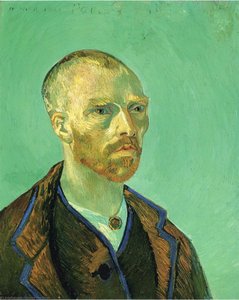
A captivating 1910 portrait of Arnold Schoenberg by Schoenberg himself, showcasing the composer's distinctive features and a faded vintage aesthetic, perfect for art enthusiasts seeking a unique piece to adorn their space.
 Espandi i dettagli
Scopri Arnold Schoenberg, il rivoluzionario compositore tedesco-americano noto per l'atonalità e la dodecafonia, padre della musica moderna e figura chiave della Seconda Scuola Viennese.
Giclée / Stampe d'arte
Stampa giclée o su tela di qualità museale, con produzione rapida e diverse opzioni di finitura. ( Acquista il dipinto realizzato a mano Passa all'immagine digitale)




P118B €10

P118H €10

P118W €10

P438Z €10

P508JH €12

P508YH €12

P805H €10

P805Z €10

P919BZ €10

P919G €10

P919XJ €10

P959ZH €10

P968JZ €12

W106C €8

W218G €10

W218JH €8

W218Y €10

W307PJ €10

W316G €10

W316PJ €8

W316Y €10

W398PJ €8

W4111J €10

W500HY €15

W500JH €15

W692G €12

W849H €8

W940BG €15

W953PJ €8




Formato standard
su misura
CM
INCH
Scegli tra le nostre dimensioni predefinite, che rispettano le proporzioni originali dell'opera d'arte.
Loading sizes...

larghezza
altezza
Inserisci la larghezza e l'altezza desiderate, per adattarle alla tua cornice o alla tua parete. Una stampa può essere solo ritagliata, mai resa più grande dell'immagine originale; pertanto, un formato con una forma differente comporterà la perdita di una parte dell'opera. Ti invieremo un mockup digitale da approvare prima di procedere con la stampa. L'immagine mostrata in questa pagina non rappresenta il ritaglio reale — solo il mockup lo mostra.
Consegna in tutto il mondo () in 2 settimane invece delle normali 4/5 settimane. (6 Novembre)

Spedizione espressa gratuita in tutto il mondo

Tela in lino di alta qualità

Assicurazione completa sulla spedizione

Garanzia di rimborso dei dazi doganali

Garanzia di fedeltà cromatica assoluta

Politica di reso entro 100 giorni (solo per difetti di fabbricazione)

Garanzia di rimborso al 100%

Offerta per acquisti multipli
 L'opzione vetro è disponibile solo per dimensioni inferiori a 110 cm

Emil Hertzka
Giclée / Stampe d'arte
Dimensioni riproduzione
-


Prezzo finale calcolato
€ 63
A Portrait of Ambition: Emil Hertzka by Arnold Schoenberg
This intimate portrait, rendered in 1910, offers a rare glimpse into the burgeoning artistic ambitions of Arnold Schoenberg, one of the most revolutionary figures in musical history. Painted by Schoenberg himself – a surprising and revealing act – the work transcends a simple likeness; it’s a carefully constructed statement about his aspirations and the perceived value of his increasingly influential art. The subject, a man with a distinguished reddish-brown beard and mustache, gazes directly at the viewer, an arresting intensity that speaks to Schoenberg's own self-assurance and desire for recognition. The slightly faded appearance of the painting lends it an aged quality, hinting at the passage of time and perhaps a subtle acknowledgement of the challenges he faced in establishing his reputation.
The Context of Innovation
- Vienna's Artistic Landscape: 1910 Vienna was a crucible of artistic innovation. Schoenberg, along with figures like Alban Berg and Anton Webern, was at the forefront of the Second Viennese School, challenging traditional harmonic structures and paving the way for atonality – a radical departure from established musical norms.
- Hertzka's Role: Emil Hertzka was a prominent art dealer who recognized Schoenberg’s potential early on. The correspondence between them reveals Schoenberg’s strategic thinking; he understood the power of association and sought to leverage his reputation within the music world to gain wider acceptance for his visual work.
- A Moment of Transition: This painting represents a pivotal moment in Schoenberg's career, just as he was solidifying his position as a leading composer and beginning to explore new artistic avenues.
Symbolism and Technique – A Calculated Impression
Schoenberg’s technique is characterized by a meticulous attention to detail, particularly in the rendering of the subject's facial features and the textures of his clothing. The use of muted tones and subtle gradations of light and shadow creates a sense of depth and realism, while simultaneously conveying an air of formality and sophistication. The glasses worn by the sitter are not merely a stylistic choice; they suggest intellectualism and perhaps a detachment from conventional perspectives – qualities central to Schoenberg’s revolutionary approach to music. The direct gaze of the subject is particularly significant, demanding engagement from the viewer and subtly asserting Schoenberg's confidence in his artistic abilities.
Beyond the Brushstroke: A Statement of Value
The inscription accompanying the painting – “You know that I paint. What you do not know is that my work is highly praised by experts…” – reveals Schoenberg’s anxieties and strategic calculations. He was acutely aware of the skepticism surrounding his foray into visual art, particularly given his groundbreaking musical innovations. By emphasizing the praise he received from "experts," he sought to bypass public opinion and directly appeal to a discerning audience. His desire for a patron, coupled with his assertion that owning a painting by him would be “much more interesting” than commissioning a work from a lesser-known artist, underscores his ambition to establish himself as a significant figure in both the music and art worlds. This portrait is not simply a representation of a man; it’s a carefully crafted testament to Schoenberg's belief in his own artistic genius.
Domande e risposte
Chi ha realizzato "Emil Hertzka" e in che anno?
L'autore di "Emil Hertzka" è Arnold Schoenberg e l'opera risale al 1910.
Quale tavolozza e quale emozione si incontrano in "Emil Hertzka"?
"Emil Hertzka" di Arnold Schoenberg unisce una tavolozza Neutrals a un tono Reflective.
In quale fase della carriera di Arnold Schoenberg si colloca "Emil Hertzka", considerando la sua datazione?
Data la sua datazione al 1910, "Emil Hertzka" rientra nel Early Modern di Arnold Schoenberg.
Opere simili




Biografia dell'artista
Early Life and Musical Beginnings
Arnold Schoenberg, Austrian-American composer who created new methods of musical composition involving atonality, namely serialism and the twelve-tone row. He was also one of the most influential teachers of the 20th century; among his most significant pupils were Alban Berg and Anton Webern. His birth on September 13, 1874, in Vienna, Austria, began a life shaped by humble origins—his father operated a shoe shop—yet Schoenberg’s innate passion for music propelled him to largely self-educate himself in the field. Initially, his musical explorations mirrored the stylistic fusion championed by Johannes Brahms and Richard Wagner, as evidenced in his early masterpiece, “Verklärte Nacht” (1899). However, he swiftly ascended to prominence as a central figure of the Second Viennese School alongside Webern and Berg, marking the dawn of a revolutionary era in musical thought.Notable Works and Musical Innovation
Schoenberg’s compositional breakthroughs fundamentally altered the trajectory of classical music. His seminal works—including “String Quartet No. 2” (1907–1908), “Erwartung” (1909), and “Pierrot Lunaire” (1912)—became emblems of atonality, a radical departure from tonal harmony that challenged established musical conventions. This pioneering approach—later formalized as serialism—involved arranging musical elements in predetermined sequences based on mathematical ratios, fundamentally reshaping the sonic landscape of the time. Furthermore, Schoenberg’s unwavering commitment to artistic integrity led him to resign from the Prussian Academy of Arts in 1933 due to mounting pressure from Nazi ideology, labeling his music as “degenerate.” Despite this perilous period, he persevered in teaching at UCLA (1936–1944), where facilities bear his name—a testament to his enduring legacy.Influence and Legacy
Schoenberg’s influence extended far beyond his immediate contemporaries, shaping the artistic sensibilities of subsequent generations of composers. Theodor W. Adorno and Carl Dahlhaus recognized Schoenberg's profound impact on musicological thought, acknowledging his contribution to redefining musical aesthetics. His aesthetic and music-historical views profoundly impacted the understanding of modern classical music, establishing him as a pivotal figure in shaping its intellectual framework.Later Life and Recognition
As awareness grew of the horrors inflicted during the Holocaust, Schoenberg honored the memory of victims through “A Survivor from Warsaw” (1947), demonstrating his compassion for human suffering. The Israel Conservatory and Academy of Music elected him honorary president in 1951—a poignant acknowledgment of his artistic stature and humanitarian spirit. His final composition, "String Trio" (1946), reflects the somber mood of Vienna during wartime, capturing a moment of vulnerability amidst profound historical upheaval.
Arnold Schoenberg
1874 - 1951 , Austria
Dettagli rapidi
- Artistic Movement Or Style: Twelve-tone technique; Expressionism
- Artists Or Movements Influenced By This Artist:
- Anton Webern
- Alban Berg
- Artists Who Influenced This Artist:
- Johannes Brahms
- Richard Wagner
- Date Of Birth: 1874
- Date Of Death: 1951
- Full Name: Arnold Schoenberg
- Nationality: Austrian-American
- Notable Artworks:
- Suite, op. 29
- Music Typewriter
- Staffliner
- Place Of Birth: Vienna, Austria
Articoli correlati

The Vienna Secession: A Golden Revolution of Symbolism and Modernity
Explore the profound impact of the Vienna Secession. Discover how Gustav Klimt and the masters of Viennese Modernism revolutionized art through symbolism, gold-leafed beauty, and the concept of Gesamtkunstwerk. A deep dive into a golden era of aesthetic rebellion.
Esplora le opere d'arte organizzate per temi, stili e caratteristiche.


