Invia
Invia Condividi
 Dettagli opera
 Guida
Guida

 Scarica
 Simili
 Slideshow
 Statistiche
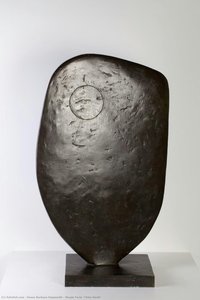
Shaft and Circle


Admire Barbara Hepworth's iconic 'Shaft and Circle' sculpture – a striking abstract form embodying balance & harmony through clean lines and organic shapes, reflecting modernist principles.
 Espandi i dettagli
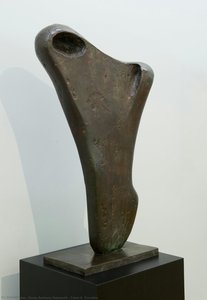
Scopri Barbara Hepworth (1903-1975), pioniera della scultura moderna! Le sue opere astratte, come 'Oval Form' e 'Two Forms', fondono surrealismo e innovazione. Visita la Hepworth Wakefield!
L'opera d'arte visualizzata in questa pagina è protetta dalle leggi sul diritto d'autore, il che significa che non possiamo legalmente creare o vendere una riproduzione identica. Tale protezione è garantita da accordi internazionali quali la Convenzione di Berna e dalle leggi nazionali, incluse quelle stabilite da Legge sul copyright degli Stati Uniti - Titolo 17. Tutti i diritti riservati. Le immagini presenti su questo sito sono protette da copyright e non possono essere riprodotte o utilizzate senza l'autorizzazione scritta di WahooArt.com o dei rispettivi proprietari del copyright.
Come alternativa rispettosa e legale, offriamo opere d'arte personalizzate e dipinte a mano, ispirate all'originale. I nostri artisti esperti e professionisti studiano con cura lo stile, l'atmosfera e l'essenza artistica dell'opera originale per creare un pezzo nuovo e unico che evochi la stessa emozione, pur rimanendo una creazione originale a pieno titolo.
Questo metodo è pienamente conforme alle normative sul diritto d'autore poiché non prevede la copia o la duplicazione dell'opera protetta. Si tratta invece di una rielaborazione creativa: un nuovo dipinto che trae ispirazione dall'originale, senza tuttavia esserne identico.
Riproduzione a olio fatta a mano
Olio su tela dipinto a mano nelle tue dimensioni e con la tua cornice, realizzato su ordinazione dai nostri artisti. ( Passa alle stampe Passa all'immagine digitale)




































Formato standard
su misura
CM
INCH
Scegli tra le nostre dimensioni predefinite, che rispettano le proporzioni originali dell'opera d'arte.
Loading sizes...

larghezza
altezza
Inserisci la larghezza e l'altezza desiderate, per adattarle alla tua cornice o alla tua parete. Trattandosi di un'opera dipinta a mano, in caso di dimensioni con un formato differente, l'artista può estendere leggermente il dipinto oltre i bordi dell'immagine o ritagliare una piccola parte — la scelta spetta a te. Ti invieremo un mockup digitale da approvare prima che la realizzazione abbia inizio. L'immagine mostrata in questa pagina non rappresenta il risultato finale — solo il mockup lo fa.
Esempi di ciò che può essere modificato: sostituire il volto con una foto del cliente; aggiungere un animale domestico (ad esempio, sostituire un gatto con un cane); inserire un messaggio nascosto nello sfondo; cambiare il paesaggio o gli elementi dello sfondo.
Dopo l'ordine, il team di TopImpressionists.com contatterà il cliente via e-mail per ricevere le istruzioni e fornirà un'anteprima del mockup
Dopo l'ordine, il team di TopImpressionists.com contatterà il cliente via e-mail per ricevere le istruzioni e fornirà un'anteprima del mockup
Consegna in tutto il mondo () in 3/4 settimane anziché nelle normali 5 settimane. (27 Ottobre). Nessun compromesso sulla qualità.

Spedizione espressa gratuita in tutto il mondo

Tela in lino di alta qualità

Assicurazione completa sulla spedizione

Garanzia di rimborso dei dazi doganali

Garanzia di fedeltà cromatica assoluta

Politica di reso entro 100 giorni (solo per difetti di fabbricazione)

Garanzia di rimborso al 100%

Offerta per acquisti multipli
 L'opzione vetro è disponibile solo per dimensioni inferiori a 110 cm

Shaft and Circle
Tecnica di riproduzione
Dimensioni riproduzione
-


Prezzo finale calcolato
€ 237
A Vertical Echo: Barbara Hepworth’s “Shaft and Circle”
Barbara Hepworth's "Shaft and Circle," created in 1972, isn’t merely a sculpture; it’s an invitation to quiet contemplation. Standing before this arresting form – a towering shaft of polished concrete punctuated by a perfectly circular aperture – is akin to entering a sacred space. The piece immediately commands attention with its stark simplicity and the profound sense of upward movement it evokes. Hepworth, a pivotal figure in 20th-century British sculpture, masterfully distilled her signature style into this work: an exploration of form’s inherent qualities, divorced from representational concerns. It's a testament to her belief that sculpture could be experienced not just visually, but through touch and the subtle shifts in light and shadow.
The material itself – likely cast concrete, though Hepworth often worked with stone as well – is treated with an almost reverent attention. The surface is flawlessly smooth, reflecting the surrounding environment while simultaneously maintaining a sense of contained solidity. This deliberate contrast between smoothness and mass speaks to the core of Hepworth’s philosophy: she sought to capture the essence of materials themselves, revealing their inherent textures and geometries. The scale of the sculpture – approximately six feet tall – further amplifies this effect, drawing the viewer upwards into its embrace.
Roots in Epirus and Mycenaean Tradition
To fully appreciate “Shaft and Circle,” it’s crucial to understand Hepworth's artistic lineage. Her early influences stemmed from her travels through Italy and Greece, particularly a deep immersion in the archaeological sites of Mycenae. The shaft tomb tradition prevalent in Bronze Age Greece – elaborate burial chambers dug vertically into the earth, often containing grave goods – provided a foundational inspiration for her work. These tombs, built by elite societies, weren’t simply markers of death; they were statements of power and belief, reflecting a complex cosmology centered around ancestry and the afterlife. Hepworth's sculpture echoes this spirit, suggesting an upward journey towards something beyond the material world.
Interestingly, similar shaft tombs have been found in Bronze Age China, demonstrating a surprisingly widespread cultural practice across Eurasia. This shared heritage underscores the universal human impulse to create enduring monuments and explore questions of mortality and transcendence. Hepworth’s work can be seen as a contemporary reimagining of these ancient traditions, translated into the language of abstract form.
The Language of Form: Circularity and Verticality
The composition of “Shaft and Circle” is meticulously balanced between two fundamental principles: verticality and circularity. The shaft itself rises directly upwards, creating a powerful sense of momentum and aspiration. This upward thrust is counterbalanced by the perfectly formed circle cut into its midsection – an element that introduces ambiguity and invites interpretation. The circle can be seen as representing wholeness, continuity, or perhaps even a portal to another dimension. It’s a subtle yet potent symbol that adds layers of meaning to the sculpture's overall impact.
Hepworth was deeply interested in exploring the relationship between form and space. She believed that sculpture should not simply occupy physical space but also create an emotional resonance within the viewer. “Shaft and Circle” achieves this beautifully, prompting a sense of stillness and introspection. The negative space created by the circular aperture is just as important as the solid mass of the shaft itself, contributing to the sculpture’s dynamic balance.
A Legacy of Minimalism and Emotional Resonance
“Shaft and Circle” exemplifies Hepworth's commitment to minimalism and her profound understanding of materials. It’s a work that rewards careful observation and invites repeated contemplation. Her sculptures, often described as “non-objective,” are nonetheless deeply expressive, communicating complex ideas about form, space, and the human condition. Today, "Shaft and Circle" remains a powerful testament to Hepworth's artistic vision – a timeless exploration of fundamental geometric principles and their capacity to evoke profound emotional responses.
Domande e risposte
Che età aveva Barbara Hepworth quando ha realizzato "Shaft and Circle"?
Barbara Hepworth ha realizzato "Shaft and Circle" all'età di 69. L'artista è nato nel 1903 e l'opera risale al 1972.
Da dove provengono i visitatori di "Shaft and Circle" di Barbara Hepworth?
È disponibile una pagina Statistiche per "Shaft and Circle", che illustra le visite mensili dell'opera e delle altre creazioni dell'artista, con dettagli relativi a paese e lingua.
Il soggetto di "Shaft and Circle" è coerente con i temi abituali di Barbara Hepworth?
I temi ricorrenti di Barbara Hepworth includono abstraction, modernism, geometry, surrealist, exploration, balance, harmony, sculptural form; "Shaft and Circle" si concentra su sculpture, abstraction, form, circle, geometric, modernism, balance.
Biografia dell'artista
Primi anni e formazione
Dame Barbara Hepworth, rinomata artista e scultrice inglese, nacque il 10 gennaio 1903 a Wakefield, nello Yorkshire. Suo padre, Herbert Hepworth, era un ingegnere civile per il West Riding County Council, che nel 1921 divenne County Surveyor. Da bambina, accompagnava il padre nei viaggi in auto che faceva in tutta la contea del West Riding. Frequentò la Wakefield Girls' High School e ottenne una borsa di studio aperta nel 1917. Le estati le furono trascorse a Robin Hood's Bay, vicino a Whitby, North Yorkshire.Carriera artistica
- Dal 1920 al 1921 frequentò la Leeds School of Art; Henry Moore era un compagno di studi.
- Dal 1921 al 1924 studiò scultura alla Royal College of Art di Londra.
Opere significative ed esposizioni
- Oval Form (Trezion), una scultura in bronzo, fa parte della collezione del Kimbell Art Museum a Fort Worth, negli Stati Uniti. (visualizza su TopImpressionists)
- Two Forms, una scultura, è esposta al The Hepworth Wakefield a Wakefield, nel Regno Unito. (visualizza su TopImpressionists)
- Totem, una scultura in marmo, fa anche parte della collezione al The Hepworth Wakefield. (visualizza su TopImpressionists)
Evoluzione artistica e influenze
Hepworth scoprì la sua passione per la scultura da bambina. Nel corso della sua carriera, sperimentò con diverse tecniche e materiali, evolvendo dal naturalismo semplificato all'astrazione pura. Fu influenzata dai movimenti artistici europei come il surrealismo e il costruttivismo, e collaborò con artisti come Ben Nicholson, Paul Nash e Henry Moore. La sua sensibilità per i materiali era notevole e praticava spesso la scultura a diretto taglio. A volte incorporava stringhe, fili e vernice colorata nelle sue sculture. Era affascinata dal gioco tra massa e spazio, e il suo approccio creava una tensione tra uno spazio aperto e interno e la massa materiale circostante.Eredità e collezioni museali
Il lavoro di Barbara Hepworth è ampiamente riconosciuto, con le sue sculture e dipinti che fanno parte di varie collezioni museali in tutto il mondo. Il The Hepworth Wakefield, intitolato all'artista, ospita numerosi capolavori di artisti rinomati, tra cui le opere stesse di Hepworth. (scopri di più su The Hepworth Wakefield su TopImpressionists)Significato storico
Il lavoro pionieristico di Dame Barbara Hepworth nella scultura britannica moderna ha lasciato un segno indelebile nel mondo dell'arte. La sua eredità continua a ispirare artisti e appassionati d'arte, con le sue opere che rimangono una testimonianza del suo spirito innovativo e del genio artistico. Ulteriori informazioni su Barbara Hepworth su Wikipedia
Barbara Hepworth
1903 - 1975 , Regno Unito
Dettagli rapidi
- Artisti Influenti:
- Henry Moore
- Brancusi
- Arp
- Data Di Nascita: 10 gennaio 1903
- Luogo Di Nascita: Wakefield, Regno Unito
- Movimento Artistico: Modernismo, Scultura astratta
- Nazionalità: Britannica
- Nome Completo: Barbara Hepworth
- Opere Notevoli:
- Oval Form (Trezion)
- Two Forms
- Totem
Articoli correlati

The Beauty of Less: A Sophisticated Guide to the Soul of Minimalist Art and Geometric Harmony
Discover the profound elegance of minimalist art. Explore how geometric abstraction and the beauty of reduction create serene, sophisticated spaces through our expert guide to finding soul and harmony in every line and shape.
Esplora le opere d'arte organizzate per temi, stili e caratteristiche.