Invia
Invia Condividi
 Dettagli opera
 Guida
Guida

 Scarica
 Simili
 Slideshow
 Domande e risposte
 Statistiche
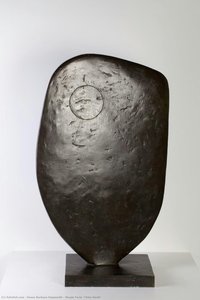
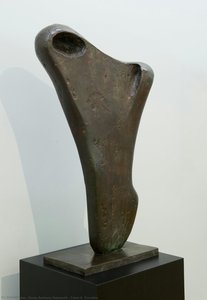
Totem


Explore Barbara Hepworth's iconic 'Totem' sculpture – an abstract masterpiece of alabaster/marble, embodying serenity and modernism. Discover its form, texture, and symbolic depth in this captivating work.
 Espandi i dettagli
Scopri Barbara Hepworth (1903-1975), pioniera della scultura moderna! Le sue opere astratte, come 'Oval Form' e 'Two Forms', fondono surrealismo e innovazione. Visita la Hepworth Wakefield!
L'opera d'arte visualizzata in questa pagina è protetta dalle leggi sul diritto d'autore, il che significa che non possiamo legalmente creare o vendere una riproduzione identica. Tale protezione è garantita da accordi internazionali quali la Convenzione di Berna e dalle leggi nazionali, incluse quelle stabilite da Legge sul copyright degli Stati Uniti - Titolo 17. Tutti i diritti riservati. Le immagini presenti su questo sito sono protette da copyright e non possono essere riprodotte o utilizzate senza l'autorizzazione scritta di WahooArt.com o dei rispettivi proprietari del copyright.
Questo metodo è pienamente conforme alle normative sul diritto d'autore poiché non prevede la copia o la duplicazione dell'opera protetta. Si tratta invece di una rielaborazione creativa: un nuovo dipinto che trae ispirazione dall'originale, senza tuttavia esserne identico.
Giclée / Stampe d'arte
Stampa giclée o su tela di qualità museale, con produzione rapida e diverse opzioni di finitura. ( Acquista il dipinto realizzato a mano Passa all'immagine digitale)




































Formato standard
su misura
CM
INCH
Scegli tra le nostre dimensioni predefinite, che rispettano le proporzioni originali dell'opera d'arte.
Loading sizes...

larghezza
altezza
Inserisci la larghezza e l'altezza desiderate, per adattarle alla tua cornice o alla tua parete. Una stampa può essere solo ritagliata, mai resa più grande dell'immagine originale; pertanto, un formato con una forma differente comporterà la perdita di una parte dell'opera. Ti invieremo un mockup digitale da approvare prima di procedere con la stampa. L'immagine mostrata in questa pagina non rappresenta il ritaglio reale — solo il mockup lo mostra.
Consegna in tutto il mondo () in 2 settimane invece delle normali 4/5 settimane. (8 Novembre)

Spedizione espressa gratuita in tutto il mondo

Tela in lino di alta qualità

Assicurazione completa sulla spedizione

Garanzia di rimborso dei dazi doganali

Garanzia di fedeltà cromatica assoluta

Politica di reso entro 100 giorni (solo per difetti di fabbricazione)

Garanzia di rimborso al 100%

Offerta per acquisti multipli
 L'opzione vetro è disponibile solo per dimensioni inferiori a 110 cm

Totem
Giclée / Stampe d'arte
Dimensioni riproduzione
-


Prezzo finale calcolato
€ 62
Barbara Hepworth’s ‘Totem’: A Silent Dialogue with Form and Space
Barbara Hepworth's “Totem,” created in 1960-62, is more than just a sculpture; it’s an invitation to contemplate the fundamental elements of form, space, and human experience. This remarkable piece, crafted from alabaster or marble – materials chosen for their inherent luminosity and tactile quality – stands as a testament to Hepworth's pioneering role in British modernism. The work immediately commands attention with its strikingly vertical orientation, a deliberate choice that draws the eye upwards, suggesting an aspiration towards something beyond the earthly realm. The contrast between this upward thrust and the grounded, angularity of the base creates a dynamic tension, inviting viewers to consider the interplay of stability and movement within the sculpture’s composition.
A Biomorphic Embrace: Form and Technique
Hepworth's signature style is powerfully evident in “Totem.” The form itself is profoundly biomorphic – an organic echo translated into stone. It eschews representational imagery, instead focusing on pure abstraction, exploring the inherent qualities of the material. The sculpture’s surface is remarkably smooth, achieved through a subtractive sculpting technique: Hepworth began with a larger block of stone and meticulously removed material to reveal the desired shape. This process isn't merely about creating an image; it’s about coaxing forth the form already latent within the stone itself. The subtle tonal shifts in the polished surface – from bright highlights to shadowed recesses – are not accidental; they are carefully orchestrated to emphasize the sculpture’s three-dimensionality and create a sense of depth and volume. The precision of the carving, combined with the inherent texture of the alabaster or marble, results in a piece that feels both solid and ethereal.
Symbolic Resonance: Ancestry and Spiritual Connection
The title “Totem” immediately evokes associations with ancient tribal cultures and ancestral figures. While Hepworth herself resisted overly literal interpretations, the sculpture undeniably carries a potent symbolic weight. The vertical element can be seen as representing a connection to the heavens or a spiritual ascent, mirroring the traditional role of totems as guardians and symbols of lineage. The pierced openings within the form aren’t simply decorative; they invite contemplation, creating pockets of negative space that seem to breathe with an inner light. These voids suggest a sense of openness, inviting viewers to project their own interpretations onto the sculpture – perhaps reflecting on personal journeys or universal themes of connection and belonging.
Historical Context: Modernism and Abstraction
“Totem” was created during a pivotal period in Hepworth’s career, aligning with her exploration of abstraction-creation. This movement sought to move beyond representational art, focusing instead on the intrinsic qualities of materials and the fundamental principles of form and space. Hepworth's work, alongside that of artists like Ben Nicholson and Paul Nash, challenged conventional notions of sculpture, embracing a more elemental and expressive approach. The piece reflects the broader shift within 20th-century art towards a rejection of traditional styles and a celebration of modern materials and techniques. It’s a powerful example of how abstraction could be used to convey profound emotional and spiritual ideas.
A Timeless Presence: Emotional Impact and Artistic Legacy
Looking at “Totem” is an experience that transcends mere visual appreciation. There's a quiet serenity, a sense of contemplative stillness that permeates the sculpture’s form. It evokes a feeling of calm, inviting viewers to slow down, breathe deeply, and connect with their own inner landscape. Hepworth’s ability to imbue stone with such emotional resonance is a testament to her extraordinary artistic vision. “Totem” remains a powerful symbol of modernism's enduring legacy – a silent dialogue between form, space, and the human spirit, offering a timeless invitation to contemplation.
Domande e risposte
L'opera "Totem" è complessivamente più luminosa o più scura?
La luminosità di "Totem" di Barbara Hepworth è registrata come brilliant, con una luminanza di Bright Balance.
A quale periodo appartiene "Totem" di Barbara Hepworth?
Il periodo storico di "Totem" di Barbara Hepworth è Modern. Questa classificazione colloca l'opera all'interno della storia dell'arte.
Quale tavolozza e quale colore dominante definiscono "Totem"?
L'identità cromatica di "Totem" di Barbara Hepworth: una tavolozza Neutrals, dominata da Gray (#817c7c).
Biografia dell'artista
Primi anni e formazione
Dame Barbara Hepworth, rinomata artista e scultrice inglese, nacque il 10 gennaio 1903 a Wakefield, nello Yorkshire. Suo padre, Herbert Hepworth, era un ingegnere civile per il West Riding County Council, che nel 1921 divenne County Surveyor. Da bambina, accompagnava il padre nei viaggi in auto che faceva in tutta la contea del West Riding. Frequentò la Wakefield Girls' High School e ottenne una borsa di studio aperta nel 1917. Le estati le furono trascorse a Robin Hood's Bay, vicino a Whitby, North Yorkshire.Carriera artistica
- Dal 1920 al 1921 frequentò la Leeds School of Art; Henry Moore era un compagno di studi.
- Dal 1921 al 1924 studiò scultura alla Royal College of Art di Londra.
Opere significative ed esposizioni
- Oval Form (Trezion), una scultura in bronzo, fa parte della collezione del Kimbell Art Museum a Fort Worth, negli Stati Uniti. (visualizza su TopImpressionists)
- Two Forms, una scultura, è esposta al The Hepworth Wakefield a Wakefield, nel Regno Unito. (visualizza su TopImpressionists)
- Totem, una scultura in marmo, fa anche parte della collezione al The Hepworth Wakefield. (visualizza su TopImpressionists)
Evoluzione artistica e influenze
Hepworth scoprì la sua passione per la scultura da bambina. Nel corso della sua carriera, sperimentò con diverse tecniche e materiali, evolvendo dal naturalismo semplificato all'astrazione pura. Fu influenzata dai movimenti artistici europei come il surrealismo e il costruttivismo, e collaborò con artisti come Ben Nicholson, Paul Nash e Henry Moore. La sua sensibilità per i materiali era notevole e praticava spesso la scultura a diretto taglio. A volte incorporava stringhe, fili e vernice colorata nelle sue sculture. Era affascinata dal gioco tra massa e spazio, e il suo approccio creava una tensione tra uno spazio aperto e interno e la massa materiale circostante.Eredità e collezioni museali
Il lavoro di Barbara Hepworth è ampiamente riconosciuto, con le sue sculture e dipinti che fanno parte di varie collezioni museali in tutto il mondo. Il The Hepworth Wakefield, intitolato all'artista, ospita numerosi capolavori di artisti rinomati, tra cui le opere stesse di Hepworth. (scopri di più su The Hepworth Wakefield su TopImpressionists)Significato storico
Il lavoro pionieristico di Dame Barbara Hepworth nella scultura britannica moderna ha lasciato un segno indelebile nel mondo dell'arte. La sua eredità continua a ispirare artisti e appassionati d'arte, con le sue opere che rimangono una testimonianza del suo spirito innovativo e del genio artistico. Ulteriori informazioni su Barbara Hepworth su Wikipedia
Barbara Hepworth
1903 - 1975 , Regno Unito
Dettagli rapidi
- Artisti Influenti:
- Henry Moore
- Brancusi
- Arp
- Data Di Nascita: 10 gennaio 1903
- Luogo Di Nascita: Wakefield, Regno Unito
- Movimento Artistico: Modernismo, Scultura astratta
- Nazionalità: Britannica
- Nome Completo: Barbara Hepworth
- Opere Notevoli:
- Oval Form (Trezion)
- Two Forms
- Totem
Articoli correlati

The Soul of Color: A Journey into the Emotional Resonance of Lyrical Abstraction
Embark on a cultural journey through Lyrical Abstraction. Explore how masters like Kandinsky used color and motion to translate emotion into visual poetry. Discover the profound beauty of abstract expressionism and learn to curate emotional resonance in your own art collection.

L’Anima della Pietra: La Danza della Luce e i Segreti della Scultura in Marmo
Scopri i segreti della scultura in marmo tra luce e tecnica. Esplora la maestria dei grandi maestri con noi.
Esplora le opere d'arte organizzate per temi, stili e caratteristiche.