


 Anteprima in scala reale
 Condividi
 Condividi
 Dettagli
 Guida stampabile

 Scarica
 Articoli simili
 Radiografia
 Slideshow
 Statistiche
The Old Bedford
 Oil
Oil- WallArt
- Impressionism
 1895
1895- 19th Century
 76.0 x 60.0 cm
 Musei Nazionali di Liverpool
A moody black and white exploration of London nightlife, this 1895 painting by Bernard Sickert captures the raucous atmosphere of the Bedford Music Hall through masterful lighting and shadows for your collection.
 Leggi tutto
Explore Bernard Sickert's evocative urban scenes & portraits – a pivotal figure in modern British art. Discover his dark palettes, press photo influence & Camden Town legacy.
Giclée / Stampe d'arte
Stampa giclée o su tela di qualità museale, con produzione rapida e diverse opzioni di finitura. ( Ordina la riproduzione dipinta a mano Passa all'immagine digitale)




P118B €10

P118H €10

P118W €10

P438Z €10

P508JH €12

P508YH €12

P805H €10

P805Z €10

P919BZ €10

P919G €10

P919XJ €10

P959ZH €10

P968JZ €12

W106C €8

W218G €10

W218JH €8

W218Y €10

W307PJ €10

W316G €10

W316PJ €8

W316Y €10

W398PJ €8

W4111J €10

W500HY €15

W500JH €15

W692G €12

W849H €8

W940BG €15

W953PJ €8




Standard
personalizzato
CM
INCH
Scegli tra le nostre dimensioni predefinite, che rispettano le proporzioni originali dell'opera d'arte.
Loading sizes...

larghezza
altezza
Inserisci la larghezza e l'altezza desiderate, per adattarle alla tua cornice o alla tua parete. Una stampa può essere solo ritagliata, mai resa più grande dell'immagine originale; pertanto, un formato con una forma differente comporterà la perdita di una parte dell'opera. Ti invieremo un mockup digitale da approvare prima di procedere con la stampa. L'immagine mostrata in questa pagina non rappresenta il ritaglio reale — solo il mockup lo mostra.
Consegna in tutto il mondo () in 2 settimane invece delle normali 4/5 settimane. (23 Ottobre)

Spedizione espressa gratuita in tutto il mondo

Tela in lino di alta qualità

Assicurazione completa sulla spedizione

Garanzia di rimborso dei dazi doganali

Garanzia di perfetta fedeltà cromatica

Politica di reso entro 100 giorni (solo per difetti di fabbricazione)

Garanzia di rimborso al 100%

Sconto per acquisti multipli
 L'opzione vetro è disponibile solo per dimensioni inferiori a 110 cm

The Old Bedford
Giclée / Stampe d'arte
Dimensioni della riproduzione
-


Prezzo totale
€ 61
Following the example of Édouard Manet (1832 – 1883) and Edgar Degas (1834 – 1917) and their paintings of Parisian cafes and theatres, Sickert painted the raucous nightlife of London’s music halls throughout his career. He was a regular visitor at the Bedford Music Hall in Camden Town, the subject of this painting. Sickert may have intended it as a sequel to his earlier picture of the child performer Little Dot Hetherington on the stage of the Bedford, in which she is shown pointing to this spot while singing the popular song, “The Boy I Love is up in the Gallery”. As well as recording vividly the atmosphere and setting of a late 19th century performance, this is a brilliant exercise in lighting and composition. Sickert exploits the contrast between the shadowy auditorium and the reflected glare of the stage, and creates tricks of space and perspective by means of the giant mirror on the left.
Domande e risposte
In quale periodo della carriera di Bernard Sickert si colloca "The Old Bedford"?
All'interno della carriera di Bernard Sickert, "The Old Bedford" appartiene al Mature Period. Questa fase permette di confrontarla con le altre opere dell'artista.
Come è strutturata la composizione cromatica di "The Old Bedford" di Bernard Sickert?
L'analisi cromatica di "The Old Bedford" di Bernard Sickert registra un Gentle contrasto e una Unified Palette armonia.
Che tipo di opera d'arte è "The Old Bedford" di Bernard Sickert?
"The Old Bedford" è un'opera di tipo WallArt.
Opere correlate


Biografia dell'artista
Bernard Sickert: A Shadowed Vision of London
Bernard Sickert (1863–1932) remains a figure of enduring fascination and subtle controversy within the annals of British art. Born in Munich to a family deeply rooted in artistic tradition – his father, Oswald, was himself a painter – Sickert’s journey led him from the vibrant hues of Germany to the grimy, atmospheric streets of London, where he ultimately forged a uniquely powerful and unsettling vision of the city. His work, often characterized by its dark palettes, press photo influence, and exploration of marginalized figures, positioned him as a pivotal transitional figure between Impressionism and the burgeoning movements of Modernism, yet his methods and subject matter frequently provoked debate and suspicion.
Early influences shaped Sickert’s artistic trajectory. Initially drawn to acting, he eventually embraced painting under the tutelage of James McNeill Whistler, absorbing the latter's emphasis on tonal harmony and formal structure. This early training provided a foundation for his later explorations of composition and color. However, it was Edgar Degas who exerted the most profound impact, particularly in his approach to depicting urban life – capturing fleeting moments of movement and revealing the underlying structures of the city through carefully observed details. Sickert’s fascination with the visual language of photography, evident in his cropped compositions and stark lighting, further distinguished his work from more traditional approaches.
The Camden Town Group and a Darker Palette
Sickert's artistic development gained significant momentum during the late 1890s and early 1900s, coinciding with the rise of the Camden Town Group – a collective of artists who sought to capture the gritty reality of London’s East End. This group, which included Walter Sickert, Vanessa Bell, and Duncan Grant, rejected the idealized landscapes favored by many of their contemporaries and instead focused on portraying the lives of ordinary people in their working-class surroundings. Sickert's involvement with Camden Town marked a shift towards darker palettes, more direct depictions of urban decay, and an exploration of themes such as prostitution, poverty, and social alienation – subjects that were often considered taboo at the time.
His association with the New English Art Club (NEAC) provided a platform for his work to be exhibited alongside other progressive artists. However, it was his depiction of Katie Lawrence at Gatti’s in 1888, a scene from a music hall frequented by prostitutes, that ignited considerable controversy. The painting's unflinching portrayal of female performers and their environment sparked outrage among critics who deemed it vulgar and morally objectionable. Despite the criticism, this work established Sickert’s reputation as an artist willing to confront difficult subjects and challenge conventional artistic norms.
London as a Subject: Portraits and Urban Landscapes
Sickert's oeuvre is remarkably diverse, encompassing portraits of prominent figures – including Whistler, Aubrey Beardsley, and members of the Bloomsbury Group – alongside numerous urban landscapes and scenes of everyday life. He possessed an uncanny ability to capture the atmosphere of London, imbuing his paintings with a sense of melancholy, isolation, and underlying tension. His use of press photographs as compositional models—often cropping figures into starkly framed images—created a distinctly modern aesthetic, anticipating developments in photography and film.
His fascination with the city’s underbelly is particularly evident in works such as “The Horses of St Mark,” a series of paintings depicting prostitutes and streetwalkers. These images are not romanticized or idealized; rather, they offer a brutally honest portrayal of poverty, exploitation, and social marginalization. Similarly, his depictions of Camden Town—the area where he established his studio—are characterized by their atmospheric gloom and sense of urban decay.
Legacy and Controversy
Despite the controversy surrounding some of his subjects and methods, Bernard Sickert’s influence on British art is undeniable. He played a crucial role in bridging the gap between Impressionism and Modernism, paving the way for subsequent generations of artists to explore new forms of expression and challenge established conventions. However, his association with Jack the Ripper—a theory that has been repeatedly investigated but never definitively proven—continues to cast a shadow over his legacy, fueling speculation about his involvement in the infamous crimes.
Regardless of this persistent speculation, Sickert remains a compelling figure – an artist who dared to look beyond the surface of London’s glittering facade and reveal its darker secrets. His work continues to resonate with viewers today, offering a poignant and unsettling glimpse into the heart of a rapidly changing city and the lives of those often overlooked by history.

Bernard Sickert
1863 - 1932
Informazioni rapide
- Full Name: Bernard Sickert
- Nationality: British
- Date Of Birth: 1863
- Date Of Death: 1932
- Place Of Birth: Munich, Germany
- Notable Artworks:
- A Canal Scene
- Lincoln Cathedral
- The Horses of St Mark
- Artistic Movement Or Style: Post-Impressionism
- Artists Who Influenced This Artist:
- Walter Sickert
- James Whistler
- Artists Or Movements Influenced By This Artist: ['Camden Town Group']
Articoli correlati
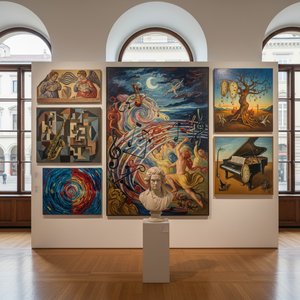
Harmonies on Canvas: Exploring the Visual Representation of Music in Art History
Explore the fascinating history of music's visual representation in art! From ancient symbolism to modern abstraction, discover how artists have captured sound and emotion on canvas. Expert insights & stunning examples.

Shadow & Soul: Why Black & White Photography Remains the Ultimate Power Move in Modern Art
Discover why black & white photography remains a powerful force in contemporary art. Explore the impact of light, shadow, and texture through a visual journey of monochrome mastery and learn how to elevate your space with timeless grayscale aesthetics.

Bianco Sublime: I 10 Dipinti Più Famosi Dominati dal Colore Bianco | .it
Esplora i 10 dipinti più celebri dominati dal bianco, da Monet a Malevich. Scopri la storia, le tecniche e l'impatto di queste opere iconiche. Trova stampe su tela e riproduzioni d'arte di alta qualità per decorare casa con stile su .

Monochrome Visions: Exploring the Aesthetic & Historical Significance of Black & White Photography
Explore the rich history & artistic power of black and white photography. From early techniques to iconic masters like Ansel Adams, discover why monochrome continues to captivate art lovers today. Expert insights for collectors.

I 10 Dipinti Più Famosi Dominati dal Nero: Maestri e Storie d'Arte
Esplora i 10 dipinti più iconici dominati dal nero, da Caravaggio a Munch. Scopri storie, tecniche e il potere espressivo di artisti come Rembrandt e Goya. Trova stampe d'arte di alta qualità per la tua casa su .