

Rappresentato: · Comprese le dimensioni della cornice:
 Anteprima in scala reale
 Invia
Invia Condividi
 Dettagli opera
 Guida
Guida

 Scarica
 Simili
 Radiografia
 Slideshow
 Domande e risposte
 Statistiche

€ 240
Riproduzione a olio fatta a mano
Olio su tela dipinto a mano nelle tue dimensioni e con la tua cornice, realizzato su ordinazione dai nostri artisti. ( Passa alle stampe Passa all'immagine digitale)
Dimensioni
·Formato standard
su misura
CM
INCH
Scegli tra le nostre dimensioni predefinite, che rispettano le proporzioni originali dell'opera d'arte.
Caricamento dimensioni...

larghezza
altezza
Inserisci la larghezza e l'altezza desiderate, per adattarle alla tua cornice o alla tua parete. Trattandosi di un'opera dipinta a mano, in caso di dimensioni con un formato differente, l'artista può estendere leggermente il dipinto oltre i bordi dell'immagine o ritagliare una piccola parte — la scelta spetta a te. Ti invieremo un mockup digitale da approvare prima che la realizzazione abbia inizio. L'immagine mostrata in questa pagina non rappresenta il risultato finale — solo il mockup lo fa.
 Scopri di più
Finitura
·
Bianco €1

Bordi sfumati €1

Bordi estesi €1

P118B €10

P118H €10

P118W €10

P438Z €10

P508JH €12

P508YH €12

P805H €10

P805Z €10

P919BZ €10

P919G €10

P919XJ €10

P959ZH €10

P968JZ €12

W106C €8

W218G €10

W218JH €8

W218Y €10

W307PJ €10

W316G €10

W316PJ €8

W316Y €10

W398PJ €8

W4111J €10

W500HY €15

W500JH €15

W692G €12

W849H €8

W940BG €15

W953PJ €8

H24-GOLD €30

H24-SILVER €30

H36-GOLD €45

H36-SILVER €45
Spedito in un tubo protettivo, pronto per essere incorniciato dal tuo artigiano di fiducia.
Servizi extra
opzionaleCosa includono gli extra?
Esempi di ciò che può essere modificato: Sostituire il volto con la foto del cliente; Aggiungere un animale domestico (ad es. sostituire il gatto con un cane); Inserire un messaggio nascosto nello sfondo; Cambiare il paesaggio o gli elementi dello sfondo.
Dopo l'ordine, il team di TopImpressionists.com invierà un'e-mail al cliente per le istruzioni e fornirà un'anteprima del mockup
Dopo l'ordine, il team di TopImpressionists.com invierà un'e-mail al cliente per le istruzioni e fornirà un'anteprima del mockup
Consegna in tutto il mondo () in 3/4 settimane anziché nelle normali 5 settimane. (3 Novembre). Nessun compromesso sulla qualità.
Vernice protettiva
Didascalia
Dettagli della targhetta in bronzo inciso
This elegant plaque features the artist's name and the title of the artwork, finely engraved for a timeless presentation.
It is made from bronze with a refined, elegant finish. The text is precisely laser-engraved for a sharp and permanent result. Measuring 9x2 cm, the plaque is compact yet easy to read. It's built to be durable and scratch-resistant, offering a professional, museum-quality look. Mounting is simple thanks to the included adhesive backing.
Dettagli della targhetta in acrilico trasparente
The plaque includes essential engraved details such as the artist's name, the title of the artwork, the date it was created, the type of media used-like oil on canvas or watercolor-a brief description of the piece, and a QR code that links to the complete artwork information.
It is crafted from clear acrylic, offering a sleek, modern appearance. The text is UV-engraved in black to ensure strong visual contrast. With a size of 10x15 cm, it ensures optimal readability. It comes equipped with two metal hooks for secure wall mounting. The plaque is designed to be weather-resistant, making it suitable for various environments, and it includes interactive features that work seamlessly with smartphone scanning.
Dettagli della targhetta in acrilico nero
This elegant plaque includes engraved information such as the artist's name, the title of the artwork, the date it was created, the type of media used (like oil on canvas or watercolor), a short description of the artwork, and a QR code for quick access to more information.
The plaque itself is made from refined black acrylic with a premium finish. The text is laser-engraved in white for high contrast and readability. Its size is 10x15 cm, designed to be easy to read. It comes with two metal hooks for professional mounting. The design is sleek and fits any interior style. It is also weather-resistant and durable, with built-in digital integration for mobile compatibility.
L'opzione vetro è disponibile solo per dimensioni inferiori a 110 cm
 L'opzione vetro è disponibile solo per dimensioni inferiori a 110 cm
- Spedizione espressa gratuita in tutto il mondo
- Tela in lino di alta qualità
- Assicurazione completa sulla spedizione
- Garanzia di rimborso dei dazi doganali
- Garanzia di fedeltà cromatica assoluta
- Politica di reso entro 100 giorni (solo per difetti di fabbricazione)
- Garanzia di rimborso al 100%
- Offerta per acquisti multipli


Descrizione del reperto
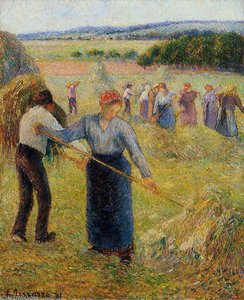
Experience Camille Pissarro’s idyllic Haymaking 1, a vibrant Impressionist scene capturing rural teamwork and the beauty of harvest time – perfect for art lovers and collectors seeking a timeless pastoral masterpiece.
Biografia dell'artista
Esplora l'arte di Camille Pissarro: paesaggi e scene di vita quotidiana impressionisti e neo-impressionisti. Una figura chiave che ha influenzato Van Gogh, Cézanne e altri.
Informazioni sul dipinto
Camille Pissarro’s ‘Haymaking 1’: A Symphony of Rural Labor
Haymaking 1, a captivating depiction of rural life by Camille Pissarro, offers a poignant glimpse into the heart of Impressionist observation. Painted around 1892, this artwork transcends a simple representation of agricultural work; it’s an exploration of human connection, community, and the enduring rhythms of nature. The scene unfolds with remarkable clarity – a bustling farmyard bathed in the warm light of a summer afternoon. Nine figures, rendered with Pissarro's characteristic loose brushstrokes and vibrant palette, are engaged in the meticulous task of gathering hay, their movements suggesting both industry and camaraderie. The sheer abundance of golden hay, meticulously scattered across the field, immediately draws the eye, creating a visual feast that speaks to the bounty of the land.
Impressionist Technique and Color
Pissarro’s mastery lies in his ability to capture fleeting moments and atmospheric effects. Executed with the hallmark Impressionistic technique, Haymaking 1 showcases broken color applied in short, visible strokes. This method wasn't merely a stylistic choice; it was a deliberate attempt to record the way light interacts with surfaces – the shimmering reflections on the hay, the subtle gradations of tone in the sky, and the warmth radiating from the figures themselves. The artist’s use of complementary colors—the blues and oranges—intensifies the vibrancy of the scene, creating a dynamic visual experience. The loose brushwork contributes to an overall sense of movement and immediacy, as if we are witnessing this rural activity unfold before our eyes.
Historical Context: Pissarro and the Rise of Impressionism
Painted in the late 1890s, Haymaking 1 reflects Pissarro’s pivotal role in the development of Impressionism. Having initially embraced Realist principles, he gradually shifted his focus towards capturing the subjective experience of light and color. This work aligns with a period where Pissarro was increasingly interested in depicting everyday scenes of rural life – a departure from the grand historical or mythological subjects favored by earlier generations of artists. His connection to the Société des Artistes Indépendants, a group that championed independent artistic expression, further solidified his position as a key figure in challenging established artistic conventions. The painting’s subject matter—a common, unromanticized view of peasant labor—was deliberately chosen to reflect the burgeoning interest in social realism within the Impressionist movement.
Symbolism and Emotional Impact
Beyond its technical brilliance, Haymaking 1 carries a profound symbolic weight. The act of haymaking itself represents more than just harvesting; it embodies hard work, community cooperation, and the cyclical nature of life. The figures’ engaged postures and shared task evoke a sense of unity and purpose. The painting's emotional impact is one of quiet contentment and appreciation for the simple pleasures of rural existence. It’s a reminder of a time when labor was inextricably linked to sustenance and connection – values increasingly absent in modern society. This artwork offers a serene and evocative portrayal of a timeless scene, inviting viewers to contemplate the beauty and significance of everyday life.
Domande e risposte
"Haymaking 1" di Camille Pissarro è un'opera dai toni chiari o scuri?
In termini di luminosità percepita, "Haymaking 1" di Camille Pissarro è bright.
Qual è la spiegazione relativa allo stato del copyright di "Haymaking 1" di Camille Pissarro?
Lo stato del copyright di "Haymaking 1" - di pubblico dominio - il copyright è scaduto - è determinato dalla data di morte dell'artista, avvenuta nel 1903.
"Haymaking 1" è di pubblico dominio?
Per quanto riguarda il copyright, "Haymaking 1" è di pubblico dominio - il copyright è scaduto.
Brevi curiosità e quiz sull'arte
Informazioni su Camille Pissarro

Camille Pissarro
1830 - 1903, Stati Uniti d'America
Biografia dell'artista
Camille Pissarro: Una Vita di Arte
Primi Anni e Formazione
Jacob Abraham Camille Pissarro nacque il 10 luglio 1830 a Charlotte Amalie, St. Thomas (allora le Indie Occidentali Danesi, ora Isole Vergini americane). Suo padre, Frederick Abraham Gabriel Pissarro, era di origine ebraica portoghese con cittadinanza francese, e sua madre, Rachel Manzano-Pomié, proveniva da una famiglia ebrea francese. La sua educazione fu in qualche modo insolita a causa del patrimonio misto dei suoi genitori e delle loro circostanze. Ricevette la sua formazione artistica precoce all'Accademia Savary a Passy vicino Parigi, dove sviluppò un apprezzamento per i maestri dell'arte francese ed è stato incoraggiato a disegnare dalla natura.
A 17 anni, Pissarro tornò a St. Thomas e continuò a disegnare durante le pause lavorando come impiegato del carico. Questo periodo gli instillò un acuto senso di osservazione della vita quotidiana e del mondo naturale – temi che sarebbero diventati centrali nella sua arte.
Sviluppo Artistico e Influenze
Nel 1855, Pissarro si trasferì a Parigi, lavorando come assistente del pittore danese Anton Melbye. Studiò le opere di Gustave Courbet, Jean-Baptiste-Camille Corot, Honoré Daumier, e Charles-François Daubigny, i cui stili hanno profondamente influenzato il suo lavoro precoce. Trovò l'istruzione artistica formale nelle istituzioni come l'École des Beaux-Arts soffocante e cercò istruzioni alternative da Corot.
Inizialmente, i dipinti di Pissarro aderivano a standard tradizionali, esposti al Salon di Parigi. Il suo primo dipinto fu accettato nel 1859. Tuttavia, presto iniziò a sperimentare con una pennellata più libera e un focus sulla cattura degli effetti fugaci della luce – caratteristiche distintive dell'Impressionismo.
Contributo all'Impressionismo e Oltre
Camille Pissarro è considerato una figura chiave sia nell'Impressionismo che nel Post-Impressionismo. È stato l'unico artista a esporre a tutte le otto mostre impressioniste di Parigi (1874-1886), fungendo da forza stabilizzante all'interno del gruppo. Non è stato solo un espositore; ha attivamente incoraggiato e sostenuto i suoi colleghi artisti, guadagnandosi il soprannome di “il padre figura” del movimento.
Più tardi nella sua carriera, Pissarro esplorò il Neo-Impressionismo, influenzato da Georges Seurat e Paul Signac, impiegando una tecnica puntinista per un periodo prima di tornare a uno stile più personale.
Realizzazioni Principali e Temi
- Paesaggi: Pissarro è rinomato per le sue rappresentazioni di paesaggi rurali e urbani, spesso concentrati su scene di vita quotidiana.
- Scene della Vita Parigina: Ha catturato l'atmosfera vivace e frenetica di Parigi durante un periodo di rapido cambiamento.
- Vita Contadina: I suoi dipinti raffigurano frequentemente la vita e il lavoro dei contadini, riflettendo la sua coscienza sociale.
- Influenza sui Giovani Artisti: Pissarro ha indirizzato e profondamente influenzato Paul Cézanne, Vincent van Gogh, e Paul Gauguin, plasmando il loro sviluppo artistico.
Significato Storico e Eredità
L'eredità di Camille Pissarro si estende oltre i suoi bellissimi dipinti. È stato un campione della libertà artistica e dell'innovazione, svolgendo un ruolo cruciale nello sviluppo dell'arte moderna. Il suo impegno a dipingere *en plein air* (all'aperto) e a catturare l'esperienza immediata ha rivoluzionato la pittura di paesaggio. La sua volontà di sperimentare con stili e tecniche diversi dimostra la sua curiosità intellettuale e il coraggio artistico.
Oggi, le opere di Pissarro sono esposte in importanti musei in tutto il mondo, tra cui il Museum Kunstsalon Franke Schenk e il Museum Frieder Burda, continuando a ispirare artisti e amanti dell'arte. Rimane una figura celebrata la cui contribuzione viene studiata e apprezzata ancora oggi.
Informazioni rapide su Camille Pissarro
- Artisti Influenti:
- Gustave Courbet
- Jean-Baptiste Corot
- Honoré Daumier
- Artisti Influenzati:
- Paul Cézanne
- Vincent van Gogh
- Paul Gauguin
- Data Di Nascita: 10 luglio 1830
- Luogo Di Nascita: Charlotte Amalie, Stati Uniti
- Movimento Artistico: Impressionismo, Neoimpressionismo
- Nazionalità: Danese-Francese
- Nome Completo: Camille Pissarro
- Opere Notevoli:
- Neve a Montfoucault
- Il Louvre: Sole Invernale
- Dulwich College, Londra
- Prato a Bazincourt
- Le Valhermeil, presso Pontoise
Opere simili





Esplora le opere d'arte organizzate per temi, stili e caratteristiche.


Camille Pissarro
Haymaking 1
() ·
Comprese le dimensioni della cornice: · Dipinto a mano con olio su tela di lino
Totale