

 Anteprima in scala reale
 Invia
Invia Condividi
 Dettagli opera
 Guida
Guida

 Scarica
 Simili
 Radiografia
 Slideshow
 Statistiche
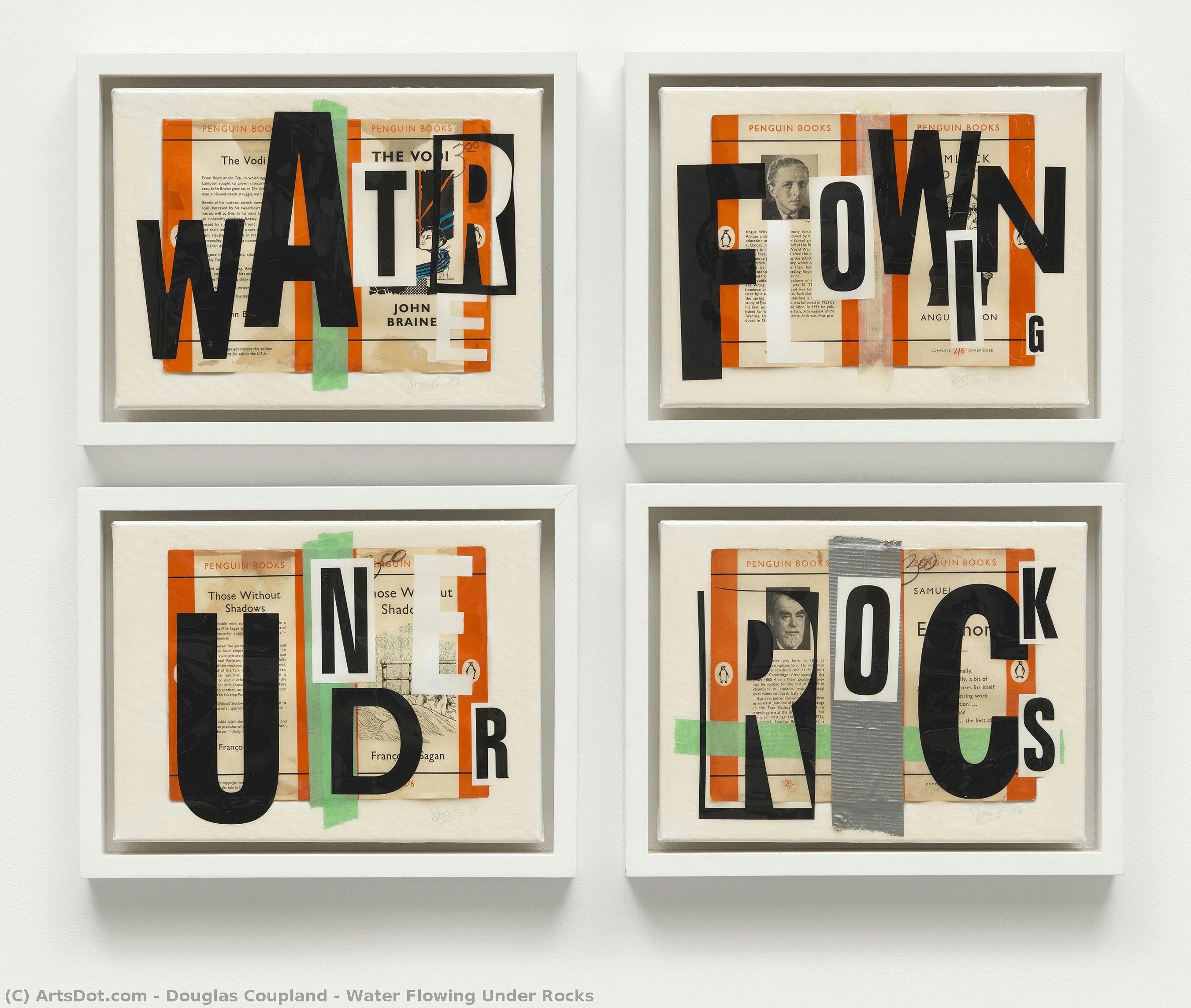
Water Flowing Under Rocks
 Collage
- WallArt
- Contemporary Realism
 Contemporary
 36.0 x 28.0 cm
 Vancouver Art Gallery
Explore 'Water Flowing Under Rocks' by Douglas Coupland – a captivating collage reflecting themes of water, nature, and modern culture through unique letter arrangements and magazine elements.
 Espandi i dettagli
Douglas Coupland: scrittore e artista visivo canadese che esplora la Generazione X, la cultura digitale e la vita moderna. Famoso per l'arte con QR code, sculture e opere stimolanti esposte a livello globale.
L'opera d'arte visualizzata in questa pagina è protetta dalle leggi sul diritto d'autore, il che significa che non possiamo legalmente creare o vendere una riproduzione identica. Tale protezione è garantita da accordi internazionali quali la Convenzione di Berna e dalle leggi nazionali, incluse quelle stabilite da Legge sul copyright degli Stati Uniti - Titolo 17. Tutti i diritti riservati. Le immagini presenti su questo sito sono protette da copyright e non possono essere riprodotte o utilizzate senza l'autorizzazione scritta di WahooArt.com o dei rispettivi proprietari del copyright.
Questo metodo è pienamente conforme alle normative sul diritto d'autore poiché non prevede la copia o la duplicazione dell'opera protetta. Si tratta invece di una rielaborazione creativa: un nuovo dipinto che trae ispirazione dall'originale, senza tuttavia esserne identico.
Giclée / Stampe d'arte
Stampa giclée o su tela di qualità museale, con produzione rapida e diverse opzioni di finitura. ( Acquista il dipinto realizzato a mano Passa all'immagine digitale)




P118B €10

P118H €10

P118W €10

P438Z €10

P508JH €12

P508YH €12

P805H €10

P805Z €10

P919BZ €10

P919G €10

P919XJ €10

P959ZH €10

P968JZ €12

W106C €8

W218G €10

W218JH €8

W218Y €10

W307PJ €10

W316G €10

W316PJ €8

W316Y €10

W398PJ €8

W4111J €10

W500HY €15

W500JH €15

W692G €12

W849H €8

W940BG €15

W953PJ €8




Formato standard
su misura
CM
INCH
Scegli tra le nostre dimensioni predefinite, che rispettano le proporzioni originali dell'opera d'arte.
Loading sizes...

larghezza
altezza
Inserisci la larghezza e l'altezza desiderate, per adattarle alla tua cornice o alla tua parete. Una stampa può essere solo ritagliata, mai resa più grande dell'immagine originale; pertanto, un formato con una forma differente comporterà la perdita di una parte dell'opera. Ti invieremo un mockup digitale da approvare prima di procedere con la stampa. L'immagine mostrata in questa pagina non rappresenta il ritaglio reale — solo il mockup lo mostra.
Consegna in tutto il mondo () in 2 settimane invece delle normali 4/5 settimane. (26 Ottobre)

Spedizione espressa gratuita in tutto il mondo

Tela in lino di alta qualità

Assicurazione completa sulla spedizione

Garanzia di rimborso dei dazi doganali

Garanzia di fedeltà cromatica assoluta

Politica di reso entro 100 giorni (solo per difetti di fabbricazione)

Garanzia di rimborso al 100%

Offerta per acquisti multipli
 L'opzione vetro è disponibile solo per dimensioni inferiori a 110 cm

Water Flowing Under Rocks
Giclée / Stampe d'arte
Dimensioni riproduzione
-


Prezzo finale calcolato
€ 61
A Submerged Narrative: Deconstructing "Water Flowing Under Rocks" by Douglas Coupland
Douglas Coupland’s “Water Flowing Under Rocks” isn't merely a collage; it’s a meticulously constructed visual poem, a fragmented meditation on the anxieties and fleeting beauty of contemporary life. Born from a collection of disparate magazine clippings – primarily sourced from newspapers and periodicals – the artwork presents a deliberately chaotic yet strangely harmonious arrangement of images centered around the word “Water.” This seemingly simple conceit unfolds into a complex exploration of language, perception, and the relentless flow of information that defines our era.
The core technique employed by Coupland is one of strategic juxtaposition. He doesn’t simply paste images together; he actively disrupts their original context, isolating words and phrases – “water,” “flowing,” “rocks” – and reassembling them in unexpected configurations. The typography itself becomes a key element, varying wildly between bold headlines, delicate script, and stark sans-serif fonts. This deliberate manipulation forces the viewer to confront the inherent ambiguity of language, questioning how meaning is constructed and disseminated through visual media. Coupland’s use of collage, a technique deeply rooted in Dadaism and Surrealism, allows him to dismantle traditional notions of authorship and originality, mirroring the fragmented nature of modern experience.
Echoes of Generation X and the Digital Landscape
“Water Flowing Under Rocks” is inextricably linked to Coupland’s seminal work, *Generation X*, published in 1996. The collage can be interpreted as a visual extension of that novel's themes – alienation, disillusionment, and the struggle to find meaning within a hyper-consumerist society. The fragmented nature of the images mirrors the fractured identities and anxieties experienced by Generation X, who came of age during a period of rapid technological advancement and economic uncertainty. The recurring motif of “water” itself carries significant symbolic weight, representing both fluidity and potential danger – the constant flow of information, the subconscious depths of human emotion, and the ever-present threat of overwhelming chaos.
Symbolism in the Submerged Fragments
Beyond its generational resonance, the artwork is rich with subtle symbolism. The “rocks” within the composition can be seen as representing the obstacles and limitations that impede our progress – societal constraints, personal insecurities, or the weight of history. The act of "flowing" suggests a continuous movement, an attempt to navigate these challenges while simultaneously acknowledging their inherent instability. Coupland’s deliberate use of vintage imagery—newspaper clippings from decades past—creates a poignant dialogue between the present and the past, hinting at the cyclical nature of human experience and the enduring relevance of our collective anxieties.
A Reflection on Perception and Meaning
Ultimately, “Water Flowing Under Rocks” is an invitation to slow down and reconsider our relationship with information. It’s a reminder that meaning isn't inherent in any single image or word but emerges from the interplay between them. Coupland’s masterful manipulation of collage forces us to actively participate in the construction of meaning, transforming passive viewers into engaged interpreters. The artwork’s enduring appeal lies not just in its aesthetic qualities but also in its profound commentary on the complexities of contemporary culture and the human condition. It's a piece that rewards repeated viewing, revealing new layers of significance with each encounter.
Domande e risposte
Che posto occupa "Water Flowing Under Rocks" tra i temi ricorrenti di Douglas Coupland?
Tra i temi ricorrenti di Douglas Coupland - generation x, consumer culture, digital age, mcluhan themes, canadian identity, urban life, pop art, media commentary - "Water Flowing Under Rocks" pone un particolare accento su collage, water, coupland, rivers, rocks, text, modernity, canada.
L'opera "Water Flowing Under Rocks" si trova nel paese del suo creatore?
Sì - l'opera è conservata nel paese d'origine dell'artista. Douglas Coupland è nato/a in Canada, e l'originale "Water Flowing Under Rocks" è conservato in un museo in Canada.
Quale tavolozza e quale emozione si incontrano in "Water Flowing Under Rocks"?
La tavolozza Neutrals di "Water Flowing Under Rocks" di Douglas Coupland si sposa con il suo tono emotivo Nostalgic. Il colore è uno dei mezzi attraverso cui un'opera trasmette emozioni.


Biografia dell'artista
Douglas Coupland: Una Biografia
- Nato: Vancouver, Canada (30 dicembre 1961)
- Origine: TopImpressionists
- Status: Vivente
Primi Anni e Svolta Letteraria
- Il percorso di Douglas Coupland è iniziato a Vancouver, in Canada, il 30 dicembre 1961. La sua vita iniziale ha plasmato le sue acute osservazioni sulla cultura contemporanea, che avrebbero poi definito la sua opera.
- Ha ottenuto un ampio riconoscimento con la pubblicazione del suo romanzo d'esordio, "Generation X: Tales for an Accelerated Culture", nel 1991. Quest'opera fondamentale ha risuonato profondamente con una generazione alle prese con l'identità e lo scopo in un mondo in rapida evoluzione.
- Il romanzo ha reso popolari termini come “Generazione X” e “McJob”, consolidando il posto di Coupland come commentatore culturale e catturando lo spirito del tempo.
Evoluzione Come Artista e Designer
- Oltre al suo successo letterario, Coupland ha coltivato una pratica artistica diversificata che comprende arte visiva e design. Ha scritto 13 romanzi, due raccolte di racconti, sette libri di saggistica e numerosi sceneggiature per film e televisione.
- La sua opera d'arte visiva è stata esposta in sedi prestigiose come la Vancouver Art Gallery e la McMichael Canadian Art Collection.
- L'esplorazione artistica di Coupland si estende a media innovativi come i codici QR, che integra nei suoi dipinti per rivelare messaggi nascosti quando vengono scansionati – fondendo l'astrazione con la funzionalità.
Temi Artistici Chiave e Opere Notabili
- Serie Codici QR: La serie di dipinti di Coupland che incorporano codici QR esemplifica il suo approccio unico, unendo tecnologia e arte per fornire commenti concisi.
- Serie Dead Grads: Questa toccante serie serve come tributo alle giovani vite tragicamente interrotte, con titoli come "Gun", "Car Crash" e "Overdose" che evocano profonde riflessioni.
- Silver Boogeyman: Un'opera d'arte sorprendente che rivela il volto di Osama bin Laden quando visualizzata tramite uno smartphone, dimostrando la capacità di Coupland di provocare pensieri e sfidare le percezioni.
- The Ice Storm: Una monumentale scultura in acciaio che riflette l'identità canadese e la fragilità, mostrando la sua esplorazione di temi nazionali.
- God: Un collage misto con elementi simbolici come "Lord Jim" e una 'D' geometrica, che dimostra le sue tecniche di stratificazione e le sue capacità di graphic design.
Riconoscimenti e Eredità
- I contributi di Coupland alla letteratura e all'arte sono stati ampiamente riconosciuti, guadagnandogli il titolo di Ufficiale dell'Ordine del Canada e la membership nell'Ordine della Columbia Britannica.
- La sua opera continua a risuonare con il pubblico in tutto il mondo, stimolando il dialogo sulla cultura contemporanea, la tecnologia e le questioni sociali.
- Rimane una figura significativa nelle arti e nelle lettere canadesi, noto per le sue osservazioni perspicaci e l'espressione artistica innovativa.

Douglas Coupland
1961 - , Canada
Dettagli rapidi
- Artistic Movement Or Style: Arte contemporanea, Pop Art
- Date Of Birth: 30 dicembre 1961
- Full Name: Douglas Coupland
- Nationality: Canadese
- Notable Artworks:
- Jumbo Boogeyman in the Sky...
- Silver Boogeyman
- God
- The Ice Storm
- The Poet
- Thomson No. 5 (Yellow Sunset)
- Place Of Birth (City And Country): Vancouver, Canada
Articoli correlati

The Alchemy of Layers: How Digital Collage Reimagines the Soul of Artistic Tradition
Explore the enchanting evolution of digital collage, where modern technology meets the timeless soul of art history. Discover how contemporary artists blend classical textures with digital innovation to create breathtaking new masterpieces for the modern collector.
Esplora le opere d'arte organizzate per temi, stili e caratteristiche.


