


 Anteprima in scala reale
 Condividi
 Condividi
 Dettagli
 Guida
Guida

 Scarica
 Articoli simili
 Radiografia
 Slideshow
 Statistiche
Pesche


Scopri la maestosa 'Pesce' di Édouard Manet, un capolavoro impressionista che cattura la bellezza della vita quotidiana con pennellate libere e colori vibranti. Rendi unica la tua casa!
 Leggi tutto
Esplora l'arte rivoluzionaria di Édouard Manet (1832-1883), una figura chiave nella transizione dal Realismo all'Impressionismo. Scopri i suoi capolavori controversi come 'Le Déjeuner sur l'herbe' & 'Olympia', e la sua influenza duratura sull'arte moderna.
Riproduzione a olio fatta a mano
Olio su tela dipinto a mano nelle tue dimensioni e con la tua cornice, realizzato su ordinazione dai nostri artisti. ( Passa alle stampe Passa all'immagine digitale)




P118B $10

P118H $10

P118W $10

P438Z $10

P508JH $12

P508YH $12

P805H $10

P805Z $10

P919BZ $10

P919G $10

P919XJ $10

P959ZH $10

P968JZ $12

W106C $8

W218G $10

W218JH $8

W218Y $10

W307PJ $10

W316G $10

W316PJ $8

W316Y $10

W398PJ $8

W4111J $10

W500HY $15

W500JH $15

W692G $12

W849H $8

W940BG $15

W953PJ $8




Standard
personalizzato
CM
INCH
Scegli tra le nostre dimensioni predefinite, che rispettano le proporzioni originali dell'opera d'arte.
Loading sizes...

larghezza
altezza
È possibile inserire dimensioni personalizzate per adattare l'opera a una cornice o a uno spazio specifico. Se la dimensione selezionata non corrisponde alle proporzioni dell'immagine originale, provvederemo a ritagliare l'opera o a estendere il dipinto con elementi aggiuntivi dipinti a mano. Un mockup digitale ti sarà inviato per approvazione prima dell'inizio della produzione.
Si prega di notare che l'anteprima a schermo non riflette il ritaglio o l'estensione effettivi. Solo il mockup mostrerà accuratamente la composizione finale.
Sebbene siano disponibili dimensioni personalizzate, consigliamo di selezionare una dimensione dall'elenco predefinito per preservare le proporzioni originali.
Esempi di personalizzazione: sostituire il volto con una foto del cliente; aggiungere un animale domestico (ad esempio, sostituire un gatto con un cane); inserire un messaggio nascosto nello sfondo; cambiare il paesaggio o gli elementi dello sfondo.
Dopo l'ordine, il team di TopImpressionists.com contatterà il cliente via e-mail per ricevere le istruzioni e fornirà un'anteprima del mockup
Dopo l'ordine, il team di TopImpressionists.com contatterà il cliente via e-mail per ricevere le istruzioni e fornirà un'anteprima del mockup
Consegna in tutto il mondo () in 3/4 settimane anziché nelle normali 5 settimane. (24 Settembre). Nessun compromesso sulla qualità.

Spedizione espressa gratuita in tutto il mondo

Tela in lino di alta qualità

Assicurazione completa sulla spedizione

Garanzia di rimborso dei dazi doganali

Garanzia di perfetta fedeltà cromatica

Politica di reso entro 100 giorni (solo per difetti di fabbricazione)

Garanzia di rimborso al 100%

Sconto per acquisti multipli
 L'opzione vetro è disponibile solo per dimensioni inferiori a 110 cm

Pesche
Tecnica di riproduzione
Dimensioni della riproduzione
-


Prezzo totale
$ 269
Peaches: A Moment of Stillness in Impressionist Light
Édouard Manet’s “Peaches” – a deceptively simple composition of three ripe peaches resting on a table before a serene blue sky – is far more than just a still life. Painted in 1882, this work represents a pivotal moment in the artist's career and a cornerstone of Impressionist aesthetics. It’s a study in light, color, and the fleeting beauty of everyday objects, imbued with a quiet contemplation that belies its apparent simplicity. Manet, deeply influenced by the Old Masters – particularly Diego Velázquez, whose mastery of capturing light and atmosphere he greatly admired – sought to move beyond the rigid conventions of academic painting and capture the immediacy of modern life. “Peaches” embodies this shift, offering a glimpse into a world where observation and sensation take precedence over meticulous detail. The painting’s power lies in Manet's distinctive approach to technique. He deliberately eschewed the smooth, blended brushstrokes favored by many of his contemporaries, opting instead for loose, visible strokes that create a sense of movement and spontaneity. The peaches themselves are rendered with an almost tactile quality – you can practically feel the velvety skin and subtle variations in color. Notice how Manet doesn’t attempt to render every detail; rather, he focuses on capturing the *impression* of light reflecting off the fruit, creating a vibrant interplay of hues that shifts depending on the viewer's perspective. The background sky, painted with broad washes of blue, provides a luminous backdrop, enhancing the peaches’ luminosity and contributing to the overall sense of tranquility. This deliberate simplification of form and color is characteristic of Impressionism – an attempt to represent not just what the eye sees, but also how it *feels*. Manet's style was deeply rooted in his fascination with contemporary life and his rejection of traditional academic subjects. He frequently depicted scenes from Parisian cafes, theaters, and streets, often portraying ordinary people in their daily routines. “Peaches,” however, stands apart as a particularly refined example of his still-life work. It’s not merely a depiction of fruit; it's an exploration of light, color, and the inherent beauty found in the mundane. The peaches themselves can be interpreted symbolically – representing abundance, fertility, or perhaps even mortality, given their ephemeral nature. The choice of these particular fruits speaks to Manet’s interest in capturing fleeting moments of beauty, a theme that would become increasingly prominent in his later works. Manet's legacy extends far beyond this single painting. He was a key figure in the transition from Realism to Impressionism, paving the way for artists like Claude Monet and Frédéric Bazille. His innovative approach to composition, color, and brushstroke profoundly influenced the development of modern art. “Peaches” serves as a testament to his genius – a small but significant work that encapsulates the essence of Manet’s artistic vision. You can delve deeper into his life and works on TopImpressionists.com, where you'll find detailed information about his artistic influences and career trajectory. Furthermore, reproductions of this masterpiece are available at TopImpressionists.com, allowing art lovers to experience its beauty firsthand.Manet: A Bridge Between Tradition and Modernity
Édouard Manet (1832-1883), born in Paris, was a revolutionary artist who challenged the conventions of his time. Initially trained as a lawyer, he abandoned this path to pursue his passion for painting, initially under the tutelage of Thomas Couture before forging his own distinctive style. His early works were heavily influenced by the Old Masters, particularly Velázquez and Frans Hals, demonstrating a deep respect for artistic tradition. However, Manet quickly moved beyond mere imitation, incorporating elements of Realism – championed by Gustave Courbet – into his paintings. This movement focused on depicting everyday life without idealization or romantic embellishment, reflecting the changing social landscape of 19th-century Paris. Manet’s bold experimentation with color and brushstroke marked a decisive break from academic painting. He rejected the dark, muted tones favored by many of his contemporaries, opting instead for brighter, more vibrant hues. His use of light was particularly innovative – he sought to capture the fleeting effects of sunlight on objects, creating a sense of immediacy and spontaneity. This approach, combined with his willingness to depict contemporary subjects (including prostitutes and street vendors), generated considerable controversy within the art establishment. Despite facing criticism and rejection from the official Salon, Manet persisted in his artistic vision, ultimately playing a crucial role in shaping the course of modern art. The influence of Velázquez is particularly evident in “Peaches.” Like Velázquez, Manet was fascinated by capturing light and atmosphere – he meticulously studied how light interacts with surfaces, creating a sense of depth and realism. However, Manet’s approach differed significantly from that of his Spanish predecessor. While Velázquez often employed a highly polished, idealized style, Manet embraced a more direct and expressive technique. His brushstrokes are loose and visible, conveying a sense of movement and immediacy that is characteristic of Impressionism. This deliberate departure from traditional techniques was revolutionary at the time, challenging established notions of beauty and artistic representation. Manet’s commitment to portraying modern life extended beyond his still-life paintings. He also created numerous portraits of Parisian society figures, capturing their personalities and social status with remarkable accuracy. His work served as a powerful commentary on the changing values and attitudes of 19th-century France. His legacy is cemented by works such as “Olympia,” which continues to provoke debate and admiration today.Still Life Treasures: Manet’s Fruitful Pursuits
Manet's fascination with still life painting was a defining characteristic of his artistic output, offering him a space for experimentation and reflection. Unlike the grand historical or mythological scenes that dominated much of 19th-century art, still lifes allowed him to focus on the beauty of everyday objects – fruit, flowers, and household items – transforming them into subjects of profound artistic significance. His “Still Life with Melon and Peaches,” housed at the National Gallery of Art in Washington D.C., exemplifies this approach, showcasing his ability to capture the subtle nuances of light and color within a seemingly simple composition. Similarly, "Almonds, currants and peaches" demonstrates Manet's meticulous observation of natural forms and his skillful rendering of textures. These works are not merely decorative; they are carefully constructed meditations on beauty, perception, and the passage of time. Manet’s still lifes were often imbued with a sense of melancholy or nostalgia – perhaps reflecting his own awareness of mortality and the fleeting nature of beauty. The influence of artists like Velázquez and Frans Hals is readily apparent in Manet's still life paintings. Like Velázquez, he was adept at capturing the play of light on surfaces, creating a sense of depth and realism. Like Hals, he employed loose brushstrokes to convey a sense of movement and spontaneity. However, Manet’s approach differed significantly from that of his predecessors – he sought to capture not just the appearance of objects, but also their emotional resonance. His still lifes are imbued with a quiet intensity that invites contemplation and reflection. Exploring these works further on TopImpressionists.com provides invaluable insights into Manet's artistic process and his enduring legacy as one of the most innovative artists of the 19th century.Opere correlate


Biografia dell'artista
vitae e carriera
Édouard Manet, pittore modernista francese, nacque il 23 gennaio 1832 a Parigi. Contrariamente alle sue radici aristocratiche e a un percorso navale predeterminato, Manet emerse come un audace pittore modernista francese le cui tele catturavano la vivacità della vita del XIX secolo. È ampiamente acclamato per il suo ruolo nel pionierismo dell'impressionismo, guidando l’arte dalle rappresentazioni realistiche a territori inesplorati.opere notevoli
Le prime opere capolavoro di Manet, Il pranzo sull'erba (Le déjeuner sur l’herbe) (1863) e Olimpia (1865), furono radicali, sfidando le norme artistiche e provocando indignazione tra i tradizionalisti. Queste opere provocatorie ottennero l'approvazione dei colleghi più lungimiranti, seminando i semi dell’impressionismo. * Il pranzo sull'erba (Le déjeuner sur l’herbe) (1863) - un dipinto che ha scatenato controversie sia da parte della critica che dell'Accademia di Belle Arti. * Olimpia (1865) - un'opera che ha causato grande scompiglio a causa della sua rappresentazione di una donna bianca nuda, accompagnata da una serva nera.musei e collezioni
Le opere di Manet si possono trovare in vari musei in tutto il mondo, tra cui: * Musée d’Orsay (Parigi, Francia) - sede di una vasta collezione dei dipinti di Manet, tra cui Olimpia. * Museo di Belle Arti (Boston, Stati Uniti) - presenta il Ritratto di Victorine Meurent, un'opera degna di nota nel suo percorso artistico.eredità e influenza
Lo stile innovativo di Manet, caratterizzato da pennellate ampie e veloci, illuminazione in studio e profondità limitata, è stato una grande influenza sui pittori futuri. La sua eredità può essere vista nelle opere di numerosi artisti che hanno seguito le sue orme.- Impressionismo: il suo lavoro pionieristico in questo stile lo ha reso un nome familiare tra gli appassionati d'arte.
- Realismo: il suo rifiuto degli approcci realistici tradizionali ha aperto la strada a una nuova generazione di artisti.
- Arte moderna: i contributi di Manet all’evoluzione dell’arte moderna sono innegabili, consolidando il suo posto nella storia dell'arte.
ulteriore lettura ed esplorazione
* Scopri di più sulla vita e sulle opere di Édouard Manet su TopImpressionists. * Esplora la collezione del Musée d’Orsay, che presenta una vasta gamma di dipinti di Manet, tra cui Olimpia, su TopImpressionists's pagina del museo.
Édouard Manet
1832 - 1883 , Francia
Informazioni rapide
- Artisti Influenti:
- Caravaggio
- Diego Velázquez
- Gustave Courbet
- Artisti Influenzati:
- Claude Monet
- Pierre-Auguste Renoir
- Edgar Degas
- Data Di Nascita: 23 gennaio 1832
- Luogo Di Nascita: Parigi, Francia
- Movimento Artistico: Impressionismo, Realismo
- Nazionalità: Francese
- Nome Completo: Édouard Manet
- Opere Notevoli:
- Le Déjeuner sur l'herbe
- Olympia
- Madame Manet a Bellevue
- Ritratto di Mery Laurent
Articoli correlati

Édouard Manet: I 25 Capolavori che Hanno Rivoluzionato l'Arte Moderna | TopImpressionists
Esplora i 25 capolavori di Édouard Manet, il rivoluzionario pittore impressionista. Scopri la storia, le tecniche e l'impatto culturale di opere iconiche come 'Le Déjeuner sur l'herbe' e 'Olympia'. Trova stampe artistiche di alta qualità su TopImpressionists.com.
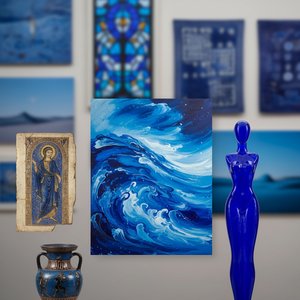
The Allure of Azure: Exploring the Symbolic & Aesthetic Depths of Blue in Art History
Explore the rich history of blue in art! Discover its symbolism, from ancient pigments to modern masterpieces by Kandinsky & Seurat. Uncover the psychological impact and cultural meanings behind this captivating hue.

I 10 Dipinti Più Famosi Dominati dal Blu Ardesia: Storia, Arte e Decorazioni Raffinate
Esplora i 10 dipinti più iconici dominati dal blu ardesia! Scopri la storia, gli artisti e le tecniche dietro capolavori impressionisti e moderni. Trova riproduzioni artistiche di alta qualità per decorare casa con .

Paul Cézanne: I 25 Capolavori che Hanno Rivoluzionato l'Arte Moderna | TopImpressionists
Esplora i 25 capolavori di Paul Cézanne, il maestro dell'impressionismo e post-impressionismo. Scopri la storia, le tecniche e i colori iconici dietro opere come 'Le grandi bagnanti' e 'Mont Sainte-Victoire'. Trova riproduzioni artistiche di alta qualità per decorare la tua casa su TopImpressionists.com.

Impressionismo: I 10 Capolavori che Rivoluzionarono la Pittura | TopImpressionists
Esplora i 10 capolavori dell'Impressionismo con TopImpressionists. Scopri Monet, Renoir e Degas: storia, tecnica e colori che hanno rivoluzionato l'arte. Stampe di alta qualità per la tua casa! Esplora la collezione online.
Esplora le opere d'arte organizzate per temi, stili e caratteristiche.


