A Study in Solitude and Sensuality: Decoding Egon Schiele’s Untitled (7434)
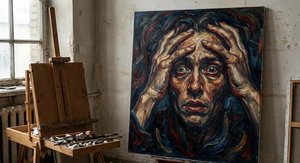
Egon Schiele's untitled (7434), a work rendered with the stark intimacy that defines his oeuvre, presents a figure steeped in both vulnerability and defiant self-possession. The painting, executed in a predominantly monochromatic palette of black and white—a deliberate choice reflecting Schiele’s Expressionist aesthetic—immediately evokes a sense of timelessness, recalling classical studies of the human form while simultaneously shattering any illusion of academic restraint. A woman reclines, her body articulated with elongated curves and a deliberate distortion that speaks to Schiele’s Expressionist sensibilities. Her outstretched arm isn't merely a gesture; it feels like an attempt to reach beyond the confines of the canvas, a yearning for connection or perhaps simply a claim to space in a world that often sought to diminish female agency.
The Echoes of Vienna and a Troubled Soul
To understand untitled (7434) is to delve into the turbulent artistic landscape of early 20th-century Vienna, a city grappling with societal upheaval and psychological introspection. Schiele emerged as a radical voice within this context, rejecting the polished aestheticism of Gustav Klimt’s earlier work in favor of a raw, unflinching honesty. His life was marked by personal tragedy – the early death of his father to syphilis, a controlling upbringing under his uncle, Leopold Czihaczek, and frequent encounters with censorship due to the perceived indecency of his art. These experiences profoundly shaped his artistic vision, imbuing his paintings with an emotional intensity that continues to resonate today. The figures in Schiele’s work are rarely idealized; they bear the marks of lived experience – anxiety, loneliness, and a desperate search for meaning.
Line, Form, and the Language of Emotion
Schiele's technical mastery lies not in meticulous realism but in his ability to convey emotion through line and form. In untitled (7434), the woman’s body is defined by sinuous contours that seem to writhe with inner life. The use of black and white amplifies this effect, stripping away any distractions of color and focusing attention on the interplay of light and shadow. Schiele’s distinctive style—characterized by bold lines and simplified shapes—is a deliberate rejection of Impressionistic techniques, prioritizing psychological impact over visual accuracy. He achieves this through careful observation of anatomy combined with expressive distortion, conveying not just physical form but also emotional state.
A Legacy of Introspection and Modern Sensibility
Though his life was tragically cut short by the Spanish Flu at just 28 years old, Egon Schiele left behind a body of work that continues to captivate and challenge viewers. His influence can be seen in countless artists who followed, from Francis Bacon to contemporary figurative painters. untitled (7434) stands as a powerful testament to his unique vision – a vision that embraced the complexities of human emotion and dared to confront the darker aspects of the modern psyche. Owning a reproduction of this work is not merely acquiring a beautiful image; it’s inviting a dialogue with a master of Expressionism, a glimpse into a troubled soul, and a reminder of the enduring power of art to illuminate the depths of the human experience.
- Artist: Egon Schiele (1890-1918)
- Style: Expressionism
- Medium: Oil on Canvas
- Dimensions: Unknown
- Date: Unknown
Explore 'untitled (7434)' by Egon Schiele, a striking Expressionist work featuring a gracefully posed woman and intriguing background figures. Discover the emotional depth of Schiele's art.



 Acquista stampa
 Invia
Invia Condividi
 Dettagli opera

 Scarica
 Simili
 Radiografia
 Slideshow
 Scopri di più






































 L'opzione vetro è disponibile solo per dimensioni inferiori a 110 cm