

Shown: · With its frame:
 Anteprima in scala reale
 Invia
Invia Condividi
 Dettagli opera
 Guida
Guida

 Scarica
 Simili
 Radiografia
 Slideshow
 Q&A
Q&A Statistiche

€ 239
Riproduzione a olio fatta a mano
Olio su tela dipinto a mano nelle tue dimensioni e con la tua cornice, realizzato su ordinazione dai nostri artisti. ( Passa alle stampe Passa all'immagine digitale)
Size
·Formato standard
su misura
CM
INCH
Scegli tra le nostre dimensioni predefinite, che rispettano le proporzioni originali dell'opera d'arte.
Loading sizes...

larghezza
altezza
Inserisci la larghezza e l'altezza desiderate, per adattarle alla tua cornice o alla tua parete. Trattandosi di un'opera dipinta a mano, in caso di dimensioni con un formato differente, l'artista può estendere leggermente il dipinto oltre i bordi dell'immagine o ritagliare una piccola parte — la scelta spetta a te. Ti invieremo un mockup digitale da approvare prima che la realizzazione abbia inizio. L'immagine mostrata in questa pagina non rappresenta il risultato finale — solo il mockup lo fa.
 Scopri di più
Finish
·
White €1

Blurside €1

Extended €1

P118B €10

P118H €10

P118W €10

P438Z €10

P508JH €12

P508YH €12

P805H €10

P805Z €10

P919BZ €10

P919G €10

P919XJ €10

P959ZH €10

P968JZ €12

W106C €8

W218G €10

W218JH €8

W218Y €10

W307PJ €10

W316G €10

W316PJ €8

W316Y €10

W398PJ €8

W4111J €10

W500HY €15

W500JH €15

W692G €12

W849H €8

W940BG €15

W953PJ €8

H24-GOLD €30

H24-SILVER €30

H36-GOLD €45

H36-SILVER €45
Shipped in a protective tube, ready for your own framer.
Above 105 cm the frame is shipped as a kit for a professional framer — read the details.
Extras
optionalWhat do the extras include?
Examples of what can be changed: Replace face with customer photo; Add pet (e.g., replace cat with dog); Include hidden message in background; Change background landscape or elements.
After order, TopImpressionists.com team will email client for instructions and provide a mockup preview
After order, TopImpressionists.com team will email client for instructions and provide a mockup preview
Consegna in tutto il mondo () in 3/4 settimane anziché nelle normali 5 settimane. (1 Novembre). Nessun compromesso sulla qualità.
Vernice protettiva
Didascalia
Dettagli della targhetta in bronzo inciso
This elegant plaque features the artist's name and the title of the artwork, finely engraved for a timeless presentation.
It is made from bronze with a refined, elegant finish. The text is precisely laser-engraved for a sharp and permanent result. Measuring 9x2 cm, the plaque is compact yet easy to read. It's built to be durable and scratch-resistant, offering a professional, museum-quality look. Mounting is simple thanks to the included adhesive backing.
Dettagli della targhetta in acrilico trasparente
The plaque includes essential engraved details such as the artist's name, the title of the artwork, the date it was created, the type of media used-like oil on canvas or watercolor-a brief description of the piece, and a QR code that links to the complete artwork information.
It is crafted from clear acrylic, offering a sleek, modern appearance. The text is UV-engraved in black to ensure strong visual contrast. With a size of 10x15 cm, it ensures optimal readability. It comes equipped with two metal hooks for secure wall mounting. The plaque is designed to be weather-resistant, making it suitable for various environments, and it includes interactive features that work seamlessly with smartphone scanning.
Dettagli della targhetta in acrilico nero
This elegant plaque includes engraved information such as the artist's name, the title of the artwork, the date it was created, the type of media used (like oil on canvas or watercolor), a short description of the artwork, and a QR code for quick access to more information.
The plaque itself is made from refined black acrylic with a premium finish. The text is laser-engraved in white for high contrast and readability. Its size is 10x15 cm, designed to be easy to read. It comes with two metal hooks for professional mounting. The design is sleek and fits any interior style. It is also weather-resistant and durable, with built-in digital integration for mobile compatibility.
L'opzione vetro è disponibile solo per dimensioni inferiori a 110 cm
 L'opzione vetro è disponibile solo per dimensioni inferiori a 110 cm
- Spedizione espressa gratuita in tutto il mondo
- Tela in lino di alta qualità
- Assicurazione completa sulla spedizione
- Garanzia di rimborso dei dazi doganali
- Garanzia di fedeltà cromatica assoluta
- Politica di reso entro 100 giorni (solo per difetti di fabbricazione)
- Garanzia di rimborso al 100%
- Offerta per acquisti multipli


Descrizione del reperto
Scopri "L'agonia del giardino", un capolavoro barocco di El Greco che cattura l'intensità emotiva e la profondità spirituale attraverso colori vibranti e figure espressive.
Biografia dell'artista
Esplora l'arte drammatica ed espressiva di El Greco (Domenicos Theotokopoulos). Scopri i suoi iconici dipinti Manneristi, i temi religiosi, le figure allungate e la sua duratura influenza sull'Espressionismo e il Cubismo. Ammira capolavori come 'Vista di Toledo'!
About the painting
El Greco: A Pioneer of Emotion
Doménikos Theotokópoulos, universally known as El Greco (meaning “The Greek”), stands as one of the most singular figures in the history of Western art. His dramatic and intensely emotional works bridged the gap between the Renaissance and the Baroque periods, simultaneously forging a distinctly personal style that continues to fascinate scholars and artists alike.
Born in Crete around 1541 – though precise dates remain elusive – El Greco’s early artistic training centered on Byzantine icon painting traditions. This rigorous discipline instilled within him an unwavering commitment to meticulous detail and symbolic representation, characteristics that would permeate his entire oeuvre. He signed his canvases in Greek, appending “Krḗs” (Cretan) as a testament to his origins, marking him as a distinct voice amidst the artistic currents of his time.
A Journey Through Venetian and Roman Influences
Around 1567, El Greco embarked on a transformative voyage to Venice, immersing himself in the vibrant atmosphere of the Serenissima Republic. This pivotal encounter exposed him to the burgeoning Mannerist style – championed by artists like Tintoretto and Titian – which actively challenged the idealized aesthetic conventions of the Renaissance. The Venetian experience instilled in El Greco a profound appreciation for expressive color palettes and dynamic compositions, elements that would become hallmarks of his distinctive artistic vision.
His subsequent relocation to Rome solidified these influences further. Amidst the intellectual ferment of the papal court, El Greco absorbed the humanist ideals of Leonardo da Vinci and Michelangelo, adapting them to his own stylistic sensibilities. This synthesis resulted in paintings imbued with a palpable sense of drama and psychological depth—a testament to El Greco’s extraordinary artistic development.
The Unique Style: Distortion and Spiritual Intensity
El Greco's signature style is instantly recognizable for its characteristic elongation of figures, achieved through meticulous anatomical manipulation. This technique wasn’t merely a stylistic flourish; it served as a deliberate means of conveying spiritual intensity—a profound desire to transcend the limitations of natural representation and capture the essence of human emotion.
He famously declared that he wished to “free himself from the obligation to nature,” prioritizing expressive distortion over literal accuracy. This audacious decision yielded figures that seemed to pulsate with inner life, their shapes exaggerated to amplify their emotional impact—a radical departure from prevailing artistic conventions.
“The Agony in the Garden”: Symbolism and Composition
"The Agony in the Garden," painted circa 1590-1595, exemplifies El Greco’s masterful command of composition and symbolism. The scene depicts Jesus alone in the Garden of Gethsemane, surrounded by angels—a poignant depiction of his inner turmoil as he contemplates the impending betrayal and crucifixion.
The central figure is seated on the ground, clutching a chalice – a gesture laden with religious significance – while his gaze directs upwards towards the heavens. The angel to his left extends his hand in benediction, symbolizing divine compassion, whilst the angel to his right leans forward, conveying urgency and apprehension.
Notably, El Greco employs a diagonal line originating from an angel’s outstretched hand and traversing Christ’s torso toward the Roman soldiers on the right edge of the canvas. This visual device underscores the inescapable trajectory of Jesus's fate—a powerful statement of dramatic tension and existential vulnerability.
Furthermore, the luminous moon dominating the upper portion of the painting contributes to an atmosphere of foreboding and spiritual drama—enhancing the scene’s emotive power and reinforcing its symbolic resonance.
Legacy: Inspiration Beyond Genre
"The Agony in the Garden" secured El Greco's place as a precursor to both Expressionism and Cubism, influencing generations of artists who sought to convey emotion through distorted forms and unconventional perspectives.
Poets and writers such as Rainer Maria Rilke and Nikos Kazantzakis recognized El Greco’s singular vision—his ability to distill profound spiritual truths into visually arresting imagery. His enduring legacy testifies to the transformative potential of art to transcend stylistic boundaries and communicate universal human experience.
Today, “The Agony in the Garden” resides prominently within the Toledo Museum of Art's collection, attracting visitors from across the globe who marvel at its breathtaking beauty and artistic innovation. Its reproduction continues to inspire collectors and interior designers alike—a timeless masterpiece that embodies the spirit of El Greco’s unparalleled creative genius.
Domande e risposte
Quale ambiente si abbina ai colori di "L'agonia del giardino" di El Greco?
Grazie alla sua palette di colori Toni della terra, si consiglia di inserire "L'agonia del giardino" in un/una Zona living.
In che modo contrasto e armonia si combinano in "L'agonia del giardino"?
L'analisi cromatica di "L'agonia del giardino" di El Greco rivela un Dichiarazione contrasto e una Tavolozza discordante armonia.
Dove posso acquistare una stampa di "L'agonia del giardino" di El Greco?
Puoi ordinare una stampa di "L'agonia del giardino" di El Greco direttamente nella sua pagina Stampa Fine Art: una stampa fine art su tela di cotone o carta canvas d'archivio.
Quick facts and art quiz
About El Greco

El Greco
1541 - 1614, Grecia
Biografia dell'artista
**primi anni di vita e formazione**
El Greco (Domenico Theotocopoulos), un rinomato pittore, scultore e architetto greco, nacque nel 1541 a Creta, allora sotto il dominio veneziano. Il suo nome di nascita era Domenico Theotocopoulos. La sua formazione iniziale come pittore di icone della scuola cretese, un centro leader dell'arte bizantina post-byzantina, ha gettato le basi per i suoi futuri sforzi artistici.**evoluzione artistica e influenze**
Lo stile artistico di El Greco fu plasmato dai suoi viaggi a Venezia e Roma, dove assorbì stili manieristi e rinascimentali, influenzato in particolare da Tintoretto e Tiziano. Il suo trasferimento a Toledo, Spagna nel 1577 segnò un periodo di produzione abbondante, dando vita a capolavori come Vista di Toledo e l'apertura del quinto sigillo.**opere notevoli e stile**
* Allegoria dell'Ordine Camaldolese (Manierismo, olio) - una testimonianza del mix unico di tradizioni bizantine e elementi stilistici occidentali di El Greco. * Favola (Manierismo, olio) – dimostra il suo uso di scelte cromatiche vivaci e insolite. * Giacomo Bosio (Manierismo, olio) – mostra la maestria di El Greco nello stile manierista.**eredità e influenza**
Lo stile drammatico ed espressivo di El Greco, caratterizzato da figure allungate e pigmentazione fantastica, è stato una fonte di ispirazione per poeti e scrittori. È considerato un precursore dell'espressionismo e del cubismo. Per saperne di più sulla vita e le opere di El Greco, visiti [https://TopImpressionists.com/@/el-greco-(domenikos-theotokopoulos)](https://TopImpressionists.com/@/el-greco-(domenikos-theotokopoulos)).- **visualizza i dipinti di El Greco** su [https://TopImpressionists.com/@@/85fr95-el-greco-(domenikos-theotokopoulos)-allegory-of-the-camaldolite-order](https://TopImpressionists.com/@@/85fr95-el-greco-(domenikos-theotokopoulos)-allegory-of-the-camaldolite-order)
- **impara di più sulla vita e le opere di El Greco** su [https://en.wikipedia.org/wiki/el_greco](https://en.wikipedia.org/wiki/el_greco)
- **esplora l'Istituto Ellenico degli Studi Bizantini e Post-Bizantini**, che presenta una vasta gamma di manufatti che riflettono il ricco patrimonio artistico dell'Impero Bizantino, su /it/art/show/art-d3b8bv-it/
Quick facts about El Greco
- Artisti Che Hanno Influenzato:
- Tiziano
- Tintoretto
- Artisti Influenzati:
- Espressionismo
- Cubismo
- Data Di Nascita: 1541
- Luogo Di Nascita: Creta, Grecia
- Movimento Artistico: Manierismo, Rinascimento spagnolo
- Nazionalità: Greco-Spagnola
- Nome Completo: El Greco (Domenikos Theotokopoulos)
- Opere Notevoli:
- Sepoltura del Conte di Orgaz
- Vista di Toledo
- Apertura del quinto sigillo
- Favola
- San Sebastiano
Esplora le opere d'arte organizzate per temi, stili e caratteristiche.


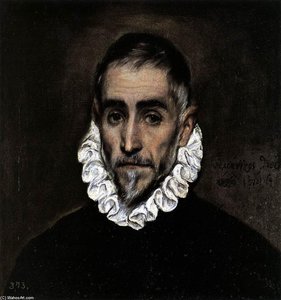


El Greco
L'agonia del giardino
() ·
With its frame: · Hand-painted in oil on linen
Total