Atelier — Spedizione gratuita in tutto il mondo — Consegna in 2–6 settimane
Da foto a dipinto Lista dei desideri Carrello
AnteprimaAnteprima Anteprima ARAnteprima AR Passa alla pittura fatta a mano Passa alla pittura fatta a manoPassa all'immagine Passa all'immagine CondividiCondividi
DettagliDettagli Aggiungi ai preferiti Aggiungi ai preferiti Scarica immagineScarica immagine Articoli similiArticoli simili RadiografiaRadiografia SlideshowSlideshow

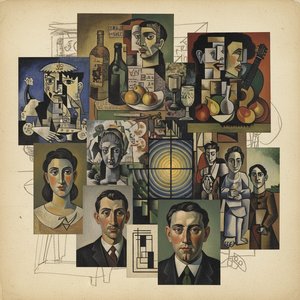
untitled (3690)

Delve into 'Untitled (3690)' by Georges Braque – a pivotal work of Cubism. Experience fragmented forms, a study in disarray, and the artist’s revolutionary approach to space and perception. Hand-painted reproduction available.

Esplora la vita e l'arte di Georges Braque (1882-1963), una figura chiave della pittura del XX secolo. Pioniere del Cubismo insieme a Picasso, noto per il Fauvismo, il collage e forme geometriche innovative. Scopri la sua eredità su TopImpressionists!

Giclée / Stampe d'arte

Stampa giclée o su tela di qualità museale, con produzione rapida e diverse opzioni di finitura. (Passa alla pittura fatta a mano Passa alla pittura fatta a manoPassa all'immagine Passa all'immagine)

P118B $10
P118H $10
P118W $10
P438Z $10
P508JH $12
P508YH $12
P805H $10
P805Z $10
P919BZ $10
P919G $10
P919XJ $10
P959ZH $10
P968JZ $12
W106C $8
W218G $10
W218JH $8
W218Y $10
W307PJ $10
W316G $10
W316PJ $8
W316Y $10
W398PJ $8
W4111J $10
W500HY $15
W500JH $15
W692G $12
W849H $8
W940BG $15
W953PJ $8

Standard
custom
CM
INCH

Scegli tra le nostre dimensioni predefinite, che rispettano le proporzioni originali dell'opera d'arte.

larghezza
altezza

È possibile inserire dimensioni personalizzate per adattare l'opera a una cornice o a uno spazio specifico. Se la dimensione selezionata non corrisponde alle proporzioni dell'immagine originale, procederemo al ritaglio dell'opera o all'estensione dell'immagine con un bordo specchiato o a tinta unita. Un mockup digitale ti verrà inviato per approvazione prima dell'inizio della produzione.
Si prega di notare che l'anteprima a schermo non riflette il ritaglio o l'estensione effettivi. Solo il mockup mostrerà accuratamente la composizione finale.
Sebbene siano disponibili dimensioni personalizzate, si raccomanda di selezionare una dimensione dall'elenco predefinito per preservare le proporzioni originali.

Consegna in tutto il mondo () in 2 settimane invece delle normali 4/5 settimane. (31 Luglio)

why_choose_icon
Spedizione espressa gratuita in tutto il mondo
why_choose_icon
Tela in lino di alta qualità
why_choose_icon
Assicurazione completa sulla spedizione
why_choose_icon
Garanzia di rimborso dei dazi doganali
why_choose_icon
Garanzia di fedeltà cromatica dell'originale
why_choose_icon
Politica di reso entro 60 giorni (solo per difetti di fabbricazione)
why_choose_icon
Garanzia di rimborso al 100%
why_choose_icon
Offerta per acquisti multipli

Prezzo totale

$ 69

reproduction

untitled (3690)

Giclée / Stampe d'arte

Dimensioni della riproduzione

-

Prezzo totale

$ 69

Dettagli rapidi

  • Medium: Painting
  • Notable elements: Door, papers, book
  • Movement: Cubism
  • Artist: Georges Braque
  • Influences:
    • Cézanne
    • Fauvism
  • Title: untitled (3690)

Quiz d'arte

Per ogni domanda è presente una sola risposta corretta.

Domanda 1:
Based on the image description, what is the primary impression conveyed by the scene?
Domanda 2:
The presence of scattered papers and a book suggests what about the depicted environment?
Domanda 3:
Georges Braque was a key figure in the development of which art movement?
Domanda 4:
What artistic influence is most strongly associated with Georges Braque's work during the period leading up to his involvement in Cubism?
Domanda 5:
According to the biographical information, what was a significant aspect of Braque's early training that shaped his artistic approach?

Descrizione del pezzo da collezione

A Study in Disarray: Georges Braque’s ‘Untitled (3690)’

Georges Braque's “Untitled (3690),” a captivating work that seems to simultaneously invite and repel, offers a glimpse into the artist’s intensely productive period at the dawn of Cubism. Painted around 1910-1912, this piece isn’t merely a depiction of a room; it's an exploration of perception, fragmentation, and the very nature of representation. The image presents a seemingly chaotic scene: a weathered wooden door, its brown frame hinting at age and solidity, stands slightly ajar, revealing a shadowy interior. Scattered across the floor and surfaces are fragments of paper – sketches, notes, perhaps even preliminary studies – alongside a solitary book, anchoring the composition with an element of quiet contemplation amidst the surrounding disorder. The overall effect is one of controlled chaos, a deliberate disruption of traditional spatial relationships that speaks directly to the core tenets of Braque’s revolutionary approach to art. It's a visual embodiment of the intellectual and emotional turmoil characteristic of the era, reflecting the shifting realities of modern life as experienced through the lens of artistic innovation.

The Roots of Fragmentation: Braque’s Early Influences

Georges Braque’s journey toward becoming a pivotal figure in 20th-century art began not within the rarefied atmosphere of Parisian studios but in his family's workshop, where he learned the craft of house painting and decoration. This practical grounding—a deep understanding of materials, structure, and the manipulation of space – proved invaluable as he later dismantled and reimagined traditional artistic conventions. Born in Argenteuil in 1882, Braque’s upbringing instilled a keen eye for form and an appreciation for the technical aspects of visual representation. Crucially, his early exposure to Cézanne's work, particularly through the 1907 retrospective at the Salon d'Automne, proved transformative. Cézanne’s exploration of multiple perspectives and geometric forms laid the groundwork for Braque’s later experiments with Cubism, prompting him to question the established rules of pictorial space and delve into a more fractured, multi-dimensional approach to depicting reality. This lineage—a blend of artisanal skill and academic study—is evident in “Untitled (3690),” where the seemingly random arrangement of objects is governed by an underlying geometric logic.

Cubism’s Delicate Dance: Collaboration with Picasso

“Untitled (3690)” stands as a testament to the collaborative spirit that fueled the development of Cubism alongside Pablo Picasso. During this period, Braque and Picasso engaged in a dynamic exchange of ideas, each pushing the boundaries of artistic expression while simultaneously influencing the other. Initially, their work was almost indistinguishable, a phenomenon documented by art historian John Rewie who noted that “the effect of his encounter with Picasso was more to accelerate and intensify Braque’s exploration of Cézanne’s ideas, rather than to divert his thinking in any essential way.” This intense partnership resulted in a shared vocabulary of fragmented forms, overlapping planes, and multiple viewpoints – techniques vividly demonstrated in "Untitled (3690)." The painting's monochromatic palette—likely influenced by the desire to strip away superficial details and focus on underlying structure—further emphasizes this geometric exploration. The deliberate ambiguity of the interior space, glimpsed through the open door, mirrors the Cubist principle of presenting multiple perspectives simultaneously, challenging the viewer’s perception of depth and spatial relationships.

Symbolism in the Everyday: The Language of Disarray

Beyond its formal innovations, “Untitled (3690)” is rich with symbolic potential. The open door suggests a transition, an invitation into an unknown space—perhaps representing the anxieties and uncertainties of modern life. The scattered papers, reminiscent of a scholar’s workspace or an artist's studio, hint at intellectual activity, creative process, and the accumulation of knowledge. The solitary book offers a counterpoint to the surrounding chaos, suggesting a yearning for order, reflection, and perhaps even escape. Braque wasn’t simply depicting a room; he was exploring the relationship between the tangible world and the realm of ideas, capturing the essence of a mind grappling with complex concepts. The deliberate lack of clear narrative or emotional content allows the viewer to project their own interpretations onto the scene, making “Untitled (3690)” a profoundly personal and evocative work.

Bringing Braque’s Vision Home: A High-Quality Reproduction

TopImpressionists offers meticulously crafted hand-painted reproductions of Georges Braque's "Untitled (3690)," allowing you to experience the power and complexity of this seminal artwork in your own space. Our skilled artisans faithfully recreate Braque’s distinctive style, capturing the subtle nuances of color, texture, and composition with exceptional detail. Whether adorning a contemporary living room or a sophisticated study, this reproduction serves as a powerful reminder of Braque's revolutionary contribution to modern art—a testament to his ability to transform the ordinary into the extraordinary through the language of fragmentation and geometric abstraction. Explore our selection today and bring a piece of art history into your world.

Biografia dell'artista

**primi anni di vita e formazione**

Georges Braque, un illustre pittore francese, collageur, disegnatore, stampatore e scultore, nacque il 13 maggio 1882 ad Argenteuil, Val-d'Oise. È cresciuto a Le Havre e inizialmente si è formato per diventare pittore di facciate e decoratore come suo padre e nonno. Tuttavia, le inclinazioni artistiche di Braque lo hanno portato a studiare pittura all’École des Beaux-Arts a Le Havre dal 1897 al 1899.

**evoluzione artistica e fauvismo**

Nel 1902, dopo aver completato il suo apprendistato con un decoratore a Parigi, Braque ha frequentato l'Académie Humbert fino al 1904. Questo periodo ha segnato la sua introduzione al fauvismo, uno stile caratterizzato da colori vivaci e risposte emotive. Influenzato dalle opere di Henri Matisse e André Derain, Braque ha adottato un approccio fauvista, come si può vedere nel suo dipinto La Pazienza (fauvismo, olio su tela).

**contributo al cubismo**

La collaborazione di Braque con Pablo Picasso dal 1908 al 1912 ha portato allo sviluppo del cubismo. Le loro opere cubiste analitiche, come Georges Braque: La Pazienza e Pablo Picasso: Clarinet(cubismo analitico, olio su tela), sono oggi considerate pietre miliari della storia dell'arte.

**eredità e opere notevoli**

* Le Case all’Éstaque: una testimonianza dell'uso innovativo di geometria e prospettiva simultanea da parte di Braque. * La Pazienza(fauvismo, olio su tela): dimostra lo stile fauvista di Braque. * Clarinet(cubismo analitico, olio su tela): un'opera cubista collaborativa con Picasso.

**musei e collezioni**

* Musée d’Orsay: presenta una vasta collezione di arte impressionista e post-impressionista, inclusi lavori di Braque. * Musée de l’Orangerie: espone una vasta gamma di opere d'arte, inclusi quelle di Braque e altri artisti notevoli. **Lo stile innovativo di Georges Braque e la sua collaborazione con Pablo Picasso continuano a ispirare artisti e appassionati d'arte.**
Georges Braque

Georges Braque

1882 - 1963 , Francia

Informazioni rapide

  • Artisti Influenti:
    • Henri Matisse
    • André Derain
    • Paul Cézanne
  • Artisti Influenzati: ['Pablo Picasso']
  • Data Di Nascita: 13 maggio 1882
  • Luogo Di Nascita: Argenteuil, Francia
  • Movimento Artistico: Cubismo, Fauvismo
  • Nazionalità: Francese
  • Nome Completo: Georges Braque
  • Opere Notevoli:
    • Case a L'Estaque
    • La Pazienza (fauvista)
    • Chitarra, Frutta e Brocca
    • Natura morta con Bass
Esplora le opere d'arte organizzate per temi, stili e caratteristiche.
© TopImpressionists.com — Tutti i diritti riservati  ·  100% Dipinto a mano · Soddisfazione garantita · Spedizione gratuita in tutto il mondo

VISA MASTERCARD