Anteprima in scala reale
 Condividi
 Condividi
 Dettagli
 Guida stampabile

 Scarica
 Articoli simili
 Radiografia
 Slideshow
 Statistiche
Young Drinker


Experience 'Young Drinker' by Gerard van Honthorst! This captivating Baroque painting showcases a contemplative youth enjoying wine, rich with light and symbolism. Explore its details & artistic context.
 Leggi tutto
Scopri Gerard van Honthorst (1590-1656), maestro dell'età dell'oro olandese e figura chiave del Caravaggismo di Utrecht. Esplora ritratti, opere bibliche e la sua influenza sull'arte barocca.
Riproduzione a olio fatta a mano
Olio su tela dipinto a mano nelle tue dimensioni e con la tua cornice, realizzato su ordinazione dai nostri artisti. ( Passa alle stampe Passa all'immagine digitale)




P118B €10

P118H €10

P118W €10

P438Z €10

P508JH €12

P508YH €12

P805H €10

P805Z €10

P919BZ €10

P919G €10

P919XJ €10

P959ZH €10

P968JZ €12

W106C €8

W218G €10

W218JH €8

W218Y €10

W307PJ €10

W316G €10

W316PJ €8

W316Y €10

W398PJ €8

W4111J €10

W500HY €15

W500JH €15

W692G €12

W849H €8

W940BG €15

W953PJ €8




Standard
personalizzato
CM
INCH
Scegli tra le nostre dimensioni predefinite, che rispettano le proporzioni originali dell'opera d'arte.
Loading sizes...

larghezza
altezza
Inserisci la larghezza e l'altezza di cui hai bisogno, per adattarle alla tua cornice o alla tua parete. Trattandosi di un'opera dipinta a mano, in caso di dimensioni con una forma differente, l'artista può dipingere un po' più oltre i bordi dell'immagine o ritagliare leggermente — la scelta spetta a te. Ti invieremo un mockup digitale da approvare prima che la pittura abbia inizio. L'immagine mostrata in questa pagina non rappresenta il risultato reale — solo il mockup lo fa.
Esempi di personalizzazione: sostituire il volto con una foto del cliente; aggiungere un animale domestico (ad esempio, sostituire un gatto con un cane); inserire un messaggio nascosto nello sfondo; cambiare il paesaggio o gli elementi dello sfondo.
Dopo l'ordine, il team di TopImpressionists.com contatterà il cliente via e-mail per ricevere le istruzioni e fornirà un'anteprima del mockup
Dopo l'ordine, il team di TopImpressionists.com contatterà il cliente via e-mail per ricevere le istruzioni e fornirà un'anteprima del mockup
Consegna in tutto il mondo () in 3/4 settimane anziché nelle normali 5 settimane. (16 Ottobre). Nessun compromesso sulla qualità.

Spedizione espressa gratuita in tutto il mondo

Tela in lino di alta qualità

Assicurazione completa sulla spedizione

Garanzia di rimborso dei dazi doganali

Garanzia di perfetta fedeltà cromatica

Politica di reso entro 100 giorni (solo per difetti di fabbricazione)

Garanzia di rimborso al 100%

Sconto per acquisti multipli
 L'opzione vetro è disponibile solo per dimensioni inferiori a 110 cm

Young Drinker
Tecnica di riproduzione
Dimensioni della riproduzione
-


Prezzo totale
€ 234
A Moment of Quiet Contemplation: Gerard van Honthorst’s “Young Drinker”
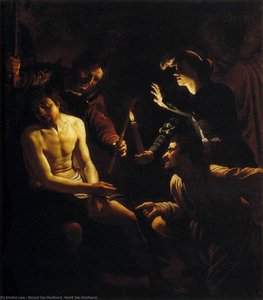
Gerard van Honthorst's "Young Drinker," painted circa 1625, is more than a simple depiction of youth indulging in wine; it’s a carefully constructed tableau brimming with symbolism and bathed in the dramatic chiaroscuro that defined the artist’s signature style. This captivating portrait, now housed within the Centraal Museum in Utrecht, offers a glimpse into the complexities of 17th-century Dutch society – its burgeoning mercantile class, its fascination with pleasure, and its underlying tensions between piety and indulgence. Honthorst, a key figure in the Utrecht Caravaggisti School, expertly channels the influence of Caravaggio, particularly his masterful use of light and shadow to create an atmosphere of intense drama and psychological depth.
The painting immediately draws the eye to the young man seated at a table, seemingly lost in thought as he sips from a glass. His posture is relaxed yet alert, suggesting a moment of quiet contemplation amidst the bustle of daily life. The details are meticulously rendered: the delicate curve of his neck, the subtle flush on his cheeks, and the intricate folds of his blue garment all speak to Honthorst’s exceptional technical skill. However, it's not merely a study in realism; the artist employs a sophisticated system of visual cues to convey deeper meaning.
The Language of Light and Shadow: Honthorst’s Chiaroscuro
Honthorst’s mastery lies in his manipulation of light and shadow – a technique known as *tenebrism*. He doesn't simply illuminate the scene; he sculpts it with carefully placed pools of light that dramatically contrast with areas of deep darkness. This creates a powerful sense of depth, drawing the viewer into the intimate space of the room. The candle flame, positioned strategically to highlight the young man’s face and upper body, acts as a focal point, guiding our gaze and intensifying the emotional impact of the scene. The surrounding shadows are not merely absences of light; they contribute significantly to the painting's overall mood – suggesting mystery, introspection, and perhaps even a hint of melancholy.
Notice how the light subtly reveals details while obscuring others. The open book on the table, adorned with illustrations depicting classical scenes, hints at intellectual pursuits, yet these are overshadowed by the immediate pleasure of the drink. This juxtaposition speaks to the central theme of the painting: the tension between reason and desire, knowledge and indulgence.
Symbolism and Social Commentary
Beyond the technical brilliance, “Young Drinker” is rich in symbolic detail. The young man’s attire – a blue hat adorned with a feather – subtly references status and perhaps even a hint of aristocratic aspiration. The book itself offers further clues: its illustrations depict scenes from mythology, suggesting an engagement with classical ideals but also hinting at the potential for these ideals to be corrupted by earthly pleasures. Crucially, the open book is juxtaposed against the young man’s enjoyment of wine – a potent symbol of both celebration and excess.
The inclusion of the small bird in his hand adds an element of surprise and perhaps even a touch of whimsy. Birds are often associated with freedom, hope, and spirituality, yet their presence here seems somewhat incongruous, suggesting a fleeting moment of innocence amidst a world increasingly dominated by worldly concerns.
A Window into 17th-Century Dutch Life
“Young Drinker” provides a valuable window into the social and cultural landscape of 17th-century Holland. It reflects the growing prosperity of the merchant class, their embrace of luxury and pleasure, and their ongoing struggle to reconcile these desires with traditional values. Honthorst’s painting captures not just a portrait but an entire era – a time of artistic innovation, economic expansion, and profound social change. Reproductions of this compelling work offer a chance to bring this evocative scene into your own home, inviting contemplation and sparking conversation about the enduring themes of human experience.
Domande e risposte
In che modo il soggetto di "Young Drinker" si relaziona ai temi abituali di Gerard van Honthorst?
Tra i temi ricorrenti di Gerard van Honthorst - caravaggio’s tenebrism, italian baroque, quaker life, social commentary, dutch golden age portraiture”, “domesticity, family dynamics”, moral contemplation - "Young Drinker" pone un particolare accento su drinking, youth, feathered hat, study, bird, light, reflection.
Quale ambiente si abbina ai colori di "Young Drinker" di Gerard van Honthorst?
I colori Earthy di "Young Drinker" di Gerard van Honthorst si armonizzano con lo spazio consigliato: un/una Living Room.
Che intensità cromatica ha "Young Drinker" di Gerard van Honthorst?
L'intensità cromatica di "Young Drinker" è Monochromatic. L'intensità descrive quanto appaiano marcati i colori.
Biografia dell'artista
La Vita e la Formazione di Gerard van Honthorst
Gerard van Honthorst, nato a Utrecht il 4 novembre 1590, fu un pittore olandese di grande rilievo durante l'età dell'oro olandese. Figlio di un pittore decorativo, ricevette le prime istruzioni artistiche dal padre e successivamente affinò la sua tecnica sotto la guida di Abraham Bloemaert. Questa formazione iniziale gettò le basi per il suo sviluppo artistico futuro.Il Periodo Italiano e l'Influenza del Caravaggismo
Un momento cruciale nella carriera di van Honthorst fu il suo viaggio a Roma, dove rimase profondamente influenzato dallo stile di Caravaggio. L’incontro con la pittura tenebrista e drammatica di Caravaggio lo portò ad adottare un approccio simile nelle sue opere, caratterizzato da forti contrasti chiaroscurali e scene illuminate artificialmente. Questo periodo romano gli valse il soprannome di "Gherardo delle Notti" ("Gerard of the Nights"), in riferimento alla sua predilezione per le scene notturne. Durante la sua permanenza a Roma, lavorò per importanti mecenati come Vincenzo Giustiniani, che commissionò l'opera "Cristo davanti al Sommo Sacerdote", ora conservata nella National Gallery di Londra.Il Ritorno in Olanda e il Successo come Ritrattista
Nel 1620, van Honthorst fece ritorno nei Paesi Bassi, stabilendosi a Utrecht. Qui, divenne una figura di spicco nel panorama artistico olandese, acquisendo rapidamente fama come ritrattista di successo. La sua abilità nel catturare la somiglianza e l'essenza dei suoi soggetti lo rese molto richiesto da nobili e personalità influenti dell’epoca. Nel 1623, divenne presidente della gilda di San Luca a Utrecht, un segno del suo prestigio e riconoscimento all'interno della comunità artistica.Stile Artistico e Contributi al Barocco Olandese
Lo stile di van Honthorst si caratterizza per l’uso magistrale della luce e dell’ombra, ereditato dal caravaggismo, ma reinterpretato in chiave olandese. Le sue opere spesso raffigurano scene bibliche o mitologiche illuminate da una fonte luminosa artificiale, creando un'atmosfera drammatica e suggestiva. Van Honthorst contribuì significativamente allo sviluppo del barocco olandese, influenzando numerosi artisti contemporanei e successivi. La sua capacità di combinare l’influenza italiana con la tradizione pittorica olandese lo rese una figura unica nel panorama artistico del XVII secolo.Collaborazioni e Opere Significative
Van Honthorst collaborò con altri importanti artisti dell'epoca, tra cui Peter Paul Rubens, dimostrando la sua apertura alle influenze artistiche internazionali. Tra le sue opere più significative si ricordano "Cristo davanti al Sommo Sacerdote", commissionata da Vincenzo Giustiniani, e "L’adorazione del Bambino", un dipinto che esemplifica il suo stile tenebrista. La "Presa di Cristo", inizialmente attribuita interamente a van Honthorst, è ora riconosciuta come opera collaborativa, testimoniando la complessità delle dinamiche artistiche dell'epoca.
Gerard van Honthorst
1590 - 1656 , Paesi Bassi
Informazioni rapide
- Artisti Influenti:
- Caravaggio
- Abraham Bloemaert
- Data Di Morte: 1656
- Data Di Nascita: 4 novembre 1590
- Luogo Di Nascita: Utrecht, Paesi Bassi
- Movimento Artistico: Caravaggismo olandese
- Nazionalità: Olandese
- Nome Completo: Gerard van Honthorst
- Opere Notevoli:
- Cristo davanti al sommo sacerdote
- L'adorazione del Bambino
Articoli correlati

Mastering Light and Shadow: The Chiaroscuro Revolution of Dutch Baroque Art
Explore the dramatic world of Dutch Baroque art. Discover how masters used chiaroscuro to revolutionize light and shadow, creating timeless psychological depth and texture in every canvas. A journey through the Golden Age for true art enthusiasts.

Golden Light & Dutch Skies: The Timeless Magic of Dutch Golden Age Landscapes
Discover the breathtaking beauty of Dutch Golden Age landscapes. Explore the mastery of light, chiaroscuro, and 17th-century realism through an expert art history lens, celebrating the enduring legacy of the Dutch Masters for discerning collectors and art lovers.

Mastering Light & Shadow: A Journey Through the Dutch Golden Age's Luminous Legacy
Embark on a cultural journey through the Dutch Golden Age. Explore the masterful interplay of light and shadow in 17th-century masterpieces, from Rembrandt to Vermeer, and discover how this era of profound realism continues to inspire fine art collectors today.
Esplora le opere d'arte organizzate per temi, stili e caratteristiche.