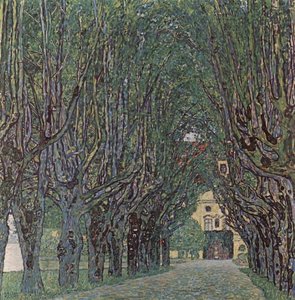
Gustav Klimt: The Pear Tree – A Symbol of Fertility and Transformation
Gustav Klimt’s “The Pear Tree,” completed in 1903, stands as one of the artist's most celebrated landscapes—and arguably his most poignant exploration of themes surrounding femininity, spirituality, and the cyclical nature of life. More than just a depiction of fruit trees laden with blossoms and ripe pears, it embodies Klimt’s signature blend of Art Nouveau elegance and Byzantine mosaic influence, capturing a moment suspended between decay and renewal.
Originally commissioned by Viktor Zuckerkandl, an industrialist and avid collector of avant-garde art, the painting reflects Klimt's fascination with the female form and his desire to convey profound emotional depth. The composition is dominated by a solitary pear tree against a hazy backdrop—a deliberate choice that underscores Klimt’s rejection of academic conventions and his embrace of subjective experience.
- Style: Klimt's distinctive style is immediately recognizable through its opulent ornamentation and flattened perspective, characteristic of Art Nouveau. He eschewed traditional realism in favor of stylized forms and vibrant colors, prioritizing emotional resonance over accurate representation.
- Technique: The painting utilizes oil on canvas—a medium favored by Klimt for its ability to achieve rich textures and luminous hues. Klimt’s meticulous application of paint, combined with the incorporation of gold leaf—a technique borrowed from Byzantine mosaics—creates a shimmering surface that draws the viewer's eye inward.
- Color Palette: Klimt employs a carefully calibrated color palette dominated by warm tones – golds, yellows, and reds – juxtaposed against cooler greens and blues. These colors contribute to the painting’s sensual atmosphere and symbolize vitality, abundance, and spiritual illumination.
The pear tree itself serves as a powerful symbol—representing fertility, blossoming beauty, and ultimately, death and regeneration. Klimt's masterful depiction of the blossoms captures the fleeting moment of springtime exuberance, while the pears hanging from the branches symbolize ripeness and fulfillment. However, beneath this veneer of idyllic splendor lies an underlying sense of melancholy, reflecting Klimt’s preoccupation with mortality and the inevitability of change.
“The Pear Tree” continues to inspire artists and collectors alike—a testament to Klimt's ability to distill complex philosophical ideas into a visually arresting masterpiece. Its enduring appeal resides in its evocative imagery and its profound exploration of human emotion, cementing its place as a cornerstone of modern art history.
Historical Context: Vienna Secession and Symbolism
Klimt’s work emerged during the Viennese Secession movement—a rebellious artistic collective that challenged the conservative aesthetic standards of the Austro-Hungarian Empire. Rejecting academic tradition, Secession artists sought to forge a new visual language rooted in symbolism and expressive abstraction. Klimt's embrace of Byzantine influences—particularly the use of gold leaf—was a deliberate provocation against prevailing artistic conventions.
Analysis: Layers of Meaning
Beyond its formal beauty, “The Pear Tree” is laden with symbolic significance. The tree’s solitary presence suggests introspection and contemplation, while the blossoms represent the ephemeral nature of life—a reminder that all things must eventually pass away. Klimt's subtle manipulation of perspective and color contributes to the painting’s emotional impact—creating a dreamlike atmosphere that invites viewers to contemplate profound questions about existence.
Legacy: Influence on Subsequent Artists
"The Pear Tree" profoundly impacted subsequent generations of artists who sought to explore themes of sexuality, spirituality, and artistic innovation. Klimt’s pioneering use of gold leaf—a technique that would become synonymous with Art Nouveau—inspired countless painters and sculptors—establishing him as a pivotal figure in the history of modern art.
Availability: A Stunning Reproduction
A meticulously crafted oil painting reproduction of “The Pear Tree” from TopImpressionists.com captures the essence of Klimt’s artistic vision—bringing this iconic artwork into your home or studio. Our skilled artisans utilize premium materials and techniques to faithfully recreate the painting's luminous colors and intricate details—allowing you to experience its beauty firsthand.
Explore More Works by Gustav Klimt

For more information, visit Gustav Klimt: The Pear Tree or learn about the The Royal Museums of Fine Arts of Belgium, Brussels.



 Preview
 Ordina la riproduzione
 Invia
Invia Condividi
 Dettagli opera

 Scarica
 Simili
 Radiografia
 Slideshow

 Scopri di più






































 L'opzione vetro è disponibile solo per dimensioni inferiori a 110 cm