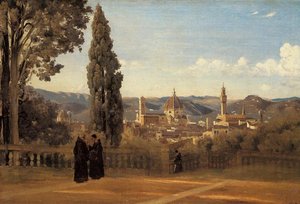
Anteprima in scala reale
 Invia
Invia Condividi
 Dettagli opera
 Guida
Guida

 Scarica
 Simili
 Radiografia
 Slideshow
 Q&A
Q&A Statistiche
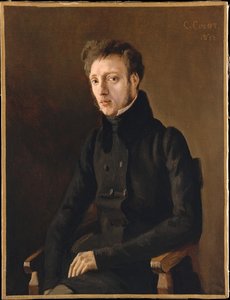
Self-Portrait

Write a English compelling meta description in maximum 230 characters for this artwork.
Explore Jean-Baptiste-Camille Corot’s ‘Self-Portrait,’ embodying Impressionist innovation with luminous landscapes and emotive brushstrokes—a serene reflection of artistic vision.
Explore Jean-Baptiste-Camille Corot's masterpiece 'Self-Portrait,' capturing the artist's essence and pioneering Impressionist tec
 Espandi i dettagli
Scopri Jean-Baptiste-Camille Corot (1796-1875), pittore francese che unisce Neoclassicismo e Impressionismo. Paesaggi sereni, ritratti realistici e la sua influenza sull'arte! Esplora 'The Repose' e altro!
Giclée / Stampe d'arte
Stampa giclée o su tela di qualità museale, con produzione rapida e diverse opzioni di finitura. ( Acquista il dipinto realizzato a mano Passa all'immagine digitale)




P118B €10

P118H €10

P118W €10

P438Z €10

P508JH €12

P508YH €12

P805H €10

P805Z €10

P919BZ €10

P919G €10

P919XJ €10

P959ZH €10

P968JZ €12

W106C €8

W218G €10

W218JH €8

W218Y €10

W307PJ €10

W316G €10

W316PJ €8

W316Y €10

W398PJ €8

W4111J €10

W500HY €15

W500JH €15

W692G €12

W849H €8

W940BG €15

W953PJ €8




Formato standard
su misura
CM
INCH
Scegli tra le nostre dimensioni predefinite, che rispettano le proporzioni originali dell'opera d'arte.
Loading sizes...

larghezza
altezza
Inserisci la larghezza e l'altezza desiderate, per adattarle alla tua cornice o alla tua parete. Una stampa può essere solo ritagliata, mai resa più grande dell'immagine originale; pertanto, un formato con una forma differente comporterà la perdita di una parte dell'opera. Ti invieremo un mockup digitale da approvare prima di procedere con la stampa. L'immagine mostrata in questa pagina non rappresenta il ritaglio reale — solo il mockup lo mostra.
Consegna in tutto il mondo () in 2 settimane invece delle normali 4/5 settimane. (28 Ottobre)

Spedizione espressa gratuita in tutto il mondo

Tela in lino di alta qualità

Assicurazione completa sulla spedizione

Garanzia di rimborso dei dazi doganali

Garanzia di fedeltà cromatica assoluta

Politica di reso entro 100 giorni (solo per difetti di fabbricazione)

Garanzia di rimborso al 100%

Offerta per acquisti multipli
 L'opzione vetro è disponibile solo per dimensioni inferiori a 110 cm

Self-Portrait
Giclée / Stampe d'arte
Dimensioni riproduzione
-


Prezzo finale calcolato
€ 61
Introduction to the Artist and his Work
Jean Baptiste Camille Corot, a French landscape and portrait painter, was born on July 16, 1796, in Paris. He is considered one of the most influential artists of the 19th century, with his vast output referencing Neo-Classical traditions while anticipating plein-air innovations of Impressionism. Corot's works are known for their mastery of light and shadow, which he used to create depth and volume in his compositions. Self-Portrait, painted around 1825, is an excellent example of Corot's early work. This painting may have been created at the request of his parents before he embarked on a study trip to Italy. The self-portrait showcases Corot's skill in capturing light and shadow, as well as his ability to convey emotion through facial expression.Corot's Study Trip to Italy
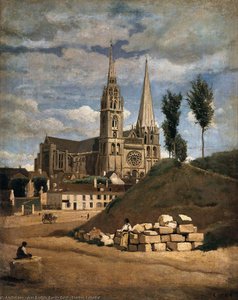
Italy had a profound impact on Corot's artistic development. During his stay from 1825 to 1828, he focused on capturing the effects of light in his landscapes, which marked a significant phase in his own painting and in the evolution of landscape painting as a whole. The Cathedral of Chartres, painted in 1830 after Corot's return to France, reflects the influence of his Italian sojourn. The highly original framing and luminosity of this work demonstrate Corot's experiments with light and shadow, which he had developed during his time in Italy.Corot's Impact on Landscape Painting
Corot's innovative approach to landscape painting laid the groundwork for Impressionism. His emphasis on capturing natural light and color, as well as his use of plein-air techniques, helped redefine the genre and paved the way for future artistic movements.Conclusion
Jean Baptiste Camille Corot's contributions to landscape and portrait painting are immeasurable. His mastery of light and shadow, as well as his innovative approach to capturing natural scenes, have solidified his place as one of the most influential artists in history. Discover more about Jean Baptiste Camille Corot's works by visiting our collection at /en/art/show/art-7z4q9p-en/.- Explore our collection of art movements
- Learn about other influential artists like Giovanni Fattori
Domande e risposte
"Self-Portrait" presenta forti contrasti chiaroscurali?
Il contrasto chiaroscurale di "Self-Portrait" è registrato come Bold. Il contrasto descrive quanto marcata sia la differenza tra le aree chiare e quelle scure.
"Self-Portrait" di Jean-Baptiste-Camille Corot è un'opera dai toni chiari o scuri?
La luminosità di "Self-Portrait" di Jean-Baptiste-Camille Corot è registrata come deep_shadow, con una luminanza di Dark.
In che modo lo stile e l'epoca si incontrano in "Self-Portrait" di Jean-Baptiste-Camille Corot?
"Self-Portrait" di Jean-Baptiste-Camille Corot appartiene al movimento Impressionistic Landscape, inserendosi nel contesto dell'epoca XIX secolo del suo autore.
Biografia dell'artista
La Vita e la Formazione di Jean-Baptiste-Camille Corot
Jean-Baptiste-Camille Corot, un rinomato pittore francese di paesaggi e ritratti, nacque il 16 luglio 1796 a Parigi. La sua famiglia, appartenente alla borghesia, gli fornì un ambiente favorevole all'esplorazione delle sue inclinazioni artistiche. Inizialmente, gli interessi di Corot erano rivolti ad altri campi, ma intorno al 1821 scoprì la sua passione per la pittura. Questo segnò l'inizio della sua prolifica carriera, che avrebbe successivamente influenzato lo sviluppo dell'Impressionismo.La Carriera Artistica e le Opere Principali
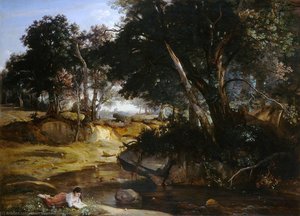
Il percorso artistico di Corot è caratterizzato da una fusione tra la tradizione neoclassica e le innovazioni en plein air (pittura all’aria aperta). Corot fu un pioniere nell'approccio alla pittura di paesaggio, dedicandosi a studi dal vero che catturavano l'atmosfera e la luce del momento. Alcune delle sue opere più notevoli includono:- The Repose (olio su tela, circa 1860s), un'opera affascinante che mostra la maestria di Corot nel catturare l'essenza della serenità.
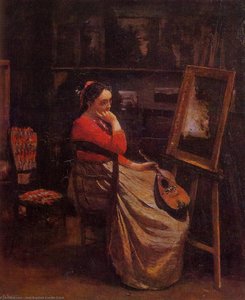
- Interrupted Reading (realismo, olio, circa 1850s), un esempio toccante dell'abilità di Corot nel ritrarre la vita quotidiana con profondità ed emozione.
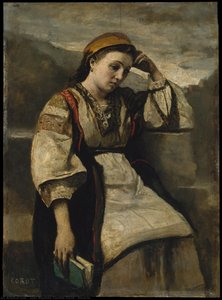
- Agostina (realismo, olio, circa 1860s), un ritratto straordinario che esemplifica l'abilità di Corot nel catturare l'essenza dei suoi soggetti.
Influenze, Sviluppo Artistico e Innovazioni
Corot fu influenzato inizialmente dalla pittura neoclassica, ma presto sviluppò un suo stile distintivo. La sua sperimentazione con la pittura en plein air lo portò a catturare la luce e l'atmosfera in modo innovativo per il suo tempo. La sua tecnica consisteva spesso nell’iniziare i dipinti all’aperto, catturando gli effetti della luce naturale, per poi completarli in studio, aggiungendo dettagli e riflettendo sulla composizione generale. Questo approccio ha contribuito a creare un'atmosfera sognante e malinconica che caratterizza molte delle sue opere. Corot fu anche influenzato dai paesaggisti inglesi, come John Constable e J.M.W. Turner, che lo incoraggiarono ad abbracciare la pittura di paesaggio en plein air.Eredità e Significato Storico
L'opera vasta di Corot ha avuto un impatto duraturo sullo sviluppo della pittura di paesaggio. Il suo approccio innovativo, combinando tecniche tradizionali con innovazioni en plein air, ha aperto la strada alle generazioni future di artisti, in particolare agli Impressionisti. Artisti come Monet, Renoir e Pissarro riconobbero il debito che avevano nei confronti di Corot per la sua capacità di catturare l'atmosfera e la luce del paesaggio. Corot è considerato una figura chiave nella transizione dalla pittura neoclassica all’Impressionismo, un ponte tra due epoche artistiche. Scopri maggiori informazioni sui dipinti di Jean-Baptiste-Camille Corot su TopImpressionists.com: https://TopImpressionists.com/@/jean-baptiste-camille-corot Approfondisci la conoscenza del Musée Courbet su Wikipedia: https://en.wikipedia.org/wiki/mus%c3%a9e_courbet_(ornans,_france)
Jean-Baptiste-Camille Corot
1796 - 1875 , Francia
Dettagli rapidi
- Artisti Che Hanno Influenzato Questo Artista: ['Neo-classicismo']
- Artisti O Movimenti Influenzati Da Questo Artista: ['Impressionismo']
- Data Di Nascita: 16 luglio 1796
- Full Name: Jean-Baptiste-Camille Corot
- Luogo Di Nascita: Parigi, Francia
- Movimento Artistico: Realismo, Impressionismo
- Nazionalità: Francese
- Notable Artworks:
- The Repose
- Interrupted Reading
- Agostina
Articoli correlati

Claude Monet: I 25 Capolavori Essenziali per Amare l'Impressionismo | TopImpressionists
Esplora i 25 capolavori di Claude Monet, il maestro dell'Impressionismo. Scopri la storia, i colori e le tecniche dietro ninfee, paesaggi iconici e dipinti famosi. Trova riproduzioni artistiche di alta qualità per arredare casa con stile su TopImpressionists.com.

Marianne North: I 25 Capolavori di una Pittrice Esploratrice | TopImpressionists
Scopri i 25 capolavori di Marianne North, pittrice vittoriana e botanica appassionata. Ammira paesaggi esotici, fiori dipinti con colori vivaci e la sua arte unica. Riproduzioni artistiche su TopImpressionists.com per decorare casa con stile.

Katsushika Hokusai: Le 25 Opere Più Iconiche per Amare l'Arte Giapponese
Esplora le 25 opere più iconiche di Katsushika Hokusai, maestro dell'ukiyo-e. Scopri la storia dietro 'La Grande Onda', il Monte Fuji e altre stampe giapponesi senza tempo. Trova riproduzioni d'arte di alta qualità per decorare la tua casa su TopImpressionists.com.

Joan Miró: I 25 Capolavori che Rivoluzionano l'Arte Moderna | TopImpressionists
Esplora i 25 capolavori di Joan Miró, pittore surrealista catalano. Scopri la storia, il simbolismo e le tecniche dietro opere iconiche come 'La Fattoria'. Stampe d'arte e riproduzioni su TopImpressionists.com per arredare con stile.

I Capolavori dei Musei Statali di Berlino: 25 Opere d'Arte Indimenticabili
Esplora i 25 capolavori dei Musei Statali di Berlino! Dalla Nefertiti al Pergamon, scopri la storia e l'arte dietro ogni opera. Riproduzioni artistiche di alta qualità per decorare casa con stile su TopImpressionists.com.
Esplora le opere d'arte organizzate per temi, stili e caratteristiche.